Iran reports progress on accessing frozen assets despite sanctions
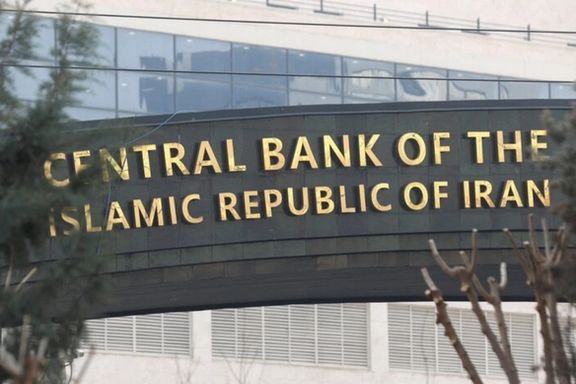
The sign of the Central Bank of the Islamic Republic of Iran is seen in Tehran, Iran January 25, 2023.
Iran has made strides in recovering portions of its blocked financial assets, foreign minister Abbas Araghchi announced, while emphasizing that billions remain inaccessible due to international sanctions.
“Some of it has been released through efforts, while some still remains. This issue is on our agenda, and we continuously pursue it,” Araghchi said on Monday, speaking at the Supreme Council for Foreign Economic Relations.
Iran's frozen assets in international accounts are estimated to be valued between $100 billion and $120 billion. Nearly $2 billion of these assets are held in the United States. According to the Congressional Research Service, in addition to funds in foreign bank accounts, Iran's frozen assets include real estate and other property.
The value of Iran's real estate in the US, along with accumulated rent, is estimated at $50 million. Beyond the assets frozen in the US, portions of Iran's assets are also frozen globally under United Nations sanctions. Despite these obstacles, Araghchi highlighted Iran’s ability to adapt.
“Managing the economy of foreign relations under sanctions and external pressures is a unique skill in which we have become proficient over the past years,” he added.
The Biden administration has eased some restrictions, notably through a September 2023 waiver enabling the transfer of $6 billion from South Korea to Qatar as part of a prisoner exchange. While advocates of such moves argue they facilitate diplomacy, many contend they enable Iran to support proxy groups in the Middle East.
Since President Joe Biden’s term began, relaxed enforcement of oil sanctions has also allowed Iran to generate an estimated $32 billion to $35 billion in additional revenue, according to the Foundation for Defense of Democracies.
Congressional Republicans have voiced concerns that these funds could fuel Iran’s nuclear ambitions or military activities, while the administration defends its policies as part of broader engagement efforts.
In a contrasting move, the US Treasury imposed sanctions in June 2024 on nearly 50 entities linked to Iran’s shadow banking network, which funneled billions to Tehran’s military and proxy forces. These groups, according to US officials, have destabilized the region and supplied drones to Russia for use in Ukraine.
Iran says it has postponed its plan to send human to space because of technical and financial challenges.
"Iran planned to send humans into space using bio-capsules as part of its space program by the year 1404 (starting in mid-March), but the plan has been delayed due to technological challenges and issues in securing funding for the project," said Iran's Space Organization chief Hassan Salarieh.
Western countries have long accused Iran of exploiting its space program to test technologies that can be repurposed for military use, specifically long-range ballistic missiles capable of carrying nuclear warheads. Despite numerous UN resolutions calling for a halt to these activities, Tehran has pressed ahead, raising alarms across the globe.
Women in Iran are being killed at alarming rates, with rights groups reporting an average of one woman killed every other day in 2024.
Many of these killings are carried out by male family members, often citing reasons such as so-called family honor, objections to divorce requests or resistance to abusive forced marriages, according to US-based Center for Human Rights in Iran (CHRI).
CHRI in a statement on Monday warned against the rising toll and attributed this systemic violence to the government’s refusal to enact protective laws or hold perpetrators accountable.
“Women in Iran are being shot, stabbed and burned to death by husbands and fathers in shocking numbers, but the government does not take even the most basic measures to try to prevent these crimes, and the Iranian judicial system lets these cases go with little or sometimes even no punishment,” said Hadi Ghaemi, CHRI’s executive director.
CHRI highlighted data from rights groups documenting the alarming rate of violence against women and girls in Iran. According to the Human Rights Activists News Agency (HRANA), 114 publicly reported femicides occurred in 2024, while Stop Femicide in Iran (SFI) reported 93 femicides in the first half of the year, equating to one killing every other day during that period.
A report by Tehran-based Etemad Daily also revealed that femicide rates in Iran in 2024 had increased by 60% compared to the previous two years.
CHRI emphasized that these figures likely represent only a fraction of the true toll, as many cases remain unreported or are misclassified as suicides or accidents.
Separately, Norway-based rights group Hengaw reported that at least 182 women were killed by family members due to domestic violence in 2024, further underscoring the extent of the crisis.
Ghaemi urged the international community to take action: “The international community must recognize the growing emergency in Iran—women and girls are being killed with impunity, and many more will be killed without the international community demanding that the Iranian authorities take concrete steps to address this violence.”
Last month, the UN Special Rapporteur on the human rights situation in Iran issued a call for input for its report on the country to the Human Rights Council.
The Special Rapporteur said the report will focus on gender-related killings and the systemic failures that enable them, including state complicity through inadequate laws and a lack of accountability for perpetrators.
Israeli Prime Minister Benjamin Netanyahu said on Tuesday that Iran remains the Jewish state’s greatest threat as the country evaluates its latest defense budget.
The Nagel Committee, which makes recommendations for defense spending, presented its findings to Netanyahu, Defense Minister Israel Katz and Finance Minister Bezalel Smotrich for further review.
“We have known for years that Iran is the greatest threat to us, both directly and through its proxies,” he said. “Of course, we took care to strike this axis very hard,” he added, referring to last year’s blitz on Iran-backed Hamas in Gaza and Hezbollah in Lebanon.
However, in spite of the weakening of Hamas in Gaza following the war sparked by the group’s October 7 attacks in 2023, and a bombardment of Hezbollah infrastructure and leadership, the long-time premier said the threat from Iran’s military allies persists.
Warning against complacency, he said: “We have been witness to the fact that: A, it [the threat] still exists and B, additional forces have entered the field, and we always need to be prepared for what may come.”
While Israel and Hezbollah maintain a 60-day ceasefire, the country has extended housing support until the end of February for the tens of thousands displaced from Israel's north since the outbreak of the conflict as questions over the future of the ceasefire remain.
Both sides report dozens of breaches since the US-brokered agreement began, with Defense Minister Katz warning on Sunday: “If Hezbollah does not withdraw beyond the Litani River, there will be no agreement.”
After the fall of Syria’s long-time President and ally of Iran Bashar al-Assad and with the second term looming of US President Donald Trump, who has promised a maximum pressure policy on Iran, Netanyahu said: “We are in the midst of a change in the basic situation in the Middle East.
The Israeli government has until the end of March to pass the new defense budget in the country’s parliament, expected to be in the region of $27-$40 billion as the country continues to battle Iran’s allies including the Houthis in Yemen.
Iranian Foreign Minister Abbas Araghchi has attributed the Syrian army's collapse to psychological warfare, warning that the rapid fall of the country's ally in Syria should serve as a cautionary tale for Tehran.
"The blow dealt to the Syrian army was more psychological than military," state-run media quoted him as saying in an event on Tuesday.
"The Syrian army was defeated before even engaging in battle and could not stand its ground. This must serve as a significant warning to us," he added.
He said Iran's adversaries are leveraging new technologies, media and cyberspace to weaken its allied groups in the region.
"We must not allow our enemies to use media platforms to sow despair, instability, hopelessness, frustration or depression in people's spirits," he said.
Last month, `Iran's Supreme Leader Ali Khamenei criminalized public discussions about Iran’s weakening position after the fall of Bashar al-Assad’s government in Syria.
Iran's Attorney General's Office later warned media outlets and online activists to avoid discussions on the topic, saying it could undermine domestic security.
Iran executed 901 people in 2024, including 31 women, marking a rise in capital punishment cases, the United Nations human rights office said on Tuesday.
Most executions were for drug-related offenses, but political dissidents and individuals linked to the 2022 protests—sparked by the death of 22-year-old Mahsa Amini in morality police custody—were also among those executed, the UN said.
"It is deeply disturbing that yet again we see an increase in the number of people subjected to the death penalty in Iran year-on-year," said United Nations High Commissioner for Human Rights Volker Türk. "It is high time Iran stemmed this ever-swelling tide of executions."
The 901 executions in 2024, compared with 853 in 2023, represent the highest annual number since 2015, when 972 people were executed, according to the UN.
Of the 31 women executed last year, many faced charges of murder, often stemming from circumstances of domestic violence, child marriage, or forced marriage, said UN rights office spokesperson Liz Throssell during a Geneva briefing Tuesday. She added that this was the highest number of female executions in at least 15 years.
Since the start of 2025, Iran has executed at least 15 prisoners in various prisons, the US-based Human Rights Activists News Agency (HRANA) reported on January 2.
At least 54 political prisoners are currently facing execution across various prisons in Iran, according to HRANA.