Ultra-hardliner politicians Sadegh Koushki, Foad Izadi, and Mehdi Ghazanfari
A newspaper linked with Iran’s Parliament Speaker has slammed what it called “super-revolutionaries" or ultra-hardliners for publicly opposing “official and revolutionary institutions.”
“The recent statements of [Sadegh] Koushki, [Mehdi] Ghazanfari, and [Foad] Izadi can be seen as the emergence and expression of a tendency in the right-wing that poses a radical reading of revolutionism against revolutionary rationality and official and revolutionary institutions,” Sobh-e No (New Dawn), a daily linked to Parliament Speaker Mohammad-Bagher Ghalibaf wrote Monday.
The statements referred to by Sobh-e No were mainly focused on foreign policy including Israel’s attacks on Iran's allies in the region, ultra-hardliners’ demand to sack Mohammad-Javad Zarif, the vice-president for strategic affairs, and the implementation of a new hijab law that President Masoud Pezeshkian's administration insists cannot be implemented amid nationwide and global backlash.
The newspaper dedicated a large part of its front page to a photo montage of the three ultra-hardliners’ images with the headline “Super Revolutionism’s Leap to Deviate Revolutionism”.
“The statements Kuskhi, Izadi, and Ghazanfari have made in recent days can be taken as the manifesto of super revolutionism,” Sobh-e No wrote.
On social media on December 10, Koushki alleged that Pezeshkian’s government is bending to foreign demands.
“Next, with completion of negotiations with the US and Europeans, the [government] will surrender [the Islamic Republic’s] missile capabilities and the rest of the Resistance Axis to the enemy, [this is the] like entering Damascus and the finalization of their mission,” he wrote.
The so-called “super revolutionaries” that Sobh-e No has referred to in its editorial have strong links to the Paydari (Steadfastness) Party and Jebhe-ye Sobh-e Iran (MASAF), which was established less than a year ago. They often refer to themselves as 'arzeshi' or guardians of the Islamic Republic's values.
Both groups have very close ties to the ultra-hardliner former nuclear negotiator Saeed Jalili who lost the recent presidential elections, and cleric Ayatollah Mohammad-Mehdi Mirbagheri who is known for having a radical interpretation of Sharia law, with pro-Russia, pro-China political tendencies.
Members of the Paydari Party and MASAF and their supporters are not only intensely critical of President Masoud Pezeshkian and his government but also often attack Ghalibaf and his supporters, too.
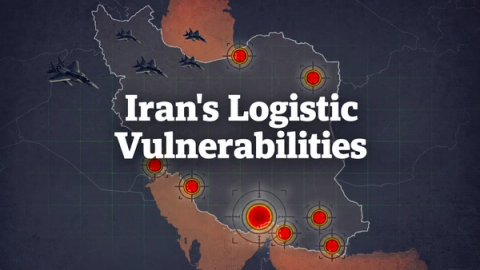
Arzeshi groups have been campaigning on social media for “True Promise 3”, a retaliation for Israel’s 26 October attack on multiple locations in Iran, and accusing authorities of negligence of their promise not to leave it unanswered.
Around 50 vigilantes linked with these groups staged a protest in Tehran Sunday demanding that authorities take military action against Israel. “We order the authorities to raze Tel Aviv and Haifa to the ground. If you don’t attack, we, the people who voted for you, will get rid of you,” the speaker of the rally declared.
Marandi is a frequent voice in international media defending Tehran’s policies as well as in the state-run television currently controlled by ultra-hardliners.
He wrote: "Slight problem. The US Al Udeid air base in is tiny Qatar. In case of aggression, the natural gas facilities and infrastructure in Qatar will be totally destroyed. Hence, there will be no natural gas from Doha. Hence, there will be no Qatar. Things won’t end there either…”