Iranian missiles reach Israel - live feeds
Iranian missiles were fired into Israel and were intercepted in mid-air, according to live streams carried by news broadcasters.
Iranian missiles were fired into Israel and were intercepted in mid-air, according to live streams carried by news broadcasters.



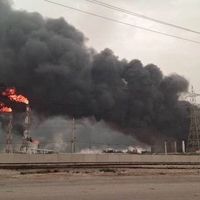
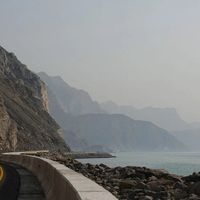
At least six people including a local Revolutionary Guards commander were killed and several others were injured in a series of attacks on Tuesday in Iran’s Sistan-Baluchestan province.
The deadly incident in the restive southeastern region was the latest in a string of attacks on security forces widely blamed on armed Sunni militants.
Unknown assailants killed an IRGC commander in the city of Bent named by state media as Parviz Kadkhodaei in an armed attack on Tuesday. The attack also claimed the lives of Yousef Shirani, head of the city council, and two conscript soldiers.
In a separate incident, two officers were killed when armed men opened fire on a police vehicle in Khash County.
Meanwhile, Haalvsh, a group monitoring rights violations in the region, reported that armed men targeted a military vehicle on the Jakigur highway in Rasak County. Shortly after, the insurgent Sunni Baluch group Jaish al-Adl claimed responsibility for the attack.
Recent attacks in Sistan and Baluchestan have intensified.
On Monday, Reza Shojaei, commander of the Sistan-Baluchestan Border Guard, announced that Mehdi Balouchi, a member of the Jakigur Border Guard unit, was killed in a clash with unidentified armed individuals, while two others were injured. The attack occurred during the transport of "food rations and support for border guards" near Pashamak village in Rasak County, according to a local news report.
On Sunday, domestic news agencies reported sporadic clashes across the province, with unknown gunmen involved in multiple shootings.
Jaish al-Adl, a group labeled a "terrorist organization" by Iran, Pakistan, and the United States, claimed responsibility for all the attacks.
The Islamic Republic News Agency (IRNA) reported the death of Amir Mohammad Amiri, an Iranian border guard in the Makki Hirmand area, in a clash with armed individuals. In another attack, Ramin Velayati, a member of the Special Forces Command in Khash County, was killed by gunmen. Gunmen also opened fire on a police station in Iranshahr, injuring at least one police officer.
The escalation follows heightened tensions in mid-January when the Revolutionary Guards launched a missile strike on Jaish al-Adl positions within Pakistan.
The incident strained relations between Iran and Pakistan, leading to retaliatory actions by Islamabad within Iranian borders. However, both nations have since declared that tensions have been resolved.
Iran has launched missiles at Israel, the Israeli military said in a statement on Tuesday.
A senior advisor to Iran's supreme leader has hinted at a potential response to Israel, saying people would know what it is after it’s carried out.
"The Islamic Republic's plan to respond to Israel is a practical measure that will be determined after implementation,” said Ali Shamkhani, Khamenei's political advisor.
Iranian officials have been quiet so far on the US assessment that Tehran might be about to launch a large-scale ballistic missile attack on Israel.
The European Union on Monday called for an immediate ceasefire to stop the escalating conflict between Israel and Hezbollah a day after Israeli forces invaded Lebanon to confront the Iran-backed group.
"The EU renews its call for an immediate ceasefire between Hezbollah and Israel," European Union foreign policy chief Josep Borrell said in a post on X.
"Any further military intervention would dramatically aggravate the situation. Arms should now be silenced and the voice of diplomacy should speak and be heard by all."
Jews in Iran are being pressured by the authorities to publicly mourn the death of Hezbollah leader Hassan Nasrallah, known for his antisemitic ideology.
Nasrallah, head of Iran's largest proxy, made multiple statements against Jews and Israelis over the years, most famously declaring that "If we searched the entire world for a person more cowardly, despicable, weak and feeble in psyche, mind, ideology and religion, we would not find anyone like the Jew. Notice, I do not say the Israeli.”
The Lebanese Shia militant leader also said in 2002 that "If they [the Jews] all gather in Israel, it will save us the trouble of going after them worldwide."
Rabbi Pini Dunner, from the Beverly Hills Synagogue which has a huge Iranian community, told Iran International that “Iran's Jewish community lives in fear of persecution if they don't align themselves with the regime's warped views."
The community, the Middle East's largest outside Israel with around 5-8,000 remaining, was compelled to issue a statement criticizing Israel and America for the killing of the Hezbollah leader.
"What choice do they have? It tells you everything you need to know about how unsafe and insecure the Jewish community feels in Iran," he added.
Tehran-born Beni Sabti, who now lives in Israel, first located the pro-Nasrallah notices on Telegram from the leadership of the Jewish communities in Iran. The Jewish community of Isfahan wrote that it “congratulates and condoles the martyrdom of Sheikh Hassan Nasrallah, the Secretary General of Hezbollah in Lebanon, who was martyred in the brutal operation of the Zionist regime.”
Sabti, a research fellow at Israel's National Institute of Security Studies, said that the Tehran Jewish community also published a similar announcement as the community in Isfahan.
The term dhimmi has been applied to Iranian Jews and Jews living in Muslim-majority nations in the Arab world to capture their servile position where they are legally required to obey Islamist supremacy.
The statement from the Isfahan Jewish community called for “severe retribution” against the actions by Israel against Hezbollah in Lebanon in the last two weeks, including the assassination of the long-time leader.
Iran's Jews numbered around 80,000 until the 1979 creation of the Islamic Republic.
The Iranian-American journalist, Karmel Melamed, an expert on Persian Jews, told Iran International "the majority of them fled Iran and now live in America or Israel”.
Melamed said ”It shouldn't surprise anyone that the mullah regime in Iran has paraded out Iran's Jews and other religious minorities from the country to supposedly mourn the death of the terrorist Nasrallah because this has been their long standing propaganda tradition to do so for the last 45 years.”
He explained that “For nearly five decades the Ayatollahs have either paid off certain Jewish leaders in Iran or used duress against Jews and other religious minorities in Iran in order to have them participate in their sham public events that promote the regime's sick radical Islamic ideology or advance their false persona in the international news media."
While Iran legally recognizes the three Abrahamic faiths, Jews, like other minority groups in the Shia state, have systematically been oppressed. “In reality, this Islamic regime in Iran has treated Jews and other non-Muslims as third class citizens with limited to no rights and created an environment of extreme hostility, imprisonment or confiscation of their properties, to the point where the vast majority of non-Muslims in Iran have fled Iran since 1979," Melamed added.
Alireza Nader, an Iranian-American expert on minorities in Iran, told Iran International that the Jews of Iran are "a small and vulnerable group ... forced to show sympathy for the regime and its allies. Otherwise they could be in great danger.”