Iran's foreign minister Abbas Araghchi during his parliamentary confirmation in parliament in August.
Iran’s new Foreign Minister Abbas Araghchi told state television that Tehran will fully back its ‘Resistance Front’ in the region by providing “unlimited support,” as Israel tries to fully defeat the Palestinian Hamas.
“The government’s policy is to provide unlimited support to the resistance. We will support the resistance front, which has established itself as a reality in the region. The regime [Israel] has so far failed to achieve its main goal of destroying Hamas,” Araghchi stated.
However, the foreign minister signaled that Tehran is reluctant to get directly involved in a wider conflict. According to Tasnim website affiliated with Iran’s Revolutionary Guard, he maintained that Iran would continue its support for the Resistance Front but “remains vigilant against traps that might be set to draw us into the conflict. We are monitoring regional developments with intelligence and awareness.”
Speaking about foreign policy, Araghchi highlighted relations with neighbors, in the absence of a real chance to resolve issues with West at this juncture. “We seek comprehensive and balanced diplomacy and aim to expand our communications. My colleagues are currently planning. When a head of state makes their first visit to a country, it signifies importance to us. The message of the President’s visit to Iraq was that our priority is first and foremost our neighbors.”
The foreign minister did not indicate any current discussions with the United States, noting that the Americans are in the midst of an election season. However, he announced that Iran is ready to engage in discussions with Europe "on the basis of equality."
“Europeans need to understand Iran’s concerns. If they have concerns, so do we. We have issues with Europe regarding sanctions and economic matters. Using failed tools is not the solution. Various sanctions were imposed on the nuclear program before, but they had to come to the negotiating table. It is clear that sanctions have failed,” Araghchi argued.
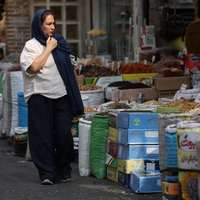
Despite the occasional denials by Iranian officials about the impact of sanctions, Iran’s economic crisis continues to deepen. Bread prices were more than doubled recently and politicians and experts warn of a much larger budget deficit in the coming fiscal year starting in March 2025.
Araghchi talked about the latest contentious issue of ballistic missile deliveries to Russia that have seriously alarmed the United States and its European allies, who have issued more targeted sanctions.
Araghchi appeared to be using the issue as a quid-pro-quo with Europe, not outright denying the accusation. “They are concerned about Iran exporting advanced weapons to Ukraine. If Europe is genuinely concerned, the solution is dignified dialogue. It is not reasonable to expect that their concerns will be addressed unilaterally. We are ready to engage in dialogue with Europe. Currently, establishing relations with Europe is not a priority for us,” the Iranian foreign minister stated.
Earlier this month, Western government began warning that Iran was delivering 200 short-range Fath-360 ballistic missiles to Russia for use in its war against Ukraine. Tehran earlier issued vague denials, but some lawmakers confirmed the news. Also, Iran's delivery of thousands of kamikaze drones to Russia since mid-2022 make the Western accusation more credible. The use of these drones against non-military targets are well documented and even Tehran, after some denials, has claimed that the weapons were delivered before Russia’s invasion of Ukraine.
A member of Tehran’s City Council has revealed that 30 priceless paintings loaned from Imam Ali Religious Arts Museum have disappeared.
Nasser Amani has estimated the value of just one of the paintings at around 300 billion rials (approximately $500,000).
The announcement came during a session of Tehran's City Council, where Amani emphasized the council’s legal duty to oversee municipal assets. He revealed that the artworks were lent to an unidentified entity outside the municipality with official documentation, allegedly for an exhibition that never took place. Despite repeated inquiries, there has been no clear explanation or response from the authorities responsible.
“We’ve tried to follow up on this, but not only have we not received a report, but no one has provided a clear answer about where the valuable artworks are,” Amani said during the session. His comments reflect the frustration within Iran over the negligence and corruption that seems to plague the management of the country's cultural heritage.
This latest incident is part of a pattern involving the misappropriation of Iran’s historical and artistic treasures under the Islamic Republic. Earlier scandals include the theft of 48 handwoven carpets from the Sa’dabad Palace between 2013 and 2016. The carpets, considered national treasures, were reportedly moved to a private residence in a pickup truck, according to eyewitness accounts.
As more instances of missing or mishandled cultural assets emerge, critics argue that the Iranian government’s incompetence, corruption, and indifference are allowing the nation’s heritage to disappear.
Some have accused the government of deliberately neglecting cultural property, with suspicions that officials might be profiting from the "disappearances" through illicit sales on the black market.
The lack of transparency in the handling of the assets further complicates matters. As in the case of the Imam Ali Religious Arts Museum, government officials remain tight-lipped, providing little to no explanation for the missing artworks.
The latest scandal comes at a time when Iran’s cultural institutions are already under immense strain. Years of economic sanctions, political instability, and internal mismanagement have left many of the country’s museums and historical sites in disrepair.
Earlier this year, Iran International published a leaked letter obtained by the hacking group Black Reward, revealing that gold coins confiscated by the government following the 1979 Revolution from Imam Sadiq University are still unaccounted for.
While the Iranian government continues to tout its economic and military initiatives, many argue that it has neglected its responsibility to safeguard the nation’s cultural and historical heritage.
Cultural activists are now demanding an investigation into the missing paintings and a full accounting of Iran’s lost cultural treasures.
A senior member of the Saudi royal family has accused Iran of breaching the terms of the 2023 agreement to resume ties as it continues to arm and fund armed militant groups in the region.
Turki al-Faisal, a former Saudi intelligence chief, said the West must also do more to deter the Iran-backed Houthi terror group in Yemen amidst the Red Sea blockade as the group holds the world "hostage".
Houthis began attacking international shipping in the Red Sea region last fall after Iran's Supreme Leader Ali Khamenei called for blockading Israel. They have expanded their reach far beyond Yemen disrupting a key global trade route.
Speaking at Chatham House in London, al-Faisal said on Friday: “The Houthis now hold the world as hostage in the Bab al-Mandab entrance to the Red Sea, and yet Iran is not showing that it can do something there if it wanted to, and the kingdom would have expected Iran to be more forthcoming in showing not just to us but to others that it can be a positive factor in securing stability and removing differences not just with Saudi Arabia but the rest of us.”
Turki Al-Faisal. File photo
Dozens of projectiles have been fired at commercial vessels and dozens of hostages taken amid the blockade initially aimed at forcing an Israeli ceasefire in Gaza.
Iran also continues to destabilize countries including Syria, Lebanon and Iraq, which al-Faisal said had broken the terms of the 2023 agreement.
However, according to the UK's The Guardian, al-Faisal has said that the West's "pinprick bombings" carried out by the UK and US on Houthi infrastructure, is not enough to quash the group, armed, funded and trained by Iran.
In a frank admission, al-Faisal said the kingdom is disappointed in Iran's having broken its promise to limit the influence of its terror groups in the region, agreed upon last year when the two countries resumed diplomatic relations after several years' hiatus.
During the session at Chatham House, he said more must be done by the global community to combat the Red Sea blockade which began in November.
“We have seen the deployment of European and US fleets along the Red Sea coast and more can be done there to interdict the supply of weaponry that comes to the Houthis from Iran,” he said.
“Putting pressure on Iran by the world community can have a positive impact on what the Houthis can do in launching these missiles and drones to hit international commerce.”
On Sunday, a missile penetrated Israel's air defence systems, threatening once again, to inflame tensions amidst the war in Gaza which has seen Iran's proxies in the region surround Israel since the Hamas invasion of the Jewish state on October 7.
A US Navy warplane on the deck of aircraft carrier Eisenhower in the Red Sea in December 2023
A former Royal Navy Commander told Iran International’s podcast Eye for Iran that Iran is winning against the Americans in the Red Sea, through their proxy the Houthis.
Tom Sharpe, who worked alongside the Americans in the Red Sea for two decades, witnessed their might as the most powerful navy in the world but in spite of that, under the tutelage of Iran, the Houthis have not been deterred by the limited US defensive and allied retaliatory actions.
“They're achieving their ends, all of them, and we're achieving none of ours. We're spending millions and millions of dollars on not winning. It's a real problem," he warned.
Critics say the US's risk aversion has meant that just like its kid gloves approach to Iran, the deterrence to its terror groups such as the Houthis is failing.
"There are definite strategies that were put forward, but our National Command Authority decided that those - I would call more aggressive postures and more aggressive strikes - was not something we wanted to challenge," Miguez said last month.
Jason Brodsky, the policy director for United Against Nuclear Iran (UANI), agreed that the Biden administration's inability to deter Iran has led to an emboldened stance not only from the Islamic Republic but also, its proxies.
“We have a deterrence deficit with Iran. They have been attacking our forces. They have been attacking commercial vessels, with impunity since October 2023,” he said.
Touted as a diplomatic breakthrough, Iranian President's first trip to Iraq last week aimed high on economics and security but seemed to hit more roadblocks than milestones.
Masoud Pezeshkian’s visit to Baghdad was steeped in high expectations, underscored by the announcement that over a dozen agreements were signed with Iraq. Yet, behind the fanfare, sources close to the negotiations revealed to Iran International that the economic objectives of the visit largely fell short.
Despite signing 14 memoranda of understanding, which signal some consensus on several fronts, the absence of concrete cooperation agreements and joint statements suggested a lack of substantive progress.
A critical point of contention emerged during Pezeshkian's meeting with Iraqi Foreign Minister Fuad Hussein. Informed sources disclosed that Pezeshkian proposed settling Iraq's substantial debt to Tehran through a joint currency mechanism, modeled after the Russia-Iraq financial arrangement.
However, the proposal was met with firm resistance from the Iraqi side, with Hussein arguing that such an approach could destabilize the value of the Iraqi dinar. The meeting, which extended 40 minutes beyond its scheduled time, reflected the broader challenges Pezeshkian faces in navigating Iraq's cautious stance toward Iran's economic overtures.
Iran’s economic relationship with Iraq has long been fraught with challenges, primarily stemming from the complex interplay of sanctions and regional politics. Iran exports critical resources such as natural gas and electricity to Iraq, making it a significant energy supplier to its neighbor. According to Iranian domestic media, Iraq ranks as the second-largest destination for Iranian exports after China, with bilateral trade currently valued at approximately $12 billion.
Since 2018, US banking sanctions have complicated Iraq's ability to settle debts with Iran, despite routine waivers under both the Trump and Biden administrations permitting energy imports. The exact amount owed by Iraq remains unclear, with conflicting reports on its settlement status.
Iranian president Masoud Pezeshkian looks on, as he meets with community members, academic figures, tribal sheikhs and officials during his visit, in Basra, Iraq, September 13, 2024.
Unfulfilled promises and divergent visions
Pezeshkian's broader vision of fostering regional unity through the removal of borders between Islamic countries, analogous to the European Union's Schengen Agreement, found little traction among Iraqi leaders.
His call for a borderless Islamic bloc, first proposed in a meeting with the Iraqi President and later reiterated in public speeches, was met with a lukewarm response at best. The Iraqi leadership, probably wary of Iran's expansive regional ambitions, showed little enthusiasm for a concept that would likely diminish their sovereignty and complicate Iraq's delicate balancing act between competing regional powers.
The lack of a joint statement at the conclusion of Pezeshkian’s visit further underscored the disconnect between the two nations. Typically a symbolic gesture of diplomatic alignment, the absence of such a communiqué hinted at underlying tensions.
Security concerns and engagement with Kurdish leaders
While economic objectives dominated the official narrative of Pezeshkian's visit, security considerations were equally pivotal, particularly in relation to Iraq's autonomous Kurdistan region.
Pezeshkian’s personal touch, including his ability to converse in Kurdish and shared cultural ties, played a notable role in easing some of the tension that had been inflamed by recent IRGC military actions against Kurdish groups.
President of Kurdistan Region in Iraq, Nechirvan Barzani welcomes Iran's President Masoud Pezeshkian at Erbil International Airport, in Erbil, Iraq, September 12, 2024.
Pezeshkian's engagements with Kurdistan’s Prime Minister Masrour Barzani and veteran Kurdish leader Masoud Barzani underscored a strategic attempt to mitigate long-standing political misunderstandings and foster a more cooperative relationship. However, this softening of ties appeared to rely heavily on Pezeshkian’s personal rapport rather than a concrete shift in policy or security strategy.
While Pezeshkian’s personal diplomacy may have momentarily eased tensions with Kurdish leaders, the broader objectives of his visit, to secure economic gains and bolster regional influence, remain unfulfilled, casting a reflective light on the nuanced and often challenging path ahead for Iran's new administration on the international stage.
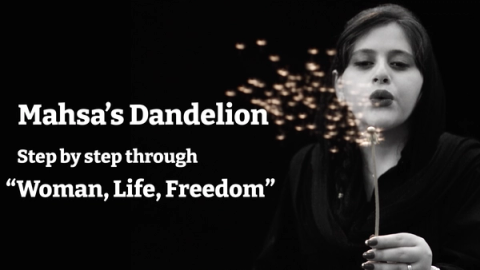
Iranian Nobel Peace Prize laureate Narges Mohammadi on Sunday urged the United Nations to criminalize gender apartheid, in a message from prison on the second anniversary of Iran's 'Woman, Life Freedom' movement.
The protests erupted after Mahsa Amini, a 22-year-old Kurdish-Iranian woman, died in the custody of Iran's so-called "morality police" on September 16, 2022. She had been arrested in Tehran for allegedly violating the country's mandatory hijab law. Her death, which came amid allegations of police brutality, ignited months of nationwide protests in Iran, led predominantly by women and young people demanding greater rights and freedoms.
"The 'Woman, Life, Freedom' movement has redefined the people's role in confronting tyrannical rule, imposing a new understanding that instills fear within this theocratic regime," Mohammadi said in her letter from Evin Prison.
On the second anniversary of the “Woman, Life, Freedom” movement, Mohammadi's letter said, "we reaffirm our commitment to achieving democracy, freedom, and equality and to defeating theocratic despotism."
The Iranian Nobel Peace Prize laureate's letter was published shortly after thirty-four women prisoners including Mohammadi went on hunger strike in Evin Prison to mark two years since protests erupted in 2022.
In her Sunday letter, Mohammadi urged the United Nations "to end its silence and inaction in the face of the devastating oppression and discrimination by theocratic and authoritarian governments against women by criminalizing gender apartheid."
"The liberation of women from the grip of oppression and discrimination is essential for empowering the force that drives peace and democracy," she said.
The concept of gender apartheid emerged from Afghan women's human rights defenders in response to the Taliban's suppression of women's rights in the 1990s.
However, Iranian activists have been joining the campaign after widespread protests against compulsory hijab laws which have seen brutal crackdowns by morality police, including the deaths of women including Mahsa Amini.
Women such as Iranian-American dissident activist Masih Alinejad, have played a pivotal role in amplifying and broadening the campaign's reach. She has been the subject of multiple assassination attempts abroad by the regime as it continues to target dissidents both at home and on foreign soil.
In June, human rights group Amnesty International joined a campaign against gender apartheid amid continued nationwide oppression in Iran and Afghanistan. The group says it aims to strengthen efforts against “institutionalized regimes of systematic oppression and domination imposed on the grounds of gender.”
In a show of global solidarity, Iranians staged protest rallies across cities in Europe and Australia on Sunday, as communities in the United States also planned their own gatherings in different cities.
These protests mark the second anniversary of Mahsa Amini's tragic death in police custody, which sparked the 2022 “Woman, Life, Freedom” uprising in Iran.
Mahsa Amini, a 22-year-old Kurdish-Iranian woman, died after receiving fatal injuries in the custody of Iran's so-called "morality police" on September 16, 2022. She had been arrested in Tehran for allegedly violating the country's mandatory hijab law. Her death, which came amid allegations of police brutality, ignited months of nationwide protests in Iran, led predominantly by women and young people demanding greater rights and freedoms. The protests rapidly spread across the country, calling for the end of mandatory hijab laws and the broader Islamic Republic system.
Sunday's protests serve as both a tribute to Amini and a continuation of the calls for justice that arose from her death. Demonstrators gathered in major European cities, including Berlin, Paris, Hamburg, and the Hague to name a few. They carried photos of Amini, raised banners that read “Woman, Life, Freedom,” and chanted slogans against Islamic Republic, condemning its repressive tactics and ongoing human rights abuses. Protests were also held in London and Sydney, Australia.
Protesters filled the streets, waving the lion and sun pre-Islamic Republic national flag and calling for governments to increase pressure on Tehran. Protestors also demanded from International leaders to list Iran's Revolutionary Guards (IRGC) as a terrorist entity in Europe, United Kingdom and Australia.
Similar global rallies were held on Saturday ahead of Amini's anniversary.
Meanwhile in Iran, strikes were held across at least 11 cities in Western Azarbaijan and Kurdistan provinces.
Security forces banned Amini's family from leaving their home to visit her burial site on her anniversary, and threatened them with arrest.
There was heavy security in many cities in western Iran to prevent any street gatherings. The government arrested 22,000 people during the protests after Mini's death and executed several young men who had taken part in the street rallies in 2022.