Houthi supporters during a rally in Sanaa, Yemen May 31, 2024
Iran-aligned Houthis in Yemen have intensified attacks on international shipping, while the Lebanese Hezbollah, Iran's most powerful proxy force, launched volleys of missiles against Israel over the past week.
UK maritime agencies reported on Sunday that two ships caught on fire after being hit by projectiles off Yemen's Aden, showing that Houthis controlling northern Yemen and supported by Tehran are determined to launch multiple attacks each day against international shipping.
The attacks began in mid-November after Iran’s Supreme Leader Ali Khamenei called on Muslim nations to blockade Israeli trade.
Hezbollah, controlling the southern region of Lebanon bordering northern Israel, has also intensifiedits rocket and missile attacks on Israel, prompting fears of an all-out war, as Israeli patience runs out with the worsening security situation.
Smoke rises above south Lebanon following an Israeli strike amid ongoing cross-border hostilities between Hezbollah and Israeli forces, as seen from Israel's border with Lebanon in northern Israel, May 5, 2024.
The twin flare-ups coincided with a Western initiated censure of Iran at the International Atomic Energy Agency (IAEA) Board of Governors meeting in Vienna.
A resolution tabled by Britain, France and Germany, and reluctantly backed by the United States, demanded Tehran to cooperate with the UN nuclear watchdog. Such a resolution could be the prelude to a move by Western powers to refer Iran’s case back to the UN Security Council, which could lead to the reimposition of UN sanctions.
Days before the censure resolution, the three European powers had writtento the Security Council detailing Iran's violationsof its 2015 nuclear deal, a step diplomats said aimed to pressure Tehran to resolve the issue diplomatically and to avoid reimposing UN sanctions.
The British, French and German letter did not explicitly threaten to "snap back" United Nations sanctions, but it noted that UN Security Council Resolution 2231, which enshrined the nuclear deal and provided that power, expires on Oct. 18, 2025.
The flag of the International Atomic Energy Agency (IAEA) flutters in front of the agency's headquarters in Vienna, Austria, June 3, 2024.
Amidst Iran's snap presidential election campaign, the reaction to the Western move has been largely controlled. However, many outside the circle of ruling hardliners are concerned about the ramifications of the IAEA resolution.
Kourosh Ahmadi, a former Iranian diplomat based in New York,told Entekhab newspaper in Tehran, that the European move could be a prelude to tabling Iran’s case in the Security Council, because that will become impossible after Resolution 2231 expires in 2025. However, Ahmadi added that at this juncture he believes the West is simply applying pressure on Iran.
As Iran’s presidential campaign kicks off in earnest following the Guardian Council's announcement of approved candidates in the coming days, the elephant in the room remains the nuclear issue and the urgent need to lift US sanctions.
For the average Iranian citizen, the prolonged economic crisis has made the main question whether there will be a reduction in sanctions. This would require Iran to demonstrate real flexibility, a decision that ultimately lies with Khamenei rather than the future president. However, the outcome of the highly regime-controlled election could provide hints about his thinking.
Commentators in Tehran tell the local media that former nuclear negotiator, Saeed Jalili, is a strong candidate because he enjoys the backing of hardliners. Two other strong candidate are Parliament Speaker Mohammad Bagher Ghalibaf and former Speaker Ali Larijani, both enjoying the backing of the wider conservative circle.
While Jalili is seen as a risky persona because of his staunch opposition to any deal with the West, Ghalibaf and Larijani are perceived as more ‘moderate’ figures. All three, however, are loyal to Khamenei.
If the election is managed in a way that Jalili becomes president, it would send a more negative message regarding relations with West, while the election of Ghalibaf or Larijani might be interpreted as a less provocative choice. The election of a hardliner other than Jalili is also possible, but overall, the new president must follow what is decided in Khamenei’s headquarters.
Iran's Acting FM Ali Bagheri speaking to CNN TÜRK, June 8, 2024.
Iran's acting Foreign Minister Ali Bagheri Kani issued renewed warnings against Israeli military operations in Gaza and potential actions in Lebanon through its proxy groups.
Bagheri, speaking to CNN TÜRK, said, "They [Israel] should not forget the defeat in 2006. If they want to fall from the Gaza swamp into the Lebanese well, we do not recommend it," he stated, referring to the second Lebanon war which came to an end after UN Resolution 1701.
Bagheri's comments were made at the Council of Foreign Ministers of the Economic Cooperation Organization of the Eight Developing Countries (D-8), during which he called for an outright boycott of Israel and levied heavy accusations against Western nations, particularly the USA and Europe, accusing them of abetting what he referred to as a "massacre" in Gaza.
The Lebanese terror group Hezbollah, Iran's largest and most powerful proxy, has recently intensified its conflict with Israel, which was triggered after the October 7 attack on Israel by Iran-backed Hamas, the Lebanese proxy joining the bombardment of Iran's archenemy. Rising numbers of drones and missiles are being launched towards Israeli territory with mass fires being ignited across northern Israel. The conflict in the north has left 100,000 Israelis displaced and similar numbers displaced from southern Lebanon.
In response, Israeli Prime Minister Benjamin Netanyahu declared on Wednesday morning that Israel is "prepared for an extremely powerful action in the north" to counter the escalating assaults.
Israeli intelligence estimates indicate that Hezbollah has stockpiled approximately 150,000 rockets and missiles in southern Lebanon, all poised to target Israel.
File photo of Swedish police at a knife attack site in Vetlanda, Sweden, March 3, 2021
The Swedish Ministry of Foreign Affairs has admitted that Iran's terror plots across Europe and its involvement with criminal networks in Sweden are “deeply concerning.”
The ministry said the revelations of plots on Swedish soil and abroad using Swedish crime gangs are being taken "very seriously".
"It is deeply concerning that a foreign power, in this case Iran, has allegedly used criminal networks to commit or instigate crimes in Sweden. The Ministry for Foreign Affairs has summoned Iran’s chargé d’affaires to stress how seriously we are taking this information," Swedish Ministry for Foreign Affairs’ Press Office told Iran International.
It follows recent reports from the Swedish Security Service (SÄPO), which revealed that Iran-backed terror plots aim to target Iranian dissidents in addition to Sweden's Jewish and Israeli community.
In January, an explosive device, said to be a hand grenade, was found inside the grounds of the Israeli Embassy in Stockholm and destroyed by the Swedish national bomb squad. The suspects were found to be part of a gang known as Foxtrot, hired under the behest of Tehran, according to Israeli intelligence agency Mossad.
In retaliation to the Swedish revelations, Iran summoned Sweden's temporary charge d'affaires last Saturday, denouncing the claims as "baseless" and influenced by Israel.
Last month,Mossad exposed a string of European plotsfunded by Tehran against Jewish and Israeli targets, including recent terror attacks at the Israeli embassy in Belgium.
Farhad Zare, the brother of slain Iranian protester Milad Zare, was arrested on Thursday and transferred to Babol’s Mati Kola Prison in the central-northern part of the country in Mazandaran province.
According to pro-bono Dadban Legal Group, Farhad will be serving a one-year sentence simply for advocating for justice for his brother Milad.
In April, Babol’s Revolutionary Court convicted Farhad to one year in prison.
Milad was shot by security forces at the back of his head on September 20, 2022, during Iran’s Woman, Life, Freedom, uprising in Babol, and reportedly died in hospital. Milad was killed only days before his birthday.
Farhad Zare had been repeatedly summoned and threatened by security agencies following his brother’s death.
Last month, the Babol Revolutionary Court sentenced him to one year in prison.
The charge against Farhad was reportedly “propaganda against the Islamic Republic”, a charge commonly used by the Iranian authorities against slain protestors’ families and activists.
Iran’s authorities have increasingly placed pressure on slain protestors' families, often building cases against them to stop them from seeking justice.
Many such families have been arrested since the uprising. Last year, at least 70 family members of slain protestors, including nine children under the age of 18 were detained between March - September 2023, according to Human Rights Organization Hengaw. Farhad was among those arrested in September 2023.
Farhad’s family has been subject to ill-treatment and harassment at the hands of the Iranian authorities. Following Milad’s death, videos emerged online of heavy state security forces at a mourning ceremony for the 40th day after Milad’s death.
Amnesty International has condemned the harassment of slain protestors' families, urging the International community to call on Iranian authorities to respect the rights of freedom of expression of the victim’s families, and “quash all unjust convictions and sentences against them and drop all charges against those facing reprisals for speaking out.”
The court session for jailed Iranian Nobel Peace Laureate Narges Mohammadi was held in branch 29 of the Revolutionary Court of Tehran without her presence.
The court convened on Saturday to address the new charges of “propaganda against the state” brought upon Mohammadi because of her statements on sexual harassment and assault on Dina Ghalibaf and boycotting parliament elections held in March according to her lawyer Mostafa Nili.
Nili announced on Xthat he attended the court session as Mohammadi’s lawyer defending her case without her presence.
Mohammadi's Instagram page also published a post stating that she did not go to court and that her trial session was held without her.
Last week, it was announced on her Instagram page that she would not be attending the court session and an online petition was started demanding a public trial.
When the new charges were first announced in May, Mohammadi announced that she would only attend the court if the session was held in a public trial.
“You are obligated to hold a public trial with the presence of independent journalists, women's rights activists, human rights advocates, and my lawyers. I wish to be prosecuted in court with the testimony of witnesses of the sexual assaults committed by the Islamic Republic regime against women,” Mohammadi stated in a message sent from prison published on her Instagram page.
Her demand for a public trial was supported by 36 female political and ideological prisoners at Evin prison.
Before this, Mohammadi had faced three court trials for recounting incidents of sexual harassment and assault against detainees. Saturday’s court session marks her fourth trial for speaking out against such violence.
In April Iranian student and journalist, Dina Ghalbaf disclosed on X that she had been sexually assaulted by morality police officers during her arrest over alleged non-compliance of mandatory hijab laws at Sadeghiyeh metro station in Tehran.
Following this disclosal Ghalibaf was arrested and detained at Evin prison. Media affiliated with Iran’s judiciary, Mizan News denied Ghalibaf’s claims of sexual assault. Days after Ghalibaf’s detainment, in a message sent from Evin prison Mohammadi supported Ghalibaf’s claims and condemned the sexual assault against her.
As pointed out by Mohammadi’s lawyer the new charge brought against her additionally relates to her statements on Iran’s legislative elections held in March.
In February this year, Mohammadi called for a boycott ofthe March 2024 legislative elections, asserting that the elections were illegitimate and deserved both national sanctions and global condemnation.
Following Saturday's court session, Ghalibaf who was recently released from Evin prison took to social media to write in support of Mohammadi, adding that she had demanded for CCTV footage to be released.
Sharing a photo of her hand showing bruises caused by the violence she endured during her arrest, Ghalibaf wrote:
“Today is my birthday. I don't like this birthday and I can't celebrate it because on the very same day Narges Mohammadi was tried for publishing an audio file of what happened to me inside the Sadeghieh metro police station,” Ghalibaf stated.
Ghalibaf continued: “In all my statements, I have referred to the videos inside the Sadeghieh Metro Police Station and have repeatedly asked for videos to be shown that strongly documented my statements. I even identified the perpetrating agent in the video.”
Additionally, on Saturday, formerly jailed scholar Sedigheh Vasmaghi condemned Iran’s judiciary for prosecuting Mohammadi and demanded that instead of Mohammadi, the perpetrators of sexual violence should be prosecuted instead.
“When Dina Ghalibaf was brought to the women's ward at Evin, I was there. I heard her statements among other prisoners. She spoke of the behavior of the officer who arrested her. I also spoke with her individually and asked her about a few things. I urge that officer and others like him be prosecuted, rather than Narges Mohammadi, who raised her voice in objection,” Vasmaghi stated in an Instagram post.
EU foreign policy chief Joesep Borrell visiting Tehran in June 2022, after the Russia invasion of Ukraine, and the collapse of Iran's nuclear talks.
Iran’s censure at the International Atomic Energy Agency (IAEA) Board of Governors meeting this week underscored the ongoing tensions surrounding the country's nuclear program.
The IAEA Board of Governors passed a resolution urging Iran to increase its cooperation with the agency and reverse actions that have hindered inspectors, despite concerns that Tehran might respond with further atomic escalation. This resolution, drafted by the European troika, Britain, France and Germany known as E3, and reluctantly supported by the US, passed with 20 votes in favor, two against (Russia and China), and 12 abstentions.
In his remarks in May, IAEA head Rafael Grossi had raised alarms over Iran's threats to develop nuclear weapons while expressing hope for serious dialogue. This juxtaposition highlights a critical issue: Iran has a history of using negotiations as a strategic tool to advance its nuclear capabilities, extract concessions, and avoid punitive measures, all while continuing its covert operations and support for militant groups.
Over the past 30 years, Iran's negotiation strategy has been marked by deception and delay. Every diplomatic engagement with the West has been leveraged to buy time, stop damning UN resolutions for human rights violations, enhance its nuclear technology, and gain economic and political concessions without genuinely abandoning its nuclear ambitions.
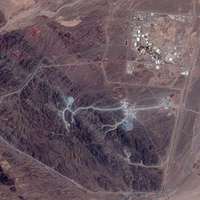
In the early 2000s, revelations about undeclared nuclear facilities in Natanz and Arak triggered international concern and led to negotiations. However, Iran's responses were characterized by stalling tactics. While Tehran engaged in talks (in 2000s and 2010s) and agreed to suspend uranium enrichment temporarily, it simultaneously continued covert activities and expanded its nuclear infrastructure. These negotiations provided Iran with the breathing room needed to develop its capabilities further while presenting a facade of cooperation.
Seyed Hossein Mousavian, a former Iranian nuclear negotiator, provides an illustrative example of this tactic in a 2005 interview with Iran's National TV. Mousavian explained that in 2003, Iran faced a 50-day ultimatum to suspend its enrichment activities. Instead of complying, Iran entered into negotiations with the IAEA and Europe, which extended the deadline and bought Iran two years to complete its projects in Esfahan and Natanz. During this period, Iran advanced its nuclear capabilities, gained permission to join the World Trade Organization (WTO), and secured international guarantees for its security, national sovereignty, non-intervention in its internal affairs, and protection against invasion. (Minute 15:37 to End)
Another example of this strategy has been particularly evident in the context of the Joint Comprehensive Plan of Action (JCPOA) and other diplomatic efforts. The JCPOA, signed in 2015, was hailed as a landmark achievement aimed at curbing Iran's nuclear program. However, even during these negotiations, Iran's intentions were suspect. The deal provided Iran with significant economic relief and lifting of sanctions, yet evidence suggests that Iran continued to advance its nuclear research and missile programs clandestinely.
In 2018, stolen Iranian nuclear documents seized by Israeli intelligence demonstrated that Iran's nuclear program was more extensive than previously known, with plans to build up to five nuclear weapons. These revelations highlighted Iran's strategy of deception and its efforts to advance its nuclear capabilities under the guise of peaceful purposes. These documents prove that even before President Trump exited the JCPOA, Iran was dishonest about its nuclear activities. Also, it continued developing its nuclear capabilities, building missiles, and arming militant groups in the Middle East, some listed by other countries as terrorist organizations.
The repercussions of these activities were starkly evident in the October 7 attack on Israel, the Houthi disruptions of vessels in the Red Sea, and the Hezbollah attacks on Israel from Lebanon. The international community's response has been mixed, with European countries often seeking to salvage the deal through concessions, inadvertently reinforcing Iran's strategy of using negotiations to gain time and advantages.
Notably, Iran's nuclear negotiators, such as Mousavian and Javad Zarif, were trained by Ali Akbar Velayati, who has regularly expressed a deep-seated animosity toward the West and its liberal values and has been one of the main figures in Iran's foreign policy for the past four decades.
Many of these negotiators lived and studied in the West, gaining a profound understanding of Western political dynamics and strategies. Iran's negotiators are well-versed in the concept of carrot and stick, frequently employing it against Western countries: threatening to enrich uranium and develop nuclear weapons while simultaneously calling for negotiations, seeking sanctions relief, and demanding a more significant influence in the Middle East. This approach leverages both intimidation and diplomacy to advance Iran's geopolitical goals, increasing its bargaining power.
This malevolence is evident in the recommendations of Saeed Jalili, a former nuclear negotiator, who advocated for Iran to abandon efforts to revive the JCPOA. He suggested that Iran should begin enriching uranium to 90 percent purity and then engage in direct negotiations with the United States to obtain necessary concessions.
Mousavian echoed this sentiment, stating thatwhen the pressure is too high and the consequences too severe, Iran should move directly toward developing a nuclear bomb. They hold a powerful card, knowing that Europeans are opposed to war between the US and Iran and that the US is unlikely to launch a costly attack on Iran. Thus, Iran uses its proxies to create mayhem in Syria, Iraq, Yemen, Israel, and Lebanon, supplies missiles and drones to Russia for use against Ukraine, plans terror attacks against Iranians in the diaspora, and simultaneously demands negotiations.
A critical understanding of Iran's foreign policy reveals that, regardless of who holds the positions of president, foreign minister, or negotiator, the ultimate authority lies with the Supreme Leader, as outlined in the IRI constitution. This concentration of power means that meaningful concessions are only made under significant external pressure when the regime finds itself with no viable alternatives. This dynamic underscores the international community's need to maintain a firm stance, applying consistent pressure to elicit genuine cooperation from the Supreme Leader, since all past negotiations only succeeded when the pressure was too high and the Supreme Leader feared losing power.
Iran’s negotiation history clearly shows a strategy not driven by a genuine desire for peace or cooperation. Instead, it is a calculated effort to advance its nuclear ambitions, secure concessions, and avoid punitive measures. The international community must recognize this pattern of bad faith and respond with increased vigilance and accountability.
Western nations and international bodies should enforce stringent verification measures, maintain robust sanctions, and support regional allies threatened by Iran's destabilizing actions. A firm and united approach is essential to prevent Iran from exploiting diplomacy to further its rogue policies and nuclear ambitions. By understanding and addressing Iran’s deceptive tactics, the global community can better safeguard peace and stability.
Opinions expressed by the author are not necessarily the views of Iran International