Iran's Money Printing Hits Record Amid Financial Crunch

Mardo Soghom
Iran International

As the Iranian government claims economic successes, a central bank report shows the money supply increased by 45% this year, heralding more high inflation.
Iran International
As the Iranian government claims economic successes, a central bank report shows the money supply increased by 45% this year, heralding more high inflation.
President Ebrahim Raisi has been making speeches claiming to have controlled inflation and reduced money printing, promising that the 50-percent inflation rate will drop to 30 percent in March 2024.
However, a report by the Central Bank of Iran (CBI) quoted by media in Tehran says that in April 2023 the money supply showed a 45-percent growth over the same time last year. Money in circulation reached a staggering 88,700,000 trillion rials or around $177.4 billion calculated based on the exchange rate of 500,000 rials per dollar.
This is the highest level of money in circulation in Iran’s history, fueled by the government’s borrowing from the CBI that inevitable leads to printing money without any foreign currency or gold backing.
The Islamic Republic has always been printing excess money in its 44-year history, but at different tempos. When oil export revenues were high enough to support government expenditures, less money was printed. However, when oil prices declined or Iran was subjected to oil export sanctions, printing increased and rial’s value suffered. Sometimes the rial remained relatively stable for a few years, such as the second half of the 2000s, when oil exports and prices were high.
In 1978 before the revolution, one US dollar bought 70 rials, compared with around 4,000 in early 2018, and 500,000 now.
The United States withdrew from the JCPOA nuclear deal in May 2018 and imposed both oil export and international banking restrictions on Iran. That quickly translated into higher inflation and a hasty retreat of the rial. The process has only picked up speed in the past year, as the rial fell from 260,000 to 500,000 per dollar.
Other factors that have not allowed the oil wealth to boost the economy, which has had no growth since 2012, are an inefficient economic system and lack of foreign investments.
Estimates by Iranian economists indicate that 80 percent of the economy is controlled by the government, which controls banking, automakers, and the energy sectors, among many others. Political appointment of managers, nepotism, government interference and bad planning have led to inefficiency.
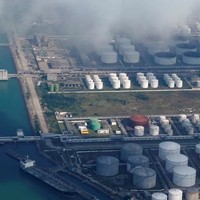
These factors in addition to international and US sanctions due to Iran’s confrontational foreign policy have prevented any meaningful volumes of foreign investment. This has left the economy mainly dependent on oil export revenues and more vulnerable to sanctions or low energy prices. Lack of investments have even damaged production in the oil and natural gas sectors, with less than one-tenth of investments compared to Saudi Arabia, and little technology infusion. Saudi Arabia’s Aramco energy company has been investing hundreds of billion dollars over the past two decades, with annual investments reaching a staggering $40-50 billion recently.
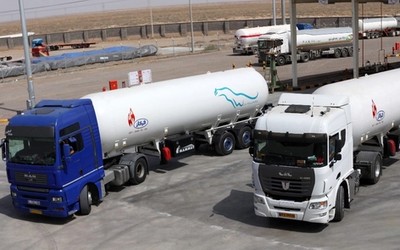
However, Iran's oil exports have been increasing and reached almost pre-sanctions levels in August, but the additional shipments so far have not translated into a financial improvement, lower inflation and a higher rate for rial.
According to a July report in Aftab News website, affiliated with Iran’s reformists, the government borrowed around $12 billion from four major quasi-private banks in three months ending June 21. To ensure availability of funds, it issued directives to these banks to reduce lending to the private sector, causing the loss of 500,000 jobs amid an already serious economic crisis.
These banks, which already face cash flow problems, rely on the central bank to replenish their reserves, Therefore, whether the government directly borrows from the CBI or from other banks, the money supply increases.