• العربية
  • فارسی
Brand
  • Iran Insight
  • Politics
  • Economy
  • Analysis
  • Special Report
  • Opinion
  • Podcast
  • Iran Insight
  • Politics
  • Economy
  • Analysis
  • Special Report
  • Opinion
  • Podcast
  • Theme
  • Language
    • العربية
    • فارسی
  • Iran Insight
  • Politics
  • Economy
  • Analysis
  • Special Report
  • Opinion
  • Podcast
All rights reserved for Volant Media UK Limited
volant media logo

US Senators Voice Support For Seizure Of Iranian Oil, Call For More

Iran International Newsroom
Jun 8, 2023, 22:43 GMT+1Updated: 17:26 GMT+1
Marshall Islands-flagged oil tanker Advantage Sweet, which, according to Refinitiv ship tracking data, is a Suezmax crude tanker which had been chartered by oil major Chevron and had last docked in Kuwait, sails at Marmara sea near Istanbul, Turkey January 10, 2023.

Several US senators backed the Biden administration's move to seize Iranian oil tankers at Panama Canal, calling for more measures to stop export of Iran’s crude.

Senator Bob Menendez (D-NJ) told Iran International’s Arash Aalaei he "applauds" the seizure and he "hopes they'll have many more."

He added that this is a message to Iranians warning them that they cannot ultimately divert their oil and violate embargoes imposed on their oil trade.

Senator Tim Kaine (D-VA) told us that he supports the Biden administration's seizure of Suez Rajan tanker carrying Iranian crude oil, lauding it as “a very strong move.”

“Iranian aggression in many ways, including supplying drones to Russia to facilitate an illegal war in Ukraine, the behavior of Iran both to its own people and beyond the borders, is getting worse and worse and worse,” he noted.

Senator Bob Menendez (D-NJ) (right) talking to Iran International’s Arash Aalaei (left) on June 8, 2023
100%
Senator Bob Menendez (D-NJ) (right) talking to Iran International’s Arash Aalaei (left) on June 8, 2023

The US this year quietly seized two tankers suspected of transporting Iranian oil as part of an elaborate sanctions-busting scheme involving forged documents and the repainting of a ship’s deck to cloak illegal shipments.

Details of the seizures are scarce and sketchy. It is not clear if the two tankers were seized at the same and at the same location or were two separate incidents.

One thing which is clear, both vessels — the Cyprus-flagged Arina and Liberia-flagged Nostos — tried to discharge the oil at a storage facility in Turkey, according to the New York-based group United Against Nuclear Iran. Instead, they were detected by US authorities and ordered to unload their cargo, which the Nostos did in Houston around Thanksgiving last year and Arina more recently, in January, in Bahamas, according to the AP. Arina, which was formerly Panama-flagged and its last listed manager is Athens-based Saint James Shipping Ltd., had previously been known to ship illegal Iranian crude, US attorneys allege in a civil complaint filed in Washington federal court.

As Iran’s illicit oil exports began to rise after President Joe Biden’s election in 2020, many US lawmakers began criticizing the administration for lax enforcement of sanctions. Some have accused the Biden team of having been soft on Iran with hope that negotiations to revive the JCPOA nuclear agreement would succeed.

The seizure of Iranian crude took place as there are unconfirmed reports that the Biden administration seeks to revive a 2015 nuclear deal with Iran via an impending interim deal, which would likely entail the US lifting sanctions. If this is true, the US may be able to balance the market thanks to Iranian oil while its sanctions on Russia removed a large portion from the market. Some of that lost supply could be made up by Iran, which – according to the AP -- pumped an average 2.4 million barrels per day in 2021 though due to sanctions has been able to sell less than half of what it produces.

The administration of Ebrahim Raisi claims to have increased the oil exports but its results have not been felt in the country’s economy as the national currency has been losing its value and society is struggling with record high inflation.

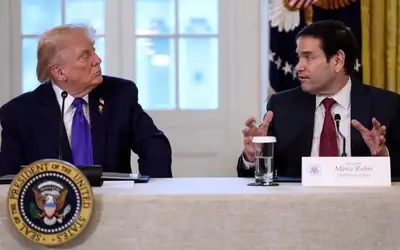
On Wednesday, US Senators Marco Rubio (R-FL), Maggie Hassan (D-NH), and Jacky Rosen (D-NV) introduced the Stop Harboring Iranian Petroleum (SHIP) Act, which would sanction illicit purchases of Iranian oil and hold the regime’s enablers accountable.

The act is supposed to target Iranian oil sales to Chinese refineries, which have been the main importers of Iran’s oil. “Iranian oil sales to China’s genocidal regime fund the Ayatollah’s ability to repress Iranian protesters,” read part of a statement to announce the act, adding that as of February 2023, Chinese refineries were processing, refining, or engaging with approximately 1.2 million barrels of Iranian oil per day.

Senator Menendez told Iran International that he cannot comment on the specifics of the legislation yet but added that in general, he supports “efforts that try to stop the Iranian regime from profiting at the expense of their own people.”

“As the regime in Tehran continues to enrich itself through the sale of sanctioned oil, we must ensure that US sanctions on all individuals and entities linked to the illicit trade of Iranian oil are rigorously enforced,” Rubio said.

“We must do everything that we can to prevent Iran from building a nuclear weapon and stop its support of terrorism. This bipartisan legislation will strengthen sanctions on Iranian oil - a key revenue source for the regime - and make the United States and our allies, including Israel, safer,” Senator Hassan said in the statement to announce the act.

“This bipartisan legislation will strengthen sanctions on ports and refineries that receive and process Iranian oil and will help reign in Iran’s ability to engage in destabilizing activities,” Senator Rosen noted.
Most Viewed

Iran diplomacy wobbles as factions compete to avoid looking soft on US
1
INSIGHT

Iran diplomacy wobbles as factions compete to avoid looking soft on US

2
VOICES FROM IRAN

Bread shortages, soaring prices strain households in Iran, residents say

3
ANALYSIS

The politics of pink: how Iran uses cuteness to rebrand violence

4

Scam messages seek crypto for ships’ safe passage through Hormuz, firm warns

5
EXCLUSIVE

Family told missing teen was alive, then received his body 60 days later

Banner
Banner

Spotlight

  • Diplomacy tolls at Hormuz as conflict returns to its doorstep
    OPINION

    Diplomacy tolls at Hormuz as conflict returns to its doorstep

  • Opposition to US talks grows in Tehran as ceasefire deadline nears
    INSIGHT

    Opposition to US talks grows in Tehran as ceasefire deadline nears

  • Tehran moderates see ‘no deal–no war’ limbo as worst outcome
    INSIGHT

    Tehran moderates see ‘no deal–no war’ limbo as worst outcome

  • The future has been switched off here
    TEHRAN INSIDER

    The future has been switched off here

  • Lights out, then gunfire: Witnesses recount Mashhad protest crackdown
    VOICES FROM IRAN

    Lights out, then gunfire: Witnesses recount Mashhad protest crackdown

  • Is Iran entering its Gorbachev moment?
    INSIGHT

    Is Iran entering its Gorbachev moment?

•
•
•

More Stories

US Avoids A Direct Response To Reports Of Secret Iran Talks

Jun 8, 2023, 10:15 GMT+1
•
Iran International Newsroom

The US State Department Wednesday dismissed media reports about secret talks with Iran for a possible nuclear deal, calling them rumors.

Principal deputy spokesperson Vedant Patel in response to a question about a Haaretz report saying talks have made progress said, “I’m certainly not going to respond to rumors or leaks of diplomatic conversations, which of course have a tendency to be false and misleading.”

In recent weeks the State Department has used the same exact formulation to characterize many media reports about some sort of indirect negotiations with Tehran, whether on the nuclear issue or securing the release of American hostages.

Haaretz reported Wednesday that Israel believes secret talks are taking place possibly to reach a limited or partial deal, whereby Iran would reduce the level of its uranium enrichment in exchange for the release of around $20 billion of its funds frozen in Iraq, South Korea and its share of withdrawal from the International Monetary Fund.

US State Department’s Principal Deputy Spokesperson Vedant Patel
100%
US State Department’s Principal Deputy Spokesperson Vedant Patel

The chief of Iran’s central bank was visiting the IMF in Washington last week and Iranian media quoted him as saying that Tehran could withdraw around $6 billion of its contributions.

If true, $20 billion seems like a big amount, but in reality, it will help the Islamic Republic for a few months amid its economic crisis and is not a fundamental solution to its domestic instability.

However, already the battered Iranian currency, the rial, has begun to rise in the Tehran foreign currency market, possibly driven by anticipation of a diplomatic breakthrough. The US dollar fell below 500,000 rials late on Wednesday for the first time since March 28. It has risen by more than 10 percent in recent weeks.

Spokesperson Patel also repeated the same public policy formulations that the Biden administration has been using on the Iran topic - the US will not allow Iran to gain nuclear weapons, but it believes the best way to achieve that goal is through diplomacy.

However, Israel strongly opposes any partial deal with Iran that does not fundamentally remove the danger of Iran building nuclear weapons. Prime Minister Benjamin Netanyahu once again warned on June 4 that Israel is preparing for a multi-front conflict if it decides to attack Iran’s nuclear installations.

“The latest statements are probably a response to an American effort to reach some sort of an agreement with Iran,” Maj, Gen. Yaakov Amidror, senior fellow at the Jerusalem Institute for Strategy and Security and former national security adviser to Netanyahu, was quoted as saying this week.

“The Israeli statements are also aimed at Iranian ears, that should they cross a certain line, Israel will respond, and does not see itself committed to any international agreements reached with Iran,” he added.

Iranian officials have repeatedly claimed in recent months that indirect contacts with Washington continue to rekindle nuclear talks that were suspended last September after 18 months of unfruitful diplomacy. The Biden administration long denied any talks, even calling Iranian officials liars at one point. But media hints about a partial deal being discussed have surfaced since February.

Tehran’s release of three Western hostages last week, and lack of a Western attempt to table a resolution against Iran this week at the board meeting of the UN’s International Atomic Energy Agency, could be signs of secret dealings.

No IAEA Resolution Against Iran Despite Western Concerns On NPT Safeguards

Jun 8, 2023, 06:31 GMT+1
•
Iran International Newsroom

The UK, France, Germany, and the US debunked Tehran’s explanations on its nuclear dossier at the UN watchdog, the IAEA, wrapped up its discussions on Iran with no resolution.

On Wednesday, the E3 as well as the United States submitted separate statements to the International Atomic Energy Agency's board of governors over the Islamic Republic’s implementation of its obligations under its NPT Safeguards Agreement, noting that the answers that Tehran provided over the cases of uranium traces are not technically credible.

However, diplomats told Iran International’s Vienna correspondent that no resolution or even any specific statement to censure Iran’s activities and lack of cooperation is expected by the IAEA board of governors.

The E3 said Iran’s activities such as centrifuge configuration changes at Fordow without prior notice to the IAEA and detection of particles of uranium enriched at 83.7% took place in the context of over four years of a lack of substantive cooperation with the IAEA regarding possible undeclared nuclear material three undeclared locations in Iran two decades ago.

International Atomic Energy Agency (IAEA) Director General Rafael Grossi waits for the start of an IAEA board of governors meeting in Vienna, Austria, June 5, 2023.
100%
International Atomic Energy Agency (IAEA) Director General Rafael Grossi waits for the start of an IAEA board of governors meeting in Vienna, Austria, June 5, 2023.

Referring to the three earlier resolutions by the IAEA board against Iran, the latest in November, the E3 said that the IAEA decided it is “essential and urgent” that Iran act to fulfil its legal obligations and clarify all outstanding safeguards issues without delay. "Iran’s longstanding lack of cooperation with the Agency, incremental and limited steps are neither sufficient nor satisfactory,” read the statement.

Calling on the IAEA to continue to demand full transparency from Iran on all outstanding safeguards issues, the E3 wondered why the agency’s assessment of the issues remains the same but the agency has no additional questions on the depleted uranium particles.

Agency’s assessment of Iran's activities was that it conducted explosive experiments at the Marivan site. This assessment has not changed yet.

The US said in its statement that “The Agency now says it has no further questions related to two of the four sites at this stage, but this does not constitute 'closure' of these files, as some have inaccurately claimed.”

The European states also expressed great concern that the agency reports no progress towards resolving the remaining outstanding safeguards issues pertaining to Turquzabad and Varamin sites.

“Unless and until Iran provides technically credible explanations to the Agency’s persisting outstanding questions, as reiterated by the November Resolution, the Agency will not be able to confirm the correctness and completeness of Iran’s declarations under its NPT Safeguards Agreement,” E3 added.

They went on to point out other issues such as limited steps towards reinstallation of enrichment monitoring devices at both Fordow and Natanz.

Echoing the same concerns, the US also said “Regrettably, Iran’s level of cooperation to date has fallen short.” “The absence of this assurance remains deeply concerning, especially considering more recent safeguards implementation issues in Iran,” it added.

The fact that despite all the open cases the IAEA board of governors did not issue any resolution against the Islamic Republic may be a sign that the regime is about to finalize a nuclear deal with the US behind the scenes.

During the past few weeks, reports have surfaced that Tehran and Washington have been in close – yet indirect – contact with each other to reach an interim agreement.

Earlier in the day, Haaretz reported that Israel expects an interim agreement to be reached within a few weeks, expected to include an Iranian agreement to stop uranium enrichment at high levels in return for releasing Iran's frozen funds.

After all, it was the US and the E3 that spearheaded past IAEA resolutions, and this time as in March, they sufficed by issuing statements.

Mehrzad Boroujerdi, vice provost and dean of College of Arts, Sciences and Education at Missouri University, told Iran International that considering the increasing communication between Tehran and Washington and the developments at the IAEA board meeting, the Haaretz’s report can be true.

UK Must ‘Steer Its Own Ship’ On Iran Policy, Claims MP

Jun 7, 2023, 19:46 GMT+1
•
Iran International Newsroom

One of the UK’s leading MPs has claimed the country must break away from US and EU-led policy and take an independent approach against the Iranian regime.

Conservative MP Brendan Clarke-Smith told the House of Parliament this week: “Iran presents one of the most immediate threats to the UK’s national interest and domestic security.”

Clarke-Smith, who called for full proscription of Iran’s Revolutionary Guards Corp (IRGC), said more action must be taken against the regime as it gets closer to nuclear armament and continues its support of terror.

“The UK can play a decisive role here. Thanks to Brexit and our newly acquired autonomous sanctions capabilities, the UK has more room to act in this space than the EU,” he said.

Slamming the softly-softly Biden administration approach, he said separating Iran policy into different areas such as human rights abuses, the nuclear program, ballistic missiles and support for terrorism, is not working.

He said: “History has shown that those policy areas can only ever be dealt with as a whole, and it is my contention that the failed approach is no longer tenable, and that the UK should take the opportunity to pursue an independent Iran policy and steer our own ship.”

The British government has failed to ban the IRGC more than four months after MPs voted for it. The House of Commons unanimously passed a motion in January to urge the government to proscribe the IRGC as a terrorist group.

Although the vote was not binding, it put pressure on ministers to respond to violence against protesters in Iran by security forces controlled by the IRGC.

Clarke-Smith said that even sanctioning the IRGC in its entirety fails to adequately reflect the extent of the threat posed by the Islamic Republic’s brutal enforcers. "Reports suggest that the UK has come under pressure from the Biden Administration over the question of proscription, which jars with their active decision not to delist the organisation from their own proscription list. The UK Government must pay no heed to these overtures and instead put our national security interests first,” he urged MPs.

Defending the lack of proscription, The Minister of State for the Foreign, Commonwealth and Development Office, Andrew Mitchell, told the House of Commons: “We take very seriously the threatening behaviour of the Islamic Revolutionary Guard Corps. Not only have we sanctioned the organisation in its entirety, but we have sanctioned 29 individuals and entities affiliated with it since last October.

“That includes the Basij force—the arm of the IRGC that is mobilised to enforce brutal repression on the streets of Iran—and, most recently, four commanders under whose leadership IRGC forces have opened fire on arbitrarily detained and tortured protesters.”

Armored police vehicles are seen outside the headquarters of Iran International in November 2022
100%
Armored police vehicles are seen outside the headquarters of Iran International in November 2022

In February, Iran International was forced to close its offices in London after continued state-backed threats to the team led to security officials saying they could no longer protect reporters and staff. Forced to move operations to Washington DC, the issue became one of the sticking points as to the UK’s refusal to crack down on Iranian threats on British soil.

At the same time, police and the security services claimed to have foiled at least 15 plots by Iran to either kidnap or kill British or UK-based individuals it considers “enemies of the regime” since January 2022.

The toll of attempted assassinations and abductions was made public hours after Iran International announced it had moved operations to the US. Just last month, Masih Alinejad, a leading Iranian dissident based in the US, was put under 24-hour police protection during a visit to the UK after the Metropolitan police received credible threats to her life.

Now, calls are being made to close a British charity run by the UK representative of Iran's Supreme Leader Ayatollah Ali Khamenei, after the aid watchdog removed its trustees over links to Iran.

Showing Teeth To Iran, US Discusses Normalization Of Israel-Saudi Ties

Jun 7, 2023, 16:31 GMT+1
•
Iran International Newsroom

As US Secretary of State Antony Blinken is in Saudi Arabia for talks, Washington reiterated its commitment to respond to Iran’s aggression in regional waters.

Blinken, who arrived in Saudi Arabia late on Tuesday for a much-anticipated visit amid frayed ties due to deepening disagreements on everything from Iran policy to regional security issues, oil prices and human rights, met with Saudi Crown Prince Mohammed bin Salman on Wednesday.

According to a US official, the two had an "open, candid" conversation for an hour and forty minutes, covering topics including Israel, the conflict in Yemen, unrest in Sudan as well as Iran.

"They discussed the potential for normalization of relations with Israel and agreed to continue dialogue on the issue," the official said.

At a speech in Washington hours before departing for Saudi Arabia, Blinken said the United States had a "real national security interest" in advocating for normalizing Saudi-Israeli ties but cautioned about the time frame."We have no illusions that this can be done quickly or easily," Blinken said.

US Secretary of State Antony Blinken is greeted by Saudi officials at the King Khalid International Airport, Riyadh, Saudi Arabia, June 7, 2023.
100%
US Secretary of State Antony Blinken is greeted by Saudi officials at the King Khalid International Airport, Riyadh, Saudi Arabia, June 7, 2023.

Although Riyadh gave its blessing to Persian Gulf neighbors United Arab Emirates and Bahrain establishing relations with Israel in 2020, it has not followed suit. In contrast, in April, Saudi Arabia restored ties with the Islamic Republic, a regional rival and Israel's archnemesis.

Two days after Blinken's visit, Riyadh will host a major Arab-Chinese investment conference. Blinken is also set to travel to China for talks in the coming weeks, in a visit intended by Washington to be a major step toward what President Joe Biden has called a "thaw" in Sino-American ties.

The visit came two days after US and UK navies acted when a merchant ship was being harassed by Iran’s Revolutionary Guard’s Navy fast-attack boats in the Strait of Hormuz, in a sign of a more forceful policy in the Persian Gulf.

Condemning this behavior, a State Department spokesperson told Iran International on Tuesday that the move was a “clear attempt to threaten and interfere with commercial shipping” in the Middle East.

Emphasizing that the United States is committed to supporting regional maritime security coalitions within the Middle East region, the spokesperson said Washington does not seek conflict or escalation with Iran. "We are committed to responding to Iranian aggression together with our global Allies and our partners in the Middle East region to ensure the freedom of navigation through the Strait of Hormuz and other vital waterways.” the official added.

Iran has hundreds of fast attack boats that for years have not only harassed civilian vessels but, on many occasions, have come dangerously close to US and other warships in a show of force. Over the past two years, Iran has now harassed,attacked or interfered with the navigational rights of 16 internationally flagged merchant vessels in regional waters.

The recent incident in the Strait of Hormuz took place against the backdrop of reports about the formation of a new naval alliance in the region with Iran being a main force.The US says it “defies reason” for Iran to be part of a regional naval alliance while the Islamic Republic is the main reason for maritime insecurity in the Persian Gulf region.

Iranian media claimed in recent days that a regional naval coalition is in the offing though this was not confirmed by any mentioned parties. On Saturday, Iran's navy commander officially announced that his country and Saudi Arabia, as well as the United Arab Emirates, Qatar and Bahrain, plan to form a naval alliance, that would include Iraq, India and Pakistan.


Bolton Slams Biden For ‘Strategic Failure’ In Middle East

Jun 7, 2023, 15:41 GMT+1

President Joe Biden’s policies on Iran and the Middle East are leading toward a “strategic failure”, former US national security adviser John Bolton says.

In an opinion article in the Wall Street Journal Wednesday, Bolton sharply rebuked Biden for pursuing the revival of the 2015 JCPOA nuclear deal, lax sanctions enforcement against Tehran, and his “apparent disdain for key Middle East allies.” He argued that Iran is overcoming a US policy of containment and Arab regional states, having lost confidence, are open to overtures by China and Russia.

Bolton also accused the administration of opposing an Israeli last resort attack on Iran’s nuclear installations to prevent the possible production of nuclear weapons, and in fact trying to prevent it.

He urged Biden to plan for a regime change in Iran, instead of making a deal that would release billions of dollars to the clerical regime. The former UN ambassador and national security advisor has long advocated that the only way to neutralize the threat posed by Iran is to change its anti-West regime.

At the same time, the Israeli Haaretz newspaper claimed that “major progress” has been achieved in contacts between Washington and Tehran for what appears to be an “interim deal”. In exchange for release of around $20 billion in frozen funds abroad, Iran would stop high-level uranium enrichment, the paper said.

The United States has been demanding that Iran stop its close military collaboration with Russia as a pre-condition for resuming the JCPOA talks. It is not clear that this would be part of an interim and limited agreement. Iran, which supplies weapons to Russia for its war in Ukraine, can use any released funds to accelerate its weapons production.