Iran’s Energy Management Reeks Of Corruption

Systematic corruption is not something new in Iran's oil-dependent economy but recently criticism over the government’s energy management is increasing.
Systematic corruption is not something new in Iran's oil-dependent economy but recently criticism over the government’s energy management is increasing.
The situation has been grave in the past several years but since the administration of Ebrahim Raisi assumed office in 2021, the entire energy management system is going haywire even faster, drawing backlash from people and even regime officials.
Iran has one of the biggest reserves of oil and natural gas and its economy is chiefly dependent on the revenues from crude oil exports. But due to sanctions and mismanagement it has failed to modernize its electricity sector and the country faces power shortages most of the year.
The regime has a hypocritical approach about the sales of fuel to foreign buyers. While it boasts about the growing level of sales, which mainly occur through vast networks of smugglers under the unofficial supervision of the Revolutionary Guards, it periodically claims to have stopped traffickers from smuggling some shipments of gasoline and diesel out of the country.
The oil-rich country has been facing a serious scarcity of gasoline in its domestic energy market because fuel is subsidized in Iran and much cheaper than in neighboring countries, which leads to small and large scale smuggling.
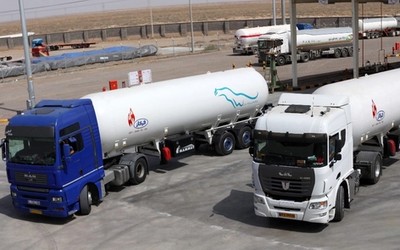
The country also faces gasoline and diesel shortages due to a lack of refining capacity, but millions of liters of fuel is smuggled out of Iran daily, which betrays a large-scale smuggling networks.
In a recently released video, Iranian lawmaker Malek Shariati said "Perhaps we are ashamed to admit that 1.5 billion liters of liquid fuel are smuggled from our power plants per year.” He added that the tankers carrying government-supplied cheap fuel are not unloaded at the power plants and documents are forged to cover for that. Even if the regulatory body finds out about it, the fine is so low that it is still worth it, Shariati noted, adding that most of the country’s diesel smuggling happens in power plants, implying that the owners of the power plants are responsible for the fuel smuggling in the country.
According to Mir-Ali-Ashraf Abdollah Pourihoseini, a former vice president of Ministry of Economic Affairs and head of the Iranian Privatization Organization, in recent years, many key power plants have been handed over to insider investors because the government did not have the needed budget to overhaul them. However, the new owners did not take any steps to overhaul the aging plants.
But who are these new owners? For instance, Abadan power plant with a capacity of 814 megawatts was handed over to the Headquarters of Imam's Directive, or simply Setad, parastatal organization under direct control of the Supreme Leader.
Zagros power plant with a capacity of 656 megawatts was handed over to the Foundation of Martyrs and Veterans Affairs at the price of less than 8 trillion rials – or about $16 million dollars in today’s exchange rate. Khatam al-Anbiya Construction Headquarter -- the engineering arm of the IRGC – acquired Sabalan power plant with a 960-megawatt capacity at a price of about $8 million. The Armed Forces Pension Fund and Social Security Investment Company bought Gilan power plant, and the list goes on.
Public property has been “privatized” by giving away key infrastructure to powerful cliques of military men and bureaucrats who easily enrich themselves.
Moreover, In the budget bill for the current Iranian year, which started March 21, the government has granted new permits to some departments such as the General Staff of the Armed Forces of the Islamic Republic to sell oil on behalf of the government and earn some of the income. Based on the legislation, the General Staff of the Armed Forces is allowed to export three billion euros worth of crude oil and oil products through small private refineries after the approval of the country's budget organization.
Iran, which is under US oil export sanctions, has used this method before to make illicit oil shipments. However, in the past this has led to large corruption cases.
A well-publicized scandal broke in 2013 when authorities arrested Babak Zanjani, a businessman, for embezzling at least $2.7 billion from illicit oil sales during international sanctions from 2009-2013. According to legal experts, this method of allocating money to government entities violates the constitution.
Many members of Iran's hardliner dominated parliament are former members of the IRGC. Moreover, the government has started a new privatization plan to sell public assets presumably to well-connected regime insiders. Iranian media and economic experts have characterized the new privatization plan by the government as "a plunder of public property" and "economic apartheid."