Biden Admin Willing To Concede Anything For Deal With Iran - Senator
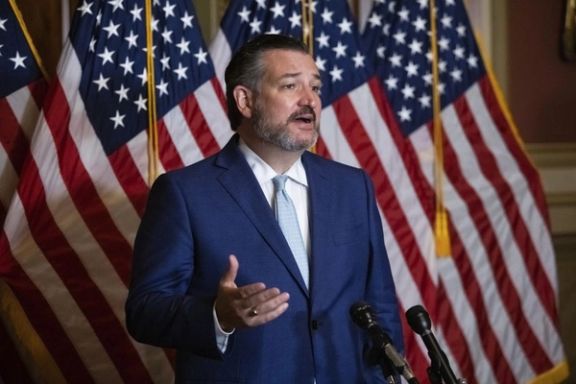
US senator Ted Cruz said Wednesday that the Biden administration wants to revive the nuclear deal with Iran so desperately that they are willing to concede anything.

US senator Ted Cruz said Wednesday that the Biden administration wants to revive the nuclear deal with Iran so desperately that they are willing to concede anything.
The Texas Republican described the Islamic Republic’s “outrageous demands” as the reason the negotiations to restore the deal have stalled.
He that “the ayatollahs’ demands are so extreme and so radical” adding that the Biden White House desperately wants a deal at almost any price, “even if it jeopardizes the safety and security of Israel, and even if it jeopardizes the safety and security of the United States".
"I forced a vote on the Senate floor, demanding that terrorism sanctions remain in place on the IRGC, and we won an overwhelming bipartisan victory. The vast majority of Senators, both Republicans and Democrats, voted for my amendment, insisting sanctions remain. I hope that stalls this deal”, he said.
Cruz noted, “The Biden administration had Russia negotiate the deal, Russia as our enemy, Iran as our enemy, and our enemies are sitting at a table together negotiating a deal that hurts America and hurts Israel”.
The eighth round of talks in Vienna which began in late December, came to an abrupt pause in mid-March as major stumbling blocks between Tehran and Washington -- which only negotiates indirectly through the European coordinator of the talks -- remained unresolved.
A major disagreement reportedly remains the US listing of Iran’s Revolutionary Guards (IRGC) as a ‘foreign terrorist organization’ while Iran has also refused to drop calls for retribution for the US killing IRGC general Qasem Soleimani in Baghdad in 2020.


A UN Special Rapporteur on sanctions has called on countries to unblock Iran's "$120 billion assets" frozen in foreign banks, so Tehran can fulfill its human rights obligations.
Alena Douhan, the United Nations Special Rapporteur on the Negative Impact of Unilateral Coercive Measures on the Enjoyment of Human Rights, made the remarks during a press conference in Tehran on Wednesday.
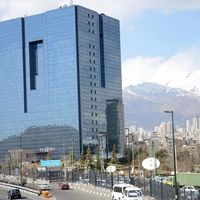
“I urge the states that have frozen the assets of Iranian Central Bank to immediately unfreeze Iran’s funds based on international law”, she said, adding, “I call on the sanctioning states, particularly the US, to abandon the unilateral sanctions”.
Douhan claimed that decades of sanctions have wholly affected Iranian people’s lives and have particularly hit the low-income section of the society.
Several human rights advocacy groups have protested her visit to assess the impact of sanctions on Iran, calling it Tehran’s attempt to divert attention from its human rights violations.
Iran has not allowed visits to any of the fourteen UN human rights experts who have made requests to monitor the situation in Iran, including to the special rapporteurs appointed by the UN Human Rights Council.
The role of the sanctions’ rapporteur was created at the UN Human Rights Council by the adoption of a resolution proposed by Iran on behalf of Non-Aligned Movement in 2014.
Since her appointment in March 2020, Douhan has mainly campaigned against the United States and its allies’ sanctions policy. She is a professor in Belarus, one of the biggest human rights violators, but is not on record criticizing massive crackdowns in her home country.

US State Department spokesperson Ned Price said Tuesday that Washington has negotiated “in good faith” in Iran nuclear talks but “the same cannot always be said of the Iranian side.”
In his daily briefing, Price was asked about the results of European Union chief negotiator Enrique Mora’s recent trip to Iran, but he avoided giving a clear answer, by insisting that the US does “not negotiate in public.” He reiterated that it is up to Iran to move the stalled negotiations forward.
“Iran needs to decide, as I alluded to before, whether it insists on conditions that are extraneous to the JCPOA, or whether it is ready, willing, and able to conclude the JCPOA, a mutual return to compliance with it, quickly,” Price said most likely referring to Tehran’s demand for removing its Revolutionary Guard from a US list of terrorist organizations.
Price also avoided directly answering a question whether the US agrees with the Israeli defense minister Benny Gantz who said Tuesday that Iran is deploying far more uranium enriching centrifuges than previously estimated. He alluded to the secret nature of intelligence information in avoiding a direct answer.
Asked if a military option against Iran, in cooperation with Israel, is on the table, Price said, “We believe that diplomacy and dialogue affords an opportunity to sustainably and durably and permanently put an end to Iran’s ability to produce or otherwise acquire a nuclear weapon.”

Iran is working on advanced uranium centrifuges at new underground sites being built near its Natanz nuclear plant, Israel's defense minister said on Tuesday.
Benney Gantz in a speech at Reichman University near Tel Aviv gave figures that appeared to go beyond those published by the UN‘s International Atomic Energy Agency, IAEA.
Centrifuges are used to purify uranium for civilian projects or, at higher levels, to make fissile materiál for a nuclear bomb. Iranian progress in the field is being watched by world powers trying to resurrect the 2015 nuclear deal with Tehran, known as JCPOA.
"Iran is making an effort to complete the manufacturing and installation of 1,000 additional advanced IR6 centrifuges in its nuclear facilities, including new facilities being built at underground sites abutting Natanz," Gantz said.
A March 3 report by the UN International Atomic Energy Agency (IAEA) said Iran had installed or planned to install a total of three IR6 cascades, amounting to around 660 machines.
IAEA chief Rafael Grossi said last month that Iran had set up a new underground Natanz workshop for making centrifuge parts, an apparent precaution against attacks.
In his remarks, Gantz alluded to Israel's long-standing threat to take military action if it deems diplomacy is at a dead end to deny its arch-enemy the means to make nuclear weapons.
"The cost of such a future war, which we hope will not happen, can be prevented or reduced" with tougher negotiations by world powers, he said.
Reporting by Reuters

Tehran says Washington must respond to proposals it put forth last week during the visit of EU coordinator Enrique Mora, to break the stalemate in nuclear talks.
“We can be in a position where all sides can return to Vienna if the American side responds,” he told reporters, reiterating that the US needs to make a “political decision,” Saeed Khatibzadeh told reporters at his weekly press briefing Monday.
Khatibzadeh also accused Israel of acting against restoration of the 2015 nuclear deal, Joint Comprehensive Plan of Action (JCPOA), “whenever an initiative is made for diplomacy.”
The Iranian side organized “very serious and result-oriented negotiations with special initiatives” during Mora’s two-day visit and several long talks were held between him and Iran’s top negotiator Ali Bagheri-Kani, he told reporters.
Before his visit to Tehran, Mora said the was going to “work on closing the remaining gaps of this negotiation continues” by presenting a compromise formula that would be acceptable to both Tehran and Washington.
The eighth round of talks in Vienna which began in late December, came to an abrupt pause in mid-March and all negotiators returned to their capitals for political consultations. Tehran and Washington, which only negotiate indirectly through the European coordinator of the talks, have repeatedly put the onus of a decision to resume the talks and a final deal on one another.
Last Monday, ahead of Mora’s visit, Khatibzadeh had told reporters that the visit was not expected to make a breakthrough in the stalled nuclear talks.
Khatibzadeh reiterated on Monday that all sanctions imposed on Iran by the administration of the former US President Donald Trump dubbed as “maximum pressure campaign” should be dismantled. “Iran's demands have been always within the text of the JCPOA and Resolution 2231,” he added.
The Iranian spokesman called the recent remarks of the US State Department Spokesman Ned Price who put the onus in striking a deal on Iran ‘hackneyed”.Commenting on the possibility of a final deal and whether the US would take the Revolutionary Guards (IRGC) off the list of Foreign Terrorist Organizations (FTO), Price said Friday that that at a deal remained "far from certain" at this point.
The IRGC was added to the US list of Foreign Terrorist Organizations by the Trump administration in 2019.
Iranian officials have repeatedly said that delisting of the IRGC is a “redline” that it will not cross.
“Negotiations [have] reached a point that obstacles can only be untied by accepting Iran’s rational and principled obligations. [The] US by negligence, and [the] EU by inaction, destroyed the opportunity to benefit from Iran's goodwill. If they have the will, we are ready and an agreement is available,” Secretary of Iran’s Supreme National Security Council Ali Shamkhani tweeted Saturday.
Mora’s visit coincided with a day-long visit by the Emir of Qatar, Tamim Al Thani, which pundits believe was aimed at salvaging the talks although there was no mention of the nuclear issue in the official reports of his meetings in Tehran.
The Qatari Emir had also visited Tehran in January 2020 when tensions were extremely high between Tehran and Washington over the US killing of Iran’s Revolutionary Guards’ Qods Force Commander Ghasem Soleimani in Baghdad in an apparent bid to calm the standoff of the two.
When asked about Russia’s role in Vienna talks Monday, Khatibzadeh said Moscow had a constructive role in the talks, but it is not out of the ordinary that Europeans may “undermine Russia’s role as a mediator” in matters such restoration of the JCPOA given the war in Ukraine.

Iran’s deputy foreign minister says the country is serious in talks to revive the 2015 nuclear deal but is also determined to distrust the “enemy” and foreigners.
Ali Bagheri-Kani, who is also Iran's chief nuclear negotiator in Vienna talks with world powers, made the remarks on Sunday as he visited Iran Oil Show 2022 underway in Tehran, adding that Iranian scientists and industrialists of the energy sector are a major force in the country’s ability to "neutralize sanctions."
He said the "art" of circumventing sanctions was once the industry's only instrument against George W. Bush's "smart sanctions", which then turned into "technology" to counter Barack Obama's “crippling sanctions" and then into "knowledge" to thwart "sanctions imposed by Donald Trump's maximum pressure campaign."
Other countries under sanctions are now seeking to acquire "sanctions neutralization knowledge" from the Islamic Republic, he added.
Bagheri-Kani went on to say that scientists and industrialists not only empower the country’s diplomacy to foil sanctions but also boost Iran’s deterrent power to stand against such measures.
The Vienna talks came to a standstill in mid-March as major stumbling blocks between Tehran and Washington remained unresolved.
A major disagreement reportedly remains the US listing of Iran’s Revolutionary Guards (IRGC) as a ‘foreign terrorist organization’ while Iran has also refused to drop calls for retribution for the US killing IRGC general Qasem Soleimani in Baghdad in 2020.