The EU's foreign policy chief says the trip by the coordinator of the talks to Tehran has unblocked the negotiations to revive the 2015 nuclear deal between Iran and world powers.
Josep Borrell made the remarks at a G7 meeting in northern Germany on Friday as Enrique Mora arrived back in Europe, saying he believes that two months of deadlock in diplomatic efforts has ended.
He described Iran's response as being "positive enough" after Mora had delivered a message that things could not continue as they were, describing his trip as “better than expected.”
He did not say what "unblocked" means and if the suspended talks in Vienna will resume.
"These things can not be resolved overnight. Let's say the negotiations were blocked and they have been unblocked and that means there is the prospect of reaching a final agreement."
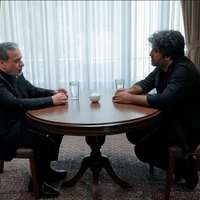
Enrique Mora arrived in Tehran for a two-day trip on Tuesday and met with Ali Bagheri-Kani and other Iranian officials, but with no news about the results of the meeting until late evening in Iran.
Talks to restore the deal with world powers have stalled since March, chiefly over Tehran's insistence that Washington remove the US designation of Foreign Terrorist Organization of Iran’s Revolutionary Guard (IRGC), which is the only example of a sovereign state’s armed forces to be included.
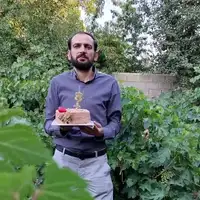
The European Union’s coordinator of the nuclear talks Enrique Mora
The European Union’s coordinator of the nuclear talks was briefly detained with colleagues at Frankfurt Airport as he was returning to Brussels from Tehran after two days of talks.
Enrique Mora said in a tweet on Friday that “not a single explanation” was given to him, adding that they airport police also took his passport and phones.
The Spanish diplomat criticized the breach of diplomatic rules, emphasizing that he is “an EU official on an official mission holding a Spanish diplomatic passport”.
About an hour later, he said on twitter that he was released. “Now released along with my two colleagues, the EU ambassador to UN Vienna and the head of the EEAS (the European External Action Service) Iran task force”.
Mora added that they “were kept separated” during the short detention and denounced “the refusal to give any explanation for what seems a violation of the Vienna Convention”.
Moreover, Mora said, “While still waiting for continuing my trip to Brussels I want to underline that in Tehran I raised the need to stop execution of Ahmadreza Djalali and asked for his release on humanitarian grounds”.
His comment about Djalali was among the few bits of information that was announced by any official about the content of his meetings in his two-day trip to Iran.
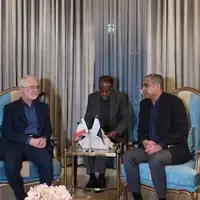
Qatar’s ruler, Emir Sheikh Tamim bin Hamad al-Thani received by Iran's president Ebrahim Raisi. May 12. 2022
Qatar’s ruler, Emir Sheikh Tamim bin Hamad al-Thani, arrived in Iran on Thursday, as the Persian Gulf state tries to help end a row between Tehran and Washington over revival of the 2015 nuclear deal.
While Iranian state media portrayed the visit as proof of Iran's expansion of ties with regional countries, a source briefed on the visit told Reuters on Sunday that the emir's trip was aimed to bring the parties to the Iran nuclear pact to "a new middle ground".
Almost a year of indirect talks between Tehran and Washington to save the pact has been on hold since March, chiefly over Tehran's insistence that the US remove the Islamic Revolutionary Guard Corps (IRGC), its elite security force, from the US Foreign Terrorist Organization (FTO) list.
Washington has made it clear that it has no such plans, while also not ruling it out.
Iran's hardline rulers believe that an uncompromising approach, spearheaded by the country's strongly anti-Western Supreme Leader Ayatollah Ali Khamenei, can force Washington to accept Tehran’s demands, Iranian officials told Reuters last month.
Under the 2015 pact, Iran curbed its sensitive uranium enrichment work, a possible pathway to nuclear arms, in return for the lifting of economic sanctions.
But in 2018, then-US President Donald Trump ditched the pact and reimposed sanctions on Iran, prompting Tehran to retaliate by gradually breaching the pact's nuclear curbs.
Mohamad Marandi, "an advisor" to Iran's nuclear negotiating team
A member of Iran’s nuclear negotiating team says removing the terrorist designation of its Revolutionary Guard is not enough and Tehran wants other guarantees.
Mohammad Marandi, introduced in Iranian media as an “advisor” to its negotiating team, said in Tehran, “Even if America at this moment completely removes the Guards [IRGC] from the terrorism list, the current situation will not change and we would not be able to speak of an agreement, because there are still a few problems remaining, the most fundamental of which is a guarantee by the US over its possible obligations.”
The statement clearly reintroduced past Iranian demands that the United States would not withdraw from a new deal or impose future sanctions in the future. The Biden administration and others have said that the President constitutionally cannot provide such guarantees, as a future administration can act according to its own policies.
Iranian officials and politicians have tried to downplay the issue of removing the IRGC from the US list of terrorist organizations as the main hindrance to reaching an agreement. Marandi’s statement is a more direct manifestation of this approach, given the fact that he has acted as a media advisor to Tehran’s negotiating team.
Whether the emphasis on securing guarantees is an attempt to deflect popular resentment in Iran against the IRGC as the reason for the lack of an agreement, or it is a genuine shift in Tehran’s position in the talks, is difficult to say.
Marandi presented a realistic picture of the Biden administration’s precarious domestic situation in garnering support for reviving the 2015 nuclear agreement, JCPOA. He said there is considerable Congressional opposition to what opponents say are too many US concessions during the Vienna negotiations since April 2021.
But he presented an interpretation of the diplomatic situation that recently officials and media in Tehran have advanced. In the wake of Russia’s invasion of Ukraine, the West, especially Europe need Iran’s oil and natural gasand that puts pressure on them to make a deal.
The problem with this reasoning is that without full normalization of relations with the West, Iran’s capacity to supply significant amounts of oil, and especially gas, is very limited. A nuclear agreement would not be sufficient to unlock full Western financial and technological investments needed to boost Iran’s oil and gas production to a significant level. Iran has shortages of gas even for its domestic consumption and its oil minister Javad Owji has said that at least $160 billion is needed to revitalize oil and gas production.
Full normalization of relations means that Iran should drastically retreat from its aggressive regional policies amounting to an attempt to build a Shiite “empire” extending to the Mediterranean. However, Tehran calls its regional policy its “red line.”
Marandi in his interview explicitly brought up the issue of investments. “If there is no guarantee for foreign investments, no company will dare toenter the Iranian market to invest and this would clearly impact our economic interests.”
In other words, Iran wants full economic benefits just for a cap on its nuclear program. Given the secret nature of the Venna talks, it is not clear if the cap would be permanently preventing Iran from expanding its nuclear capabilities or would follow the original JCPOA sunset clauses.
Marandi insisted that the IRGC’s delisting issue is an excuse by the West not to give economic guarantees. In other words Iran’s position of receiving every concession but not negotiating over its regional policies would amount to “having your cake and eating it too.”
A US lawmaker has called it outrageous that Iran detained European nationals while European Union’s coordinator of nuclear talks Enrique Mora is in Tehran to make a deal.
“This should be the final nail in the coffin for any bad deal with Iran”, Idaho’s Republican Senator Jim Risch, who is a ranking member at the foreign relations committee, said in tweet on Wednesday.
“The EU must accept that Iran is not a trustworthy interlocutor given its continued aggression”, Risch added.
Before departing for Tehran on Tuesday, he tweeted that he would be discussing both the revival of the nuclear talks and “other issues”, prompting speculations that the visit could be as much about prisoner swap deals between Europe and Tehran as to find a common ground to jump start the JCPOA talks stalled since mid-March.
Iran has been threatening Sweden for the long trial of a former judicial official who was arrested in Stockholm for his alleged role in the killing of thousands of political prisoners in Iran in 1988. There is also the case of a former Iranian diplomat who is serving a 20-year prison term in Belgium for organizing a plot to bomb an opposition rally in France. Iran also demands his release.
On Tuesday Tehran ruled out any prisoner exchange with Europe as it says it will execute Hamidreza Djalali, a Swedish Iranian dual citizen, who was arrested in 2016 on a visit to an Iranian university and convicted on alleged “espionage for Israel.”
The United States has reiterated that direct communication with Iran would in some ways facilitate diplomacy regarding the talks to revive the 2015 nuclear agreement.
“I am confident that our team will be in touch with Enrique Mora and his team. Of course, he is still on the ground”, he said.
Answering a question about the last communication exchanged between Tehran and Washington, he said that if Iran and the US were able to have direct discussions "we weren’t reliant on a middleman... But regardless, we’re not going to detail a play-by-play".
Saying that the department does not have any updates on the talks to offer, Price emphasized that the administration is of the opinion that a mutual return to compliance with the Joint Comprehensive Plan of Action, or the JCPOA, “would manifestly be in our national security interest because it would once again put permanent and verifiable limits on Iran’s nuclear program, a program that has been in many ways unconstrained since 2018”.
Talks to revive Iran's 2015 nuclear deal with world powers have stalled since March, chiefly over Tehran's insistence that Washington remove the FTO designation of the IRGC, which is the only example of a sovereign state’s armed forces to be included.