Iranian protesters who lost one or both eyes to brutality by security forces.
Canadian lawmaker Ali Ehsassi has pledged to refer findings that Iranian security forces possessed paintball guns from a Canadian-owned brand during the 2022 protest crackdown, which left scores of demonstrators blinded, to federal authorities.
The report identified Tippmann guns, a brand owned by Montreal-based KORE Outdoor, in the possession of Iranian security personnel. Investigators could not establish whether the guns were responsible for any of the blinding injuries.
“We’ll take this report. I was not aware of it, and we’ll send it to the appropriate authorities,” Ehsassi told Iran International’s Eye for Iran.
Ehsassi, a Liberal who represents Willowdale, said he did not know whether Global Affairs Canada had reviewed the investigation, published in September 2025 by IranWire and the Iran Human Rights Documentation Center.
Asked what Canada could do about the equipment reaching Iranian security forces, he pointed to federal funding to strengthen sanctions enforcement.
Iran International contacted Global Affairs Canada and KORE Outdoor for comment. Neither responded by the deadline for this report.
How did Tippmann guns reach Iran?
Shahin Milani of the Iran Human Rights Documentation Center told Iran International that researchers found photographs showing Iranian security personnel with paintball guns bearing the Tippmann logo.
One photograph from 2018 shows a member of the Fatehin special unit holding a Tippmann marker. The report also includes a screenshot of the Iranian Paintball Association’s website offering a Tippmann marker for sale.
Some paintball guns seen in footage from the 2022 protests resembled Tippmann models, the researchers said, but image quality and distance made the brand difficult to confirm. Milani said investigators could not link a specific case of blinding to a Tippmann gun.
In October 2022, KORE Outdoor CEO Billy Ceranski condemned the use of the company’s paintball products to suppress protests in Iran. He said KORE complied with US import and export laws and had never sold goods directly or indirectly to countries on the US arms embargo list, including Iran.
Milani said Canadian authorities could start by asking KORE to identify its buyers and then ask those buyers where the equipment went next.
“You cannot just sell such devices and not care as to who actually ends up owning them,” Milani told Iran International.
The sales page for Tippmann Empire BT-4 Combat paintball marker in the official website of Paintball Association of the Islamic Republic of Iran. Source paintball.ir
Hundreds suffered eye injuries
A separate investigation by the Human Rights Center at the University of California, Berkeley found that about 120 people suffered partial or total blindness during the 2022–23 crackdown.
Researchers documented close-range shots to the face involving shotguns, paintball guns and tear gas canisters.
By November 2022, ophthalmologists at three Tehran hospitals had reported at least 500 serious eye injuries, while doctors in Kurdistan province reported at least 80 more.
In its investigation, IranWire and the Iran Human Rights Documentation Center documented 134 people injured by weapons described as less lethal across 47 cities in 24 provinces. At least 114 were injured by shotgun pellets and nine by paintball projectiles. Most of the injuries were to the head, face or eyes.
In one video from December 2022, a plainclothes agent fires a paintball gun at the face of a person being detained in Tehran’s Ekbatan neighborhood.
Blinding injuries documented again in January
Severe eye injuries were also reported during Iran’s January 2026 crackdown, although no link has been established between those cases and Tippmann guns.
Dr. Sarah Raza, a trauma and vascular interventional radiologist who advised wounded protesters remotely, told Iran International that patients feared their wounds would identify them as protesters if they sought medical care.
Raza cited reports of more than 400 gunshot-related eye injuries at a single Tehran hospital during the January 8 and 9 crackdown.
The report Ehsassi pledged to forward examined the 2022 crackdown. The weapons used in the January cases remain a separate question.
Newly elected democratic members of Congress, who have flipped Republican seats gather for photos at the US Capitol in Washington, DC, US, November 12, 2026.
US Democratic lawmakers are stepping up efforts to end the war with Iran after their sweeping midterm election victory, promising legislative action when they take control of Congress in January.
Democrats won control of both chambers of Congress in the November 3 elections, a defeat for Republicans that President Donald Trump and Vice President JD Vance acknowledged was driven in part by public dissatisfaction with the war.
“Last week, voters were loud and clear: Trump’s economy doesn’t work for Americans,” Senate Democrats said in a statement on X on Friday.
“When Senate Democrats are back in the majority next year, we will take immediate action to end Trump’s war in Iran, stop his reckless tariffs, and lower costs for everything from energy to groceries to housing.”
A Reuters/Ipsos poll released Tuesday found that 71 percent of Americans wanted Congress to pass legislation ending the conflict, including 93 percent of Democrats and 51 percent of Republicans.
The growing pressure has reached the current Republican-controlled Congress, where Representative Thomas Massie of Kentucky, a frequent critic of Trump, has pledged to force another vote on ending the war before his term expires.
Massie introduced a War Powers resolution on November 10 directing the president to remove US forces from hostilities with Iran.
In a post on X Saturday, Massie said he could force a vote by mid-December, provided House Speaker Mike Johnson does not cancel scheduled legislative days. He added that two other resolutions seeking to end the war could reach the House floor even sooner.
But Republican lawmakers, including some who have criticized the conflict, remain reluctant to use congressional powers to force its conclusion.
“A Republican Congress is not going to send bills to a Republican president that he's going to veto,” Representative Tom Cole of Oklahoma, chairman of the House Appropriations Committee, told reporters this week.
The disagreement is expected to become a central issue in negotiations over government funding, which expires on December 11, raising the possibility of another shutdown confrontation.
Several Republicans have previously joined Democrats in attempts to restrict Trump's military operations, although most of the party has remained aligned with the president.
A war that was supposed to last weeks
The pressure has intensified as the conflict approaches its ninth month, far exceeding the administration's initial expectations.
“We are now in week 37 of Trump’s ‘2 to 3 week’ war with Iran,” Democratic Representative Jason Crow of Colorado wrote on X.
Representative Jimmy Panetta, a California Democrat, also accused Defense Secretary Pete Hegseth of continuing the war in violation of the War Powers Resolution of 1973 and failing to provide transparency over deadly strikes on civilians, including an elementary school in Iran.
“Congress will exercise its constitutional authority to hold him accountable,” Panetta said.
Democrats will have several options when they take control of Congress on January 3, including legislation restricting military operations, limits on war funding and congressional investigations into the administration's conduct.
But their ability to compel an end to the conflict remains uncertain. Trump could veto legislation passed by Congress, requiring two-thirds majorities in both chambers to override him.
Nobel Peace Prize laureate Shirin Ebadi accused the Islamic Republic on Friday of funding threats against journalists abroad while failing to provide for people at home, after two Iranian men were convicted in London of assisting Iranian intelligence operations.
“The Islamic Republic keeps careful accounts. It has a budget for killing journalists, but not for people’s bread,” Ebadi, a lawyer who has lived in exile since 2009, wrote on her Telegram channel.
She shared an audio recording of Mostafa Sepahvand, one of two men convicted on Thursday at London’s Woolwich Crown Court of helping Iranian intelligence target Iran International journalists.
In it, Sepahvand complains about his travel and car-hire costs, the risk of arrest and the work of tracking down where journalists lived. He says he was sent only £3,500, about $4,600, though he had spent up to £8,000, about $10,600.
British prosecutors said he had been promised £150,000, about $200,000, and help resolving a criminal case against him in Iran, to “finish off” one of his targets.
“Even following journalists through the streets of London has a price,” Ebadi wrote. “The agent has to be paid, his car and travel covered, and if he is supposed to kill someone, the fee has to match the risk.”
In Iran, she wrote, there are families who cannot afford meat or medicine, workers who wait months for their wages and prisoners who cannot buy “even a packet of biscuits.” Yet the state had offered £150,000 to locate and eliminate a journalist working thousands of kilometers away.
“A government that won’t give workers what they are owed sets a fee for killing journalists, and apparently can’t even pay that on time,” she wrote. “In the Islamic Republic, even the lives of its opponents have a price. Only the lives of the Iranian people are worth nothing in its accounts.”
Sepahvand, 41, and Farhad Javadi Manesh, 46, were unanimously convicted of conduct likely to assist a foreign intelligence service under Britain’s National Security Act. Sepahvand was also convicted of surveillance and reconnaissance with intent to commit serious violence. They will be sentenced on December 17.
Prosecutors said the men watched Iran International journalists and others in Britain on behalf of Iranian intelligence. Tehran has denied involvement in plots against its critics abroad.
A sculpture depicting a large family riding a motorcycle, installed in Tehran to promote childbirth and encourage larger families.
Iran's population could shrink from 87 million to 31 million over the next 75 years, a senior population official warned Thursday, citing a projection far more pessimistic than United Nations estimates.
Marzieh Vahid Dastjerdi, secretary of the National Population Headquarters, said at an international fertility conference that Iran's fertility rate had fallen to 1.34 children per woman, well below the replacement level of about 2.1, despite years of government efforts to encourage larger families.
Dastjerdi attributed the population forecast to the World Health Organization, but the UN's World Population Prospects 2024 projects Iran's population at around 80 million by 2100 under its medium-variant scenario.
The assumptions behind the substantially lower figure cited by Dastjerdi were not immediately clear.
Fertility below replacement level does not necessarily translate into immediate population decline. The pace of any contraction also depends on a country's age structure, life expectancy and migration.
Dastjerdi warned that continued demographic decline could leave Iran surrounded by neighboring countries with populations in the hundreds of millions.
Iran's fertility rate stood at six to seven children per woman in 1986 but fell to 1.34 in the Iranian calendar year ending March 2026, she said.
A mother holds her newborn baby in a maternity ward in Iran, where birth rates continue to decline despite government campaigns and financial incentives encouraging families to have more children.
Economic pressures undermine birth incentives
The decline has continued despite years of government campaigns, financial incentives and appeals by senior officials and religious leaders encouraging couples to have more children.
Inflation, high housing costs, cultural changes, delayed marriages and difficulties balancing employment with motherhood are among the main obstacles to childbearing, Dastjerdi said.
She attributed more than 75 percent of the decline to rising education levels and social development without corresponding economic progress.
A September Instagram poll conducted by Iran International found that 97 percent of more than 18,000 respondents said conditions in Iran had prompted them to postpone major life decisions, including marriage and having children. The self-selected survey was not representative of the Iranian population.
According to Dastjerdi, Iran has approximately 7.3 million unmarried men aged 20 to 54 and between 6.5 million and seven million unmarried women aged 15 to 49.
The average age of women having their first child has reached 27 years and six months nationwide and 30 years and eight months in Tehran.
Couples now wait an average of four years and six months after marriage before having their first child, contributing to fertility challenges, she said.
Annual marriages have fallen from 900,000 in 2010 to 431,000 in the Iranian year ending March 2026, while the proportion of women remaining permanently unmarried has risen sevenfold, from 1.1 percent in 1996 to 7.7 percent.
A cleric poses with a large family and a newborn baby. The Islamic Republic has promoted childbearing and larger families through government campaigns and financial incentives.
Aging population raises concerns
Beyond the long-term risk of population decline, Iran faces a more immediate challenge from an aging population.
The share of people aged over 60 is projected to rise from 13 percent to 32 percent by 2051, increasing elderly care costs and reducing the number of younger caregivers, Dastjerdi warned.
Successive leaders of the Islamic Republic have made population growth a strategic priority.
Mojtaba Khamenei, Iran's third supreme leader, called for higher birth rates in a May message, linking population growth to the government's long-term strategic objectives and the creation of a new Islamic Iranian civilization.
Khamenei described increasing the population as one of the most important concerns of his predecessor, Ali Khamenei, who was killed earlier this year.
The government has also introduced financial incentives under its Family Protection and Youthful Population Law in an effort to reverse declining birth rates.
Dastjerdi said a new maternal support program, backed by 500 trillion rials (approximately $188 million), provides eligible mothers with monthly purchasing credits of 20 million rials (about $7.50) for 24 months after childbirth.
She also called for full insurance coverage of infertility treatment and expanded screening services, noting that 79 secondary-level and 130 tertiary-level fertility treatment centers operate nationwide.
Despite these measures, official figures continue to show declining fertility and marriages, raising concerns about the country's long-term demographic and economic outlook.
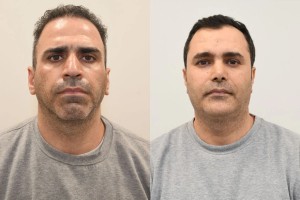
Mostafa Sepahvand, 41, (left) and Farhad Javadi Manesh, 46, were unanimously convicted on Nov. 12, 2026 of engaging in conduct likely to assist a foreign intelligence service under Britain’s National Security Act.
Two Iranian men were found guilty on Thursday of assisting Iranian intelligence operations targeting Iran International journalists in Britain, following a six-week trial at London’s Woolwich Crown Court.
Mostafa Sepahvand, 41, and Farhad Javadi Manesh, 46, were unanimously convicted of engaging in conduct likely to assist a foreign intelligence service under Britain’s National Security Act.
A third defendant, Shapoor Qalehali Khani Noori, 57, was acquitted of all charges and discharged by the court.
Sepahvand was also unanimously convicted of conducting surveillance and reconnaissance with the intention of committing serious violence against a person in Britain.
Javadi Manesh was acquitted of a separate charge alleging that he conducted surveillance intending to facilitate serious violence by others. Noori was also acquitted of that charge.
The judge had told jurors that the court would accept majority verdicts of 10 or 11 out of 12, although they should continue striving for unanimity. The guilty verdicts were unanimous.
Sepahvand and Javadi Manesh are scheduled to be sentenced at London’s Old Bailey on December 17.
Iran International journalists among targets
Prosecutors said the men conducted surveillance on behalf of Iranian intelligence between August 2024 and early 2025, gathering information about individuals in Britain whom Tehran regarded as opponents.
The targets included Iran International journalists Kambiz Hosseini and Mojtaba Pourmohsen, as well as British barrister Jonathan Turner.
During the trial, prosecutor Bill Emlyn Jones told jurors that the defendants visited addresses, photographed buildings and vehicles, and recorded videos to help Iran’s Revolutionary Guards identify potential targets.
The prosecution said Sepahvand was expected to carry out an attack and recruited the other two men to assist in locating and monitoring the individuals.
The court heard evidence of communications with contacts in Iran, including discussions about surveillance, payments and Sepahvand’s efforts to resolve a criminal case against him in Iran.
Defendants disputed knowledge and intent
Sepahvand acknowledged conducting surveillance but said he acted under threats against himself and his family and deliberately tried to frustrate the operation.
Prosecutors challenged that account, arguing that his repeated demands for more accurate information about the targets showed he was actively trying to help locate them.
Javadi Manesh denied knowing that his activities were assisting Iranian intelligence. He did not give evidence during the trial.
Noori also denied knowing that his actions were connected to Iranian intelligence operations.
The convictions come as concern grows in Britain over suspected Iranian intelligence activity targeting dissidents and journalists.
British authorities have repeatedly warned of threats against Iran International staff, while Tehran has previously denied involvement in plots targeting critics overseas.
Women dressed in black hold portraits of slain protesters during a gathering at a cemetery in Iran.
Iranian security agencies have threatened to label families of slain protesters "terrorists" unless they accept the government's account of their relatives' deaths, sources told Iran International ahead of the first anniversary of the January killings.
Security agents have summoned relatives and demanded they describe those killed as "martyrs," a designation that would place their deaths within the Islamic Republic's official narrative of the protests.
Families refusing the designation and instead using the Persian term "Javidnam," meaning "forever remembered," have been warned they could be placed on lists of "terrorists," according to sources close to them.
The term is used by bereaved families to commemorate those killed during protests without accepting the authorities' account of their deaths.
Authorities have also offered certain benefits to families willing to accept the official designation and instructed relatives not to hold anniversary commemorations.
Bereaved family faces repeated security summons
Security agencies have continued summoning and threatening a bereaved family despite serious health problems affecting several of its members, one of them told Iran International.
The family member, whose identity is being withheld for security reasons, said their mother developed heart problems after suffering severe psychological distress while searching for the body of a loved one at Kahrizak.
Their father suffered a stroke in October, while the family member has an autoimmune disease.
Despite these circumstances, the individual has been detained several times in recent months and was summoned to a security agency in November.
During the latest summons, agents demanded that the family describe their slain loved one as a "martyr" and abandon plans for any anniversary ceremony.
Other families have faced similar restrictions.
Iran International previously reported that authorities opened a case against Sanaz Banisaeed, the wife of Mohsen Rashidi-Khaniabadi, who was killed during the January protests, and blocked her Instagram account.
The family of Iman Asadi, another person killed during the protests, has also been summoned repeatedly and warned against posting on social media, according to information received by Iran International.
Pressure continues after protest victim's mother dies
Security pressure on the family of Behboud Hassanzadeh has continued even after the death of his mother, Afrouz Eslampanah, a source close to the family told Iran International.
Authorities have blocked the SIM cards belonging to Hassanzadeh's brother and summoned him several times in recent weeks.
Security agents also warned him against holding memorial gatherings or anniversary ceremonies and demanded that the family recognize Hassanzadeh as a "martyr," according to the source. Eslampanah died on October 30.
Hassanzadeh, 37, a father of two daughters, was shot while helping an injured person during protests on January 8 in Kuhchenar, Fars province. He died two days later.
Pressure to accept official account
Efforts to secure families' acceptance of the government's account of the protest deaths began months before the approaching anniversary.
Authorities had, in some cases, made the return of protesters' bodies conditional on families signing undertakings accepting the official account of how their relatives were killed.
In one case, representatives of the Revolutionary Guards, the governor's office and the education department visited the family of Bahar Shahmehri, a 17-year-old student killed during protests in Neyshabur, northeast of Iran.
The representatives told the family that accepting the official "martyr" designation would be in their interests, a source close to the family told Iran International. Shahmehri's family refused.
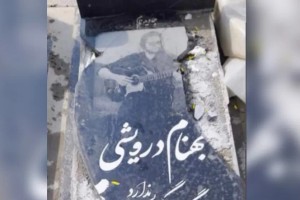
Earlier reports also documented damage to and destruction of gravestones belonging to several people killed during the protests.
Bereaved families regard such actions as attempts to prevent them from preserving the memory of their loved ones.
Despite repeated summons and security warnings, families continue to demand accountability and answers about the deaths of their relatives, according to sources close to them.