• العربية
  • فارسی
BrandBrand
  • Iran Insight
  • Politics
  • Economy
  • Analysis
  • Special Report
  • Opinion
  • Podcast
  • Live TV
  • Iran Insight
  • Politics
  • Economy
  • Analysis
  • Special Report
  • Opinion
  • Podcast
  • Live TV
  • Theme
  • Language
    • العربية
    • فارسی
  • Iran Insight
  • Politics
  • Economy
  • Analysis
  • Special Report
  • Opinion
  • Podcast
  • Live TV
All rights reserved for Volant Media UK Limited
volant media logo
ONE-ON-ONE

Americans ‘a bit naive’ about influence campaigns by Iran, Russia, China

Kambiz Tavana
Kambiz Tavana

Iran International

Nov 13, 2026, 00:01 GMT+0
Sean Durns, director of the Counter Extremism Research Center at the Capital Research Center, speaks in an interview with Iran International's Kambiz Tavana in Washington DC on Nov. 12, 2026

Americans have repeatedly underestimated foreign efforts to influence their politics and public opinion, leaving the US vulnerable to campaigns by China, Russia and Iran, says Sean Durns, director of the Counter Extremism Research Center at the Capital Research Center.

Speaking at Iran International's Washington studio, Durns argued that influence operations and unconventional warfare are deeply embedded in the strategies of America's adversaries but remain poorly understood by much of the US public and political establishment.

"The American people are great people. They can be a bit naive," he said. Influence operations and hybrid warfare, he added, "have been ingrained into the DNA of the Chinese Communist Party since its founding, but they're very foreign to Americans."

Durns, a former deputy commentary editor at the Washington Examiner, leads a program launched last month by the conservative Capital Research Center to investigate extremist movements and foreign influence in the United States.

"These countries have a common enemy, and that is us," he said. "They do cooperate. They do collaborate, and we've seen that with the recent war, in fact, against Iran, where both China and Russia have given aid to Iran in its war against America."

A Ukrainian intelligence assessment reviewed by Reuters in April found that Russian satellites had carried out dozens of imagery surveys of military and critical sites across the Middle East to help Iran strike US forces and other targets.

In May, the Trump administration sanctioned several China-based firms it said had supplied satellite imagery that enabled Iranian strikes on US forces.

"The Chinese Communist Party views Iran as a foil, a way to tie down the United States,” Durns said, “so that it can continue to amass its power and challenge America for hegemony," he said.

Money and influence

Durns pointed to the network of Neville Roy Singham, an American-born former technology executive living in Shanghai, as an example of what he described as foreign influence reaching Western political movements.

Singham, who is married to Jodie Evans, a co-founder of the antiwar group Code Pink, has funded organisations that have attracted scrutiny over their promotion of Chinese government narratives.

In July, the House Ways and Means Committee subpoenaed three Singham-funded nonprofits—BreakThrough News, The People's Forum and Tricontinental—over approximately $40 million in funding linked to him.

Two of the organisations said the subpoenas violated the First Amendment. No charges have been filed.

Durns suggested that some demonstrations in Europe reflected organised influence campaigns rather than entirely spontaneous public mobilisation.

"It's important to understand, when the American public looks across the Atlantic and sees streets burning in Milan, Italy, or in Paris, France, or elsewhere, in Albania, in Spain, that these are not necessarily organic protests," he said.

Durns also accused such groups of exploiting the Gaza conflict to mobilise public anger.

"Gaza has been a very effective one for them, in which, of course, they use lies," he said. "They count on the public not being aware, not being educated."

He argued that social media platforms have made it easier for foreign influence campaigns to reach American audiences.

"There's no fact-checking on TikTok, and the algorithms are distorted to work on behalf of the Chinese Communist Party," he said.

Lessons from the Cold War

Durns said American complacency about foreign influence was not new, pointing to revelations about Soviet intelligence operations that emerged after the Cold War.

Among the examples he cited was the Mitrokhin Archive, a collection of notes compiled by KGB archivist Vasili Mitrokhin and smuggled to Britain in 1992, which exposed Soviet intelligence operations across the West.

"I have met a number of individuals in the press, or who are policymakers themselves, who have never heard of things like the Mitrokhin Archive," Durns said.

He suggested that a similar failure to understand the motivations of adversaries had shaped Washington's approach to the Islamic Republic since the 1979 revolution.

Successive American administrations, he argued, had repeatedly searched for moderate figures within Iran's leadership, misreading the nature of its political system.

"There are no moderates in the Iranian regime. The moderates have been expelled," he said. "They're in Evin prison, or they're elsewhere."

An enduring challenge

Durns rejected comparisons between the recent US war with Iran and the American experience in Vietnam, arguing that claims of an American defeat were misleading.

"There's been a very popular narrative, which is that America lost the current war against Iran, or that this war against Iran was like Vietnam," he said. "That is profoundly, profoundly false."

He also argued that Iran's economic weakness left Washington with substantial leverage despite Tehran's efforts to prolong the confrontation.

Durns compared the current mood in the United States to the 1970s, when America emerged from Vietnam amid widespread predictions of decline, only to prevail in the Cold War less than two decades later.

"So never count America out," he said. "But at the same time, the hour is getting late, and there are growing threats that have been massing over the course of many years that we need to confront and combat."

Most Viewed

Workers in Iran sell organs to pay debts and cover living costs
1

Workers in Iran sell organs to pay debts and cover living costs

2
VOICES FROM IRAN

Missile city unveiling sparks anger over poverty, lack of shelters

3

Trump vows ‘total victory’ as Iran rejects concessions and threatens wider war

4

Iranian commanders threaten to kill Trump, strike US targets worldwide

5
ANALYSIS

US targets Iran's land trade routes, but Tehran may hold firm

Banner
Banner
Banner
Banner
Banner
Banner
Banner

Spotlight

  • Iran's intelligence merger debate signals possible security shake-up
    INSIGHT

    Iran's intelligence merger debate signals possible security shake-up

  • Americans ‘a bit naive’ about influence campaigns by Iran, Russia, China
    ONE-ON-ONE

    Americans ‘a bit naive’ about influence campaigns by Iran, Russia, China

  • Trump's Iran dilemma after America's 'everything' election
    OPINION

    Trump's Iran dilemma after America's 'everything' election

  • The faceless judge who sentenced 11 Iranian protesters to death in 2026
    SPECIAL REPORT

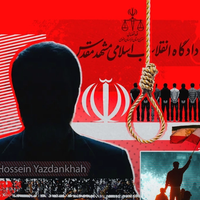
    The faceless judge who sentenced 11 Iranian protesters to death in 2026

  • Iran state TV panelists urge tougher action against US blockade

    Iran state TV panelists urge tougher action against US blockade

  • Iran’s largest ‘private’ bank is run by Supreme Leader’s business empire
    SPECIAL REPORT

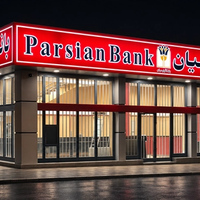
    Iran’s largest ‘private’ bank is run by Supreme Leader’s business empire

  • France's cyberattack allegations against Iran should wake up Europe
    OPINION

    France's cyberattack allegations against Iran should wake up Europe

  • US targets Iran's land trade routes, but Tehran may hold firm
    ANALYSIS

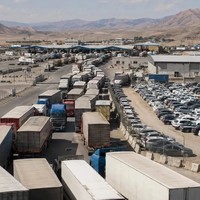
    US targets Iran's land trade routes, but Tehran may hold firm

•
•
•

More Stories

Trump's Iran dilemma after America's 'everything' election

Nov 12, 2026, 21:00 GMT+0
•
Albert Eisenberg
100%
FILE PHOTO: US President Donald Trump arrives to deliver remarks, ahead of the midterm elections at the Lincoln Memorial Reflecting Pool, after being reopened following months of repairs, in Washington, DC, US, November 2, 2026.

President Donald Trump may have paid a heavy political price for his war with Iran, but last week's sweeping election defeat has done little to clarify what he will do next.

Voters across America did not simply hand Democrats control of Congress. The wave reached further down the ballot, flipping hundreds of state legislative seats from Arizona to New Hampshire and giving Democrats control of states and localities few thought possible.

Last Tuesday was a referendum on much of what has happened since Trump took office for the second time in January 2025. The war was a powerful accelerant.

From the beginning, the administration has seemed intent on alienating voters and turning wins into losses. Its approach to immigration, overseen by figures such as Homeland Security Secretary Kristi Noem, helped turn what had been a Republican strength into a political liability.

Trump imposed, paused and reimposed a slew of punishing tariffs at a time when voters were already struggling. Headlines about alleged self-dealing and conflicts of interest, including the decision to accept a $400 million Boeing jet from Qatar's royal family, added to the damage.

In 2024, Republicans successfully portrayed Democrats as out-of-touch insiders; by 2026, they were facing similar accusations themselves.

All of this significantly weakened Trump's domestic political standing and tarnished the Republican brand. The controversies sucked oxygen from the most pressing issue on American voters' minds: the affordability crisis.

On the eve of the war, Trump's approval rating stood at 42 percent. When gas prices shot up, Republicans had little credibility left with working voters in states such as Ohio, Iowa and Texas. By last week's elections, his approval had fallen further, to 37 percent.

Iran was a major factor, not least because of the lack of clear deadlines or a convincing explanation to the American public of why the country was at war. Whatever the administration's strategic arguments, the average American voter had more immediate concerns.

Vice President JD Vance, whose political identity is closely tied to MAGA, has argued that the war was the reason Republicans lost up and down the ballot. “The reason we lost is the war,” Vance wrote the morning after the election.

The immediate verdict is that the war has been a political loser for Trump and the Republican Party. The long-term verdict on the argument Trump has made from the start—that Iran cannot be allowed to acquire a nuclear weapon—is less clear.

The president himself acknowledged the political costs in an interview with 60 Minutes after the election: “Is it a good decision for today and tomorrow? Maybe not, but I have to go with what's right for our country.”

What comes next is anybody's guess. After meeting with Qatar's prime minister this week, Trump declared that Iran “militarily, is effectively over” and called further strikes “quite unlikely.”

Trump has also signaled a pullback from Israel, Iran's principal regional adversary: a shift Vance says voters are demanding. On Election Day itself, the president announced that the US would stop sending Israel its roughly $4 billion in annual aid by the end of this year.

Democrats, meanwhile, will use every tool at their disposal to prevent the US military from extending its operations, starting with the power of the purse. “We are going to end the war,” Senate Democratic Leader Chuck Schumer has promised.

But America's mercurial president is difficult to predict and has a habit of saying one thing and doing another when it comes to Tehran. With the political damage already done, he could ramp up the pressure, keep the blockade in place or pursue a peace deal. Trump likes options, and he likes leverage.

After last week's Everything Election, those options remain on the table, even if the political room to pursue them has narrowed.

Iran's top clerical governing body calls for nuclear doctrine review

Nov 12, 2026, 16:22 GMT+0
100%
File photo: Members of Iran's Assembly of Experts meet Iran's then Supreme Leader Ali Khamenei, in November 2024

Iran's Assembly of Experts, a body of Islamic jurists tasked with choosing the supreme leader, has become the first governing institution to call for a review of the country's defense doctrine, potentially paving the way for a reversal of the religious ban on nuclear weapons.

In a statement released on Thursday, the assembly called for reviewing Iran's membership in the Nuclear Non-Proliferation Treaty (NPT) and its defense doctrine to establish adequate deterrence, describing the move as an “unavoidable necessity” and a “public and national demand.”

The intervention carries particular religious significance because the assembly comprises senior clerics, some of whom are qualified to exercise independent Islamic legal reasoning. Their support for reconsidering the doctrine could help weaken the religious justification for Iran's longstanding prohibition on nuclear weapons, based on a decree by the late Supreme Leader Ali Khamenei.

The assembly is constitutionally responsible for appointing and overseeing Iran's supreme leader. It has no direct authority over nuclear policy, but its statement gives institutional weight to demands previously voiced largely by hardline lawmakers and commentators.

Iran has long maintained that its nuclear program is peaceful, citing Khamenei's religious ruling against weapons of mass destruction.

Iran's security chief Mohsen Rezaei said last month that changing the nuclear doctrine was under discussion but that neither the government nor the broader establishment had made a new decision.

Earlier this week, Foreign Ministry spokesman Esmaeil Baghaei said Tehran remained committed to the NPT.

Hardliners press for nuclear policy shift

Tehran's interim Friday prayer leader, Mohammad-Javad Haj Ali-Akbari, described revising the nuclear doctrine as a national demand on October 30. Lawmaker Ahmad Naderi has openly advocated acquiring an atomic bomb.

Hardliners have also urged Supreme Leader Mojtaba Khamenei to overturn his father Ali Khamenei's religious decree prohibiting the production of nuclear weapons. Others have proposed enriching uranium to weapons-grade levels while stopping short of manufacturing a bomb.

Reformist figures have challenged claims that developing nuclear weapons enjoys broad public support. Separately, Nour News, a website close to the Supreme National Security Council, warned against allowing crowd slogans to substitute for expert assessment of nuclear policy.

Warning of retaliation

The assembly also warned that another attack on Iran would trigger an “immediate and effective response without geographical limits” from the armed forces.

Its language echoed instructions attributed to Mojtaba Khamenei in an account published by the Revolutionary Guards-affiliated Tasnim news agency on October 31. That account did not announce an order to develop nuclear weapons.

Beyond military policy, the assembly called for establishing a “war economy headquarters” involving different branches of government and operating under the supreme leader's oversight.

It also urged action against what it described as the enemy's “cultural assault,” particularly concerning chastity and hijab.

Iran says the US must ‘surrender’ to seven conditions. What are they?

Nov 12, 2026, 14:03 GMT+0
•
Arash Sohrabi
100%
People walk past an anti-US billboard in Tehran, August 3, 2026. Officials have presented Iran’s seven conditions at home as the terms of an American defeat.

Iran’s leaders say no talks can begin until Washington accepts seven conditions. But Tehran has never published them, its own officials list them differently, and several are demands no US president could meet, while the one issue Washington cares most about is ruled out.

The conditions are back at the center of the war’s diplomacy this week. On Thursday Hossein Taeb, a cleric who ran the Revolutionary Guards’ intelligence organization until 2022 and now heads the Basij paramilitary force, gave the most detailed account yet of how messages are moving between the two sides.

  • Iran threatens US bases in Europe if attacks resume

    Iran threatens US bases in Europe if attacks resume

  • Trump vows ‘total victory’ as Iran rejects concessions and threatens wider war

    Trump vows ‘total victory’ as Iran rejects concessions and threatens wider war

  • Iran state TV panelists urge tougher action against US blockade

    Iran state TV panelists urge tougher action against US blockade

  • US targets Iran's land trade routes, but Tehran may hold firm

    US targets Iran's land trade routes, but Tehran may hold firm

Days before the US midterm elections, he said, a Trump representative went to Vladimir Putin, and a Russian envoy then flew to Tehran with a written message for Supreme Leader Mojtaba Khamenei. The envoy waited for a reply. Khamenei, Taeb said, calmly ordered that it be sent “at a suitable time.”

Then came a phone call between Putin and Mohsen Rezaei, secretary of the Supreme National Security Council, and Rezaei’s trip to Moscow, where he handed Putin a letter from Khamenei on November 5.

“Our position is that Iran’s seven conditions must first be met and accepted by the other side,” Taeb said. Only then would Iran decide how, and about what, to negotiate.

His account sits awkwardly beside his colleagues’. Rezaei told Al Mayadeen this week that there are no negotiations of any kind and that reports of talks are “lies.” On X he told Washington to stop “manufacturing FAKE NEWS about imaginary talks” and wrote that it was “time to SURRENDER to the seven conditions.”

Parliament Speaker Mohammad Bagher Ghalibaf, who formally leads Iran’s negotiating team, told Al Jazeera on Wednesday that Tehran had given Washington “a clear and transparent response” and was waiting for an official reply.

The US envoys Steve Witkoff and Jared Kushner met Putin in the Kremlin on Thursday, mainly to discuss Ukraine after talks in Abu Dhabi. Neither side has said whether Iran came up.

A list that was never published

Rezaei announced the seven conditions on September 23, after a meeting with President Masoud Pezeshkian and Foreign Minister Abbas Araghchi, and said they had been put in writing and handed to Pakistan and Qatar. Iran later offered to reopen the Strait of Hormuz within seven days if they were met, then within two.

Iran has never officially released the text. Officials say the conditions grew out of the Islamabad understanding of June, which Hassan Ghashghavi, spokesman of parliament’s National Security and Foreign Policy Committee, says the presidents of both countries signed. Trump has disowned it.

No official list exists. Pieced together from what officials have said, it usually runs: an end to the war on all fronts, especially in Lebanon, the lifting of sanctions, the release of frozen assets, an end to the US naval blockade, compensation for war damage, guarantees against future attacks, and Iranian control of the Strait of Hormuz.

But the list moves. Vahid Ahmadi, a member of the same committee, includes “the management of the Strait of Hormuz” by Iran under a new route agreed with Oman. Ghalibaf, listing them on Wednesday, added guaranteed waivers for Iranian oil sales. The armed forces chief, Ali Abdollahi, has set out five conditions of his own, including recognition of Iranian authority over Hormuz and a new regional security framework. Some reports include a reduction of US forces in the region. “Sometimes we may mention some conditions,” Rezaei said in September, “but Iran has seven.”

On October 11 Rezaei said Washington had “agreed to some” of them. This week he said there was no response at all.

Why they don’t hold up

An end to war “on all fronts.” This asks Washington to stop wars that Iran’s allies are fighting. Ahmadi says the condition now covers not only Lebanon but “the other resistance fronts,” meaning Hezbollah, the Houthis and militias in Iraq. Lebanon already has its own track. A US-brokered framework between the United States, Israel and Lebanon in June led to direct talks between Israel and Lebanon. Tehran is tying its own deal to a war fought by a group it arms and funds.

Lifting sanctions. No US president can do this alone. Many US sanctions on Iran are written into law by Congress. United Nations sanctions returned in late September 2025 under the nuclear deal’s snapback mechanism. The European Union and Britain impose their own. Lifting sanctions under the 2015 nuclear deal took two years of negotiation. Iran is asking for it as a condition for starting to talk.

Frozen assets. Iran’s own figures do not agree with anyone else’s. Tasnim and the central bank put the total at about $24 billion; other estimates run past $100 billion. Some of the money is tied up in US court judgments won by victims of attacks blamed on Iran, and the $6 billion moved to Qatar in 2023 was frozen again after the Hamas attack on Israel that October.

Ending the blockade. The US blockade of Iranian ports began on April 13, after Iran choked traffic through Hormuz. The condition asks Washington to lift its response while Iran keeps the closure that caused it. Iran’s only offer in return is to reopen a waterway it closed.

Reparations. The government spokeswoman has put Iran’s losses at $270 billion without a breakdown. Trump has rejected paying anything. Tehran is demanding compensation while its own missiles and drones struck its neighbors. The UAE alone absorbed close to 3,000 attacks in the first months of the war, the Financial Times has reported.

Guarantees against attack. No US president can bind his successor, which is the lesson Iranian officials themselves draw from Trump’s exit from the 2015 deal. The same officials who say Washington cannot be trusted are demanding a promise from it.

Iranian control of Hormuz. The strait is an international waterway. A condition that Iran “manage” it, approve routes or collect tolls is not a term for ending a war. It is a claim to a power Iran did not have before the war began.

What is not on the list

The issue Washington says the war was about is missing. Rezaei said this week that the nuclear file “is not under discussion,” and that “not even a particle” of Iran’s enriched uranium would leave the country.

The result is a list that asks Washington to give up every lever it holds, sanctions, the blockade, its forces and the money, before talks begin, while Iran keeps the two things the other side wants most: the closure of Hormuz until the end, and its nuclear material for good.

Who the list is for

Officials have sold the conditions at home as the terms of a victory. Rezaei told Washington it was “time to SURRENDER to the seven conditions Iran has repeatedly set out.” Taeb told his audience that the 40-day war decided the elections in Israel and the United States, and that Trump would have to withdraw his forces or face “a wider social movement” at home.

Ghalibaf said on Wednesday that Tehran wants to end the state of “neither war nor peace,” but that this might come through “sustainable deterrence” rather than talks.

The cost of the stalemate falls on Iranians. Ghalibaf himself complained that the blockade has cut access to food and medicine. Taeb said gasoline output fell to about 102 million liters a day during the war against consumption of about 135 million, and that Iran still imports some seven million liters a day. Inflation reached about 77 percent in October.

Iranian commanders threaten to kill Trump, strike US targets worldwide

Nov 12, 2026, 09:30 GMT+0
100%
FILE PHOTO: People visit the Islamic Revolutionary Guard Corps (IRGC) Aerospace Force Museum in Tehran, Iran, November 4, 2026.

Senior Iranian military and Revolutionary Guards officials issued a series of threats against the United States and Israel on Wednesday, including a pledge to kill their leaders and warnings of attacks on American bases in Europe and targets worldwide.

“We are determined to kill Trump and Netanyahu as long as we live,” Keyoumars Heydari, deputy chief of staff of Iran's armed forces, told state television, referring to US President Donald Trump and Israeli Prime Minister Benjamin Netanyahu.

Heydari also claimed that American forces had been driven out of the Persian Gulf and that US warships had retreated hundreds of kilometers from Iranian territory.

His remarks followed threats from senior Revolutionary Guards adviser Mohammadreza Naqdi, who said Iran's armed forces had received authorization from Supreme Leader Mojtaba Khamenei to retaliate without geographical restrictions.

“If the enemy makes another wrong move and seeks to act aggressively again, it will certainly receive deadly blows in different parts of the world,” Naqdi said.

He was referring to Khamenei's October 31 instructions to military commanders to respond immediately to threats, expand their potential targets and disregard geographical limitations.

Iran's top security official, Mohsen Rezaei, meanwhile, threatened to extend retaliatory strikes beyond the Middle East if Washington resumed attacks.

“We may even target some American military bases in European countries,” Rezaei, secretary of Iran's Supreme National Security Council, told Lebanon's Al Mayadeen television.

He said American bases in Europe and on distant islands could become targets if US aircraft used them to attack Iran. The extent of Iran's ability to strike such distant locations remains uncertain.

Revolutionary Guards spokesman Hossein Mohebbi separately told the Guards-affiliated Tasnim news agency that Iran's aerospace forces had developed sufficient military capabilities to confront a global superpower and bring it to a standstill.

Mohebbi credited the late supreme leader Ali Khamenei and military commanders, particularly Hassan Tehrani Moghaddam, regarded as the architect of Iran's ballistic missile program, for developing those capabilities.

The increasingly confrontational rhetoric accompanied continuing disagreements over negotiations with Washington.

Parliament Speaker Mohammad Bagher Ghalibaf told Al Jazeera on Wednesday that Iran was determined to end its prolonged state between war and peace through sustained military deterrence, potentially without negotiations.

He said Washington had yet to formally respond to Tehran's seven conditions for reopening the Strait of Hormuz and resuming talks.

The statements followed months of US-Israeli military operations and a continuing American naval blockade, with Tehran insisting on its conditions for ending the confrontation while Washington maintains economic and military pressure.

Trump vows ‘total victory’ as Iran rejects concessions and threatens wider war

Nov 12, 2026, 00:41 GMT+0
100%
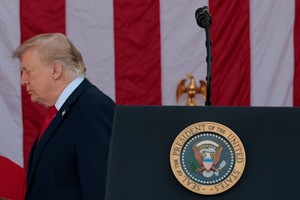
US President Donald Trump attends a Veterans Day ceremony at Arlington National Cemetery in Arlington, Virginia, US, November 11, 2026. REUTERS

US President Donald Trump predicted Wednesday that the war with Iran would end soon, but Tehran rejected nuclear concessions and threatened US bases as far away as Europe, while Washington intensified economic pressure and tensions persisted in the Strait of Hormuz.

Speaking at a Veterans Day ceremony at Arlington National Cemetery, Trump declared that US forces had already defeated Iran militarily and suggested Washington could decide when to end the conflict.

“We won. It’s just a question of when we end it,” Trump said.

“I want to make sure we have a total victory, not a 93 percent victory,” he added, predicting that the conflict would end soon.

Tehran, however, showed little willingness to accept Washington's terms. Parliament Speaker Mohammad Bagher Ghalibaf said Iran was determined to end its prolonged state between war and peace through military deterrence, potentially without negotiations.

In an interview with Al Jazeera, Ghalibaf said Washington had not formally responded to Tehran's seven conditions for reopening the Strait of Hormuz and resuming talks. He insisted that those conditions must be fully implemented before either could proceed.

His remarks followed comments by President Masoud Pezeshkian on Monday that Supreme Leader Mojtaba Khamenei had ordered an end to the country's “no war, no peace” situation. Pezeshkian said Iran could resolve the dispute through negotiations but would not yield to pressure.

The impasse extends to Iran's nuclear program, one of the central disputes between the two countries.

Mohsen Rezaei, secretary of Iran's Supreme National Security Council, said Tehran would not transfer any of its enriched nuclear material abroad, rejecting a possible arrangement involving Russia.

“We have informed our Russian friends that the enriched material will remain in Iran, and we will use it ourselves,” Rezaei told Lebanon's pro-Hezbollah Al Mayadeen television.

Russia's Foreign Ministry said Wednesday that its offer to receive the material remained available, while emphasizing that Tehran alone would decide what happened to its stockpile.

The disagreement highlights the obstacles facing any diplomatic settlement, even as Pakistan continues efforts to mediate between Washington and Tehran.

Pakistani Prime Minister Shehbaz Sharif, who met Pezeshkian on the sidelines of the COP31 climate summit in Turkey, called for restraint and sustained diplomacy, saying negotiations offered the only path to lasting peace.

The Wall Street Journal reported Wednesday that US Vice President JD Vance was considering face-to-face talks with Iran's Supreme National Security Council Secretary Mohsen Rezaei, citing US and Middle Eastern officials and people familiar with the negotiations.

Trump has authorized Vance to negotiate with Iran, according to the report. Vance sent Rezaei a letter in October requesting a meeting, but no date has been set, with Doha under consideration as a possible venue.

But prospects for direct talks appeared uncertain. Mehdi Mohammadi, an adviser to Ghalibaf, said Tehran had rejected a request from US Vice President JD Vance for direct negotiations before Washington delivered its final response to Iran's proposal.

The Wall Street Journal, meanwhile, reported that Trump had privately questioned whether a Pakistan-brokered agreement reached in June had allowed Tehran to regroup before the United States imposed its naval blockade.

With negotiations stalled, Washington is seeking to intensify the economic pressure already imposed through maritime restrictions and sanctions.

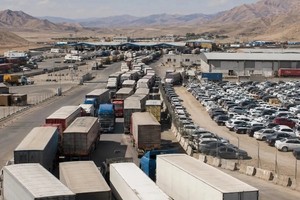
The New York Times reported Wednesday that US officials had spent weeks unsuccessfully pressing Iran's neighbors, particularly Iraq, Turkey and Pakistan, to restrict trade across their land borders.

The effort gained a new dimension with the establishment of Task Force Iron Gate, a US Central Command initiative aimed at disrupting the movement of weapons, sanctioned goods and illicit revenue across Iran's land borders and the Caspian Sea.

But neighboring governments have resisted measures that could damage their own economies and provoke unrest in communities dependent on cross-border trade.

According to the Times, Iraq rejected a US request to close all but two crossings with Iran, while Turkey has largely declined to change its border policies.

The Group of Seven foreign ministers pledged Wednesday to maintain economic and political pressure if diplomacy failed to address Iran's nuclear program and regional security concerns.

Iran's response has combined diplomatic resistance with increasingly expansive military threats.

Rezaei warned Wednesday that any US military base involved in a renewed war against Iran could be targeted, including facilities in Europe.

“NO SAFE DISTANCE. NO SAFE HAVEN. NO IMMUNITY,” he wrote on X.

Other senior Iranian military figures issued similar warnings. Deputy armed forces chief Keyoumars Heydari said Iran had prepared an expanded list of potential targets beyond the Middle East, while Revolutionary Guards adviser Mohammadreza Naghdi said the armed forces had authorization to retaliate without geographical restrictions.

Mohammadi, the adviser to Ghalibaf, also warned that Iran could consider preemptive military action if Washington continued tightening economic pressure. He claimed the United States was preparing for a limited strike, although there was no independent confirmation of such a plan.

An adviser to Supreme Leader Mojtaba Khamenei also warned that countries helping enforce a blockade against Iran could be treated as participants in an act of war.

Those threats came as the Strait of Hormuz remained a flashpoint, complicating efforts to restore commercial shipping and energy exports from the Persian Gulf.

Reuters reported Wednesday, citing three sources familiar with the matter, that Iran had attacked navigation infrastructure on Oman's Didamar island used to support shipping through the waterway. The extent of any damage was unclear.

Iran's navy also said a tanker had caught fire after striking a mine east of the strait, describing the area as unsafe and restricted and urging shipowners to coordinate passage with Iranian forces.