Mediators are expected to hold separate talks with the United States and Iran on Monday or Tuesday over an amended version of a seven-day proposal Tehran presented on the sidelines of the UN General Assembly, sources briefed on the negotiations told Reuters.
Iranian Foreign Minister Abbas Araghchi and Qatari mediators remained in the United States for the discussions, an official briefed on the negotiations said.
The diplomatic effort comes with divisions visible inside Iran over negotiations and the country’s nuclear policy, while military officials continue to warn about another confrontation with Washington.
Diplomacy meets resistance at home
A group of serving and former Iranian officials called Monday for an immediate halt to cooperation under the Nuclear Non-Proliferation Treaty and withdrawal from the pact “as soon as possible.”
“Continued membership in this treaty is not in the country’s interest, and we call for withdrawal from it as a strategic necessity,” the signatories said.
Former intelligence minister Heydar Moslehi and other former officials from the administrations of Ebrahim Raisi and Mahmoud Ahmadinejad signed the statement alongside serving lawmakers.
Hardline newspaper Kayhan also criticized Iran’s diplomatic approach, saying officials had shown excessive enthusiasm for negotiations during President Masoud Pezeshkian’s visit to New York and sent Washington “a signal of weakness.”
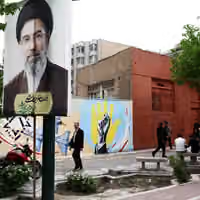
Supreme Leader Mojtaba Khamenei, meanwhile, emphasized Iran’s military position, describing the country as the “world’s top power” according to what he called “divine calculations” and saying enemy forces had been pushed back from waters near Iran.
Military pressure centers on Hormuz
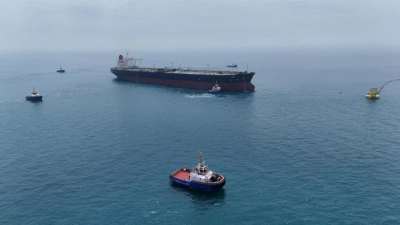
Iranian officials continued to point to the Strait of Hormuz in their warnings to Washington.
“We are acting with authority in the northern Arabian Sea and east of the Strait of Hormuz, and we will not let anyone pass. On the other side, our IRGC brothers are also standing firm,” army deputy coordinator Habibollah Sayyari said.
Lawmaker Salar Velayatmadar said Iran could close the Strait of Hormuz and Bab al-Mandab if the United States launched another attack.
Rial falls under trade and oil pressure
The economic backdrop to the negotiations has also deteriorated, with the US dollar listed at 2.45 million rials on Iran’s open market Monday.
Iranian businesses are facing higher costs in trade with neighboring Iraq as banks tighten checks and anti-money-laundering requirements, head of the Iran-Iraq Joint Chamber of Commerce, said.
The main danger was not a complete halt in trade but a gradual loss of Iran’s share of the Iraqi market, Jahangbakhsh Sanjabi Shirazi, said.
Washington is also seeking to restrict Iran’s oil income more. Iran could have “nothing left to trade for anything” within two weeks after completing its remaining oil deliveries to China, US Treasury Secretary Scott Bessent said Sunday.
About 15 million barrels remained out for delivery, Bessent estimated.
Pressure on Iranian financial operations extends into Europe. Italy’s central bank told Iran International on Monday that the Rome branch of Iran’s Bank Sepah has remained under special administration since October 2025 following the European Union’s adoption of restrictive measures against Iran.
The weakening rial and growing obstacles to trade are adding to Iran’s economic pressure, while warnings over Hormuz and recent military exchanges keep the risk of renewed conflict hanging over the country and the region.