• العربية
  • فارسی
Brand
  • Iran Insight
  • Politics
  • Economy
  • Analysis
  • Special Report
  • Opinion
  • Podcast
  • Iran Insight
  • Politics
  • Economy
  • Analysis
  • Special Report
  • Opinion
  • Podcast
  • Theme
  • Language
    • العربية
    • فارسی
  • Iran Insight
  • Politics
  • Economy
  • Analysis
  • Special Report
  • Opinion
  • Podcast
All rights reserved for Volant Media UK Limited
volant media logo

Senator Graham was a steadfast friend of the Iranian people, Prince Pahlavi says

Jul 12, 2026, 10:52 GMT+1Updated: 12:37 GMT+1
US Senator Lindsey Graham speaks at a rally by Iranian opposition supporters in Munich, Germany, on February 17, 2024.

Iran's Prince Reza Pahlavi offered condolences following the death of US Senator Lindsey Graham on Sunday, calling him a “steadfast friend of the Iranian people” and a defender of freedom.

Pahlavi said Graham had stood with Iranians “when friends were seldom found” and had used his voice to amplify those fighting for justice.

“His support for Iran’s Lion and Sun Revolution earned him the title ‘Uncle Lindsey’ among Iranians. He will be remembered with profound gratitude and deep respect,” Pahlavi said in a post on X.

The Iranian prince extended condolences to Graham’s family, colleagues, the people of South Carolina and the United States.

The senior Republican lawmaker from South Carolina died after a “brief and sudden illness,” his office said in a post on X. US media reported that emergency personnel had responded to a call for cardiac arrest at his Capitol Hill home on Saturday night.

Graham backed Iranian opposition

Graham told a large gathering of Iranian opposition supporters in Munich in February that it was “a time of choosing.”

“I choose the Iranian people over the murderous ayatollah. It is time for him to go,” he said as he waved Iran’s pre-1979 Lion and Sun flag.

He said he had been “dreaming of a free Iran” and urged people around the world to speak out in support of Iran’s opposition movement.

Graham was also featured in Iranian government-aligned messaging during the funeral of former Supreme Leader Ali Khamenei in Tehran, where placards showed his face alongside US President Donald Trump beneath red target symbols.

A longtime voice on foreign policy, Graham was a prominent supporter of Israel and Ukraine and a staunch critic of Iran’s government. He consistently advocated a hard line toward US adversaries. His Senate website said he had “consistently pushed for outcomes in the War on Terror that protect our long-term national security interests.”

Tributes pour in

Trump called Graham “one of the greatest people and senators I have ever known” and described him as a hard-working patriot.

After Trump became president, Graham became one of his closest allies in Congress and a frequent golf partner.

“Israel has lost one of its greatest friends. America has lost a great patriot. I have lost a beloved friend,” Israeli Prime Minister Benjamin Netanyahu said in a statement.

Graham had only recently returned from Ukraine and had been scheduled to appear on NBC's Meet the Press on Sunday morning, the network said.

This structure keeps all the Iran-related reporting together before broadening out to US politics and international tributes, which I think is much stronger for your audience.

Most Viewed

Iran faces region’s harshest mix of wartime contraction and inflation
1

Iran faces region’s harshest mix of wartime contraction and inflation

2
PODCAST

Is the Iran-US MoU dead – or are we asking the wrong question?

3

Khamenei doubles down on revenge after Trump vows to decimate Iran if targeted

4

Senator Graham was a steadfast friend of the Iranian people, Prince Pahlavi says

5
INSIGHT

For many Iranians, paychecks now barely cover food

Banner
Banner
Banner

Spotlight

  • Iran faces region’s harshest mix of wartime contraction and inflation

    Iran faces region’s harshest mix of wartime contraction and inflation

  • Is the Iran-US MoU dead – or are we asking the wrong question?
    PODCAST

    Is the Iran-US MoU dead – or are we asking the wrong question?

  • For many Iranians, paychecks now barely cover food
    INSIGHT

    For many Iranians, paychecks now barely cover food

  • Iran’s economic pain deepens as factions trade blame
    INSIGHT

    Iran’s economic pain deepens as factions trade blame

  • A remote bridge shows how US-Iran war is expanding
    ANALYSIS

    A remote bridge shows how US-Iran war is expanding

•
•
•

More Stories

Is the Iran-US MoU dead – or are we asking the wrong question?

Jul 11, 2026, 12:18 GMT+1
•
Negar Mojtahedi
100%
Smoke rises from boats on fire at a fishing pier in Banood, Bushehr Province, Iran, after a U.S. projectile struck the area around Iran's Bushehr nuclear power plant on Thursday, according to the deputy governor of Bushehr Province, in this screengrab from a video obtained from social media and released on July 9, 2026. Social Media via Reuters

Less than three weeks after Washington and Tehran began implementing a 60-day memorandum, the ceasefire is broken, commercial ships have again come under attack in the Strait of Hormuz, and US forces have struck Iran. Yet the two sides are still talking.

President Donald Trump declared the ceasefire over after the Islamic Revolutionary Guard Corps fired on three merchant vessels, but said negotiations would continue because Iran “wants to make a deal so badly.”

The contradiction suggests the memorandum may be doing something narrower than ending the conflict. It has failed to prevent renewed violence, but may still provide a structure through which Washington and Tehran can contain escalation, preserve communication and negotiate between military exchanges.

The latest crisis has already damaged one of the memorandum’s main objectives: restoring safe commercial passage through the Strait of Hormuz while the two sides pursued a broader agreement over Iran’s nuclear program and other disputes.

The question is no longer simply whether the ceasefire survived. It is whether the memorandum was ever a peace agreement, or a system for managing an unfinished war.

Experts who spoke to Iran International’s Eye for Iran podcast differed over whether the arrangement remains viable, but broadly agreed that both Washington and Tehran still have reasons to prevent the confrontation from returning to full-scale war.

Jonatan Sayeh, a research analyst at the Foundation for Defense of Democracies, said Tehran may have calculated that it could test US limits, absorb a contained response and retain many of the economic benefits it secured under the agreement.

“That to them was a gamble that was kind of worth it,” Sayeh said.

From the IRGC’s perspective, the outcome may still fall short of its worst-case scenario. Iran was struck, but the broader maritime blockade has not been fully restored, Tehran can continue selling oil to China, and the confrontation did not immediately return to all-out war.

Sayeh also questioned claims that Iran’s civilian government had simply lost control of the Guards.

Tehran may instead be using a new version of its longstanding “good cop, bad cop” strategy, he said, with civilian officials seeking concessions while presenting the IRGC as an independent force they cannot fully restrain.

Historian and Atlantic contributing writer Arash Azizi said the attacks had not necessarily destroyed the broader framework.

“I certainly don’t think it was doomed to fail,” Azizi said. “And I don’t, in fact, think it has failed actually yet.”

Neither Washington nor Tehran appears eager to resume full-scale war, he said. That shared interest could preserve negotiations even after the immediate ceasefire collapsed.

Azizi said hardline pressure on President Masoud Pezeshkian and Foreign Minister Abbas Araghchi may also help explain the attacks. Factions opposed to the agreement could fear that 60 days of normal traffic through Hormuz would make it harder for Iran to reassert control of the waterway as a source of leverage.

Fatima Al-Asrar, a senior policy analyst at Ideology Machine, argued that the memorandum’s ambiguity may have benefited the IRGC from the outset.

She called it a “memorandum of undoing,” saying it postponed or weakened earlier US demands concerning Iran’s nuclear program, armed allies and regional conduct.

“The MoU gives you this kind of maybe false sense of progress, and I think it’s performative mostly,” Al-Asrar said. “It’s a truce, and that’s great, but it’s driven by short-term political wins.”

Rather than removing Iran’s capacity to threaten shipping, she said, the arrangement may have allowed Tehran to retain what amounts to a geopolitical switch.

Iran can reduce tensions when it seeks sanctions relief, oil revenue or diplomatic concessions, then disrupt the strait again when it wants greater leverage.

The consequences extend far beyond Washington and Tehran. Disruption in Hormuz raises shipping and energy costs and can affect fertilizer supplies and food prices across Asia and other import-dependent regions.

Itai Reuveni, director of communications at NGO Monitor, described the memorandum as a deliberately flexible answer to the immediate needs of all sides.

Iran wanted to stop US and Israeli strikes before they threatened the survival of the Islamic Republic. Washington wanted to avoid another prolonged Middle Eastern war. Israel had demonstrated its ability to strike Iran but also faced the costs and risks of a sustained campaign.

The agreement reduced the intensity of the war without settling the disputes that caused it.

“It seems to me that the line is always being pushed,” Reuveni said.

The United States, Israel and Iran may now be entering a prolonged cycle in which each side tests how far it can go without triggering another major war.

That may explain why military action and diplomacy are continuing at the same time.

The memorandum did not create a conventional peace process in which violence stopped before negotiations began. It created a framework in which strikes, threats, retaliation and mediation could unfold alongside one another.

The attacks in Hormuz have damaged that framework and increased the danger of miscalculation. Another round of fighting could be broader and more destructive.

But whether the memorandum is dead depends on what it was expected to achieve.

The ceasefire may be over. The managed confrontation it created may only be beginning.

Episode 111 of Eye for Iran is available on YouTube and all major podcast platforms.

Ali Khamenei buried in Mashhad after days-long funeral

Jul 9, 2026, 23:41 GMT+1
100%
A picture of Ali Khamenei in the Iraqi city of Najaf where a funeral was held for him ahead of his burial in

Iran’s slain supreme leader, Ali Khamenei, was buried Thursday evening at the shrine of the eighth Shia imam in the northeastern city of Mashhad after days of funeral processions in Iran and Iraq, while his successor, Mojtaba Khamenei, remained absent from all public ceremonies.

Before the burial, Khamenei’s eldest son, Mostafa, led prayers over his father’s body.

Islamic Republic loyalists filled the streets and courtyards around the shrine as Khamenei’s coffin was brought through Mashhad, his hometown, at the end of a week of funeral ceremonies.

Mourners dressed in black waved Iranian flags, carried portraits of Khamenei and held placards with revolutionary slogans. Some in the crowd chanted against the United States and called for revenge on US President Donald Trump.

Videos from Khamenei’s final state-organized funeral in Mashhad on Thursday night showed loyalists of the Islamic Republic chanting “death to America” and “death to Israel” and demanding revenge for the slain supreme leader’s killing.

Iranian state media also reported plans for a symbolic public execution and burning of a Trump-like effigy in Mashhad’s Ahmadabad Square, with footage showing the effigy mounted on a truck

The burial came as renewed hostilities between Iran and the United States deepened uncertainty in the country, with Tehran presenting the funeral turnout as a show of public support and revolutionary resolve.

Khamenei’s remains, along with those of four family members killed with him, had earlier been taken through Tehran, Qom and the Iraqi shrine cities of Najaf and Karbala.

The burial marks the end of Khamenei’s 37-year rule, a period his supporters portray as one of resistance against foreign pressure, while critics point to years of repression, economic hardship and repeated waves of anti-government protests with the latest resulting in tens of thousands of protestors killed by state security forces during January’s nationwide uprising.

US-Iran conflict widens with fresh strikes and Persian Gulf attacks

Jul 9, 2026, 14:09 GMT+1
100%
Photo published on social media shows smoke and flames rising after explosions during overnight strikes on Iranshahr in Iran's southeastern Sistan and Baluchestan Province, Wednesday night. Iranian authorities said the attack targeted facilities at Iranshahr Airport.

The United States and Iran expanded their military confrontation over the past 24 hours with fresh strikes, missile and drone attacks across the Persian Gulf and growing disruption to shipping through the Strait of Hormuz despite diplomatic efforts to preserve a ceasefire.

The latest US strikes hit southern Iran on Thursday, with a provincial official saying an attack on a pier in Sirik killed three people and wounded 15 others. Iranian media also reported explosions near Bandar Abbas, while a Bushehr official said projectiles struck areas around the province's nuclear power plant.

The attacks followed a broader US campaign against Iranian military infrastructure along the country's southern coast.

US Central Command said it struck around 90 military targets, including coastal surveillance systems, air defenses, anti-ship missile positions, drone and missile storage sites, logistics infrastructure and dozens of Islamic Revolutionary Guards Corps naval vessels, saying the operation was intended to reduce Iran's ability to threaten shipping in the Strait of Hormuz.

Iran responded by announcing missile and drone attacks on what it called US military facilities in Bahrain, Kuwait and Qatar, saying it targeted air defense systems, fuel storage sites and other military infrastructure in retaliation for the US strikes.

Bahrain and Kuwait said their air defenses intercepted incoming missiles and drones, while Jordan activated nationwide air raid sirens after missiles and drones entered its airspace.

The US Embassy in Amman urged Americans to seek shelter indoors, and Qatar condemned Iranian attacks on Bahrain, Jordan and Kuwait while urging all sides to return to diplomacy.

Strait of Hormuz

The confrontation increasingly centered on the Strait of Hormuz, one of the world's most important energy corridors.

Bloomberg reported commercial traffic through the waterway had slowed to a near standstill, while CBS News, citing vessel-tracking data, said only three fuel tankers were observed transiting the strait on Thursday.

The IRGC Navy said shipping had recovered to about half of pre-war levels under routes designated by Iran but warned any US attempt to control maritime traffic would receive a "crushing response."

Oil prices climbed to their highest levels in about three weeks as traders weighed the risks to global energy supplies.

Diplomacy falters

President Donald Trump said the United States had struck Iran "much harder" after attacks on commercial ships and warned further Iranian action would trigger an even stronger response.

He also questioned whether Tehran could be trusted to uphold any future agreement despite saying Iran had again sought negotiations.

Axios reported the White House was preparing for the possibility of a military exchange lasting days or even weeks depending on Iran's next moves in the Strait of Hormuz.

Iran accused Washington of violating the memorandum of understanding reached after April's ceasefire and appealed to the UN Security Council, arguing the latest strikes breached both the agreement and the UN Charter.

Qatar urged both Washington and Tehran to honor the memorandum and return to dialogue, while Iraq said it was seeking to promote rapprochement between the two countries.

Funeral ceremonies continue

Military operations unfolded alongside the final stage of funeral ceremonies for former Supreme Leader Ali Khamenei.

After processions in Tehran, Qom, Najaf and Karbala, Khamenei's coffin was flown from Iraq to Mashhad for burial. Iranian authorities presented the ceremonies as a demonstration of regional solidarity, while IRGC-affiliated media published photographs it said showed Quds Force commander Esmail Qaani attending the funeral.

The past day's events showed how the confrontation has shifted beyond Iran's nuclear program, with the Strait of Hormuz emerging as the military and economic center of the conflict.

Finnish grocery brand drawn into Khamenei funeral spectacle in Iraq

Jul 9, 2026, 08:30 GMT+1
100%
Screengrab from a Reuters video shows a refrigerated vehicle carrying the coffin of Iran’s former Supreme Leader Ali Khamenei in Karbala, Iraq, on July 9, 2026.

A Finnish supermarket group has found itself unexpectedly drawn into Ali Khamenei’s funeral ceremonies after footage from Iraq appeared to show his coffin being unloaded from a refrigerated truck carrying K-Group branding.

The scene, filmed in Karbala and circulated by Reuters, showed a large crowd surrounding a refrigerated truck marked with orange-and-white logos resembling those of Finland’s K Group, part of the retail giant Kesko. Men in dark clothing then pulled a coffin from the frosted rear compartment and carried it above the crowd.

100%
Supermarket K Market, Kallio, Helsinki

The footage was filmed during the Iraqi leg of Khamenei’s funeral processions, which moved through Najaf and Karbala before his planned burial in Mashhad on July 9.

The image quickly drew attention in Finland, where Finnish tabloid Ilta-Sanomat described the sight as “incredible” and said Finns may have had to “rub their eyes” when they saw what looked like familiar K-Market-style branding in the middle of Khamenei’s funeral. Helsingin Sanomat, Finland’s largest daily newspaper, also reported the story.

Yle, Finland’s public broadcaster, ran the story under the headline: “Was Khamenei’s coffin pulled from a K-Group vehicle in Iraq?” It said the Reuters video showed a cold transport truck with orange coloring and repeated K letters that appeared to resemble K Group logos.

Kesko told Yle it had no information about the vehicle and had only become aware of the case through the images.

The company said its deliveries are handled by partner-owned vehicles and that Kesko does not have its own fleet. It suggested one possibility was that a transport partner had sold a vehicle onward without removing K-Group markings.

“This may be a situation where one of our transport partners failed to remove decals referring to us when selling equipment onward,” Kesko told Yle by email.

The company said it would remind transport operators that such decals must be removed before vehicles are sold.

There is no indication that Kesko or K-Market had any involvement in Khamenei’s funeral procession or that the company owned or operated the truck.

The strange visual detail stood out because of the contrast: one of the Islamic Republic’s most symbolic funeral ceremonies, a coffin kept cold after months of delayed burial, and what appeared to be the branding of a Finnish grocery chain on the vehicle carrying it through Karbala.

Iran summons British ambassador after London calls in senior diplomat

Jul 9, 2026, 08:28 GMT+1
100%

Iran summoned the British ambassador in Tehran on Thursday, two days after Britain called in Iran's most senior diplomat in London following the conviction of two Romanian men over the stabbing of an Iran International journalist.

Iran's foreign ministry said it handed the ambassador a protest note rejecting what it called "groundless and false" British statements that Tehran had sought to carry out security-related activities in the United Kingdom.

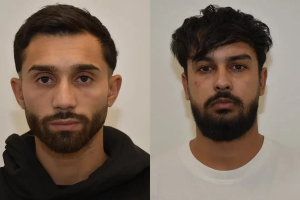
Britain summoned Iran's chargé d'affaires on Tuesday after George Stana and Nandito Badea were sentenced to 12 years and eight years in prison, respectively, for their role in the 2024 attack on Pouria Zeraati, an Iranian-British journalist who works for Iran International.

Zeraati was stabbed three times in the leg near his home in southwest London in March 2024.

British prosecutors said the two Romanian nationals were acting as proxies for the Iranian government. They had pleaded not guilty to wounding with intent but were convicted at London's Woolwich Crown Court.

Judge links attack to Iranian state

The British Foreign Office said the judge had concluded that the attack was carried out "in the interests of, and on behalf of, the Iranian state."

According to a police statement, the judge ruled that the "foreign power condition" under Britain's National Security Act was met in Stana's case because of "extensive planning and his lengthy involvement in the plot", indicating that he knew, or at least should have known, of the connection to the Iranian state.

  • Romanian men get combined 20 years over Iran International journalist attack

    Romanian men get combined 20 years over Iran International journalist attack

The police statement said the condition was not met in Badea's case because he was not aware of the Iran connection as the reason for the attack.

Tehran rejects British move

Iran's foreign ministry rejected Britain's statements as "groundless and false" and said they amounted to an attempt to divert attention from Britain's own conduct.

Britain's Foreign Office said the case followed "a longstanding pattern of hostile activity by the Iranian intelligence services on UK soil" and said Iran must stop such activity immediately. Iran's embassy in London has rejected what it called "unfounded, politically motivated and hostile allegations."

Iran's foreign ministry also called on Britain to stop hosting media outlets that Tehran said were "funded and directed by the Israeli regime." It said Britain should end such activity "as soon as possible."