• العربية
  • فارسی
Brand
  • Iran Insight
  • Politics
  • Economy
  • Analysis
  • Special Report
  • Opinion
  • Podcast
  • Iran Insight
  • Politics
  • Economy
  • Analysis
  • Special Report
  • Opinion
  • Podcast
  • Theme
  • Language
    • العربية
    • فارسی
  • Iran Insight
  • Politics
  • Economy
  • Analysis
  • Special Report
  • Opinion
  • Podcast
All rights reserved for Volant Media UK Limited
volant media logo
OPINION

Iran's Pride Match is about visibility, not politics

Omid Iravanipour
Omid Iravanipour

LGBTQ rights activist

Jun 26, 2026, 17:20 GMT+1
Soccer Football - FIFA World Cup 2026 - Group G - Iran v New Zealand - Los Angeles Stadium, Inglewood, California, U.S. - June 15, 2026 Iran fans celebrate after the match

Iran’s World Cup match against Egypt has become a test not only of FIFA’s approach to inclusion but also of whether LGBTQ+ Iranians can claim visibility on one of the world’s biggest sporting stages.

The game has been designated as the tournament’s “Pride Match” by local organizers to acknowledge and celebrate the LGBTQ+ community.

The designation has no official standing with FIFA and was determined by Seattle’s local organizing committee. Still, the Iran Football Federation objected, as did Egypt’s. Iran’s football chief labeled the match’s designation an “irrational move that supports a certain group.”

That opposition is unsurprising. It represents a continuation of the Islamic Republic’s efforts to erase our community and deny our existence.

In Iran under the Islamic Republic, being LGBTQ+ can quite literally be a death sentence. Under Articles 234–239 of Iran’s Islamic Penal Code, same-sex acts between men can be punished by death.

I never came out publicly in Iran, but I didn’t have to. People could “sense” it, they’d say. The harassment, the threats and the fear were constant. I could have been arrested—or worse.

After fleeing to the United States, I began speaking out—mostly for those who still can’t. In June 2019, when New York City hosted WorldPride to mark the 50th anniversary of the Stonewall Uprising, I had the privilege of marching through the streets of Manhattan alongside my fellow Iranian queers and my family.

It was the first time WorldPride had ever been held in the United States, but for me it meant even more. After 23 years of living under an oppressive state, I was finally able to publicly and proudly be myself—both as a proud Iranian and a gay man.

From that day forward, I committed myself to using the privileges I have as an American citizen to amplify the voices of the Iranian LGBTQ+ community to the world. Our community faces severe legal and social discrimination, state-sanctioned violence and persecution, and unyielding efforts to erase our existence.

I quickly came to understand that it would be reductive to speak about the Iranian LGBTQ+ community outside the context of Iranian identity and Iranian politics. The two cannot be separated.

This is exactly why the 2026 FIFA World Cup has become such a charged and meaningful moment for our community. The news felt like a moment in which we could bring visibility to our plight on one of the world’s largest stages.

But the Pride Match represents only one controversy surrounding Iran in this year’s World Cup. Ahead of the tournament, FIFA made the decision to ban the historic Lion and Sun flag from all venues because it reportedly viewed the flag as “political” in nature.

That flag served as Iran’s official flag until the regime seized power in 1979 and replaced the Lion and Sun image with its current emblem. For millions of Iranians, including myself, the Lion and Sun is not a political symbol but one of cultural identity and resistance to a government that has never represented us.

Despite FIFA’s decision, dozens of brave Iranian fans defied the ban at the national team’s opening match, waving the flags proudly across SoFi Stadium in Los Angeles. While some fans displayed the flags without issue, others were stopped by security while trying to enter the stadium.

One young boy who was stopped said the flag “means freedom,” while another asked: “What do they expect us to do? Support a regime that we do not believe in?”

That question deserves an answer from FIFA. By banning the Lion and Sun, FIFA risked reinforcing the regime’s preferred narrative by treating a symbol many Iranians see as cultural identity as merely political.

The broader conduct of the Iranian Football Federation at this tournament should also give FIFA pause. The Iranian team’s send-off ceremony in Tehran was held at an IRGC-affiliated rally hosted by a sanctioned official who described the World Cup as a “war battlefield” and urged players to compete in memory of those who “stood by Iran’s missile defense systems and ballistic missile launchers.”

This is the organization whose preferences FIFA appears to have reflected when it banned the Lion and Sun flag.

Iran has now threatened to walk off the field entirely if it faces Pride symbols or dissenting slogans at the match, and FIFA has left local organizers to hold the line alone. Iran’s sports minister says they have been “assured that no disruptive incidents will occur in the stadium,” but it remains to be seen how FIFA will handle the situation during the match.

FIFA should avoid repeating that mistake. The Pride Match was intended to affirm visibility and inclusion, not to make a statement about Iranian politics.

For LGBTQ+ Iranians, that visibility is not symbolic. It is something they are denied at home under threat of imprisonment, violence and even death. Allowing that visibility to be erased on US soil would leave them wondering whether their existence remains negotiable when confronted by political pressure.

Most Viewed

Inside the strike on a Shiraz lodging complex: why was a civilian site hit?
1
EXCLUSIVE

Inside the strike on a Shiraz lodging complex: why was a civilian site hit?

2
EXCLUSIVE

Sources detail Ali Khamenei bunker with blast-resistant room

3
INSIGHT

President's economic reality check fuels Iran's US deal debate

4

North Korea received $25 million for Iran tunnel technology, ex-diplomat says

5

World Cup déjà vu: Iran’s ominous Brazil-Scotland quake memory haunts Venezuela

Banner
Banner
Banner

Spotlight

  • Iran's Pride Match is about visibility, not politics
    OPINION

    Iran's Pride Match is about visibility, not politics

  • Investigation traces January protest deaths to Gharazi Hospital in Isfahan
    SPECIAL REPORT

    Investigation traces January protest deaths to Gharazi Hospital in Isfahan

  • US-Iran MoU pauses conflict but leaves nuclear dispute unresolved

    US-Iran MoU pauses conflict but leaves nuclear dispute unresolved

  • Iran economists warn recovery needs reform not just relief
    INSIGHT

    Iran economists warn recovery needs reform not just relief

  • Rival visions of Iran take to the streets during Ashura
    INSIGHT

    Rival visions of Iran take to the streets during Ashura

  • Iran’s negotiators have 60 days; its factories may not
    ANALYSIS

    Iran’s negotiators have 60 days; its factories may not

•
•
•

More Stories

Iranians recast Ashura mourning to remember January protest victims

Jun 26, 2026, 12:38 GMT+1
•
Saba Heidarkhani
Iranians recast Ashura mourning to remember January protest victims
100%
صورة أرشيفية تُظهر مسيرة عزاء خافتة بمناسبة شهر محرم في أحد شوارع إيران

Many Iranians are using the Shiite mourning period of Muharram to commemorate those killed in January's nationwide protests rather than take part in state-backed religious ceremonies, according to messages sent to Iran International and videos from across the country.

Muharram is the holiest month in the Shiite Muslim calendar. Its ninth and tenth days, Tasu'a and Ashura, commemorate the seventh-century killing of Imam Hussein, the grandson of the Prophet Muhammad, whose death at the Battle of Karbala symbolizes resistance against oppression and is marked each year with public mourning processions.

Messages received by Iran International suggest this year's ceremonies have drawn smaller crowds than in previous years, with many Iranians saying the nights of January 8 and 9 massacres have become their own Tasu'a and Ashura, when they mourn tens of thousands of those killed.

Social media posts also show many users replacing traditional Muharram images with photographs and names of people killed during recent protest crackdowns.

Many shared similar sentiments, writing: "We have had our own Ashura. We have seen the real oppressed."

Quieter ceremonies, different mourning

Videos sent to Iran International show some mourning processions incorporating tributes to those killed in the protests.

One resident said a banner bearing the names and photographs of protest victims was raised during Ashura ceremonies in Homayounshahr, near Isfahan, on June 25. According to the account, it was displayed openly during the religious gathering.

The mother of 25-year-old Mohammad Jafarpour, who was killed by security forces in Khomeinishahr, Isfahan province, on January 9, posted a video from his graveside on Wednesday.

"My mourning procession this year, my Ashura and Tasu'a, is your grave, my son," she wrote.

Several residents described this year's Muharram ceremonies as noticeably subdued.

A Tehran resident said that while passing Enghelab Square in central Tehran on June 24, coinciding with Tasu'a, they saw only a single woman waving the Islamic Republic's flag.

Another said chest-beating processions in their town, once dominated by young people, were this year attended mainly by older participants.

"The young people of our city were buried in January with all their dreams," the resident said.

  • A nation in limbo: 100 days after the massacre, has the world moved on?

    A nation in limbo: 100 days after the massacre, has the world moved on?

For decades, Muharram rituals have been strongly promoted by the Islamic Republic and, in many state-supported ceremonies, religious observances have also served as platforms for political messaging and expressions of support for the government's ideological positions.

Karbala remembered through recent protests

Many said they now wear black during Muharram to mourn those killed in the January protests.

Some residents also said that mourning ceremonies in places including Kangavar in Kermanshah province included elegies for those killed during the protests.

Video received by Iran International showed the mother of a victim called Mohammad Radmannia addressing mourners during a Tasu'a ceremony in Tehran, urging them: "Do not let my son's path be extinguished."

Radmannia, 29, was killed by security forces during protests in Tehran's Nezamabad neighborhood on January 9.

  • Over 36,500 killed in Iran's deadliest massacre, documents reveal

    Over 36,500 killed in Iran's deadliest massacre, documents reveal

Another video shared by the sister of 25-year-old Amirhossein Javadzadeh showed their mother searching through Muharram mourners while calling her son's name aloud.

Elsewhere, mourners in Lafmejan village in Gilan province gathered at the grave of 18-year-old Mani Safarpour during a Muharram procession. His photograph was mounted on ceremonial drums used in the procession. Safarpour was killed during protests in Tehran on January 8.

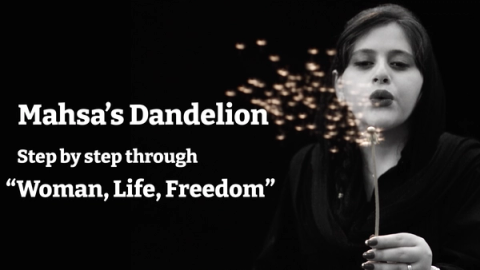
The use of Muharram commemorations to remember those killed in anti-government protests has continued since the Woman, Life, Freedom movement.

During Muharram in 2023, mourners in several cities sang protest songs, held symbolic performances honoring those killed, distributed memorial food offerings in their names and gathered at gravesides.

Investigation traces January protest deaths to Gharazi Hospital in Isfahan

Jun 26, 2026, 11:18 GMT+1
•
Farnoosh Faraji
Investigation traces January protest deaths to Gharazi Hospital in Isfahan
100%
Silhouetted protesters flash victory signs in front of burning barricades during anti-government demonstrations in Iran in January 2026.

Iran International has launched a new phase of its campaign documenting the January massacre, focusing on Gharazi Hospital in Isfahan, where documents and witness accounts show the facility became a destination for many of those killed or wounded during the January 8-10 protests.

The investigation draws in part on a list of people recorded at Gharazi Hospital during the crackdown. Documents reviewed by Iran International have so far confirmed the identities of 24 people who died after being taken there.

Iran International has previously reported on several deaths connected to the hospital, including those of Iraj Kiani, Mohammadreza Saberi, Ahmadreza Mehrab Beik, Mehdi Masoumi and Mona Hosseini.

Those reports described a pattern of direct gunfire at protesters, denial of medical treatment, bodies removed without family consent, delayed release of remains, pressure on relatives and demands for large payments before bodies were handed over.

Hospital under security control

Witnesses, relatives and medical sources described the hospital as operating under tight security control during the three-day period.

They said security personnel controlled the hospital, many bodies were removed without informing families and records relating to some of the dead and wounded disappeared from the hospital's admission system.

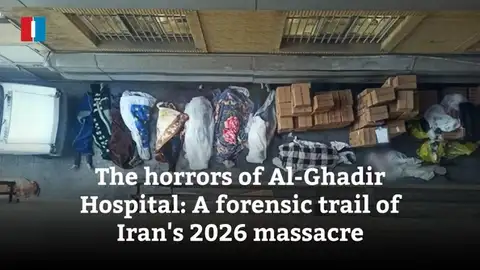
  • Families help identify more victims linked to Alghadir hospital

    Families help identify more victims linked to Alghadir hospital

More than 100 injured people were brought to the hospital on the evening of January 9, according to information received by Iran International. A hospital source said the names of a number of injured and killed were removed from the electronic registration system shortly after being entered.

One medical staff member estimated that 140 bodies linked to the hospital were identified or seen during the unrest, though other sources suggested the real figure may have been considerably higher.

Morgue accounts

Medical sources and eyewitnesses said the hospital morgue reached capacity on the nights of January 8 and 9, with bodies stacked on top of one another. Several sources also said that some wounded people were transferred there alongside those already dead.

One member of the medical staff told Iran International that groaning could be heard from inside one of the body bags after it reached the morgue, suggesting that at least one person was still alive. Security personnel, the source said, prevented staff from approaching the individual.

Witnesses also described bodies being moved to external storage facilities after the morgue became full.

  • Pay for bullets: How Iran pressures families after killing protesters

    Pay for bullets: How Iran pressures families after killing protesters

Families told Iran International that some bodies were withheld for several days before being released under heavy security restrictions, with payments of between five billion and 10 billion rials, roughly $3,500 to $7,000 at the time, reportedly demanded before remains were returned.

The reports contrast with an announcement by Iran's Legal Medicine Organization on January 12 that examinations of those injured during the protests and the release of victims' bodies would be free of charge.

Protester's final hours

Among the cases documented is that of Farid Seifi, who was shot during the protests on January 8.

Witnesses said a security officer fired from a rooftop, striking him in the heart. His family took him to Gharazi Hospital while he was still breathing, but he later died there.

  • How one Tehran hospital became a window into Iran’s January massacre

    How one Tehran hospital became a window into Iran’s January massacre

People close to the family said security personnel subsequently removed his body. After several days and the payment of a substantial sum, his body were returned and buried under heavy security on January 15.

He had been married for only one year and eight months, and his wife was pregnant with triplets when he was killed.

Information from the streets of Isfahan also indicates that Gharazi Hospital became the destination for many people wounded by direct fire from security forces during the protests.

A witness said thousands of people had gathered when security forces advanced from the nearby streets on January 9. Officers first used tear gas and long-range fire before moving closer and opening direct fire on the crowd, according to the witness.

Several people fell after a burst of gunfire, forcing protesters to flee through side streets, the witness said.

One protester was struck by three bullets. "People tried to call emergency services, but the lines were busy," the witness said. "Eventually, several people stopped a car and asked the driver to take the protester's body to the hospital."

Wounded teenager says hospital opened judicial case

In a separate account, an 18-year-old identified as Mehdi said he was shot with live ammunition from about 10 meters away during protests in Isfahan on January 8, with the bullet striking above his knee.

He said protesters first took him to a nearby house, where they stemmed the bleeding. "As the number of wounded increased and space ran out, some protesters were treated in residential parking garages," he said.

Because of heavy blood loss, Mehdi later sought treatment at Gharazi Hospital, where he said staff opened a judicial case for him. Security agents visited his home several times after his hospital visit, he added.

Accounts received by Iran International show that fear of arrest, torture or being killed at hospitals led many wounded protesters to avoid medical centers altogether or leave shortly after arriving. Some instead received treatment in homes and parking garages with the help of local residents and medical staff.

The pattern has also meant that the true number of people wounded and killed was never fully recorded in official systems or, in some cases, disappeared after initial registration.

Iran International's campaign into the small town of Mamasani killings in Fars province has previously documented similar accounts of wounded protesters receiving treatment at home because they feared arrest at hospitals.

  • How a small town became an early flashpoint of Iran’s January bloodshed

    How a small town became an early flashpoint of Iran’s January bloodshed

The campaign to establish the facts surrounding the January protest crackdown continues by collecting, examining and verifying accounts from witnesses, victims' families, medical staff and local sources.

Testimony reviewed by Iran International has made Gharazi Hospital one of the central locations in the investigation. Multiple sources described it not only as a hospital where wounded protesters were denied treatment, but also as a site where bodies were used to intimidate families, extract payments, conceal evidence and erase traces of the killings.

Global index says torture is embedded in Iran’s laws, courts and prisons

Jun 26, 2026, 03:37 GMT+1
Global index says torture is embedded in Iran’s laws, courts and prisons
100%
Students hold up blood-red handprint paintings as an act of protest at a girls’ school in Iran.

Iran was listed among the world’s highest-risk countries for torture, impunity and state violence in the 2026 Global Torture Index, released Thursday by the World Organization Against Torture (OMCT) and partner groups.

The index, produced for Iran in collaboration with Impact Iran, said torture remained deeply embedded in the country’s law, policy and practice, and warned that US and Israeli strikes on Iran during the June 2025 military escalation had further increased the risk of torture, ill-treatment and arbitrary detention.

The report said Iran scored at the most severe level on six of the index’s seven pillars: political commitment, police and institutional violence, impunity, victims’ rights, the right to defend human rights, and protection for all. It rated Iran as high-risk on conditions in detention.

It said Iran had not ratified the UN Convention against Torture, did not criminalize torture as a distinct offense, and continued to allow punishments such as flogging and amputation.

The report also cited the use of confessions in convictions, saying this created incentives for torture and ill-treatment to extract statements, including confessions later broadcast by state media.

It said at least 1,639 executions were recorded in Iran in 2025, including executions of people who were under 18 at the time of their alleged offenses.

The index also pointed to what it called near-total impunity, saying no independent body investigates torture allegations or deaths in custody, while overcrowded detention facilities operate with little or no outside oversight.

Women and girls, ethnic minorities, LGBTQIA+ people, human rights defenders, journalists and lawyers face heightened risks of torture, arbitrary detention and other abuse, the report said.

“In Iran, torture is not a failure of the system – it is the system: written into law, rewarded by the courts, and concealed behind prison walls,” said Rose Richter, Impact Iran’s executive director.

Richter said security forces fired on civilians even inside hospitals during the crackdown of December 2025 and January 2026, when more than 50,000 people were arrested and more than 7,000 killed.

Other rights groups and monitoring organizations have previously reported higher figures for the crackdown, pointing out the difficulty of verifying casualties and arrests amid restrictions on access, intimidation of families and limited independent reporting inside Iran.

  • Over 36,500 killed in Iran's deadliest massacre, documents reveal

    Over 36,500 killed in Iran's deadliest massacre, documents reveal

“Behind each of those numbers is a person whose suffering was deliberate, and a family still waiting for the truth,” Richter said.

Gerald Staberock, secretary general of OMCT, said the index was intended to turn “scattered warnings into evidence that cannot be ignored.”

“The Global Torture Index should be read by development agencies, but also by security actors and businesses seeking to engage or invest in the countries covered,” Staberock said.

OMCT urged Iran to halt executions and judicial corporal punishment, ratify the UN Convention against Torture, criminalize torture, end the use of coerced confessions and give the UN Fact-Finding Mission unhindered access.

Rival visions of Iran take to the streets during Ashura

Jun 25, 2026, 23:52 GMT+1
•
Maryam Sinaiee
Rival visions of Iran take to the streets during Ashura
100%
Mourners at an Ashura procession in Tehran. June 24, 2026.

Iran's Ashura commemorations have again become a stage for competing political narratives, with government supporters and opponents alike using Shi'ite mourning rituals to advance sharply different messages.

Every year during the Islamic month of Muharram, millions of Shi'ite Muslims across Iran commemorate the martyrdom of Imam Hussein, the grandson of the Prophet Muhammad who was killed in 680 AD.

Hardliners often invoke his example to argue Iran should continue confronting the United States, while government critics use the same symbolism to condemn injustice at home.

Political messaging also comes through speeches by eulogists (maddahs), who preside over ceremonies recounting Hussein's sacrifice and heroism.

At one ceremony, well-known maddah Reza Narimani criticized President Masoud Pezeshkian for disclosing in a recent speech that funds equivalent to the value of 20 million barrels of oil had been allocated to the Revolutionary Guards' Aerospace Force during the war.

Narimani also claimed Supreme Leader Mojtaba Khamenei opposed negotiations and an agreement with Washington and had merely observed the government's recent diplomatic efforts.

Another eulogist, Mohammad Reza Bazri, criticized officials he accused of ignoring "the ten conditions of the Imam"—a reference to slain leader Ali Khamenei—while pursuing an agreement with Washington and failing to respond to what he described as US violations of the ceasefire.

"The Iranian people would never consent to an agreement with the United States," he claimed.

Opposition mourning

Government critics have likewise used Ashura ceremonies to express dissent, often through traditional mourning chants or carefully worded speeches condemning injustice without directly naming officials.

Religious gatherings in Yazd and Bushehr have become known for incorporating such politically charged poetry.

One widely performed lament, heard again this year, calls on people to rise up and "bring down the idols and palaces of tyrannical rulers."

Another popular mourning chant, which has gained prominence among religious opponents of the government in recent years, criticizes what it portrays as state-sponsored religion.

"In your religion, there is God's name, but God is absent," the lyrics say.

The poem's author, Shahabeddin Mousavi, was detained for a period after it became widely known.

Remembering those killed

While many ceremonies are organized or supported by the state, independent local communities also hold mourning processions that sometimes become venues for political expression.

According to social media posts, some Ashura gatherings this year included performances of the patriotic song Az Khoon-e Javanan-e Vatan ("From the Blood of the Nation's Youth") in memory of thousands of young people killed during the January unrest.

Originally composed during Iran's Constitutional Revolution more than a century ago, the song likens the blood of fallen youth to red tulips blooming from the earth.

At some ceremonies, eulogists reportedly read aloud the names of those killed.

In the central city of Arak, the mother of Mohammad Radmannia, a 29-year-old who was fatally shot in the back of the head with live ammunition in Tehran, urged mourners to continue her son's path.

In a village in the northern province of Gilan, mourners attached a photograph of Mani Safarpour, an 18-year-old from Lahijan who was also killed in Tehran, to a ceremonial drum and cymbals before gathering at his grave to perform chest-beating rituals.

Some opposition activists criticized fellow government opponents for attending Ashura ceremonies, arguing that the events are widely viewed because of state promotion as expressions of support for the Islamic Republic.

"The massacre of protesters in January was carried out on the direct orders of the leader of Shi'ites (Ali Khamenei), while other senior clerics remained silent," one user wrote on X. "A couple of Yazdi or Bushehri mourning chants cannot erase that crime from our society's memory."

Another user wrote: "The blood that was unjustly spilled will never be washed away. No lament or elegy can diminish the scale of this tragedy in our collective memory."

Others defended participation in the ceremonies.

"These mourning chants serve to remind people of those tragedies," one user argued.

Another wrote that participating in Ashura ceremonies was "part of the struggle to reclaim religious symbols" from the government.

A further comment added: "When will people understand that many ordinary religious Iranians have nothing to do with the government or its hardline supporters?"

World Cup déjà vu: Iran’s ominous Brazil-Scotland quake memory haunts Venezuela

Jun 25, 2026, 15:36 GMT+1
World Cup déjà vu: Iran’s ominous Brazil-Scotland quake memory haunts Venezuela
100%
A combo showing the aftermath of the 1990 quake in Iran's Manjil (left) and the Venezuelan people resting as they receive treatment in a field hospital in the aftermath of earthquakes, in La Guaira, Venezuela, June 24, 2026.

A World Cup fixture etched in Iran’s memory since the 1990 Rudbar-Manjil earthquake gained a grim new echo after twin quakes struck Venezuela as Brazil and Scotland met again 36 years later.

For most football fans, Brazil vs Scotland is just a World Cup pairing. For many Iranians and now Venezuelans, it has never been that simple.

The match recalls the early hours of June 21, 1990, when millions in Iran were awake for Italy 90 and Brazil’s 1-0 win over Scotland in Turin. Minutes later, northern Iran was shattered by the 7.4-magnitude Rudbar-Manjil earthquake, one of the deadliest disasters in the country’s modern history.

Now, 36 years later, the same fixture has coincided with another national tragedy, this time in Venezuela.

As Brazil beat Scotland 3-0 in Miami on Wednesday, two powerful earthquakes struck west of Caracas, sending buildings crashing down, forcing terrified residents into the streets and triggering a major rescue operation. US seismologists said the first quake measured magnitude 7.2 and was followed less than a minute later by a stronger 7.5 tremor.

Venezuelan authorities said at least 164 people had been killed and nearly 1,000 injured, with the toll expected to rise as rescue teams searched through collapsed buildings in Caracas, La Guaira and other damaged areas for over 14,000 missing people.

The US Geological Survey warned the eventual death toll could run into the thousands.

Interim President Delcy Rodriguez declared a state of emergency and said rescue crews were racing to reach those trapped beneath the rubble. Power outages, damaged roads and continuing aftershocks complicated the response. International offers of aid quickly followed.

For Venezuelans, the images were immediate and devastating: dust rising from apartment blocks, airports and hospitals under strain, families searching through debris, and people too frightened to return home.

For Iranians watching from afar, the timing reopened a wound buried deep in national memory.

40,000 people killed

The Rudbar-Manjil earthquake struck shortly after midnight local time in 1990, destroying towns and villages across Gilan and Zanjan provinces. Around 40,000 people were killed, tens of thousands were injured, and hundreds of thousands were left homeless.

Many survivors later told the same story: they were awake because of the Brazil-Scotland match. Some said football saved their lives, giving them the seconds they needed to run outside or protect their families when the walls began to shake.

There has never been an official study proving that the match reduced casualties, but the story became part of Iran’s collective memory.

That is why this week’s coincidence feels so jarring.

There is, of course, no scientific link between a football match and an earthquake. Seismology has no room for curses, omens or fixtures written into the earth’s plates. Venezuela sits in a seismically active zone, just as northern Iran lies along dangerous fault lines. The two disasters were geological events, not cosmic messages.

But memory does not always obey science.

For Brazil, Wednesday’s match was a clean passage into the World Cup knockout stage, with Vinicius Junior scoring twice and Matheus Cunha adding a third. For Scotland, it was a damaging defeat that left its hopes hanging by other results.

For Iran and Venezuela, however, Brazil vs Scotland now carries a darker meaning.

In Iran, it will always evoke the night Rudbar and Manjil collapsed. In Venezuela, it may now recall the evening when two quakes, 39 seconds apart, turned a World Cup night into a national disaster.