• العربية
  • فارسی
Brand
  • Iran Insight
  • Politics
  • Economy
  • Analysis
  • Special Report
  • Opinion
  • Podcast
  • Iran Insight
  • Politics
  • Economy
  • Analysis
  • Special Report
  • Opinion
  • Podcast
  • Theme
  • Language
    • العربية
    • فارسی
  • Iran Insight
  • Politics
  • Economy
  • Analysis
  • Special Report
  • Opinion
  • Podcast
All rights reserved for Volant Media UK Limited
volant media logo
ANALYSIS

100 days on: why Iran’s January protests spread across social classes

Ata Mohamed Tabriz
Ata Mohamed Tabriz

Iran analyst

Apr 20, 2026, 02:12 GMT+1
People protest in Iran's northeastern city of Mashhad, January 8, 2026

One hundred days after protests erupted across Iran in January 2026, the events continue to reveal something fundamental about Iranian society: many people now fear silence more than they fear protest.

The protests were the result of several crises converging at once. Economic collapse, political exclusion and a growing sense of humiliation pushed society beyond its tolerance threshold and created a shared feeling across social groups that life in Iran had become increasingly unlivable.

When demonstrations erupted across the country, many slogans targeted the Islamic Republic itself.

The roots of the unrest run deep in provinces that host major oil and industrial projects but have long seen little improvement in living standards.

From Abadan to Bushehr and from Kangan to Gilan-e Gharb, many of the cities that first erupted in protest are places where people have spent years asking the same question: where did the country’s oil wealth go?

President Masoud Pezeshkian’s government attempted to calm tensions by announcing direct cash payments to households after eliminating subsidized exchange rates. The payment amounted to about one million tomans—roughly seven dollars.

The gesture came at a time when food prices were soaring. Cooking oil prices had risen more than 200 percent, eggs were more than twice as expensive as a year earlier, and some shopkeepers had begun selling basic dairy products on installment plans.

For many Iranians the payment symbolized not relief but humiliation.

The middle class and the bazaar

One of the defining features of the January protests was the erosion of the social distance between Iran’s middle class and its poorer citizens.

Historically, Iran’s middle class has been a carrier of civil and political demands. But by early 2026 many middle-class families were struggling simply to avoid falling into poverty.

Political sociologists have long argued that revolutions are rarely led by the poorest members of society. They tend instead to emerge among groups that once enjoyed relative stability but now feel they are falling.

In Iran, the middle class had not only lost income but also social status. That loss helped create an unwritten alliance between middle-class citizens and poorer groups, both of whom felt they were suffering under the same policies.

Another signal that the unrest had entered new territory came when parts of Tehran’s Grand Bazaar closed on January 7.

The bazaar has historically been one of the most cautious institutions in Iran’s political life. Even during severe economic crises it has often preferred negotiation and indirect pressure to open confrontation. During the 2009 protests many merchants stayed silent, and in 2022 they largely remained on the sidelines. This time was different.

Currency volatility made supply chains chaotic and pricing unpredictable. A product purchased in the morning could be worth something entirely different by the afternoon. Many traders said they could no longer price goods reliably, and keeping shops open risked losses rather than gains.

When sections of the bazaar shut their doors, it signaled that dissatisfaction had spread beyond traditional protest groups. A conservative economic institution had concluded that the existing order itself had become a source of instability.

The collapse of reformist hopes

For some voters, President Pezeshkian had represented a final opportunity for reform and for avoiding war.

As protests intensified, however, he adopted increasingly hardline rhetoric. On January 11 he described protesters as “terrorists” and called on security forces to respond decisively.

Even some reformist figures who had supported him began to express frustration.

The shift reinforced a broader perception among many Iranians that the political system was incapable of meaningful change.

Combined with the economic crisis and the aftermath of the 12-day war, this sense of political closure deepened public despair.

From scattered anger to mass protest

The January protests also unfolded against a tense geopolitical backdrop.

Statements from foreign political figures—including remarks by Donald Trump warning Tehran against violent repression—were widely circulated among Iranian audiences. At the same time, Iran’s exiled prince Reza Pahlavi called for coordinated demonstrations and nightly slogans across the country.

Such messages helped focus attention on specific moments of protest. But they did not create the anger that drove people into the streets. That anger had been building for years.

The protests occurred as the Islamic Republic appeared to be shifting toward what might be described as a more defensive style of governance.

In this approach, economic grievances and social demands are increasingly treated as potential security threats. Limited cultural concessions—such as relaxing enforcement of the hijab law or allowing controlled concerts—serve mainly as tools for managing pressure rather than as signs of genuine reform.

The January protests tested this model. The state ultimately suppressed the demonstrations. Yet repression alone cannot address the deeper structural tensions that produced the uprising in the first place.

The streets may have emptied. But many Iranians now believe that the country cannot return to the conditions that existed before January.

Most Viewed

100 days after carnage: Iran economy reels from war, inflation, unemployment
1
INSIGHT

100 days after carnage: Iran economy reels from war, inflation, unemployment

2
EXCLUSIVE

Iranian assaulted in London amid concern over threats to regime critics

3
INSIGHT

Ghalibaf defends Iran-US talks amid hardline backlash

4

IRGC fires at Indian vessel in Hormuz

5
INSIGHT

A nation in limbo: 100 days after the massacre, has the world moved on?

Banner
Banner

Spotlight

  • 100 days on: the anatomy of Iran’s January crackdown
    INSIGHT

    100 days on: the anatomy of Iran’s January crackdown

  • Ghalibaf defends Iran-US talks amid hardline backlash
    INSIGHT

    Ghalibaf defends Iran-US talks amid hardline backlash

  • 100 days on: why Iran’s January protests spread across social classes
    ANALYSIS

    100 days on: why Iran’s January protests spread across social classes

  • From instability to influence: Pakistan’s pivotal role in US-Iran diplomacy
    ANALYSIS

    From instability to influence: Pakistan’s pivotal role in US-Iran diplomacy

  • A nation in limbo: 100 days after the massacre, has the world moved on?
    INSIGHT

    A nation in limbo: 100 days after the massacre, has the world moved on?

  • The Hormuz get out of jail card turned to a grave
    OPINION

    The Hormuz get out of jail card turned to a grave

•
•
•

More Stories

From instability to influence: Pakistan’s pivotal role in US-Iran diplomacy

Apr 19, 2026, 11:16 GMT+1
•
Mahboob Shah Mahboob

Despite deep political turmoil, economic distress, militant violence, and a fraying security landscape at home, Pakistan has unexpectedly emerged as the publicly acknowledged central mediator between Washington and Tehran.

Since late February 2026, the war involving the United States, Israel, and Iran has widened, with traffic through the Strait of Hormuz becoming a major pressure point for the global economy.

Under that pressure, a temporary ceasefire was first announced with Pakistani mediation. That was followed by rare direct talks between the United States and Iran in Islamabad.

Pakistan’s role was publicly acknowledged by both Washington and Tehran, each of which described it as the “central mediator.”

The talks held in Islamabad on April 11-12 lasted more than 20 hours and ended without an immediate agreement. Even so, the channel remained open, and efforts to prepare a second round have continued.

That process has raised a central question: was Pakistan merely passing messages, or was it managing a broader peace process?

Although the direct US-Iran talks took place in Islamabad, Pakistan’s role can be seen across several parallel tracks.

Hidden channels of communication

From the beginning of the war, Pakistan helped facilitate the exchange of messages between Washington and Tehran.

A number of Pakistani politicians have openly acknowledged that US proposals – at times in the form of specific points or clauses – were conveyed to Iran through Pakistan, and that Iran’s responses were then relayed back to Washington.

That role became particularly important at a moment when some of the Persian Gulf’s traditional mediators, including Qatar, were themselves under severe security pressure and were being targeted daily by Iran.

Structuring the agenda of the talks

By hosting the talks, Islamabad took three practical steps.

First, it provided a secure environment and the necessary logistics for both sides, which trusted Pakistan’s capacity in that area.

Second, it separated the negotiations into distinct tracks: the nuclear program, sanctions, frozen assets, the Strait of Hormuz, and regional security.

Third, it pressed for a timetable and a mechanism for a “second phase” of talks and for dialogue to continue.

Although the talks ended without an immediate outcome, Pakistan succeeded on the first two fronts. That is why it did not remain passive afterward and continued its mediation efforts in preparation for a second round.

Coordination with regional partners

Pakistan has also sought to widen support for a ceasefire and renewed talks by securing broader backing – especially from Saudi Arabia, Turkey, Egypt.

That coordination matters because it allows each side to use its influence and reduces the likelihood of disruptive action by spoilers.

Why trusting Pakistan?

Although there are countries in the region more powerful than Pakistan – India being the clearest example – trust in Pakistan has not stemmed from moral authority. It has come from necessity, leverage, and calculation.

Pakistan has long-standing security ties with the United States, as well as neighborly and working relations with Iran. Together, those ties provide a minimum level of mutual trust for both sides.

For Washington, the need was for a country able to transmit messages within a framework aligned with US interests and to provide a negotiating venue acceptable to Donald Trump’s administration.

In that context, India was not a suitable choice for the United States, because the degree of influence and leverage the Trump administration has over Pakistan does not exist in the same way over India.

At the same time, America’s Arab allies are not only under intense pressure, but are also seen by Iran as direct partners of Washington and therefore lack the credibility needed for mediation. The United States also needed an Islamic country with nuclear capability to play that role. From that perspective, Pakistan was the best available option.

Pakistan also has workable relations with Saudi Arabia, Qatar, and the United Arab Emirates, and its trust-building efforts during the talks could prove useful.

Pakistan depends on the Persian Gulf and the wider Middle East for energy, labor remittances, and regional stability. A prolonged war would therefore carry domestic economic and security costs. Those costs, in turn, increase Islamabad’s incentive to preserve the ceasefire and keep negotiations alive.

There is also a domestic political calculation. Pakistan’s government is trying to ease both internal and external pressure, particularly amid the country’s political crisis and the imprisonment of former prime minister Imran Khan. By taking part in a process in which the United States is one of the parties, Islamabad may hope to reduce pressure on Shehbaz Sharif’s government.

Economic distress is another dimension. Pakistan hopes that these talks may help it secure US economic support as well as financial aid and loans from Arab states – a need Islamabad understands well.

At the same time, Pakistan has security and defense agreements with Saudi Arabia and could, if the war dragged on, come under pressure to support Riyadh. That concern appears to have pushed Pakistan to avoid direct entry into the conflict: first by opening confrontations in Afghanistan to signal to its allies that internal instability left it unable to cooperate militarily against Iran, and then by presenting itself as a mediator for peace.

For Iran, too, Pakistan may not be the ideal mediator, but in practice there are few alternatives. Tehran has targeted many Arab countries, while Qatar – which had previously played a mediating role – has itself become a casualty of the war. That leaves Pakistan, as an Islamic country, as the remaining option. For that reason, Tehran has also welcomed Pakistani mediation.

The role of the security institutions and the army

In a crisis of this kind, guaranteeing a ceasefire and ensuring the safe passage of messages is difficult without the involvement of security institutions.

According to reports, Pakistan’s army chief is seen in Washington as a reliable channel for direct contact, and that has accelerated decision-making.

Pakistan has also previously hosted and facilitated confidential contacts between major powers, including during the period of rapprochement between China and the United States. That history suggests Islamabad has experience in closed-door diplomacy.

Reports further indicate that direct contact between the Trump administration and General Asim Munir helped smooth the decision-making process, and that Washington believes Pakistan has practical influence over security commitments, can preserve its relationship with Iran, maintain its ties to the Arab world, and is itself affected by instability in the Middle East.

Why is the army chief at the center of this diplomacy?

In this mediation effort, it has been not the prime minister or foreign minister, but Pakistan’s military chief, Field Marshal Asim Munir, who has emerged as the main figure in the negotiations.

Pakistan’s military has more than 51 years of experience dealing with US and Iranian security and military circles. Pakistani officials say responsibility for maintaining confidential channels with the political and military leadership in Tehran and Washington has been placed in Munir’s hands. In a crisis like this, security guarantees carry greater weight than purely political commitments.

Prime Minister Shehbaz Sharif said in a speech that Munir had played an especially prominent role in the talks. He added that Munir received the Iranian delegation in full field marshal dress and welcomed the American delegation in formal Western attire – a symbolic message suggesting that Pakistan was guaranteeing the process not only at the level of the civilian government, but at the level of the state and security establishment.

After the imprisonment of Imran Khan, public discontent with the army in Pakistan had risen sharply, and many came to see the military as the root of the country’s crises. Munir appears to have understood that mood clearly, and by accepting a mediating role at such a sensitive moment, he has, to a considerable extent, managed to rebuild some of the public trust that had been lost.

According to a source in the Pakistani prime minister’s office, Trump’s office contacted Munir directly 12 times after the first round of talks.

That suggests Pakistan’s army chief is effectively acting as an indirect representative of the United States while also handling the transmission of messages.

Political parties and civilian institutions in Pakistan, however, are unhappy with that role and worry that, if the talks succeed, the army’s power will grow further and the already weakened political sphere will fall more deeply under military influence.

After the first round ended, Munir traveled to Tehran to prepare the ground for a second round of talks and to convey Washington’s messages and proposals to the Iranian side. The trip was directly linked to efforts to shape the next phase and extend the ceasefire.

The prospects for success in talks

Although the first round ended without a final result, the repeated trips by Pakistan’s army chief and the pressure created by the situation in the Strait of Hormuz – on both the United States and global markets – have increased the chances of at least a partial agreement.

The path ahead, however, is far from straightforward, because the disagreements are more structural than merely technical.

Several difficult but essential steps could improve the prospects for success.

  • A step-by-step agreement: first, an extension of the ceasefire, a temporary mechanism for Hormuz, and limited sanctions relief; then deeper discussions on nuclear and regional issues.
  • A package of guarantees: balanced guarantees – rather than automatic snapback mechanisms –in the event of a ceasefire breach, with Pakistan seeking to underpin those guarantees through security channels.

Statements by Pakistani officials suggest they are trying to lay the groundwork for those two stages and hope that Islamabad will reap what they describe as “the sweetest fruit” from both Washington and Tehran.

That expectation rests on a broader calculation. Tehran no longer has the capacity for a long war and wants relief for its weak economy from sanctions pressure, while the United States has shown signs of willingness to ease some of those sanctions.

On the other side, the Trump administration is facing rising domestic political and economic pressure, while Iran has sent positive – though conditional – signals on the nuclear file.

For those reasons, hopes for the success of the talks have increased.

A nation in limbo: 100 days after the massacre, has the world moved on?

Apr 18, 2026, 22:16 GMT+1
•
Negar Mojtahedi

One hundred days after one of the deadliest crackdowns in modern history, Iran remains suspended between grief and uncertainty, with a fractured public mood as some see justice in recent blows to the regime, while others feel left behind with it still in place.

At least 36,500 Iranians were killed by the Islamic Republic during the January uprising, mostly on January 8 and 9, according to classified documents, field reports and witness accounts reviewed by Iran International, with the true toll believed by many to be far higher.

The dead included children, students and the elderly. Among the youngest victims frequently cited was three-year-old Melina Asadi.

three-year-old child identified as Melina Asadi, from Kermanshah, was killed after being directly shot by forces of the Islamic Republic of Iran during popular protests on Tagh- Bostan Boulevard.
100%
Three-year-old child identified as Melina Asadi, from Kermanshah, was killed after being directly shot by forces of the Islamic Republic of Iran during popular protests on Tagh- Bostan Boulevard.

One image from the unrest remains etched in public memory: a bloodied older woman standing in the street, fist raised, saying, “I’m not afraid. I’ve been dead for 47 years.”

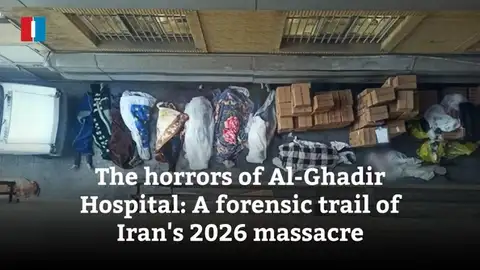
Another was the sight of body bags. Videos that emerged despite the blackout showed rows of black bags lining courtyards, makeshift morgues overflowing and desperate families searching among the dead for loved ones.

Some bodies appeared with catheters and breathing tubes still in place, reinforcing witness claims that wounded protesters were killed after reaching hospitals.

One eyewitness, Kiarash — whose surname is being withheld for security reasons — described Tehran’s main cemetery as a “warehouse of bodies,” saying trucks continued arriving to unload more corpses as families waited outside.

The protests, which erupted in early January, were met with overwhelming force. Demonstrators demanding freedom were confronted with live fire, blades and military-grade repression.

Witnesses also described hospitals turned into extensions of the crackdown. Doctors and healthcare workers were allegedly threatened, detained or attacked for treating the injured. Some families say loved ones who survived initial gunfire were later killed inside hospital wards.

One such case was 17-year-old Sam Afshari, whose father told Iran International that after being wounded during protests in Karaj, his son was taken to hospital alive, placed on a breathing tube and then fatally shot.

“They finished him off,” his father said.

  • 'They finished him off': father recounts hospital killing of teen protester

    'They finished him off': father recounts hospital killing of teen protester

Authorities and some outside observers initially portrayed the unrest as primarily economic. But many Iranians rejected that narrative.

While anger first surfaced in the bazaars — historically seen as a pillar of the Islamic Republic’s support base — in late December, demonstrations quickly spread to universities, provincial towns and religious communities.

Unrest reached hundreds of cities and towns nationwide, according to reports reviewed by Iran International.

For many participants, this was not just another protest wave. It was the release of 47 years of accumulated pressure over repression, corruption, economic decline and personal freedoms.

Iranians were demanding a future not defined by compulsory social controls, state violence or a nuclear confrontation that repeatedly drags the country into crisis.

On January 8, authorities cut public access to the internet, triggering a 20-day digital blackout that rights groups say helped conceal the scale of the killings.

The blackout severely restricted access to independent information, communication with family abroad and documentation of abuses.

Iranian officials also acknowledged economic damage, with estimates placing losses in the tens of millions of dollars per day.

Trump support resonated with some protesters

During the uprising, support from US President Donald Trump drew significant attention.

For some Iranians, it mattered because memories of the 2009 Green Movement — the mass protest movement that erupted after disputed elections under President Barack Obama — still run deep. Many from that era felt the world did not do enough.

A few days after the January 8–9 massacre of protesters, Trump publicly backed demonstrators, writing: “Iranian patriots… KEEP PROTESTING… HELP IS ON ITS WAY.” He urged them to “take over your institutions” and warned the US was “locked and loaded.”

Despite mixed views on the effectiveness of a military campaign to topple the Islamic Republic, many Iranians felt so desperate that they wanted Trump to begin strikes as soon as possible.

He did so nearly 50 days after the massacre.

40-day war hits regime hard

On February 28, the United States and Israel launched a coordinated military campaign targeting the Islamic Republic’s leadership, nuclear infrastructure, missile systems, air defenses and internal security apparatus.

The operation included tens of thousands of strikes on military and strategic sites across Iran. Senior regime figures were killed, including Supreme Leader Ali Khamenei, in the most dramatic leadership blow since the 1979 revolution.

Other targets included IRGC commanders, Basij infrastructure, military production centers and strategic compounds tied to regime control. Iranian missile launchers and parts of the country’s strike capability were also heavily degraded.

For many Iranians who blamed these institutions for repression, torture and killings, the campaign was seen not simply as war, but as the first time the machinery used against them had itself come under sustained attack.

Videos reviewed by Iran International showed some Iranians thanking US President Donald Trump and Israeli Prime Minister Benjamin Netanyahu for the strikes. Others celebrated in homes and streets, with some dancing to YMCA — the song closely associated with Trump rallies — seeing the moment as symbolic justice after years of suffering.

Others hoped the weakening of the regime’s coercive apparatus could create space for future protest and political change, as promised by both Trump and Israeli Prime Minister Benjamin Netanyahu.

Yet even as parts of the repressive apparatus were hit, executions of prisoners and dissidents continued. Human rights groups say Iran carried out a record number of executions last year and warn the death penalty may be used even more aggressively after the war.

Diplomacy returns, questions remain?

The military campaign paused with the announcement of a two-week ceasefire on April 8, and the rhetoric has since shifted toward diplomacy: talk of deals, sanctions relief, frozen assets, and uranium transfers.

Iranian civil society groups have urged negotiators to include the release of political prisoners and prisoners of conscience in any agreement, arguing peace without human rights would leave thousands behind.

For many Iranians, the central question remains unchanged: where are the Iranian people in these negotiations?

Those killed in the streets, in detention and in hospitals did not die for another nuclear arrangement, many argue, nor to see one insider replaced by another such as Mohammad Bagher Ghalibaf.

One hundred days later, Iran remains suspended between grief and uncertainty.

Some feel partially avenged by the killing of Khamenei and his commanders, and by the weakening of the regime. Others still hold out hope that change may come. But many say they fear the world has moved on without them.

100 days after carnage: Iran economy reels from war, inflation, unemployment

Apr 18, 2026, 18:10 GMT+1
•
Maryam Sinaiee

One hundred days after thousands of protesters were massacred on January 8 and 9, Iran's already fragile economy has sharply deteriorated, with millions feared to be unemployed as a devastating war compounds the crisis and accelerates economic collapse.

The protests that started in the Grand Bazaar of Tehran in late December and quickly spread across the country were followed by what has been described as the deadliest crackdown on protesters in Iran’s contemporary history in January.

Shortly thereafter, a war involving the United States and Israel began, compounding the country’s economic distress.

The service sector was hit hard during the protests. Advertising agencies, technical consulting firms, digital service providers, and hospitality and tourism businesses have since suffered further, and in many cases irreparable, damage because of the war.

Three weeks of internet disruptions during the protests, and over 1,100 hours since the beginning of the war on February 28, have effectively paralyzed large parts of the digital economy.

"According to official estimates released by Iranian authorities, more than 10 million people in Iran earn their income directly through the internet. As a result, any disruption or shutdown of internet services poses a serious threat to their livelihoods," Dadban, a legal advisory and training center for activists, said in a report.

"With the continuation of this situation, millions have faced a sharp drop in income or unemployment," Dadban added.

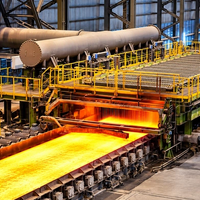
More significantly, the conflict has inflicted severe damage on critical economic infrastructure, including key petrochemical industries and steel production across multiple cities. These sectors, considered the backbone of Iran’s industrial economy, have suffered extensive losses.

The destruction of major industries has disrupted the supply of raw materials, triggering cascading effects across manufacturing and related sectors.

Widespread layoffs have followed, affecting not only workers in these industries but also those employed in dependent businesses.

At the same time, exports have declined sharply, further constraining an already limited flow of foreign revenue.

The scale of the economic shock is underscored by official estimates. A government spokesperson has put total war damages at around $270 billion—roughly 57 percent of Iran’s gross domestic product and several times larger than the country’s annual oil revenues.

The figure is estimated to be nearly three times the government’s general budget, highlighting the unprecedented fiscal strain facing the state.

Stagflation and rising risk of renewed unrest

Iran’s economy has now entered a period of stagflation, combining high inflation with economic stagnation and rising unemployment.

Even if the conflict were to end in the near term, economists warn that recovery will be protracted and uneven.

These worsening conditions have heightened the risk of renewed social unrest.

Without a political resolution—particularly an agreement with the United States—analysts suggest that further protests, potentially larger than those seen in December, are increasingly likely.

Public anger boils over online

Public sentiment, particularly on social media, reflects growing frustration and despair.

One user highlighted the desperation faced by unemployed citizens: “I live in Tehran, I’m married and renting. Since January I was working reduced hours, and I was officially laid off on March 25.”

Another user described the collapse of freelance work: “In this situation, most jobs have shut down, especially for people like us who worked freelance. Our income has dropped to zero, and we don’t know what we can do if the war and internet outages continue.”

A third user wrote: “Given the brutality of the clerical regime and its supporters, the skyrocketing prices of basic necessities, and the bizarre inflation that keeps getting worse… I think people are just waiting for a spark to come back to the streets. Death is no longer the issue—this situation is worse than death and must end.”

Inflation surges to historic highs

Inflation has risen dramatically over the past 100 days. Official data show point-to-point inflation, already above 50 percent at the end of December, climbed to over 70 percent by late February—before the war—reaching its highest level in decades.

In essential goods such as meat, dairy, oil, rice, fruits, and vegetables, inflation has exceeded 110 percent. Prices of critical medications, including some types of insulin, have multiplied several times—when they are available at all.

Although updated overall inflation figures have not been released, some experts believe the rate may already have entered triple digits, with further increases expected.

Survival economy takes hold

Some Iranians say the absence of severe shortages during the war reflects collapsing demand rather than stable or sufficient supply. With incomes sharply reduced, many households can no longer afford basic goods.

To cope, families are increasingly relying on savings, rental deposits, or loans from banks and relatives—placing them at risk of losing their homes. In some cases, household are selling personal belongings just to afford food.

Business owners are also under pressure. Many have begun selling equipment, with online marketplaces now flooded with listings for café and restaurant supplies and electronic devices—often with little or no buyer interest.

Meanwhile, the government faces mounting fiscal constraints. Even before the war, it struggled to meet budgetary obligations. Now, with millions feared to be unemployed, the government lacks the capacity to provide adequate unemployment benefits, and some workers report being unable to access them at all.

Iranian assaulted in London amid concern over threats to regime critics

Apr 18, 2026, 13:00 GMT+1

Iran International has received reports that an Iranian man was violently assaulted in central London. The Metropolitan Police are understood to be investigating.

The man has not been named. Sources say he was a professional working in the area and a peaceful opponent of the Iranian government.

The attack comes at a time of growing concern about threats, intimidation, and violence affecting people linked to Iran in Britain.

On Friday, British police charged three people over an attempted arson attack near the London offices of Iran International. Police said a burning container was thrown towards the broadcaster’s headquarters in north-west London. No one was injured, but the case has added to concerns about the safety of Persian-language media in Britain.

Before that, in March 2026, an Iran-aligned group was reported to have claimed responsibility for an arson attack on Jewish ambulances in Golders Green, north London.

In May 2025, three Iranian men were charged under the National Security Act after a major counter-terrorism investigation. Prosecutors said one of the men had carried out surveillance, reconnaissance, and online research with the aim of committing serious violence against a person in the UK.

The other two were accused of similar activity intended to help others carry out serious violence. The Home Secretary said the case was part of a broader response to threats linked to the Iranian state.

British authorities have warned for several years that Iran poses a serious threat on UK soil.

In October 2024, the head of MI5, Ken McCallum, said the security service and police had responded to 20 Iran-backed plots since January 2022 involving potentially lethal threats to British citizens and UK residents. He said many of the cases were linked to opponents of the Iranian state living in Britain.

The full circumstances of this latest assault are not yet public. But for many in the Iranian community, the message will already be clear. It will be seen as part of a wider climate of fear facing Iranians in exile, especially those who oppose the government in Tehran.

Iran blackout cripples freelancer, small business incomes

Apr 16, 2026, 10:32 GMT+1
•
Hooman Abedi

Freelancers and small business owners say their incomes have collapsed and daily operations have halted during Iran’s prolonged internet shutdown, which NetBlocks said has caused $1.8 billion in losses over 48 days.

“I work as a freelance web developer and my income has dropped to zero because of the internet outage. I am selling my belongings to cover debts,” a citizen wrote in a message to Iran International.

Another said: “As a student and computer technician, I am stuck in uncertainty. Online classes are heavily disrupted, and I cannot even access the internet to complete projects. My workplace has no customers.”

NetBlocks said on Thursday the disruption had lasted 1,128 hours, describing the shutdown as unprecedented in scale for a country with deep reliance on global connectivity. The group added that its estimate, based on its COST methodology, also reflects wider social and human rights impacts.

Digital economy grinds to a halt

The outage has hit Iran’s digital sector, which had absorbed part of the country’s unemployment pressure over the past decade. Online businesses have lost access to customers, payment systems, and essential tools tied to the global internet.

The Rokna news website said on Wednesday the disruption amounted to a shutdown of the digital economy, noting that the cut to international internet access dealt a direct blow to online businesses.

A couple walk in a park overlooking Tehran, with the iconic Milad Tower seen in the background, April 1, 2026.
100%
A couple walk in a park overlooking Tehran, with the iconic Milad Tower seen in the background, April 1, 2026.

Hundreds of small digital enterprises have been unable to maintain sales, customer communication, or after-sales services. Layoffs have spread across technology firms and media organizations, affecting employees whose work depends on stable connectivity, the outlet added.

Journalists and media workers have also faced income losses and job cuts as communication channels narrowed and publishing operations slowed, according to the report.

Workers face mounting financial strain

“I managed to connect briefly using expensive VPNs, but I have lost my job due to the internet disruption. I have loans to repay and rent to cover, and many others are in the same situation,” another citizen told Iran International.

  • War and inflation batter Iran’s workforce

    War and inflation batter Iran’s workforce

Accounts from across the country point to a broader slowdown. “Prices have increased several times over. Many people have lost their jobs. At least 50 percent of shops are closed,” one resident said, adding that only essential services such as repair shops and small markets remain partially active.

Delays in salary payments have become more common in some businesses, increasing pressure on workers already affected by rising prices. Inflation has further reduced real wages, leaving even those still employed struggling to cover basic living costs.

File photo of a young Iranian man who checks his phone outside a store
100%
File photo of a young Iranian man who checks his phone outside a store

Professional networks also reflect the downturn. Users on LinkedIn have publicly said they are seeking new job opportunities, indicating a rise in job seekers among skilled and experienced workers.

Experts warn of lasting damage

Economic journalist Arezoo Karimi said the losses extend beyond immediate income declines, warning of wider consequences for employment and growth.

“This means zero income for businesses that depend on international connectivity. It leads to layoffs and rising unemployment,” Karimi said, adding that daily losses run into tens of millions of dollars.

Karimi said the broader economic impact could reach several times the direct losses, pointing to reduced production and slower economic growth. Inflation, already elevated, is likely to worsen if disruptions continue.

  • Iran's digital economy battered by prolonged blackout

    Iran's digital economy battered by prolonged blackout

“Businesses are not only losing income, they are losing their position in international markets and online visibility. These are damages that cannot easily be reversed,” Karimi added.

With limited access to global markets and tools, many digital workers now face a choice between prolonged uncertainty and leaving the country.

The outage has exposed the dependence of Iran’s digital economy on stable international connectivity, with weeks of disruption enough to dismantle businesses built over years.