Vance says Iran expected to move on Hormuz, hints at progress in talks
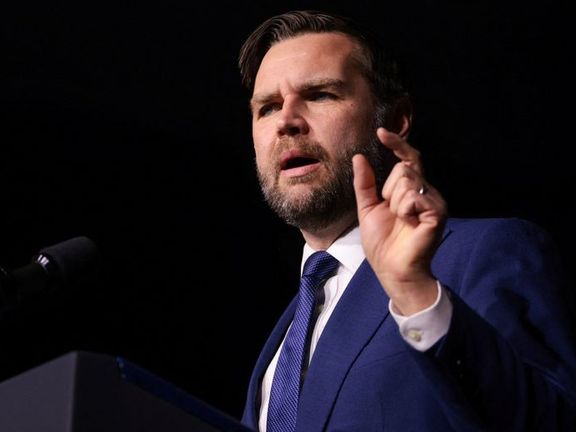

US Vice President JD Vance signaled progress in talks with Iran, saying Washington had made “a lot of progress” and expects Tehran to move toward reopening the Strait of Hormuz.
Speaking to Fox News, Vance said further diplomatic movement now depends on Iran.
“The ball is in Tehran’s court,” he said, suggesting Washington is waiting for Tehran’s next step following the latest round of negotiations.
Vance also said the expectation was that Iran would make progress toward reopening the strategic waterway, a key global oil shipping route whose disruption has unsettled energy markets.


China’s foreign minister Wang Yi said blocking the Strait of Hormuz would run counter to the interests of the international community, according to a statement from his office after talks in Beijing with a senior UAE envoy.
Yi said Beijing understands the “legitimate security concerns” of Iran's Arab neighbours and supports the UAE in safeguarding its sovereignty, security and national interests, the Chinese Foreign Ministry said.
Addressing the US-Iran conflict, Wang called for “a comprehensive and lasting ceasefire” to be achieved through political and diplomatic means.
Russian Foreign Minister Sergei Lavrov told his Iranian counterpart Abbas Araghchi that it is important to prevent a new round of fighting and said Moscow is ready to help support a settlement.
"S. Lavrov emphasised the importance of preventing a recurrence of armed confrontation and once again confirmed Russia's unwavering readiness to assist in resolving the crisis, which has no military solution," Russia's Foreign Ministry said in an account of the telephone conversation.
According to the readout, Lavrov welcomed efforts aimed at “long-term stabilization” and warned against renewed escalation in the conflict.
A tanker sanctioned by the United States for transporting Iranian oil passed through the Strait of Hormuz on Monday shortly after the Trump administration’s blockade on Iranian shipping was set to take effect, CNN reported Monday citing ship-tracking data.
The vessel, Elpis, registered in Comoros and partially laden with cargo, cleared the strategic waterway Monday afternoon, according to data published by Kpler, a global trade-flow analytics platform. T
he tanker was sanctioned by Washington in 2025 for its “involvement in the sale, purchase, and transportation of Iranian petroleum” as part of Iran’s so-called shadow fleet.
Oil prices are likely to remain elevated and could rise further until significant ship traffic resumes through the Strait of Hormuz, US Energy Secretary Chris Wright said on Monday.
Speaking at the Semafor World Economy forum in Washington, Wright said markets would likely remain under pressure until “meaningful” shipping activity returns to the strategic waterway, through which roughly a fifth of global oil supplies normally pass.
His remarks suggested a shift from earlier comments in which he had said oil prices would likely fall soon.
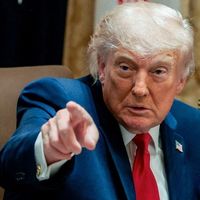
US President Donald Trump has lashed out at the New York Times, accusing the newspaper of misleading readers about the state of the war with Iran and insisting the country has been “totally obliterated” militarily.
In a post on social media, Trump said coverage by what he called “The Failing New York Times” falsely suggested Iran was performing well in the conflict.
“Despite the fact that Iran has been totally OBLITERATED, Militarily, and otherwise, you would think that Iran is actually winning, or at the very least, doing quite well,” he wrote.
Trump accused the newspaper of spreading “FAKE NEWS” and demanded an apology, calling the outlet a “corrupt media organization” and asking: “Have they no shame? Have they no sense of decency?”