• العربية
  • فارسی
Brand
  • Iran Insight
  • Politics
  • Economy
  • Analysis
  • Special Report
  • Opinion
  • Podcast
  • Iran Insight
  • Politics
  • Economy
  • Analysis
  • Special Report
  • Opinion
  • Podcast
  • Theme
  • Language
    • العربية
    • فارسی
  • Iran Insight
  • Politics
  • Economy
  • Analysis
  • Special Report
  • Opinion
  • Podcast
All rights reserved for Volant Media UK Limited
volant media logo

Italy urges citizens to leave Iran citing unstable security conditions

Feb 27, 2026, 19:22 GMT+0

Italy’s foreign ministry on Friday urged its citizens to leave Iran and advised extreme caution across the Middle East, citing persistently unstable security conditions.

“Italians in (Iran) for tourism or whose presence is not strictly necessary are urged to depart,” the ministry said, adding that travel to Iraq and Lebanon is also strongly discouraged.

The ministry also advised Italian nationals in Israel to exercise maximum caution and remain vigilant

Most Viewed

State media slam Araghchi's Hormuz tweet, say it let Trump claim victory
1

State media slam Araghchi's Hormuz tweet, say it let Trump claim victory

2
OPINION

The Hormuz get out of jail card turned to a grave

3
INSIGHT

How Tehran bends its own red lines to boost state rallies

4

Iran International says it won’t be silenced after London arson attack

5

US arrests Iranian national over alleged Basij-linked visa fraud

Banner
Banner

Spotlight

  • Too early to tell who is winning Iran war, experts say
    PODCAST

    Too early to tell who is winning Iran war, experts say

  • How Tehran bends its own red lines to boost state rallies
    INSIGHT

    How Tehran bends its own red lines to boost state rallies

  • Iran blackout cripples freelancer, small business incomes
    VOICES FROM IRAN

    Iran blackout cripples freelancer, small business incomes

  • Ideology may be fading in Iran, but not in Kashmir's ‘Mini Iran'
    INSIGHT

    Ideology may be fading in Iran, but not in Kashmir's ‘Mini Iran'

  • US blockade enters murky phase as tankers spoof signals and buyers hesitate
    ANALYSIS

    US blockade enters murky phase as tankers spoof signals and buyers hesitate

  • Why the $100 billion Hormuz toll revenue is a myth
    ANALYSIS

    Why the $100 billion Hormuz toll revenue is a myth

•
•
•

More Stories

Protests and crackdown spill into Iranian sport

Feb 27, 2026, 18:54 GMT+0
•
Maryam Sinaiee

The Islamic Republic’s harsh response to recent protests has spilled beyond politics into sport, where athletes now face a stark choice: compete in silence or risk reprisal.

As families hold 40th-day memorials and students continue demonstrations on university campuses, the country’s widening crisis has left athletes weighing personal conscience against state pressure.

In the early days of unrest, athletes across disciplines signaled support through Instagram posts. Before the January crackdown, former national football team captain Mohammad Khakpour responded online to the Supreme Leader’s characterization of protesters as “rioters.”

“One cannot expect perpetual silence from the people who are being crushed under the burden of high prices, unemployment, and insecurity and then have their voices silenced by labeling them as rioters.”

He added: “The people who come to the streets defenselessly have neither weapons nor a platform; they only have voices. Silencing their voices with force, bullets, batons, or fear neither solves the problem nor makes the wound smaller."

Some have gone further. Goalkeeper Rashid Mazaheri, long known for outspoken criticism, published a defiant Instagram post on Wednesday addressing the Supreme Leader directly: “Khamenei, beware that your rule on this divine land has ended.”

In the same message, he wrote that being a champion means standing against injustice, not winning medals: “We won’t bow our heads to you!”

The post was removed within hours. His wife wrote on Instagram that she feared for his life and would hold the government responsible for his safety. Supporters interpreted the message as confirmation he had been detained, though authorities have not commented and his whereabouts remain unclear.

The pressure has also reshaped national team rosters. Two women’s national team footballers preparing for the Women’s Asia Cup in Australia this month—Zahra Alizadeh and Kousar Kamali—publicly withdrew from the squad.

Kamali wrote: “When the heart is wounded and the soul is exhausted, football is no longer a refuge. I can’t pretend everything is normal.”

“This decision is not born of anger, but of awareness; it is not out of disrespect, but out of respect for my conscience. I say goodbye not to football, but to the national team — in the hope that one day it will again be possible to play for the people with a peaceful heart.”

Symbolic gestures have also drawn scrutiny. In recent weeks, some footballers have refrained from celebrating goals altogether or marked them with muted gestures reflecting protest or solidarity rather than triumph.

In several competitions, players have reportedly been barred from wearing black armbands or other signs of mourning.

According to Sami Sport FC, match supervisors have been instructed to suspend games if players use black clothing, ribbons or armbands. Facing possible disqualification and citing mounting security pressure, the club announced it would withdraw from the remainder of the season.

Two weeks earlier, Sami Sport players entered the pitch in black kits and armbands. After scoring, they covered their faces in a gesture of mourning rather than celebrating.

The episodes echo earlier moments when Iranian athletes declined to sing the national anthem—reminders that even arenas meant for national unity have become sites of political contest.

The stakes are likely to rise further this year. Iran has qualified for the World Cup, and all three of its group-stage matches are scheduled to be played in the United States. The tournament will place the team under intense international scrutiny, including from a large Iranian diaspora that has become increasingly vocal.

During the 2022 World Cup, many fans harshly criticized the national team and even called for a boycott, accusing players of indifference to the “Women, Life, Freedom” protests and to the state’s violent crackdown.

This time, the political climate is even more charged. Iranian society has grown more radicalized, repression much harsher and mistrust deeper than three years ago.

The government is likely to exert tight control over players to prevent any gestures of dissent on the sport’s biggest stage. But with global attention fixed on the team, even silence—or the absence of it—may carry political meaning.


Omani foreign minister, VP Vance discuss Iran in Washington meeting

Feb 27, 2026, 18:39 GMT+0

Oman's Foreign Minister Badr Albusaidi met US Vice President JD Vance in Washington DC on Friday, where he "shared details of the ongoing negotiation between the United States and Iran and the progress achieved so far," he said in a post on X.

"I am grateful for their engagement and look forward to further and decisive progress in the coming days. Peace is within our reach."

Tehran downbeat after Geneva talks, pins hopes on Oman mediation

Feb 27, 2026, 18:37 GMT+0
•
Behrouz Turani

Tehran appeared noticeably downbeat about the outcome of Thursday’s negotiations with Washington in Geneva, with signs of disappointment emerging first on the website of the government’s news agency.

In a commentary published Friday, IRNA said the two sides’ clashing positions were jeopardizing the talks, laying the blame for such an outcome at Washington’s door.

It also made clear that Tehran is placing considerable hopes in Oman’s foreign minister, Badr Albusaidi, whose quiet mediation has been central to the negotiations.

Albusaidi now carries a “grave responsibility,” the piece argued, with his role beginning in Muscat, continuing through two rounds of talks in Geneva and now entering “another important step” when he meets US Vice President JD Vance in Washington.

Tehran’s official outlet even hinted at the mediator’s message to the American side: a warning that a war with Iran would not remain limited, that regime change is unattainable and that even heavy damage to Iranian targets would not achieve the goals emphasized by President Donald Trump, “just as they did not in the June attacks.”

Iranian media outlets have also begun outlining the main sticking points in the negotiations.

The news website Fararu reported Friday that the talks remain deadlocked over fundamental issues including enrichment levels, sanctions relief and the dismantling of parts of Iran’s nuclear infrastructure.

Another major obstacle, it said, is Iran’s refusal to export enriched nuclear material, with Tehran insisting on maintaining domestic fuel production.

Axios reported that some of Trump’s advisers, including Jared Kushner and Steve Witkoff, were disappointed with Araghchi’s proposals, arguing that they fell short of US expectations.

Trump himself signaled frustration with Tehran on Friday, telling reporters he was “not happy” with Iran but expected further talks to take place.

Asked about the possibility of using military force, the president said he hoped it would not be necessary but did not rule it out.

Speaking before leaving the White House for a trip to Texas, Trump said he still wants to reach an agreement with Iran but reiterated that Tehran “cannot have a nuclear weapon.”

Fararu suggested Washington may be pursuing a dual-track strategy, combining diplomacy with the threat of limited military strikes to maintain pressure.

The negotiations, it concluded, have entered a “complex and decisive” phase: a potential framework is beginning to take shape, but deep structural disagreements and continued US military signaling are sustaining a high level of uncertainty.

In a separate interview with the website, foreign policy analyst and former Iranian diplomat Jalal Sadatian said President Trump’s tone toward Iran had recently become noticeably “sharper, more decisive and more alarming.”

Sadatian also warned that Iran’s “asymmetric capabilities” mean that even limited military action could quickly escalate in unpredictable ways.

US seeks forfeiture of 1.8 million oil barrels linked to IRGC and Venezuela

Feb 27, 2026, 18:16 GMT+0

The US Department of Justice on Friday filed a civil forfeiture complaint seeking the seizure of the motor tanker Skipper and its 1.8 million barrels of Venezuelan crude oil supplied by Venezuela's state-owned oil company, Petróleos de Venezuela, S.A. (PDVSA).

The tanker was seized on the high seas last December. Prosecutors said it provided material support to Iran's Islamic Revolutionary Guard Corps (IRGC), including its Qods Force.

The complaint alleges a scheme dating back to at least 2021 to ship and sell petroleum for the benefit of the IRGC. The Skipper delivered millions of barrels of Iranian oil to Syria in 2024 and used location spoofing and false flags to evade sanctions.

The current cargo, loaded in Venezuela in November 2025, was partly destined for sanctioned Cuban entities. US Attorney Jeanine Ferris Pirro said the department will pursue such vessels to deny Iran revenue used to support terrorism.

Trump says not happy with Iran, may have to use force

Feb 27, 2026, 17:39 GMT+0

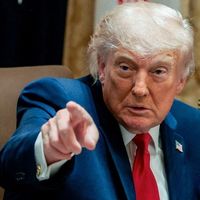
‌US ​President ⁠Donald Trump ‌told reporters he is not happy with Iran but more talks ​were ‌expected to be ‌held ⁠on Friday.

Trump, when asked about the possibility of using military force against Iran, said he doesn’t want to use it, but that sometimes it’s necessary.

"We haven't made a final decision [on Iran]. We're not exactly happy with the way they negotiated... We're not thrilled with the way they're negotiating," Trump told reporters before leaving the White House.

Asked if there is a risk that an attack could turn into a long, drawn-out conflict in the Middle East, he said, "I guess you could say there's always a risk. When there's war, there's a risk in anything, both good and bad. We've had tremendous luck with myself. Soleimani, Al Baghdadi, everything's worked out, and then we do the midnight hammer and so many others, everything's worked out. And we want to keep it that way, but we're going to see."

"It'd be wonderful if they negotiate, really, in good conscience, good faith and conscience. But they are not getting there so far," he said.