• العربية
  • فارسی
Brand
  • Iran Insight
  • Politics
  • Economy
  • Analysis
  • Special Report
  • Opinion
  • Podcast
  • Iran Insight
  • Politics
  • Economy
  • Analysis
  • Special Report
  • Opinion
  • Podcast
  • Theme
  • Language
    • العربية
    • فارسی
  • Iran Insight
  • Politics
  • Economy
  • Analysis
  • Special Report
  • Opinion
  • Podcast
All rights reserved for Volant Media UK Limited
volant media logo
ANALYSIS

What the 1991 uprising in Iraq can teach US and Iran

Bozorgmehr Sharafedin

Iran International

Feb 12, 2026, 21:25 GMT+0
One of the thousands of pictures of former president Saddam Hussein that once dotted the country. This painting was in Tikrit in 2007, four years after Saddam’s fall.

About a month ago, US President Donald Trump urged Iranians to keep protesting and take over institutions, saying that “help is on the way.”

Since then, the US military presence around Iran has expanded steadily, and many Iranians openly call for American military action against the Islamic Republic.

Yet some of Trump’s advisers draw cautionary parallels between a potential strike on Iran and the US invasions of Afghanistan in 2001 and Iraq in 2003, warning against another protracted and costly war.

There is, however, another Middle Eastern precedent—one that both Iran and the United States would be wise to examine closely: the 1991 Shia and Kurdish uprising in Iraq. It was a revolt sparked in part by American encouragement but crushed after the United States did not intervene on behalf of the protesters.

US call for uprising

On Feb. 15, 1991, President George H.W. Bush called on “the Iraqi military and the Iraqi people to take matters into their own hands and force Saddam Hussein, the dictator, to step aside.”

His message was broadcast into Iraq via television and radio. Coalition aircraft dropped leaflets urging Iraqi soldiers and civilians to “fill the streets and alleys and bring down Saddam Hussein and his aides.”

The call came weeks after the US-led coalition had launched its campaign to expel Iraqi forces from Kuwait. Shia communities in southern Iraq and Kurdish groups in the north rose up against Saddam.

The uprisings were fueled by deep public anger over Saddam’s military adventurism — from the long war with Iran to the invasion of Kuwait — which had imposed immense human and economic costs on Iraqi society.

Protests began in Basra and quickly spread to Najaf, Karbala and Nasiriyah. Shia rebels and defecting soldiers attacked security forces and government buildings. Baath Party offices were seized, officials were killed, prisoners were freed.

Within roughly two weeks, 14 of Iraq’s 18 provinces were effectively outside the central government’s control.

It was a dramatic advance — but it did not last.

The collapse of the uprising

The rebellion ended in one of the bloodiest crackdowns in modern Iraqi history. Its failure stemmed from a combination of factors: American hesitation to intervene, Saddam’s extensive use of force and deep divisions among the opposition — a combination that could, in a different form, reappear in Iran.

Despite overwhelming military superiority in the Persian Gulf, the Bush administration chose not to enter a new confrontation with Saddam. There were fears of “another Vietnam,” with American troops drawn into a prolonged deadly conflict.

Bush publicly called for Saddam’s removal but remained wary of what might follow. One concern was the “Lebanonization” of Iraq — the prospect of the rise of Iranian-backed Shia forces in Baghdad.

Meanwhile, opposition groups inside Iraq — Shia factions, Kurds, nationalists and others — failed to unify under a coherent command structure. The opportunity to conquer Baghdad slipped away.

The Gulf War ceasefire allowed Saddam breathing room. A regime many believed was on the brink of collapse recovered quickly. Relying on the Republican Guard — which had remained in the war largely intact — Saddam launched a counteroffensive.

Although parts of Iraq were placed under no-fly zones, Saddam exploited a loophole: helicopters were not barred. He used them to attack rebels, and coalition forces did not intervene to stop those assaults.

The Republican Guard shelled residential neighborhoods indiscriminately, conducted house-to-house arrests and carried out mass executions. Chemical weapons were used against some rebel-held areas. Even those who sought refuge in religious shrines in Najaf and Karbala were not spared.

Estimates suggest that between 30,000 and 60,000 Shia in the south and around 20,000 Kurds in the north were killed. Roughly 2 million people were displaced.

Lessons for the US and Iran

The Iraqi uprising offers several lessons for policymakers in Washington, and for Iranians.

First, the international community often underestimates a regime’s capacity for internal violence. Military weakness abroad does not necessarily translate into fragility at home.

A government that perceives its survival to be at stake may show restraint toward foreign adversaries while unleashing far harsher tactics domestically. Even an army battered in external war can regroup internally, close ranks and act with renewed intensity.

Saddam’s regime had been defeated by an international coalition, yet it retained loyal security structures, a functioning chain of command and the willingness to use extreme force against its own citizens.

At such moments, any external concession or diplomatic maneuver can be repurposed as an instrument of internal consolidation.

A deal with Iran could give the ruling elite a chance to regroup and unleash a new wave of repression against its own people.

For opposition movements, strategic cohesion matters. Agreement on minimum political goals, unity of command and preparation for a potential power vacuum can be decisive.

Victory does not arrive simply because a regime appears weakened. In Iraq, rebels went so far as to appoint local governors in areas they controlled — but the new order collapsed swiftly. Divisions within the opposition ultimately strengthened the existing power structure at a decisive moment.

At the same time, global leaders should recognize that threats alone are insufficient. If a foreign power seeks to alter the balance of power, it must understand that displays of force without the intention to use it can carry profound and unintended consequences.
Most Viewed

Iran negotiators ordered to return after internal rift over Islamabad talks
1
EXCLUSIVE

Iran negotiators ordered to return after internal rift over Islamabad talks

2
ANALYSIS

US blockade enters murky phase as tankers spoof signals and buyers hesitate

3
ANALYSIS

Why the $100 billion Hormuz toll revenue is a myth

4

US tightens financial squeeze on Iran, warns banks over oil money flows

5
ANALYSIS

US blockade targets Iran oil boom amid regional disruption

Banner
Banner

Spotlight

  • Hardliners push Hormuz ‘red line’ as US blockade tests Iran’s leverage
    INSIGHT

    Hardliners push Hormuz ‘red line’ as US blockade tests Iran’s leverage

  • Ideology may be fading in Iran, but not in Kashmir's ‘Mini Iran'
    INSIGHT

    Ideology may be fading in Iran, but not in Kashmir's ‘Mini Iran'

  • War damage amounts to $3,000 per Iranian, with blockade set to add to losses
    INSIGHT

    War damage amounts to $3,000 per Iranian, with blockade set to add to losses

  • Why the $100 billion Hormuz toll revenue is a myth
    ANALYSIS

    Why the $100 billion Hormuz toll revenue is a myth

  • US blockade targets Iran oil boom amid regional disruption
    ANALYSIS

    US blockade targets Iran oil boom amid regional disruption

  • Iran's digital economy battered by prolonged blackout
    INSIGHT

    Iran's digital economy battered by prolonged blackout

•
•
•

More Stories

The night gunfire silenced a lifetime of music in Tehran

Feb 12, 2026, 18:18 GMT+0
•
Azadeh Akbari

The night air on Jan. 8 in northeastern Tehran filled with chants rising in defiance. Among them stood Pooya Faragerdi, a violinist whose life was measured in music and a heart that beat for Iran. Then came the gunfire.

Faragerdi, 44, was shot by security forces near a police station in Pasdaran that night.

Videos verified by Iran International from Pasdaran on Jan. 8 showed wounded protesters lying bloodied on the street as others tried to help, with gunfire audible in the background.

“At first we thought he had been killed in Majidiyeh… but later I learned he went to Pasdaran and was shot there,” his brother Payam Fotouhiehpour told Iran International.

A bullet pierced the right side of his abdomen around 11 p.m., and he was taken to a hospital. He died the following day, Jan. 9, his brother said, but for days the family did not know where he was.

Nearly 12 days later, they learned his body was at Kahrizak — a forensic medical complex south of Tehran where many protest victims were taken.

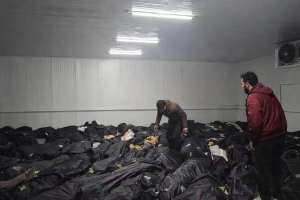
Footage verified by Iran International from Kahrizak showed families searching among rows of black body bags as the complex filled with protest victims.

Searching through darkness

While Faragerdi joined protests in Tehran, his brother was in the United States, cut off by a nationwide internet blackout imposed on Jan. 8 as demonstrations intensified.

Connectivity dropped to near zero, with tens of millions cut off from global internet access and phone communication severely disrupted. Rights groups said the shutdown aimed to prevent information from leaving the country and obscure the scale of the crackdown.

“I was unaware of everything,” he said.

Only days later, when limited international calls were partially restored, he learned his brother was missing.

“I convinced myself he had gone somewhere with a friend… I told myself he would show up and I would scold him for ten or fifteen minutes.”

He never did.

“Every moment his image was in front of my eyes. I had to go into the storage room or my office to cry so my wife and daughter would not lose themselves.”

On Jan. 20, authorities informed the family that Faragerdi’s body was in Kahrizak. He was buried the following day at Tehran’s Behesht-e Zahra cemetery.

“These days, images of his childhood come to my mind more and more. Even his childhood voice is in my ears — ‘Dada Payam.’”

Defiance through music

Long before the protests, Faragerdi had resisted Iran’s cultural licensing system, which requires artists to obtain approval from the Ministry of Culture and Islamic Guidance before performing or releasing music.

Born on Sept. 7, 1981, he trained in violin from childhood, developing a foundation in classical performance. Though he held a degree in agricultural machinery engineering, music remained central to his life.

“He decided to play the violin professionally - and teach,” his brother said. “He taught my daughter Baran as well.”

Faragerdi played classical music—from Baroque to modern—and had a taste for all types, his brother said: jazz, blues, rock.

But the permit system pushed him away from formal stages.

“He hated that,” his brother said. “It was insulting to him that these creatures would decide what he could do.”

Faragerdi redirected his creativity into craftsmanship. Skilled with tools, he began carving wooden instruments by hand, including ocarinas he built and played himself.

A fellow musician who performed with him, speaking on condition of anonymity, said Faragerdi had once been part of an independent orchestra in Tehran.

“He was part of an independent orchestra—meaning no government body oversaw it. It was private,” the musician said.

Following the 2019 crackdown, during which at least 1,500 protesters were killed, many artists moved away from orchestras requiring ministry permits, the musician added.

'Your bow is still, but not our rage'

Tributes from fellow musicians and students have surfaced across social media.

“We shared a stage, a stand, a country. We played side by side for years, and we still hear your velvet voice in the pauses between movements,” two of his fellow musicians told Iran International.

“On January 8, you were shot for daring to breathe free… They might have silenced your body but not your echo. They killed a musician, not sound itself. Your bow is still, our rage is not.”

Faragerdi’s final Instagram post showed him burning an Iranian banknote bearing the image of Ruhollah Khomeini, founder of the Islamic Republic, holding it over a toilet before dropping the ashes into the bowl. The clip was captioned: “Let us count the life that has passed,” and set to “The Final Countdown” by Swedish band Europe.

In text messages, his brother shared memories with care.

Asked why Pooya joined the protests, his brother said he was not someone who would stay home while others took to the streets.

“I think on Jan. 8 he fell in love with his people again,” he said. “I wish he had lived to see freedom as well.”

The last sounds Pooya heard were not drawn from his violin, but from chants rising through the streets. Perhaps that was the music he had wanted to hear all along — a chorus of voices rising through the streets.

Iranians challenge Islamic Republic's show of unity

Feb 12, 2026, 17:45 GMT+0
•
Maryam Sinaiee

Iranians took to social media on the anniversary of the 1979 Revolution to challenge the Islamic Republic’s claims of overwhelming public support, sharing videos of anti-government chants and questioning the authenticity of state broadcasts.

Authorities said “tens of millions” rallied nationwide to back Supreme Leader Ali Khamenei and the Islamic Republic’s ideology on the 47th anniversary of the revolution. Opponents—many still grieving the deaths of thousands shot during January protests—argued that attendance was often compelled and official imagery exaggerated.

State television aired long processions of marchers chanting pro-government slogans.

In Tehran, special police units and armored vehicles were deployed in what officials described as a show of stability. Critics said the heavy security presence signaled coercion rather than confidence.

What was presented as a unified celebration instead revealed competing narratives. While state media depicted unwavering loyalty, many Iranians online asserted that genuine political support cannot be measured in choreographed crowds or tightly controlled broadcasts.

Fireworks and counter-chants

Tuesday evening’s commemoration began with fireworks across Tehran and other cities. As in previous years, mosque loudspeakers and Basij bases urged citizens to step outside at 9 p.m. on the eve of the anniversary to chant “Allah-u-Akbar” from rooftops and streets.

But videos posted online from several cities, including Tehran, showed opponents raising anti-government slogans such as “Death to the dictator”, at times drowning out pro-state chants amplified through megaphones.

Clips shared on X and Instagram captured competing chants echoing across neighborhoods, reflecting a contested public atmosphere rather than a single unified voice.

Social media users also accused authorities of pressuring public employees, teachers, conscripts and others to attend the marches. Some alleged that participation was encouraged through incentives, including paid leave or material benefits—even implied threats to job security.

In several cities, critics said buses transported families to designated gathering points despite the anniversary being a public holiday.

One widely circulated claim alleged that relatives of those detained during the January unrest were told that sharing photos or videos of their families attending anniversary rallies could help secure the release of their loved ones. The claim could not be independently verified.

Staged testimonials?

Accusations extended to state media broadcasts. Opponents pointed to a now-viral clip in which the same woman—holding portraits of Khamenei and revolutionary founder Ruhollah Khomeini—appeared in live footage from Qazvin and Khorramabad, cities hundreds of kilometers apart.

One user wrote that the anniversary had produced “a woman teleporting on state TV.”

Others questioned the authenticity of official images, alleging digital manipulation or the reuse of footage, though no conclusive evidence has been publicly presented.

State media also aired interviews with participants including women without traditional hijab expressing loyalty to the leadership. Opposition voices dismissed the segments as staged propaganda.

In one broadcast from Isfahan, a woman said she had joined the marches after 30 years “for love of the Leader, to support the country and Islam against threats.”

In another clip released Wednesday, a woman without a headscarf declared: “Many enemies of Iran said the Islamic Republic would not see this anniversary—we’re glad it didn’t happen because if it had, surely Iran would have split.”

Critics argued such testimonials were carefully selected to project enthusiasm that may not reflect the broader political mood.

Iran protest deaths may amount to crimes against humanity, EU parliament says

Feb 12, 2026, 11:53 GMT+0

The European Parliament on Thursday condemned what it described as systematic repression by Iran’s authorities against protesters and civil society, warning that reported killings during recent unrest could amount to crimes against humanity.

Lawmakers said that the death toll from the latest wave of protests may have reached around 35,000 and called for alleged atrocities to be independently documented by United Nations bodies, with evidence preserved for potential future prosecutions.

In a resolution adopted by 524 votes in favor, three against and 41 abstentions, members of the European Parliament (MEPs) demanded an immediate end to violence against civilians, including arbitrary detentions, enforced disappearances and torture.

They also urged Iranian authorities to stop prosecuting doctors and healthcare workers over treating injured protesters.

  • Over 36,500 killed in Iran's deadliest massacre, documents reveal

    Over 36,500 killed in Iran's deadliest massacre, documents reveal

The resolution reaffirmed solidarity with the Iranian people, saying they are the “sole legitimate source of sovereignty” in the country, and called on the European Union’s Council and Commission to expand targeted sanctions.

MEPs further pressed the EU and its member states to develop a counter-strategy to support families of detainees and to prevent what they described as Iran’s use of hostage diplomacy.

Lawmakers emphasized that the Islamic Revolutionary Guard Corps (IRGC), designated by the EU as a terrorist organization, plays a central role in the repression.

They also demanded the immediate release of detainees, particularly women activists, including Nobel Peace Prize laureate Narges Mohammadi, and condemned what they called the regime’s oppression of women and minorities.

The parliament adopted similar resolutions on the human rights situations in Türkiye and Uganda on the same day.
Why Netanyahu raced to Washington over Iran

Feb 11, 2026, 20:12 GMT+0
•
Danny Citrinowicz

Israel’s Prime Minister Benjamin Netanyahu believes only direct engagement with US President Donald Trump can prevent a limited nuclear deal with Iran—and turn this moment into a decisive blow against the Islamic Republic.

Netanyahu’s sudden trip to Washington on Tuesday is not routine diplomacy. It reflects his deep concern that renewed US–Iran talks in Oman could drift toward a narrow nuclear agreement that would stabilize Tehran rather than confront it.

Recent statements by President Trump have focused almost exclusively on the nuclear file. After the meeting on Wednesday, he said he told Netanyahu that he prefers a negotiated settlement with Iran and hopes Tehran is more reasonable than it was in 2025.

For Netanyahu, this signals a familtiar danger: pressure within the United States to settle for a deal that curbs uranium enrichment while leaving Iran’s missile arsenal, regional network of proxies, and broader strategic posture intact.

Netanyahu appears to believe this moment is unique—that Iran is weaker than it has been in years: economically strained, internally divided, and strategically exposed after recent regional confrontations. In his assessment, a limited agreement would squander a rare opportunity to alter the regime’s trajectory, particularly at a time of unprecedented US military presence in the region.

As in past confrontations with US administrations, Netanyahu is expected to arrive armed with intelligence briefings and a historical argument tailored to Trump himself. The message is likely to be direct: presidents are remembered for moments when they reshape history, not defer it. This, he will argue, is such a moment.

Netanyahu will also push for broadening negotiations to include Iran’s ballistic missile program—a threat not only to Israel but to US forces and regional allies.

Tehran is unlikely to accept such terms. Iranian officials have asserted this many times. Yet from Netanyahu’s perspective, that refusal would strengthen the case for a tougher American response. If Tehran accepts expanded terms, its capacity to project power would be significantly reduced.

There is also a domestic dimension.

Netanyahu seeks to reinforce his image as the leader most capable of confronting Iran while maintaining close ties with the US. That positioning carries particular weight after earlier claims that Israel had neutralized key Iranian threats—claims now tempered by recognition that deterrence alone may not suffice.

Underlying this approach is a broader strategic conclusion: Israel can manage Iran’s proxies, but it cannot indefinitely manage the regime itself. Only a fundamental shift in Tehran, whether through internal collapse or decisive US-led military pressure, would transform Israel’s long-term security equation.

Netanyahu’s decision to engage Trump directly also reflects skepticism toward the president’s diplomatic circle, particularly advisers who favor a pragmatic nuclear arrangement that stabilizes tensions in the short term while leaving the core challenge unresolved.

From Netanyahu’s standpoint, the risk of a narrow agreement is clear. Economic relief for Tehran could dilute international urgency and complicate future coalition-building against Iran while constraining Israel’s freedom of action.

Yet this strategy carries risks of its own.

Netanyahu may underestimate the resistance his approach could encounter within the United States, especially among segments of the MAGA movement increasingly skeptical of foreign entanglements. While Trump himself has shown openness to assertive uses of power, much of his political base is wary of being drawn into another Middle Eastern confrontation.

Historical memory also shapes the landscape. Netanyahu’s 2002 congressional testimony supporting military action in Iraq—and the subsequent costs of that war—still resonates in Washington. Advocacy framed as preventive or regime-targeting military action inevitably triggers those comparisons.

Israel could face heightened scrutiny and erosion of political goodwill should US–Iran tensions escalate in ways perceived domestically as externally driven or strategically avoidable.

In seeking to shape US policy at a pivotal moment, Netanyahu is pursuing what he sees as strategic necessity. But in doing so, he risks complicating Israel’s long-term standing within an increasingly divided American political landscape.

Iran marks 1979 anniversary under deepening legitimacy strain

Feb 11, 2026, 15:54 GMT+0

One month after a sweeping and deadly crackdown on nationwide protests, Islamic Republic marked its anniversary with state-organized rallies that appeared designed to project strength even as anti-government chants reverberated across neighborhoods nationwide.

The annual commemoration of the 1979 Islamic Revolution has long served as a showcase of mass loyalty. This year, however, it unfolded under the shadow of what critics describe as a deepening crisis of legitimacy following the January bloodshed.

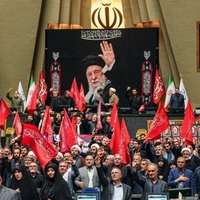
In Tehran, security forces and Basij units maintained a visible presence as supporters gathered in Azadi Square. State media broadcast images of families and children waving flags, and highlighted what it portrayed as festive participation across the country.

Among the more striking displays were symbolic coffins bearing the names and photos of senior US military officials, including US Army Chief of Staff Randy George and CENTCOM Commander Brad Cooper. Cooper was part of the US delegation that recently held talks with Iranian officials in Oman.

American and Israeli flags were also burned during the rally.

The imagery of defiance came as Iranian officials engage in renewed diplomatic contacts with the United States. The juxtaposition reflected a dual message: confrontation abroad and consolidation at home.

President Masoud Pezeshkian, addressing the rally, repeated the government’s narrative about the recent unrest, accusing protesters of sabotage and violence and saying “no Iranian takes up arms to kill another Iranian.”

Iranian President Masoud Pezeshkian speaks during the 47th anniversary of the Islamic Revolution in Tehran, Iran, February 11, 2026.
100%
Iranian President Masoud Pezeshkian speaks during the 47th anniversary of the Islamic Revolution in Tehran, Iran, February 11, 2026.

He acknowledged widespread dissatisfaction but said the government was prepared to “hear the voice of the people,” while emphasizing loyalty to Supreme Leader Ali Khamenei and adherence to his “red lines” in diplomacy, a tacit reference to Iran’s uranium enrichment, missile program and support for regional militia groups.

State television placed particular emphasis on images of children and families at the rallies, a move that analysts say may reflect efforts to soften the government’s image after weeks of reports about civilian casualties.

Rights advocates have long criticized the use of minors in political events, arguing that it instrumentalizes children for propaganda purposes.

The commemorations took place roughly a month after a violent suppression of protests that erupted in late December.

The editorial board of Iran International said earlier this month that more than 36,500 people had been killed in a targeted crackdown ordered by Khamenei.

Even as the government staged its anniversary spectacle, dissent surfaced in other forms. On the eve of 22 Bahman, residents in multiple neighborhoods of Tehran – including Narmak, Ekbatan, Majidieh and Naziabad – shouted slogans such as “Death to Khamenei” and “Death to the dictator” from rooftops and balconies. Similar chants were reported in cities including Mashhad, Arak, Qazvin, Kermanshah and Shahriar.

Videos circulating online showed nighttime fireworks lighting the sky as anti-government slogans rang out.

In one clip from Arak, residents could be heard chanting against Khamenei in response to mosque loudspeakers broadcasting the traditional “Allahu Akbar.”

In Tehran, one resident said the fireworks were so loud “we thought America had attacked.”

In isolated incidents, pro-government speakers appeared to inadvertently repeat anti-Khamenei slogans during live broadcasts, prompting abrupt cuts in coverage.

One state reporter in Sistan and Baluchestan was heard listing “Death to Khamenei” among rally chants before the feed was interrupted.

Political analyst Iman Aghayari told Iran International that the anniversary had become “an arena of confrontation between the government and the people,” adding that unlike in previous years, authorities seemed less concerned with demonstrating broad public backing and more focused on asserting control.

“This time,” he said, “the regime is not trying to prove people are with it. It is simply declaring that it rules.”

As Iran navigates renewed diplomacy abroad and mounting pressure at home, the 22 Bahman (February 11) anniversary appeared to reflect a widening gap between official displays of unity and the anger that continues to surface beyond the state’s stage-managed events.