Iran protests show people reject autocracy, Nobel laureate says
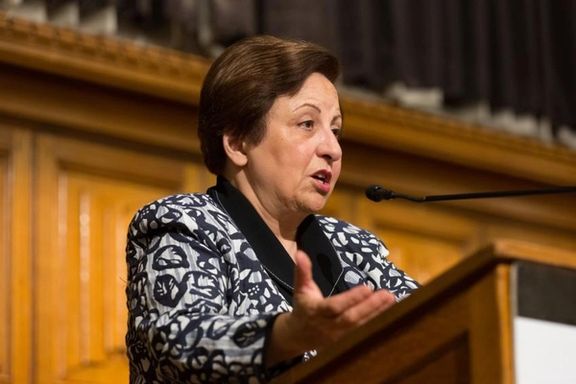

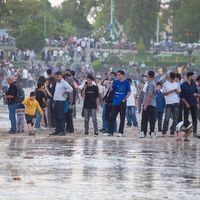
Iran is witnessing the broadest strike and protest movement in the Islamic Republic’s history, Nobel Peace Prize laureate Shirin Ebadi said on Thursday, saying the protests showed Iranians would no longer accept despotism.
“A free and democratic Iran will be built through unity and solidarity and in cooperation among all people,” she wrote on Instagram. “The people of Iran are building a different Iran together, an Iran in which we will see less suffering and more joy.”
Ebadi said the solidarity seen across society was a lesson for future political movements that Iranians would no longer submit to autocracy.
British lawmaker Tom Tugendhat said on Thursday that corruption could widen divisions between Iran’s Revolutionary Guards and the country’s regular armed forces.
“It is only a matter of time before the gap between the IRGC, the mafia guards of the Islamic regime, and the army is made wider by the rampant corruption in the Guard,” ex-Security Minister wrote on X.
He added that Iran’s conventional forces had not benefited in the same way. “The Iranian army, navy and air force have not enjoyed the same access to the profits of crime,” he wrote.
The Islamic Revolutionary Guard Corps, known as the IRGC, is a powerful military and economic force in Iran and operates alongside the regular army.

Iran does not want war but is prepared for it, Foreign Minister Abbas Araghchi said on Thursday, responding to what he described as growing threats from Israel.
“We do not want war, but we are ready for war,” Araghchi told reporters on arrival in Lebanon.
“Our region is facing serious challenges, and the threats that are directed at the region, specifically from Israel, have never been as great as they are today,” he said.
Araghchi said Iran was in contact with countries across the region. “The Islamic Republic is in consultations with all countries in the region, and my trip to Lebanon is taking place at an important time,” he said.
On the possibility of talks with the United States, Araghchi said negotiations could begin under certain conditions. “Whenever the Americans accept that negotiation is different from dictation, talks can begin,” he said.
Darya Safai, an Iranian-born member of Belgium’s parliament, told Iran International that exiled Prince Reza Pahlavi’s call for protests at 8 p.m. on Thursday and Friday would be decisive for Iran’s future and what she described as a national revolution.
She said people had already shown they want a secular government, adding that many Iranians see Prince Pahlavi as a symbol of unity and believe his historical background gives him legitimacy to lead a transitional period.
“The Islamic Republic has reached its end point, and after 47 years the Iranian nation is ready for a final battle. Forty-seven years of rule by the Islamic Republic was a historical mistake, and the Iranian nation is rewriting its own history.”
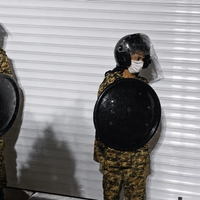
Security forces fired directly at protesters in the city of Qazvin, northwest of Tehran, on Wednesday night, according to a video received by Iran International.
US Republican Congressman Keith Self said that Iran's theocratic rulers face imminent end as protesters take to the streets.
“The days of the theocratic rulers of Iran are numbered. As protesters fill the streets, the Ayatollah would be wise to read the writing on the wall and realize that the time for change has come,” the Republican House member from Texas posted on Wednesday on X.
"The Iranian people are more determined than ever to overthrow the regime and this time, the people have the upper hand. I believe this time the people are willing to make the sacrifice that will lead to a more free society," he added.