An Iranian flag is raised during an state-sponsored performance to mark the coincidence of the birth of Shiites' first Imam, Ali, and the death of IRGC Quds Force commander Qassem Soleimani, January 3, 2026
The seizing of Venezuela’s Nicolas Maduro by US forces over the weekend has sharpened debates in Tehran about President Donald Trump’s endgame in Iran, as anti-government protests across the country enter a second week.
The episode has prompted comparisons—sometimes uneasy, sometimes fiercely rejected—between Venezuela’s trajectory and Iran’s own.
Strikes and protests have spread to dozens of Iranian cities in recent days, sharpening questions about economic exhaustion and public legitimacy.
Former Iranian diplomat Fereydoun Majlesi told the Shargh newspaper that Maduro’s detention reflected Washington’s current logic: maximal displays of power and deterrence. “Maduro’s arrest was not just a political act but a deterrent message to other players,” he said.
Foreign policy analyst Ali Bigdeli also told Shargh that while a direct U.S. attack on Iran would require congressional approval, the Venezuela episode showed that covert actions or security pretexts remained possible.
“Without a serious revision of foreign policy and adaptation to new global conditions, continuing the old path will not only fail but impose greater costs,” he warned.
‘Erosion of trust’
Even sources close to the establishment reflected unease, albeit more subtly.
Khabar Online, a moderate outlet close to security chief Ali Larijani, highlighted US sanctions on Venezuela while also pointing to mismanagement and corruption.
“Maduro’s fall was not the product of a single factor, but the outcome of accumulated crises long ignored,” the commentary argued, landing on a phrase widely used in reference to Iran’s own condition: “erosion of public trust.”
Political analyst Sadegh Maleki was more direct.
“Maduro, like (Syria’s) Assad, ruled without heartfelt popular backing,” he told Shargh. “Governments that create distance between themselves and the people are more vulnerable to external operations.”
‘Not comparable’
Conservative voices, however, moved quickly to dismiss any analogy. Gholamreza Sadeghian, editor-in-chief of the Revolutionary Guards-affiliated Javan daily, was blunt in his assessment. “Iran Is Not Comparable—Don’t Waste Your Time,” he headlined his Sunday editorial.
Washington’s threats, Sadeghian wrote, were not a sign of strength but part of a “repetitive and failed spectacle,” adding that “America neither has the capacity for final victory nor the ability to reshape the global order in its favor.”
Hardline newspapers denounced the US action as an “open kidnapping,” a “violation of the UN Charter,” and a “raid on Venezuela’s oil.”
Commentators argued that Washington’s aim was to gain leverage over global energy markets and consolidate geopolitical influence by controlling the country’s vast reserves.
The lesson, hardliners argued, was that Iran should never engage in talks with the United States, noting that Maduro was detained shortly after he signaled readiness to negotiate with Trump.
‘Military power not enough’
Kayhan newspaper, which is funded by the office of Iran’s Supreme Leader, claimed that Venezuelans had taken to the streets in support of Maduro and declared they would not allow their country to be occupied.
Ultraconservative lawmaker Javad Karimi-Ghodousi went further, predicting that Maduro would return to Venezuela “as a hero.” Trump, he added on X, would “be slapped by America’s revolutionary youth and fall into the dustbin of history.”
A more measured assessment came from the moderate outlet Rouydad24.
An editorial argued that the two countries’ situations were fundamentally different and rejected “fear of collapse,” while still suggesting that Maduro’s fate offered a lesson for Tehran on the need to address economic and social demands.
“Venezuela showed that even military structures cannot endure without sustainable social backing,” the site wrote.
In Hamadan, two protesters sit facing each other and flash the victory sign.
No one can say with certainty whether the current protests will spiral into a revolution. But analysts tell Eye for Iran it is becoming harder to ignore signs that Iran’s theocracy may be entering a period of repeated crises that challenge its ability to function as a state.
Some analysts now warn that Iran may be entering the early stages of regime collapse — not through a single dramatic event, but through a slow erosion of state capacity.
What makes this round different is not only the fury in the streets. It is the growing uncertainty within the clerical establishment, which is leaning more heavily on coercion while projecting less confidence than before.
The protests began with the plunging rial. They have since widened into a broader test of whether the government can still manage a country living in constant crisis. Demonstrations that started in Tehran’s electronics markets have spread across provinces, bazaars and campuses, with chants increasingly aimed at the ruling system itself.
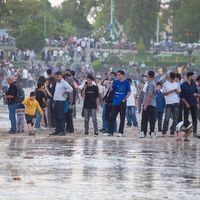
Live fire and deaths have fueled anger, while rare scenes in a religious city like Qom and other cities show crowds refusing to retreat.
A system running out of answers
Shayan Samii, a former US government appointee said the anger goes beyond economic hardship — it reflects a belief that the future has narrowed.
“They are upset because the value of their currency has gone down the drain,” he said. “There is nothing to look forward to.”
That sense of closure, he argued, is what pushes ordinary Iranians to take risks despite repression — a difficult dynamic for a state that relies heavily on deterrence and coercion.
Journalist and author Arash Azizi described protests appearing not only in major cities but in towns once seen as politically quiet.
“There is discontent everywhere,” he said — but protesters “lack leadership” and “lack organization.”
Without that, he warned, unrest can erupt and fade without producing structural change, even as each round leaves the system more brittle.
From an intelligence perspective, Danny Citrinowicz, former head of the Iran branch in Israeli military intelligence, said the deeper issue is not simply mismanagement but the absence of any workable path forward.
“The main problem the regime has is that it has no silver-bullet solution to the economic problems in Iran,” he said. Even if authorities find temporary fixes, “the problem will stay.”
Economic calm, in other words, may only pause — not resolve the crisis.
Cracks inside the ruling class
It is not only public anger that is shifting, said Alex Vatanka of the Middle East Institute but the mood among elites themselves.
“I have certainly not ever seen this level of hopelessness inside the Iranian regime,” he said.
That kind of discouragement, he added, can be more consequential than unrest alone, opening space for miscalculations and internal rivalries that become harder to contain.
Former US State Department official Alan Eyre cautioned against assuming outside forces can engineer rapid political change.
“Regime change is wildly improbable in Iran right now,” he said — warning that intense external pressure could strengthen hard-liners or push Iran toward greater militarization.
His remarks followed comments by Donald Trump that the United States was “locked and loaded” if Iranian authorities kill protesters — language that energized some activists while raising fears of escalation among others.
Why this wave feels different
Bozorgmehr Sharafeddin, head of Iran International Digital, argued that this round cuts deeper because it points to a crisis of state survival rather than policy error.
“This protest is not about inflation,” he said. “This is about the collapse of the Iranian economy.”
He also noted that international reaction came immediately — a contrast with earlier cycles when global attention arrived more cautiously and later.
Across the conversation, one theme recurred: the state still has the means to suppress dissent — but it is doing so with increasing uncertainty about what comes next.
Protesters are directing anger at the foundations of clerical power, not merely the officials administering policy. Reform promises carry less credibility. And senior figures themselves acknowledge problems they cannot easily fix.
That does not guarantee revolution and it does not mean collapse will come overnight. But analysts say a government that relies primarily on coercion while showing visible doubt from within no longer projects stability.
What emerges, they warn, is a system still capable of force yet less certain of itself with every passing crisis.
You can watch Episode 84 of Eye for Iran on YouTube or listen on any podcast platform of your choosing.
A screen-grab from a video that appears to show protestors in Iran's southern city of Marvdasht chant against Supreme Leader Ali Khamenei, January 1, 2026
As protests once again ripple across Iran, the country’s political establishment is moving quickly to revive an economic reform agenda that many Iranians say no longer speaks to the core of their anger.
While demonstrators chant against the entire system, the government of President Masoud Pezeshkian has focused its response on reshuffling economic managers and pressing ahead with long-delayed currency reforms, betting that technical fixes can still defuse a crisis that has increasingly become political.
The renewed unrest was triggered by a sharp bout of currency volatility that briefly pushed the U.S. dollar to around 1.45 million rials on the open market, intensifying already high inflation and accelerating the erosion of purchasing power.
“Protesting the dollar is protesting instability; protesting a life that cannot be planned,” wrote journalist Mustafa Danandeh in the daily Ettelaat. “People who do not know whether six months from now their rent will double, medicine will be available, or their job will survive.”
A new old face
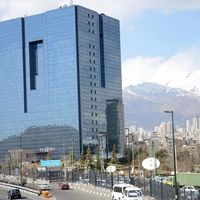
In response, Pezeshkian reshuffled the leadership of the Central Bank of Iran, reappointing Abdolnaser Hemmati and reviving a controversial push toward a single exchange rate—an idea long advocated by economists but repeatedly stalled by politics, sanctions and entrenched interests.
Hemmati, a prominent centrist figure, had been forced out less than seven months into his tenure as economy minister after parliament impeached him over exchange-rate volatility.
His return—this time to a post that does not require parliamentary approval—has infuriated hardline lawmakers and highlighted widening rifts within the political elite.
“This explicitly ignores parliament’s vote and shows disregard for the will of representatives,” said Zeynab Gheisari, an ultra-hardline lawmaker from Tehran. Another hardline legislator, Amir-Hossein Sabeti, said the move demonstrated the government’s “disregard for the people and the country’s economy.”
In his first public remarks after the appointment, Hemmati laid out familiar priorities: controlling inflation, managing the foreign exchange market and tightening oversight of banks.
It’s the economy—or is it?
The reform effort centers on dismantling Iran’s multi-rate currency regime, a system dating back to the Iran–Iraq war of the 1980s, when preferential exchange rates were introduced to subsidize essential imports. Over time, the widening gap between official and market rates turned the system into a major source of rent-seeking, corruption and uncertainty.
As the business news outlet Tejarat News noted, the policy “failed to provide sustainable support for domestic producers and created severe uncertainty for investment and production planning.”
The Entekhab news site cautioned that in an economy burdened by sanctions, fiscal shortfalls and political distrust, inflationary expectations tend to regenerate quickly once short-term interventions fade.
On Thursday, the president announced the immediate elimination of the subsidized exchange rate of 285,000 rials per dollar for basic goods and animal feed imports, saying the subsidy would instead be transferred directly to consumers to eliminate “rent, bribery and corruption.”
In unusually blunt remarks, Pezeshkian acknowledged that public anger was directed at the state itself. Dissatisfaction, he said, was the government’s responsibility, adding that “there is no need to look for America to blame.”
Many protesters appear keenly aware that Pezeshkian’s authority is tightly constrained by entrenched power centers, a reality reflected in slogans that target the theocratic system itself and its supreme leader rather than the exchange rate.
Iran's president Masoud Pezeshkian (middle) listens to an aide as they walk out of a cabinet meeting in Tehran, December 31, 2025
Tehran’s response to the protests this week has looked markedly different, whether out of calculation or necessity, with Iranian media reporting on the unrest, the government striking a conciliatory tone and the internet remaining largely accessible.
The protests, triggered by rising prices, quickly moved beyond economic grievances. Slogans once again targeted the ruling system itself, with demonstrators openly calling for its downfall.
In both 2019 and 2022, when similar chants echoed across Iran, authorities moved swiftly to shut down the internet, cutting off communication with the outside world and crippling domestic news coverage. Protesters were rapidly branded as enemy foot soldiers, and state media framed the unrest almost exclusively as a foreign-backed security threat.
This time, the state broadcaster appears to have adopted a more cautious line, quoting hardline outlets on the causes of the protests while limiting its own commentary, perhaps to avoid provoking demonstrators—or to reclaim an audience long lost to social media and foreign-based Persian-language outlets.
‘Right to protest’
State television presenters have repeatedly asserted in recent days that “protesters have every right to protest rising prices.”
That framing mirrors President Massoud Pezeshkian’s recent assertion that “protesters do not need a permit to take to the streets under the Iranian Constitution.”
The statement was always legally correct, but no senior official or major outlet had previously expressed it so plainly.
At a December 31 press conference, government spokeswoman Fatemeh Mohajerani reiterated that the administration recognizes the public’s right to protest, adding that Pezeshkian has pledged to listen to citizens and resolve their problems.
The new central bank governor, Abdolnasser Hemmati, issued sweeping promises: to control inflation, end privileges for well-connected individuals and address banking irregularities, including unauthorized withdrawals from government accounts.
Hemmati previously held senior economic posts under Presidents Rouhani and Pezeshkian without achieving those goals, but on December 31 he insisted he now has “full authority” and is determined to deliver.
Cities shut down
At the same time, the government has taken steps to sap momentum from the streets.
Beginning December 31, schools and offices in 26 of Iran’s 31 provinces were closed for four days, a move widely seen as an attempt to replace open unrest with a fragile calm—particularly as the closures were announced amid unusually clear weather in the capital, rather than the pollution that has forced similar shutdowns in recent months.
As heavy smog over Tehran briefly lifted after months, some protesters remarked—almost incredulously—that Mount Damavand was visible again on the northeastern horizon, an unintended symbol of dissent long presumed dormant but never extinguished.
Yet an ominous sign looms as well.
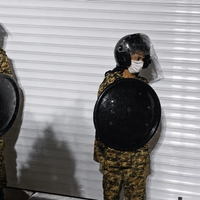
Ali Fadavi, the IRGC’s deputy commander, has been replaced by Ahmad Vahidi, a figure known for harsher methods and strict loyalty to Supreme Leader Ali Khamenei. Reports already suggest that shootings at demonstrators and arrests increased on Thursday, the fifth day of unrest.
It remains to be seen whether Tehran sustains its current posture if unrest deepens—or reverts to its familiar factory settings of internet disruption and brute force.
A person walks past a sign at a currency exchange, as the value of the Iranian Rial drops, in Tehran, Iran, December 30, 2025.
Iranian President Masoud Pezeshkian said on Thursday that his government would stop distributing a heavily subsidized exchange rate, blaming the system for encouraging rent-seeking and failing to protect households despite billions of dollars in state support.
Speaking at a meeting with political and social activists in Chaharmahal and Bakhtiari province, Pezeshkian said the 28,500-toman dollar – one of several preferential exchange rates used in Iran – would no longer be allocated.
“Anyone who received the 28,500-toman dollar pocketed it, so we will not give it out anymore,” Pezeshkian said, arguing that multiple exchange rates had benefited intermediaries rather than consumers.
Iran has long used subsidized exchange rates to support imports of basic goods and curb inflation, but critics say the system has encouraged corruption and widened inequality, particularly as sanctions and high inflation have strained the economy.
Pezeshkian said the government had spent about $18 billion on subsidies, adding that the funds could be used more effectively to improve living standards.
“We have given $18 billion in subsidies, when with this amount we could plan so that everyone’s table is the same,” he said.
Late last month, Hossein Samsami, a member of parliament’s economic committee, said more than $116 billion in export earnings had not been repatriated since 2018, citing official non-oil export data.
The president added that subsidies would not be eliminated but redirected to end consumers rather than producers or intermediaries. He said foreign currency allocations for sectors such as livestock feed would be moved to the final stage of the production chain.
“We are not removing subsidies; we are giving them to the final consumer,” Pezeshkian said.
Iran operates several exchange rates, including a market rate that trades far weaker than official or subsidized levels, creating price gaps that economists say incentivize arbitrage.
The preferential exchange rate system was introduced in April 2018 under former president Hassan Rouhani, when the dollar was fixed at 42,000 rials in an effort to stabilize prices amid mounting sanctions.
Iran’s economy has been under sustained pressure from US sanctions, high inflation and currency depreciation, complicating repeated efforts by successive governments to reform subsidies and unify exchange rates.
People walk past closed shops following protests over a plunge in the currency's value, in the Tehran Grand Bazaar, Tehran, Iran, December 30, 2025.
Iran’s bazaar strike, sparked by currency chaos and collapsing purchasing power, is widening beyond traders and shopkeepers – pulling in students and salaried workers as the anger is spreading across Iran’s squeezed middle and low-income households.
President Masoud Pezeshkian’s administration says it recognizes the public’s right to protest, but it has neither the financial resources to placate the deepening public anger nor the political leverage to confront hardliners who place the blame squarely on the government.
Pezeshkian addressed the situation on social media on Tuesday, writing that people’s livelihoods are his daily concern and that fundamental reforms of the monetary and banking system are on the agenda to protect purchasing power. He also said he had tasked the interior minister with speaking to representatives of the protesters.
The message failed to convince most Iranians, including many of Pezeshkian’s own supporters.
Morteza Nemati Zargaran, a university professor, reminded Pezeshkian in a post on X that recognizing public protests carries no practical guarantees as long as he lacks the necessary authority.
“What action can you take if the protesters’ representatives challenge the country’s overarching policies – policies to which you have repeatedly declared your loyalty? And what will you do if … they are arrested by power centers beyond your government?”
'Closed is cheaper than open'
The economic strain has been especially visible in Tehran’s Grand Bazaar.
Morteza, a 45-year-old former wholesale shoe merchant who recently closed his shop after failing to pay rent, told Iran International that nearly all his fellow traders have joined the ongoing bazaar strike.
“They tell me I’m lucky I shut my shop and left,” he said. “They say they lose less money if they keep their shops closed now than if sell their goods – because it’s impossible to replace the stock at the same price.”
The stagnation has become so severe that some shops have recently advertised installment plans for clothing and shoes – an unprecedented practice in Iran and a sign of sharply declining purchasing power.
Morteza added: “The economic situation is so dire that the government no longer dares to deny it. When someone earning 400 million rials a month (around $280) – still a dream salary for many – is below the poverty line in Tehran, it means almost no worker or employee can endure the pressure anymore. Everyone has reached their limit, in every sense.”
Cautious nod from state media
Concerns over further escalation appear to be growing within official circles.
On Monday, state television – controlled by hardliners opposed to President Masoud Pezeshkian – briefly covered the bazaar protests for the first time.
Cameras were taken into shops, airing interviews in which merchants emphasized that their protests were economic in nature and driven by currency volatility rather than politics.
At the same time, videos circulating on social media showed protesters chanting anti-government slogans in several locations.
According to Morteza, while the protests so far have had a strong economic dimension, they cannot be reduced to bread-and-butter issues alone.
“Livelihood is not the only reason for people’s anger. This time, the government cannot calm society with small handouts, superficial concessions or a crackdown.”
Fear at the bottom, strain in the middle
Iran’s deteriorating economy has devastated low-income households while also eroding the lives of salaried middle-class families who once enjoyed relative stability.
Even by official figures, inflation surpassed 50 percent last month. Yet the government’s proposed budget for next year includes only a 20 percent increase in salaries for civil servants and retirees, deepening concerns over an unbridgeable gap between incomes and living costs.
Middle-class families may still live in reasonably maintained homes, but a burst pipe, a broken car, or a medical emergency can wipe out most of a month’s income, according to widespread accounts on social media.
Downsizing, once a coping strategy, now offers little relief. Iran’s housing market – particularly in Tehran – is experiencing an unprecedented slump, limiting families’ ability to sell or relocate to offset rising costs of food and utilities.
Journalist Mohammad Parsi wrote on X: “In this country… first buying a home became a dream, then a car, a phone, travel – and now even essential goods are disappearing from daily life, just like that, in one of the richest countries in the world.”
Another user, Arian Bahmani, described even buying basic snacks as a financial calculation, calling it “a frightening collapse of living standards.”
“The disaster is not that we can’t buy a house or a car – they’ve been dreams for years,” he wrote. “The disaster is that ‘500,000-rial (about 35 cents) treats are luxury purchases. When buying snacks becomes a financial risk, we are no longer citizens – we are hostages.”