Iran says bombed nuclear sites present radiation risk
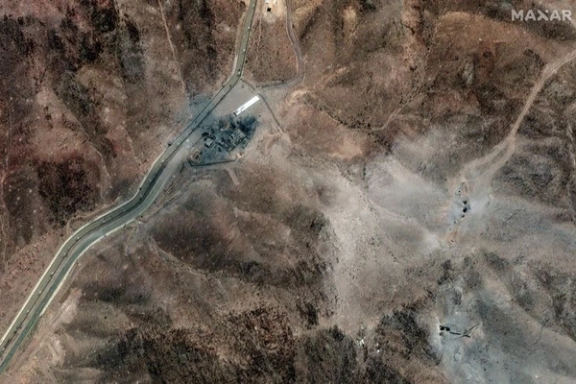
Iran’s foreign minister Abbas Araghchi says there is a risk of radiation release at nuclear facilities bombed during the 12-day war in June, contradicting earlier assurances from Tehran.
Iran’s foreign minister Abbas Araghchi says there is a risk of radiation release at nuclear facilities bombed during the 12-day war in June, contradicting earlier assurances from Tehran.
In an interview with Japan’s Kyodo News on Sunday, Araghchi said strikes on Iran’s nuclear facilities had created serious dangers, including possible radiation exposure and unexploded ordnance.
“We are now facing security threats and safety concerns,” he said.
Following the joint US-Israeli attacks, Iranian authorities refused to evacuate surrounding towns and repeatedly dismissed public fears.
In late June, deputy health minister Alireza Raeisi said enrichment “does not involve nuclear fission” and therefore cannot generate harmful radiation, adding that measurements around Natanz and Fordow showed the areas were completely safe.
The International Atomic Energy Agency (IAEA) likewise reported in June that it had detected no radiation increase around Natanz.
Conditional openness to new talks
Before the 12-day conflict, Tehran and Washington held five rounds of talks that broke down over Iran’s refusal to end domestic enrichment as demanded by US President Donald Trump.
Tehran, Araghchi said, could restart talks with Washington “as soon as they accept a logic of confidence-building” that trades sanctions relief for restrictions on Iran’s nuclear program.
He insisted any framework must recognize Iran’s “right to enrichment.”
Iran, Araghchi added, is prepared to accept supervisory mechanisms “beyond the NPT” and time-limited limits on enrichment levels and centrifuge types, recalling that Tehran had accepted the 3.67-percent cap for 15 years under the JCPOA.
Still, Araghchi told Kyodo News that Iran cannot currently allow the resumption of IAEA inspections halted after the war because no protocol or guideline exists for inspectors entering damaged facilities.
IAEA director general Rafael Grossi has said most of Iran’s enriched-uranium stockpile is being kept at sites in Isfahan, Fordow and Natanz where inspectors lack access, and warned in October that monitors had observed activity around storage locations.
US officials under President Trump have demanded zero enrichment, dismantling of proxy forces and limits on Iran’s missile program – terms Tehran calls unacceptable.