• العربية
  • فارسی
Brand
  • Iran Insight
  • Politics
  • Economy
  • Analysis
  • Special Report
  • Opinion
  • Podcast
  • Iran Insight
  • Politics
  • Economy
  • Analysis
  • Special Report
  • Opinion
  • Podcast
  • Theme
  • Language
    • العربية
    • فارسی
  • Iran Insight
  • Politics
  • Economy
  • Analysis
  • Special Report
  • Opinion
  • Podcast
All rights reserved for Volant Media UK Limited
volant media logo

Recognition of Israel ‘impossible under Khamenei,’ adviser’s son says - FT

Nov 26, 2025, 11:41 GMT+0
People hold photos of Iran’s Supreme Leader Ali Khamenei during a religious ceremony in Tehran, November 2025.

Hamzeh Safavi, a Tehran University professor and son of senior Khamenei military adviser, said Iran should consider a Saudi-backed approach that conditions any recognition of Israel on acceptance of a two-state solution along 1967 borders, the Financial Times reported.

“If I were a decision maker, I would have joined the plan endorsed by Saudi Arabia, which conditions recognition of Israel on its acceptance of a two-state solution based on the 1967 borders,” he said.

Safavi, 44, the son of former Revolutionary Guards commander Yahya Rahim Safavi, added: “Israel will never accept the two-state solution, but Iran would demonstrate it has no intention of undermining the internationally recognized order.”

He stressed he spoke personally and not for the state.

Safavi also said recognition of Israel is “impossible under Ayatollah Khamenei’s leadership,” while allowing that “in the long term, no one knows.”

The article said debate over Iran’s direction has widened among well-connected figures after a brief war with Israel in June.

Other prominent voices cited by the outlet include Faezeh Hashemi – a former lawmaker and daughter of ex-president Akbar Hashemi Rafsanjani – who said Iran should re-establish diplomatic ties with Washington and take “meaningful steps towards substantial change.”

The article also referenced figures from influential families who have at times diverged publicly from hardline positions, including cleric the grandchild of the Islamic Republic’s founder Hassan Khomeini, his brother Ali, and lawyer Hassan Younesi, the son of a former intelligence minister.

The article emphasized that their comments reflect a broader discussion inside elite circles rather than an official policy shift.

There is no indication Iran’s leadership plans to adopt the proposals described, the Financial Times said, adding that the debate may gain importance as the country looks ahead to eventual succession for the 86-year-old Supreme Leader.

Most Viewed

Ghalibaf defends Iran-US talks amid hardline backlash
1
INSIGHT

Ghalibaf defends Iran-US talks amid hardline backlash

2
INSIGHT

Iran diplomacy wobbles as factions compete to avoid looking soft on US

3
VOICES FROM IRAN

Bread shortages, soaring prices strain households in Iran, residents say

4
ANALYSIS

The politics of pink: how Iran uses cuteness to rebrand violence

5

Scam messages seek crypto for ships’ safe passage through Hormuz, firm warns

Banner
Banner

Spotlight

  • Tehran moderates see ‘no deal–no war’ limbo as worst outcome
    INSIGHT

    Tehran moderates see ‘no deal–no war’ limbo as worst outcome

  • The future has been switched off here
    TEHRAN INSIDER

    The future has been switched off here

  • Lights out, then gunfire: Witnesses recount Mashhad protest crackdown
    VOICES FROM IRAN

    Lights out, then gunfire: Witnesses recount Mashhad protest crackdown

  • Family told missing teen was alive, then received his body 60 days later
    EXCLUSIVE

    Family told missing teen was alive, then received his body 60 days later

  • Is Iran entering its Gorbachev moment?
    INSIGHT

    Is Iran entering its Gorbachev moment?

  • Iran crackdown reaches cemeteries as graves of slain protesters defaced
    EXCLUSIVE

    Iran crackdown reaches cemeteries as graves of slain protesters defaced

  • Iran’s rulers don’t mind the ship sinking, their brood jumped long ago

    Iran’s rulers don’t mind the ship sinking, their brood jumped long ago

  • Iran's noble-born openly tout their 'good genes'

    Iran's noble-born openly tout their 'good genes'

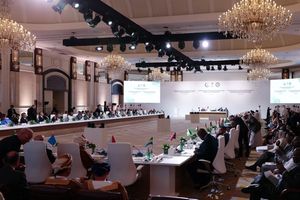
  • Iran rejects Arab-Islamic summit’s call for two-state solution

    Iran rejects Arab-Islamic summit’s call for two-state solution

  • Iran's Guards warn against 'satanic' push for two-state solution

    Iran's Guards warn against 'satanic' push for two-state solution

•
•
•

More Stories

Iran’s troubled energy sector gets an untested tsar

Nov 26, 2025, 07:11 GMT+0
•
Umud Shokri

President Masoud Pezeshkian has drawn fire over his decision to hand leadership over a crucial new energy body tasked with confronting an acute power crisis to a bureaucrat with no background in the sector.

The newly formed Energy Optimization and Strategic Management Organization (EOMSO) was hailed as a technocratic command center for a sector in crisis.

With Esmaeil Saghab Esfahani at its helm, tens of millions of Iranians could soon feel through the consequences of having untested hands manage a key aspect of their daily lives.

Iran’s energy system is under historic strain. Chronic blackouts, aging grids, water scarcity and soaring demand have eroded reliability, while subsidies distort consumption and drain national revenue.

Esfahani held a senior position in the administration of Pezeshkian's hardline predecessor Ebrahim Raisi and his appointment has been attributed by some critics as a potential sop to to the government's conservative opponents.

Lacking expertise

The EOMSO was created in early 2025 to confront these pressures by streamlining policy and coordinating investment across electricity, oil, gas and renewables. Its mandate runs from grid modeling and demand-side management to long-term transition planning.

But Esfahani's previous work centered on administrative reform, social equity programs and government transformation initiatives—useful skills, but far removed from the thermodynamics, market design, regulatory engineering and infrastructure planning that define modern energy governance.

There is no record of experience in electricity economics, energy markets, renewable-integration planning or the operational challenges of Iran’s grid and gas systems.

This gap represents more than a resume mismatch. It signals strategic misalignment at a moment when Iran needs precision and domain-specific leadership most.

Task at hand

The stakes are high because EOMSO is tasked to reduce Iran’s estimated $53 billion in annual energy waste, guiding renewable-energy investment with the National Development Fund, supervising subsidy reform and steering the transition toward cleaner and more resilient energy systems.

Integrating the cultures and functions of multiple legacy institutions into a single strategic entity is itself a formidable challenge.

Doing so under intensifying demand pressures, geopolitical volatility, and deteriorating infrastructure requires leadership that understands both the technical architecture and the political economy of Iran’s energy sector.

Without deep technical grounding, the organization risks drifting toward procedural audits rather than reform. Key initiatives could stall. Policies can be misjudged, wasting limited capital and prolonging Iran’s vulnerability to outages.

Administrative instincts alone are no substitute for practical knowledge.

Political cost

Beyond the technical implications, the appointment carries political and institutional consequences that reach into Pezeshkian’s broader reform agenda.

The moderate president campaigned on professionalizing governance and empowering specialists. Choosing Esfahani undercuts that promise and risks reducing EOMSO to another venue where political balancing supersedes competence.

Public trust, already strained by blackouts and stalled projects, is unlikely to withstand another round of unmet expectations. Energy policy touches households and industries daily; missteps are felt immediately.

The danger is not personal failure on the part of Saghab Esfahani. It is the systemic vulnerability created when a critical institution is led without the technical authority needed to manage its portfolio.

Iran’s energy crisis is too severe, and the EOMSO’s mandate too demanding, for improvisation. The body’s creation could be a step toward coherent energy governance if the administration compensates for the expertise gap.

Without corrective measures—and fast—the appointment risks becoming an energy turning point for all the wrong reasons.

Pezeshkian’s top team unravels under growing pressure

Nov 25, 2025, 17:58 GMT+0
•
Behrouz Turani

Mounting pressure on President Masoud Pezeshkian’s administration from hardline opponents and an ailing economy appears to be cutting deep into his inner circle, triggering resignations, public spats and mistrust.

Recent departures and high-profile clashes demonstrate that misgivings within the 18-month-old administration have spilled into public view.

Fayyaz Zahed, a senior adviser, publicly quit last week.

In a sharply worded letter, Zahed denounced several recent appointments as “embarrassing” and reflective of “bad taste,” singling out the choice of Sagheb Esfahani—a hardliner with no experience in the energy sector—to head Iran’s energy optimization body.

Zahed’s colleague Mohammad Mohajeri later quoted him as telling Pezeshkian: “If you want a silent apologist as your adviser, please be advised that genuine opinion cannot be bought with orders and directives.”

Jafar the kingmaker

Much of the internal disarray is now being linked to the expanding influence of Vice President Mohammad Jafar Ghaempanah—an old friend, wartime companion and arguably the president’s closest confidant.

Reports from Khabar Online and outlets aligned with Majles Speaker Mohammad Bagher Ghalibaf accuse Ghaempanah of driving a series of controversial appointments and sidelining more experienced advisers.

Hardline media have seized on the moment, describing the resignations—grudgingly accepted by Pezeshkian—as evidence of a broader administrative failure, one that neither the president nor his deputies can reverse.

These departures land at a time when Iran’s economy is dragging under renewed sanctions, high inflation, frustrated expectations from the post-election period and a sense that Pezeshkian has struggled to articulate a coherent economic direction.

Hardline outlets including Javan, Kayhan and Sobh-e No have amplified that narrative, arguing that the president’s inability to rein in his inner circle has compounded the economic drift.

The line of attack is clear: factional meddling and poor personnel decisions are not just political missteps—they are undermining governance at a moment of national fragility.

VP Aref next?

Against this backdrop, pro-Ghalibaf media such as Sobh-e No and Khorassan now claim that First Vice President Mohammad Reza Aref has submitted his resignation.

The government has not confirmed the reports. Some accounts suggest the trigger is Aref’s escalating clashes with Ghaempanah and Chief of Staff Mohen Hajimirzai. Others say Aref grew frustrated with the “limited scope” of his role.

Aref himself has been criticized by both conservatives and moderates for taking on more responsibilities than his capacity allowed.

If Pezeshkian accepts Aref’s resignation, Ghaempanah would become the president’s last remaining senior vice president, consolidating his position as the most influential figure in the administration’s inner ring.

One anecdote from a recent provincial visit has circulated widely: after one too many sycophantic compliments from Ghaempanah, Pezeshkian reportedly snapped, “Come off it!”

Sasan Karimi, an aide to former foreign minister Javad Zarif, later quipped on social media: “The country would have been better off if Jafar (Ghaempanah) really did come off it. Sometimes the biggest obstacles lie within the innermost circles.”

Together, the confirmed exit of Zahed, the deepening feud around Ghaempanah, the economic malaise, and the swirl of unverified but persistent reports surrounding Aref paint a picture of an administration under severe strain and struggling to hold itself up.

Iran opens case over ex-MP’s remarks on Riyadh mediation

Nov 25, 2025, 14:02 GMT+0

Iran’s judiciary said on Tuesday that prosecutors have filed charges against a former member of parliament and media figure who alleged that President Masoud Pezeshkian sent a message to US President Donald Trump through Saudi Crown Prince Mohammed bin Salman.

According to the judiciary’s media center, Tehran prosecutors accused the former lawmaker of “spreading false information” about the content of a letter Pezeshkian sent to the Saudi crown prince.

Earlier this week, the foreign ministry said the letter was a routine diplomatic message concerning coordination for the annual Hajj pilgrimage.

The announcement comes days after former lawmaker Mostafa Kavakebian told Iranian media that Pezeshkian had, with the approval of Supreme Leader Ali Khamenei, sent a message through the Saudi crown prince offering to resume talks with Washington. Reuters had earlier reported that the letter urged Riyadh to help persuade Trump to restart nuclear negotiations — a report Tehran denied.

Foreign ministry spokesman Esmail Baghaei dismissed the reports, saying “the president’s message to the Saudi crown prince had purely bilateral content,” and accused some domestic figures of fueling “baseless speculation.”

Reports of Saudi mediation

The Lebanese newspaper al-Akhbar reported on Tuesday that Trump had authorized the Saudi crown prince to manage contacts aimed at opening dialogue with Tehran. The paper said bin Salman believed a US-Iran understanding was necessary to reduce regional tensions, though there has been no confirmation from either Washington or Tehran.

Iran’s state news agency IRNA said speculation about third-party mediation misses the broader issue, arguing that the main obstacle is the lack of a shared framework for talks with the United States.

Iran lawmakers urge action over Tabriz hospital chemo drug scandal

Nov 25, 2025, 12:55 GMT+0

More than 80 Iranian lawmakers called on the judiciary on Tuesday to urgently clarify and pursue a 2024 case in which chemotherapy drugs were allegedly stolen from a hospital in the northwestern city of Tabriz and patients were injected with distilled water instead.

The lawmakers, in a letter to judiciary chief Gholamhossein Mohseni Ejei published by Iranian media, said more than a year after the alleged malpractice at Vali-Asr Hospital, officials have yet to provide a full public account of what happened or who was responsible.

They urged what they described as a “serious and transparent” investigation to protect patients’ rights and public trust.

The case first surfaced in Iranian media in October 2024, when local outlets reported that cancer patients at the privately run hospital had received distilled water in place of high-cost chemotherapy drugs that were allegedly diverted for sale on the black market.

Provincial police said at the time that a hospital aide was detained as a suspect and later identified three alleged accomplices, adding that the drugs had been moved to Tehran and sold in the informal market. According to East Azarbaijan police, 20 judicial case files were opened, including cases involving deceased patients’ families.

Prosecutors in Tabriz said the investigation began after a complaint was filed in November 2024, and that four people were arrested.

The provincial prosecutor’s office has said at least one patient whose medication was stolen died, prompting the case to be referred to a special murder unit, and that more than 30 complainants have registered claims so far.

Health authorities in Tabriz confirmed wrongdoing in the chemotherapy ward but said it involved “individual misconduct” rather than an institutional policy, and that the hospital itself reported the suspects to law enforcement.

Former vice president involved

In their Tuesday letter, lawmakers also raised concerns over a potential conflict of interest involving Shahram Dabiri Oskuei, the hospital’s main shareholder and director.

They said Dabiri had sought to frame the affair only as illegal drug sales and had publicly suggested the missing treatments did not affect patients’ life expectancy because some were in advanced stages of cancer.

The lawmakers said that Dabiri has announced his candidacy to head Iran’s Medical Council Organization, a body that can play a disciplinary role in suchcases, and said this could undermine confidence in the investigation.

DabiriOskuei, a physician and politician who served as Tabriz city council chairman and later as Iran’s vice president for parliamentary affairs in under President Masoud Pezeshkian, has not publicly responded to the lawmakers’ new call, according to Iranian media.

Pezeshkian fired him in April after images surfaced online showing the official on vacation in Argentina and en route to Antarctica during the Iranian new year holidays.

Separately, Iranian media reported a similar case in January at Tehran’s Shariati Hospital, where officials said a staff member was suspended after drugs were allegedly siphoned off and replaced with distilled water, with the matter referred to the courts.

Ex-CIA agent says weakened Islamic Republic won't go down without a fight

Nov 24, 2025, 19:22 GMT+0
•
Negar Mojtahedi

Worsted in war and sapped by sanctions, the Islamic Republic remains determined to quash with deadly force any domestic move to topple it, former CIA case officer Reuel Marc Gerecht told Iran International.

Few understand the stakes better than former CIA case officer Reuel Marc Gerecht, a man who once risked his life to enter Iran on his own.

After four decades of watching the Islamic Republic from every angle - as a CIA officer, a historian and someone who smuggled himself into Iran just to see what it was really like - Gerecht’s conclusion about Iran today is stark.

“These people are not moving to Paris,” he said. “They are going down swinging.”

Tehran, he says, is fundamentally unstable, badly shaken by a US-Israeli war in June and deeply suspicious of intelligence penetration by its enemies.

“It has spiritually and perhaps bureaucratically dealt a death blow to the Supreme Leader,” he said, asserting that the stature of veteran theocrat Ali Khamenei who since the conflict has emerged in public more rarely is on the wane.

“I am very doubtful that the eighty-six-year-old gentleman is actually running the government now," he said. "His clones are. He has been effective replicating himself inside the system.”

The surprise Israeli air campaign in June appeared to expose broad intelligence failures and killed hundreds of military personnel and civilians.

Assassinations of top commanders need not have required many Israeli personnel or agents, said Gerecht, a former so-called Iranian targets officer who identified and recruiting Iranians to work for US intelligence.

“The number wouldn’t be that large,” he said.

Young men

Still, the impasse over Iran's disputed nuclear program festers despite US President Donald Trump's assertion that US attacks on nuclear facilities had "obliterated" it.

Khamenei and other top leaders have ruled out US conditions to restart talks even as US and international sanctions on Iran have deepened, driving up costs of living and undermining popular support for authorities.

“The regime cannot make a full recovery and they know that,” he said. “They know how many people dislike them intensely.” Yet as long as Tehran maintains “X number of young men willing to commit violence” on its behalf, it survives.

The United States, he said, is unlikely to seek Tehran's downfall by force.

“The unexpected could happen,” he said. “It is the unexpected that really scares them.” But he sees no serious external push for regime change. “Trump certainly does not have a regime change strategy,” he said. “The bureaucracies are always opposed to that.”

Given US reluctance to get embroiled in another Mideast adventure, any change to the nearly fifty-year-old Islamic system would come from within.

The "Woman, Life, Freedom" protest movement sparked by the death of a young woman, Mahsa Amini, in 2022 was quashed with deadly force by security forces.

“Women can’t bring the Islamic Republic down," Gerecht said. "It has to be young men.”

Going rogue

It was the early 1990s and Iran was still emerging from revolution and a devastating war with Iraq when Gerecht made a decision few would dare.

Driven by a relentless desire to understand the country from within, he left the agency and paid a truck driver to hide him in a cramped storage compartment as they crossed the border from Turkey into Iran.

“They (the CIA) didn’t allow me to go inside Iran,” he said. “So I went rogue.”

In his view, the governing system has lost legitimacy but not its capacity for violence, and real change will only come from fractures among the men who enforce the clerical establishment, not from foreign pressure or peaceful transition.

Gerecht recalled an anecdote far from Iran. At a party in Moscow years ago, he asked a group of former and current KGB officers what had disturbed them most about their service. “They all said they got tired of lying to their children,” he recalled.

He wonders whether one day those inside Iran’s own security establishment might face that same reckoning.

“If that type of scenario is possible,” he said, “then you could conceivably have real change in the Islamic Republic.”

Until then, he sees Iran as a country full of contradictions and a clerical establishment determined to maintain its grip by force.