• العربية
  • فارسی
Brand
  • Iran Insight
  • Politics
  • Economy
  • Analysis
  • Special Report
  • Opinion
  • Podcast
  • Iran Insight
  • Politics
  • Economy
  • Analysis
  • Special Report
  • Opinion
  • Podcast
  • Theme
  • Language
    • العربية
    • فارسی
  • Iran Insight
  • Politics
  • Economy
  • Analysis
  • Special Report
  • Opinion
  • Podcast
All rights reserved for Volant Media UK Limited
volant media logo

Iran’s top brass grappling with distrust after June war - Telegraph

Nov 19, 2025, 10:47 GMT+0

Iranian security institutions have come under growing internal pressure and suspicion since Israel’s June attacks, with accounts describing heightened oversight inside the Revolutionary Guard, The Telegraph reported on Wednesday. 

According to the report, unnamed Iranian officials and security sources said this week that members of the Islamic Revolutionary Guard Corps (IRGC) and other agencies have become increasingly distrustful of one another after what the newspaper described as “extensive Israeli infiltration” during the 12-day war in June. 

The report said officials inside Iran spoke of security personnel seeking to demonstrate their loyalty as investigations widen.

One senior Iranian official told The Telegraph that “many officials, including within the Sepah [IRGC], are doing everything they can to convince the system that they haven’t done anything wrong,” adding that “the Israelis have massively infiltrated several agencies.” 

Another official said, “what’s becoming an even greater concern is the growing number of people who are, in one way or another, betraying the system,” according to the paper.

According to analysts cited in the report, the atmosphere of suspicion could complicate Iran’s crisis-management capabilities. “The paranoia within the IRGC risks weakening Iran’s most powerful military force and the regime’s ability to respond coherently to future crises."

Hundreds of people have been arrested on espionage charges since June and several Iranians have been executed, actions that officials speaking to the outlet described as intended to show that “the system is still functioning.”

The Telegraph also cited officials describing confusion over the status of Tehran’s regional allied forces and unease about the country’s longer-term direction.

A poll by the Iranian Student Polling Agency reported public dissatisfaction at 92%, attributing the figure to Iran’s economic troubles and renewed UN sanctions after the collapse of the 2015 nuclear deal. 

President Masoud Pezeshkian offered a similar note of concern in remarks to parliament last week, warning that Iran could “turn on itself” if the Supreme Leader were harmed during a crisis. 

He said the country’s cohesion rests on Ali Khamenei’s leadership and cautioned that an attack on him during the June war might have triggered internal clashes “without the need for Israel to intervene.” He urged officials to avoid factionalism and to reinforce cooperation across state institutions.

Earlier in the month, the arrest of two men displaying the pre-1979 Iranian flag at a Tehran metro station sparked debate about discontent within parts of the security forces. 

Despite the reported pressures, the Telegraph said experts believe the Iranian state remains structurally stable, pointing to what it called “rally-around-the-flag” dynamics during and after the June conflict with Israel. 

Most Viewed

Ghalibaf defends Iran-US talks amid hardline backlash
1
INSIGHT

Ghalibaf defends Iran-US talks amid hardline backlash

2
INSIGHT

Iran diplomacy wobbles as factions compete to avoid looking soft on US

3
VOICES FROM IRAN

Bread shortages, soaring prices strain households in Iran, residents say

4
ANALYSIS

The politics of pink: how Iran uses cuteness to rebrand violence

5

Scam messages seek crypto for ships’ safe passage through Hormuz, firm warns

Banner
Banner

Spotlight

  • Opposition to US talks grows in Tehran as ceasefire deadline nears
    INSIGHT

    Opposition to US talks grows in Tehran as ceasefire deadline nears

  • Tehran moderates see ‘no deal–no war’ limbo as worst outcome
    INSIGHT

    Tehran moderates see ‘no deal–no war’ limbo as worst outcome

  • The future has been switched off here
    TEHRAN INSIDER

    The future has been switched off here

  • Lights out, then gunfire: Witnesses recount Mashhad protest crackdown
    VOICES FROM IRAN

    Lights out, then gunfire: Witnesses recount Mashhad protest crackdown

  • Family told missing teen was alive, then received his body 60 days later
    EXCLUSIVE

    Family told missing teen was alive, then received his body 60 days later

  • Is Iran entering its Gorbachev moment?
    INSIGHT

    Is Iran entering its Gorbachev moment?

  • Tehran metro arrests fuel debate over protests and change in Iran

    Tehran metro arrests fuel debate over protests and change in Iran

  • Iran could turn on itself if Supreme Leader harmed, president warns

    Iran could turn on itself if Supreme Leader harmed, president warns

•
•
•

More Stories

Tehran denies any talks with Washington despite Trump comment

Nov 19, 2025, 10:45 GMT+0

Iran said on Wednesday that no negotiation process is underway with the United States, rejecting President Donald Trump’s claim a day earlier that the two sides had begun talks.

“There is no process of negotiation between Iran and the United States,” Foreign Ministry spokesman Esmail Baghaei told reporters in Tehran.

“As the foreign minister has said many times, talking to a side that does not believe in mutual respect and takes pride in military aggression against Iran has no logical justification.”

Trump said on Tuesday that the United States was talking with Iran and that he believed Tehran wanted a deal “very badly.”

Speaking at the White House alongside Saudi Crown Prince Mohammed bin Salman, he said, “I am totally open to it, and we’re talking to them, and we start a process.”

The US president added that “it would be a nice thing to have a deal with Iran,” saying he thought the two sides could reach one with Saudi support.

Washington and Tehran held indirect contacts earlier this year over Iran’s nuclear program and regional issues, but the talks stopped after Israel launched a 12-day military campaign in June, followed by US strikes on key Iranian nuclear sites.

No message to US via Riyadh

Baghaei also addressed reports about a recent message from Iranian President Masoud Pezeshkian to the Saudi crown prince, saying it had only bilateral content.

He said the message, delivered by the new head of Iran’s Hajj and Pilgrimage Organization, expressed Iran’s gratitude for Saudi Arabia’s assistance to Iranian pilgrims last year and stressed the need for continued cooperation for this year’s pilgrimage.

Jailed ex-official urges end to Iran clerical rule via constituent assembly

Nov 19, 2025, 03:00 GMT+0

A freely elected constituent assembly to rewrite Iran’s constitution is the only peaceful path to democratic transition, imprisoned politician Mostafa Tajzadeh said in a letter from prison made public on Tuesday.

Tajzadeh said the constituent assembly is the only way to avert state collapse or violent chaos once Supreme Leader Ali Khamenei is no longer in power.

“As of now there are the likely scenarios: Continuing the status quo (which will lead to gradual “state failure from above”), violent overthrow (likely producing anarchy, foreign intervention and possible territorial break-up), or fundamental structural reform while Khamenei remains alive,” Tajzadeh said in the letter published on his Telegram channel.

Tajzadeh said mass civil disobedience has already defeated the compulsory hijab and internet filtering, and the same strategy can force the government’s hard core, including the Revolutionary Guards and senior clerics, to accept a national referendum and the formation of a constituent assembly.

“The ceiling and floor of constitutional amendments will be determined by representatives elected by the nation in a constituent assembly, who will then submit the new charter to a referendum,” Tajzadeh said.

‘Constitutional revolution'

“The minimum national demand will be the removal of velayat-e faqih (Guardianship of the Islamic Jurist) from the constitution and the end of clerical rule – a failed experiment that has revived the bitter experience of Church domination in the Middle Ages in the modern era,” he added.

Tajzadeh said the path forward would be the model of Iran’s 1905–1911 Constitutional Revolution.

“The only peaceful transition passes through the Constitutional Revolution model: forcing the hard core (including the IRGC and clergy) to accept change while the Leader is still alive,” Tajzadeh said.

“Both preserving the status quo and violent overthrow would lead to the same destination - state collapse, prolonged chaos, foreign intervention, and possible fragmentation of Iran.”

'Chalice of poison'

In the letter titled 'Iran After 12 Days', Tajzadeh said Khamenei "has neither the courage to drink the chalice of poison, nor the bravery to resign."

The phrase "chalice of poison” is one of the most famous metaphors in the political lexicon of the Islamic Republic. It was used by Ayatollah Ruhollah Khomeini in 1988, when he accepted UN Resolution 598 that mandated a ceasefire to end the eight-year Iran–Iraq War.

Tajzadeh said “Khamenei no longer has the power to impose the compulsory hijab on women, nor the capacity to tolerate their freedom to choose. He can neither continue the militarization of the state and the barracks-style governance of society, nor hand over the management of the country to civilians.”

“Khamenei’s refusal to go along with unfolding transformations will not discourage the people from pursuing them; but his confrontation with the nation’s demands will carry unpredictable and extremely dangerous consequences — to the point where it may leave no path to repair the damage caused by his obstinacy.”

The letter, which was released just 13 days after Tajzadeh was rearrested and returned to Evin Prison after a brief furlough, is his clearest roadmap yet for a post-Khamenei Iran.

Tajzadeh, a former deputy interior minister under President Khatami, has been in and out of prison since 2009 for criticizing the Supreme Leader and calling for structural reform.
Tehran media debate merits of new ‘armed negotiations’ doctrine

Nov 18, 2025, 15:19 GMT+0
•
Behrouz Turani

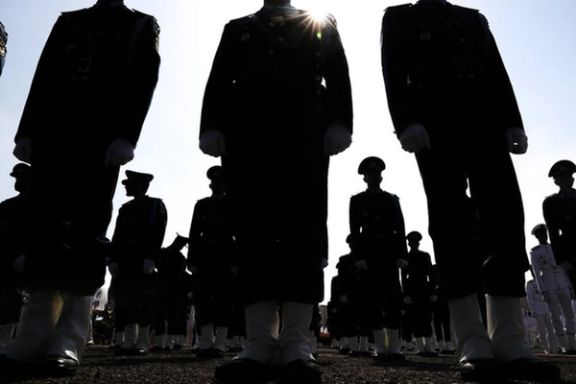
Iran’s strategy post-war and post-UN sanctions appears to have taken shape into what some in Tehran media have called “armed negotiations,” warning that it could make a thaw with Washington less likely.

Under the doctrine, officials say diplomacy is still possible—but only from a position of maximum strength and full military readiness, especially if talks were to resume under a second Trump administration.

Conservative outlets including Hamshahri, Jam-e Jam and Tabnak stressed that Iran would enter any talks “without trust, and ready to defend its red lines by force if necessary.”

In recent days, government spokeswoman Fatemeh Mohajerani and Deputy Foreign Minister Saeed Khatibzadeh confirmed that several countries had passed messages from Washington about reopening nuclear talks.

Tehran’s answer, they said, is that no negotiations will occur unless Iran enters them with demonstrated deterrent power.

Battlefield diplomacy

Other developments point to escalation as well. Iran’s seizure of a foreign oil tanker in international waters last week underscored its willingness to court confrontation, testing the limits of U.S. patience.

The state-broadcaster daily Jam-e Jam made its case by citing Foreign Minister Abbas Araghchi: “What you failed to take on the battlefield, you cannot impose at the negotiating table.” A

raghchi said on Sunday that Tehran was prepared for renewed conflict and was halting nuclear talks with the E3 (Britain, France and Germany) after they triggered the mechanism that returned UN sanctions on Iran.

The message, or the “doctrine” as it is described in Tehran, is that the Islamic Republic remains open to diplomacy, but only with weapons at the ready.

‘Armed negotiation’

On Monday, moderate outlets questioned both the logic behind the doctrine and what they see as conflicting signals from those in power.

“One day Iran strictly rules out any negotiation and a few days later the media say the other side has called for talks,” Ham Mihan wrote in an editorial. “This only makes sense if officials clarify what has changed in the other side’s conditions.”

The paper warned that the public is tired of “news that leads nowhere” and wants something new.

Even the conservative outlet Rokna—aligned with the security establishment—challenged the efficacy of Tehran’s approach, especially on the nuclear file.

“Iran’s nuclear ambiguity and the IAEA report have only symbolic value,” it asserted, reflecting the widely held view that Tehran is deliberately keeping its nuclear stockpile’s status unclear to deter the United States and Israel.

The moderate daily Setareh Sobh mocked the new doctrine as “armed negotiation,” arguing that it is less a show of strength than a “product of mounting economic pressures, the snapback of sanctions, and a series of regional developments.”

Iran lawmaker links June war assassinations to Mossad network in Iran

Nov 18, 2025, 13:55 GMT+0

An Iranian lawmaker said on Tuesday that Israeli intelligence operations during the June war were likely aided by a Mossad network operating inside Iran that leaked information on the movements of senior officials.

Ahmad Bakhshayesh Ardestani, a member of parliament’s national security and foreign policy committee, said it appeared the network helped identify Iranian targets on the ground rather than relying on intelligence gathered from Israel.

“It seems that the Mossad network formed inside Iran leaked information showing our officials were targeted, not that there was a center in Israel obtaining it,” Bakhshayesh said, according to Iranian media.

He said Iran’s counterintelligence services had already detained and executed several people accused of cooperating with Israeli intelligence.

Bakhshayesh added that Israel, the United States, and NATO acted together during the June conflict, but said the attacks failed to weaken Iran.

Iran plans first launch from Chabahar space center as three satellites near liftoff

Nov 18, 2025, 13:53 GMT+0

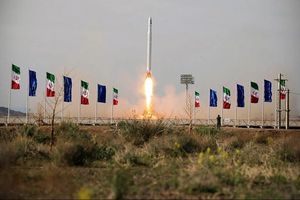
Iran said on Tuesday it will soon launch three Earth-observation satellites and carry out the first test launch from its new Chabahar space center, signaling a further expansion of its space program amid Western concerns over the dual-use nature of Iranian rocket technology.

Hassan Salarieh, head of the Iranian Space Agency, told a media event in Semnan that the Zafar-2, Paya and the second batch of Kosar imaging satellites are ready for launch. 

He said Iran’s space sector had advanced to the point where “satellites with one-meter and sub-five-meter imaging resolution are now under construction.”

Salarieh said the first experimental launch from the Chabahar Space Center – a coastal site under development in Iran’s southeast – will take place next year. 

“Chabahar is becoming one of the most important launch centers in West Asia,” he said, adding that its construction began in 2023 and that the site is designed to support heavier, liquid-fuel launch vehicles.

  • US restores India waiver for operations at Iran’s Chabahar Port

    US restores India waiver for operations at Iran’s Chabahar Port

  • Iran developing Chabahar space center for heavier liquid-fuel rockets

    Iran developing Chabahar space center for heavier liquid-fuel rockets

His comments come as Iran accelerates work on Chabahar’s second development phase. In April, the agency said the facility would eventually handle semi-heavy liquid-fuel rockets and serve as Iran’s main space gateway, with a geographic position suited for placing satellites into sun-synchronous and geostationary orbits.

Salarieh said Iran had also signed its first private-sector contracts for satellite constellations, including the narrow-band Kosar system intended for emergency data transfer, and highlighted recent milestones such as the launch of private-built satellites on a Russian rocket, the successful 2023 flight of the solid-fuel Sorayya launcher, and the deployment of the Nahid-2 communications satellite in 2025.

Iran has long said its space program is civilian and scientific, though Western governments argue that technologies used for orbital launches can advance long-range ballistic missile capabilities. 

President Masoud Pezeshkian has said Iran’s missile and space work supports national deterrence, while Defense Minister Aziz Nasirzadeh has said Tehran could eventually offer launch services to allied states.

  • Iran plans maiden launch of its first satellite constellation by March

    Iran plans maiden launch of its first satellite constellation by March

  • Iran says upgraded communication satellite ready for December launch

    Iran says upgraded communication satellite ready for December launch

Salarieh said domestic expertise had raised Iran’s launch capacity to “several hundred kilograms” and that efforts in propulsion, solid-fuel and liquid-fuel systems had advanced in parallel over the past three years. 

Iran’s space program has picked up pace since the 2009 launch of the Omid satellite, with universities and state-linked research centers producing a series of experimental spacecraft. 

In 2023 and 2024, Iran also carried out multiple sub-orbital tests, launched reconnaissance satellites via foreign rockets and unveiled new satellite buses and transfer stages, including the Saman-1 upper stage designed for higher-altitude orbits.

Salarieh said the government sees space as a strategic industry with economic, security and industrial implications. “We have strong human capital and significant infrastructure,” he said. “The development of space capability will continue rapidly.”