Israel seeks highest ever military budget, in part to confront Iran - daily
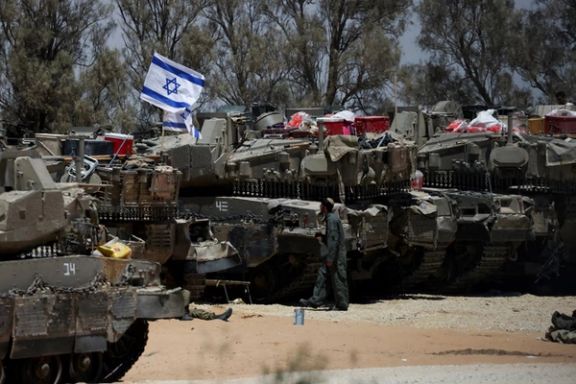
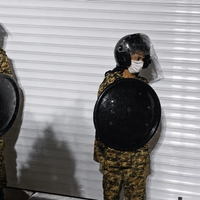
Near Israel’s border with Gaza, May 29, 2024
Israel's Defense Ministry is seeking a record high $45 billion allocation in the 2026 budget, Israeli financial daily Calcalist reported on Tuesday, including a large sum to counter Iranian drones and missiles.
The ministry seeks 144 billion shekels ($44.7 billion) for 2026, of which roughly 7 billion shekels ($2.2 billion) targets Iran's missile and drone expansion, the report said.
"Our enemies' focus demands immediate emergency resupply," said Major General Amir Baram, Defense Ministry director general, while criticizing the Finance Ministry for blocking billions in arms, tank parts, drones and border walls, citing Iran's drills and rearmament.
Calcalist is Israel's leading financial newspaper under Yedioth Ahronoth Media Corp.
Israel launched a surprise military campaign against Iran in June, striking nuclear and military sites. Tehran responded with hundreds of drones and ballistic missiles.
Following Israel's strikes, the United States targeted major nuclear sites in Fordow, Natanz, and Esfahan on June 22. President Trump called the attack successful, resulting in the “obliteration” of Iran's nuclear facilities.
The 12-day war concluded with a US-brokered ceasefire on June 24, halting military attacks on both sides. Yet in the months since, officials in both Iran and Israel have openly hinted at the prospect of another confrontation.
‘Proxy threat’
Israeli Finance officials countered they support defense but warn of economic risks from excess, blaming IDF “waste in reserves,” the report said. Baram conceded reforms but prioritized Iran's vows of revenge alongside Hezbollah threats.
Baram noted current spending at 6.7% of GDP (vs. 35% in 1973) and called for swift replenishment, including a Jordan border fence.
Prime Minister Benjamin Netanyahu said on Monday that Tehran remains a threat to Israel but was weakened by the punishing 12-day war in June.
“We crushed Iran’s axis of evil. We distanced and neutralized the dual threat from Iran—the nuclear threat and the ballistic threat alike," Netanyahu told the Knesset amid growing criticism from opposition lawmakers.
“This is a real threat, but not what it once was. We act with determination, initiative, and strategy," he added.
Iran's foreign minister Abbas Araghchi (left) shakes hands with security chief Ali Larijani
Conflicting narratives from Iranian officialdom on negotiations with the United States may indicate a sort of organized chaos aimed at prolonging diplomatic theater without any real intention of reaching a resolution.
This pattern of contradictory statements suggests a deliberate strategy.
By constantly shifting positions and contradicting one another, Iranian officials may be attempting to prolong indirect messaging with Washington while avoiding actual negotiations, perhaps hoping to stall until Donald Trump leaves office.
On Monday, security chief Ali Larijani declared that Iran rejects Western demands to limit its nuclear program, while Foreign Minister Abbas Araghchi reiterated Tehran’s commitment to strengthening the so-called “axis of resistance.”
The United States and Europe have made halting uranium enrichment, ending support for regional proxy groups and curbing missile development key conditions for lifting sanctions and potentially normalizing relations with Iran.
Larijani also asked, “What right does the West have to talk about the range of Iran’s missiles?” and insisted that Tehran would not “surrender to the West even at the cost of full-fledged confrontation.”
His remarks likely reflect calculated defiance.
Larijani is well aware that Iran’s missile program is a major source of concern for Europe and neighboring countries, especially given Tehran’s military cooperation with Russia in the war against Ukraine and its provision of missiles to Houthi rebels in Yemen.
Yet he avoids questioning why Iran continues to involve itself in conflicts in Yemen, Lebanon and Gaza.
Following Iran’s missile response to Israeli strikes in June, and its operations targeting Iraqi Kurdistan and tribal areas in Pakistan in the past, Western powers and regional neighbors are under no illusion: Iran is willing to deploy missiles and drones whenever its clerical leadership or Revolutionary Guards commanders deem it necessary.
Despite ongoing public discourse by Iranian officials and media commentators about resolving the diplomatic impasse, Supreme Leader Ali Khamenei, and at times President Pezeshkian, Araghchi and Larijani have made it clear that Iran has no intention of negotiating directly with the United States.
Khamenei recently said that hostility toward the United States is intrinsic to the Islamic Republic’s identity. But on Monday, Larijani asserted that none of Iran’s leaders have ever had any enmity with the West.
Adding to the confusion, government spokesperson Fatemeh Mohajerani acknowledged that Iran has received messages from the United States, while the foreign ministry flatly denied any such contact.
'Cannot continue'
Meanwhile, media outlets continue to fuel the narrative of “talks about talks.”
On Monday, ILNA quoted foreign policy analyst Amir-Ali Abolfath as saying, “We are in the middle of a US attack on Iran.”
“Attacks don’t always come with guns and tanks," he added. "There are cyber wars, cognitive warfare, economic wars and sanctions. We are at war with the United States, only the sound of gunfire is missing.”
Abolfath concluded that the divide between Tehran and Washington is unbridgeable.
In contrast, commentator Ali Bigdeli, writing for Fararu, suggested that Iran should seek mediation from International Atomic Energy Agency chief Rafael Grossi to break the deadlock despite Grossi’s recent warning that Tehran could still eventually build a nuclear weapon.
While many Iranian commentators warned on Monday of imminent conflict with Israel or the United States, Bigdeli reassured Fararu readers that “another war is unlikely to break out.”
In a separate Fararu piece, analyst Ahmad Bakhshayesh Ardestani added, “another war is unlikely unless unrest erupts inside Iran.”
That paradox in official messaging may be untenable, Bigdeli warned: “The current situation cannot continue for long.”
Immigration and Customs Enforcement agents detain a man after conducting a raid at the Cedar Run apartment complex in Denver, Colorado, US, February 5, 2025
Two Iranians deported in an unprecedented deportation flight from the United States to Tehran in September were quoted by the New York Times on Tuesday as saying they were abused during their ordeal and feared for their lives.
The Times first revealed that the United States had organized a chartered deportation flight sending 54 Iranians from Louisiana to Tehran after months of negotiations with Iranian officials, marking the first coordinated operation of its kind.
The report on Tuesday said deportees were shackled and forcibly placed on the plane, some alleging abuse during transfers, and that Iran’s Interests Section in Washington helped verify identities and issue travel documents for the flight.
Among those on board was 34-year-old Mehrdad Dalir, a political activist from Mashhad, who said he pleaded with US officers not to send him back out of fear persecution by the Islamic Republic. Dalir said he was forcibly dragged onto the flight by US authorities.
“They told me, ‘You are either getting on the plane on your own, or we will tie you and send you back,’” the newspaper quoted him as saying.
The flight to Iran took nearly 50 hours and stopped in Puerto Rico, Cairo and Doha. Deportees were all shackled and handcuffed for the whole flight to Doha, the Times reported, adding that The Department of Homeland Security described the measure as essential to the safety of the passengers and staff.
Another deportee, identified only as A.A., who said he was denied a fair hearing and fears for his safety in Iran.
“They used electric tasers to pacify me, and when that didn’t work they put me and another guy in straight jackets and tied us to our seats,” A.A. told the newspaper referring to Qatari security forces on the last leg of their journey from Doha to Tehran.
Qatar, the New York Times cited a Qatari official as saying it did not receive any requests for asylum, and the detainees were transferred in full compliance with international law and security protocols.
A.A.'s lawyer, Ali Herischi, told Iran International in October that the deportees’ belongings, including files, evidence, and cell phones, were handed to Iranian authorities.
“That’s very dangerous,” said Herischi, a Maryland-based immigration lawyer.
Herischi said several deportees have since been contacted by Iran’s Revolutionary Guards intelligence branch for questioning, while at least three have had their passports confiscated. One of his clients, a Christian convert, remains in hiding, and another, a political dissident, has been forced to move repeatedly to avoid arrest.
The Times also reported that Iranian officials, led by Abolfazl Mehrabadi, head of Iran’s Interests' Section in Washington, visited US detention facilities ahead of the flight to verify the deportees’ identities and issue travel documents.
The Department of Homeland Security told the Times that all 54 Iranians on the flight had final removal orders and were given due process. Dalir and A.A. said they were denied fair hearings and that returning to Iran places them in serious danger.
Earlier this year, Iran International reported on similar deportations of Iranian converts and dissidents to Costa Rica and Panama, where many remain stranded.
Rights groups say mass deportations to Iran, a country with a record of persecuting political and religious minorities, could amount to a breach of US asylum obligations.
The New York Times said both Mehrdad Dalir and A.A. had entered the United States illegally and were later ordered deported after their asylum claims were denied.
The report said it obtained government records for both men confirming details of their detention and deportation, and reviewed written statements collected by Dalir’s father from seven other passengers who said they were forcibly returned to Iran, along with interviews with both men, their families, lawyers and other Iranians in US custody familiar with the case. The report said it obtained government records for both men confirming their detention and deportation. It also reviewed written statements collected by Dalir’s father from seven other passengers who said they were forcibly returned to Iran.
Tricia McLaughlin, a spokeswoman for the Department of Homeland Security, was cited as saying that of the 54 Iranians deported, 23 were linked to terrorism, 7 were on a terror watch list and 5 others were involved in human trafficking.
The report said the two men the newspaper interviewed were not among those named as involved in terrorism or fraud.
Iran’s foreign ministry says more than 400 Iranians in US custody face deportation, with additional flights under discussion, the Times reported.
Protesters, largely Houthi supporters, rally to show solidarity with Palestinians in the Gaza Strip, in Sanaa, Yemen, on June 7, 2024. (Reuters)
Yemen’s Iran-backed Houthi movement said they would pause their attacks against Israel and maritime shipping in the Red Sea but warned they will resume combat if the fragile Gaza ceasefire collapses.
After punishing Israeli blows to Iran and its armed affiliates in the region, the Houthis stood out as the most resilient ally of Tehran even as its attacks on Israel and maritime commerce caused relatively little damage.
The message came in a letter from the Houthis’ new military chief, Major General Yusuf Hassan al-Madani, to Hamas’s armed wing, the al-Qassam Brigades.
Al-Madani, who replaced Major General Mohammed Abdul Karim al-Ghamari after he was killed in an Israeli airstrike, used the letter to signal that the group has lifted its naval blockade on Israel.
The Israeli military accused al-Ghamari of having close ties to the Islamic Republic, saying in a statement at the time of his death in August, that he was "trained by Hezbollah and IRGC," referencing Iran's Islamic Revolutionary Guard Corp.
“Your words of loyalty and sincerity are a great source of pride for us… Our unity in confronting the Zionist-American enemy and its criminal projects is rooted in faith and in our shared stance against tyranny and aggression,” wrote al-Madani.
While much of the message focused on shared ideology, its closing section delivered a clear policy signal.
“We are closely monitoring developments,” al-Madani wrote, “and declare that if the enemy resumes its aggression against Gaza, we will return to our military operations deep inside the Zionist entity, and we will reinstate the ban on Israeli navigation in the Red and Arabian Seas.”
That warning comes after two years Houthi attacks on shipping in the Red and Arabian Seas, which they described as an effort to pressure Israel to stop the war in Gaza.
The campaign disrupted one of the world’s busiest trade routes, killed at least nine mariners, and forced global shipping companies to reroute cargo.
The International Monetary Fund estimates Egypt lost about $6 billion in Suez Canal revenue in 2024 as a result.
Frequent Houthi missile and drone attacks on Israel for much of the last two years were mostly fended off by air defense systems.
Notable lapses came in the form of a Houthi drone attack which killed an Israeli man in Tel Aviv last year and a missile attack which struck outside Israel's busiest airport in May.
Since the Gaza ceasefire began on October 10, Houthi attacks have largely stopped. Israeli officials have yet to comment on the new statement, though Defense Minister Israel Katz warned earlier this year that any renewed strikes would draw a “sevenfold” response.
The apparent halt by the Houthis, who have long cast themselves as part of the Islamic Republic’s so-called Axis of Resistance, speaks volumes about Iran’s influence, the shifting calculus of its regional proxies, and the fragility of the current peace truce.
Members of Hezbollah carry the coffin of Hezbollah member Abbas Shuman, who was killed in southern Lebanon amidst tension between Israel and Hezbollah, during his funeral in Baalbek, Lebanon, October 23, 2023.
The Islamic Republic’s embassy in Lebanon on Tuesday fired back at remarks made by a top US sanctions official who urged Beirut to cut Tehran's funding to its Lebanese ally Hezbollah.
“There’s a moment in Lebanon now. If we could get Hezbollah to disarm, the Lebanese people could get their country back,” said John Hurley, the US Treasury’s undersecretary for terrorism and financial intelligence, in an interview with Reuters.
"The key to that is to drive out the Iranian influence," Hurley said, "and control that starts with all the money that they are pumping into Hezbollah."
Iran, according to Hurley, has delivered about 1 billion dollars to Hezbollah so far this year despite heavy Western sanctions.
His comments came during a regional tour through Turkey, Lebanon and the United Arab Emirates aimed at raising pressure on Tehran.
The Iranian embassy in Beirut dismissed the statements as “baseless and misleading” in a post on X Tuesday. “In recent days, American nonsense about Iran and its presence in Lebanon and the region has increased."
“It would have been better if American officials, instead of wasting time and being preoccupied with empty words, fulfilled the promises they made years ago to the people of Lebanon," it added, "even if only by helping to find a solution to the electricity crisis.”
“Rather than demonizing Iran and making unfounded accusations, the United States should have curbed the evil of the Israeli regime and its savage, ongoing aggression against Lebanon and its oppressed people,” the statement added.
Hurley’s comments mark Washington’s latest bid to choke off Tehran’s regional influence by targeting Hezbollah’s finances.
The strategy has intensified since Israel’s clash with the group escalated late last year with assassinations of senior and mid-ranking officials and an air and ground campaign which killed over 4,000 people.
Citing people familiar with Israeli and Arab intelligence, the Wall Street Journal reported last month that Hezbollah was rebuilding its weapons and ranks in defiance of a a ceasefire deal.
Israel meanwhile continues to maintain a military presence in outposts on Lebanese territory and has repeatedly carried out deadly airstrikes it says target militants.
A woman holds an Iraqi flag at a polling station during a parliamentary election in Mosul, Iraq, November 11, 2025.
Iraq’s parliamentary election on Tuesday unfolded under the shadow of foreign influence from the United States and Iran which have for two decades vied over the future of the war-battered Arab nation.
Less than half of eligible voters reportedly registered, raising doubts that turnout will reach even 50%. Public disillusionment has depressed participation since 2005, with only two exceptions: the first post-Saddam vote that year and the 2015 election, when turnout neared 80%.
Iranian media outlets, especially those aligned with Tehran’s political factions, have been following the buildup intensely.
Conservative papers and those close to state institutions cast the vote as a measure of Iran’s remaining leverage in Baghdad.
But reform-leaning Rouydad24 cautioned that while Tehran and Washington view the election through a geopolitical lens, Iraqi voters are focused on preserving “fragile stability and economic growth,” a subtle critique of both countries’ roles.
‘Weary people’
Truska Sadeghi, a journalist monitoring the election from Paris, described the November 11 vote as “a fateful test for a country caught between crises ranging from the legitimacy of its governments to the influence of foreign powers.”
Iraqis, she said, have grown weary of “repetitive and ineffective political maneuvers,” while shifting coalitions and Iran’s declining sway in the wider “axis of resistance” have made Baghdad Tehran’s most critical arena.
The United States has repeatedly warned Iran in recent months against meddling in Iraq’s political process, urging Baghdad to distance itself from Tehran.
Iran’s foreign ministry on Monday spoke against what it deemed to be "unacceptable” foreign interference. Iraq’s foreign ministry called the statement “provocative” and urged Tehran not to get involved in the country’s internal affairs.
Despite its diminishing regional clout, Iran remains a central player in the Iraq.
Tehran-aligned groups such as Hashd al-Sha’bi and various Kata’ib factions have rebranded themselves as civilian organizations, even as their armed presence in Baghdad remains visible.
‘Stability’
Analysts including Sadeghi and Frankfurt-based Ali Sadrzadeh argue that Iran-linked networks still wield significant political and economic leverage.
Islamic Revolutionary Guard Corps-Quds Force Commander Esmail Qaani and other senior officers continue to shuttle between Iranian and Iraqi cities, meeting aligned factions to ensure “Iraq’s stability.”
A key test for the next government will be whether it can assert authority over pro-Iranian groups like Hashd al-Sha’bi, which has long sought to position itself as a parallel defense institution.
“It’s a battle over whether Iraq achieves genuine political independence or remains tethered to foreign powers,” Sadeghi said.
Whatever the result, she added, Iraq’s next government will face the same core tasks: bringing armed groups under state control, restoring public trust through credible reforms, and recalibrating relations with Iran, the United States and regional partners.