Iran foreign minister doubles down on strengthening ‘axis of resistance’
People walk past a billboard with a picture of late Hezbollah leaders Hassan Nasrallah and Hashem Safieddine and senior Iranian military commander General Qassem Soleimani, on a street in Tehran, Iran, September 27, 2025.
Iran’s foreign ministry has channeled much of its political and diplomatic capacity into strengthening regional alliances and supporting what it describes as ‘axis of resistance,’ Minister Abbas Araghchi told parliament on Monday.
“By strengthening the Axis of Resistance and supporting unity-building movements across the Islamic world, the ministry of foreign affairs has devoted a significant portion of its capacity to providing political and diplomatic backing for the Resistance Front,” he said.
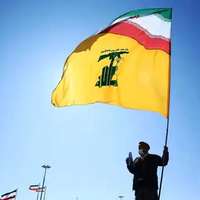
The term "axis of resistance" is used by the Islamic Republic to describe a network of allied groups in the region, including Palestinian militant organizations, Lebanon’s Hezbollah, several factions in Iraq and Syria, and the Houthi movement in Yemen.
Araghchi told the lawmakers that the foreign ministry’s activities over the past 14 months have followed four main strategic tracks.
According to him, the first, focused on security diplomacy, covers deterrence, defense, and resistance coordination. The second on economic and development diplomacy, including “resistance economy” initiatives. The third centered on building regional influence and the fourth was aimed at shaping ideas and narratives through think-tank, public, and media diplomacy.
He described recent months as a period of intensified confrontation involving the United States and Israel, citing assassinations and airstrikes across the region, including attacks on Hamas and Hezbollah figures, as justification for increased diplomatic engagement.
"Under these circumstances, a significant portion of the Foreign Ministry’s efforts has been devoted to supporting the axis of resistance, effectively functioning as the foreign ministry of the axis."
Western governments have renewed pressure on Tehran to engage in direct talks not only over its nuclear and missile programs, but also its continued backing of armed groups across the Middle East.
Iran’s diplomatic agenda, Araghchi said, also sought to build a “multipolar order,” defend national sovereignty, and counter Western sanctions through cooperation with blocs such as the Shanghai Cooperation Organization, BRICS, and the Non-Aligned Movement.