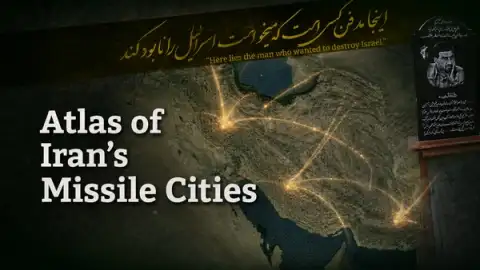
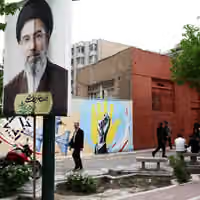
People walk past a billboard depicting the late Hezbollah leaders Hassan Nasrallah and Hashem Safieddine, along with senior Iranian military commander General Qasem Soleimani, on a street in Tehran, September 27, 2025.
A senior conservative’s assertion that Iran’s Islamic system is “softly reforming” its stance on the hijab has triggered furious backlash from ultra-hardliners demanding full enforcement of the Hijab and Chastity Law suspended earlier this year.
The remarks by Expediency Council member Mohammad-Reza Bahonar come as Iran’s leadership struggles to contain public discontent while facing renewed UN sanctions.
The fierce subsequent backlash underscores deepening fractures within Iran’s conservative establishment over how far the state should go in policing morality and religious codes.
Speaking to reporters on October 3, Bahonar said the Hijab and Chastity Law—quietly shelved by Iran’s Supreme National Security Council (SNSC) in May—is “no longer legally enforceable.”
Mohammad-Reza Bahonar, member of Iran's Expediency Discernment Council
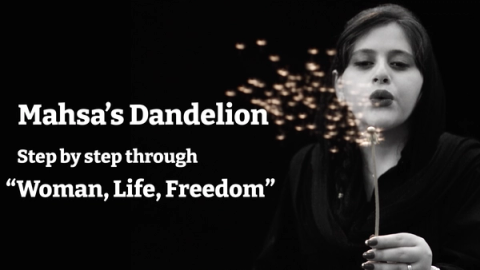
It was likely shelved due to concerns it would inflame tensions after the 2022 death of a young woman, Mahsa Amini, in morality police custody sparked nationwide protests which were quashed with deadly force.
“The paradigms of the Islamic Republic are being gradually and softly reformed,” Bahonar said, adding there is currently no binding or enforceable law regarding hijab. “The system’s general decision is that there is no compulsory hijab law in force.”
The veteran conservative bashed ‘Hezbollahis’—hardline Islamist loyalists—for attempting to dictate their preferences to the 90 percent of Iran's citizenry who “want to live” as they choose.
‘Savage, naked' West
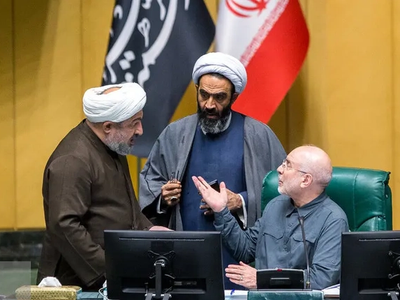
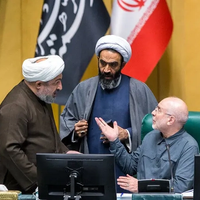
At Saturday’s heated parliament session, ultra-hardline lawmakers launched a coordinated attack.
“Which system’s interests are you defending in the Expediency Council—the Islamic Republic’s or that of the savage, naked Western system?” senior MP Ahmad Rastineh said, addressing an absent Bahonar.
“Those who promote and defend nudity and say there is no hijab law are no different from those who frighten the nation with the shadow of war. Both target the Islamic system,” he added.
Amirhossein Bankipour, one of the law’s architects, blamed Speaker Mohammad-Bagher Ghalibaf and President Masoud Pezeshkian for blocking its enforcement, saying on state TV that both men had “failed to communicate Parliament’s decision to executive bodies.”
In a recent Fox News interview, Pezeshkian reaffirmed his opposition to coercion, saying he “does not believe in forcing women to wear the hijab.”
Bankipour invoked Supreme Leader Ali Khamenei’s position, insisting: “The Leader has stated several times—publicly and unambiguously—that there will be no retreat on the issue of chastity and hijab.”
Hossein Shariatmadari, editor of the hardline daily Kayhan, denounced Bahonar’s terminology, saying the phrase “compulsory hijab” was “fabricated by the enemies of Islam and the Revolution.”
“Mr. Bahonar has not explained what he means by using the term ‘compulsory hijab,’” Shariatmadari wrote. “If the hijab is a legal requirement—and it is—why should it not be enforced?”
Quiet retreat
Khamenei last forcefully touched on the issue in an April 2023 when he declared that disregarding the hijab was both “religiously and politically haram (forbidden).”
Meanwhile, the reformist outlet Ensaf News reports that Iran’s urban landscape has already moved past the old debate.
In Tehran and some other cities, the number of women wearing headscarves has markedly decreased, while many others wear loose scarves on their shoulders and the back of their hair.
The once-ubiquitous manteau coat has nearly vanished, replaced by long blouses and trousers. Crop tops and open shirts have become increasingly visible among young women—a quiet but unmistakable shift in daily life.