Top US geophysics society awards highest honor to Iranian-American scientist
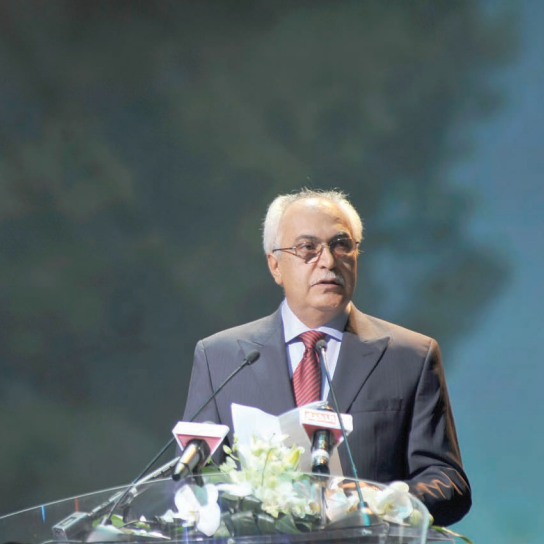
The American Geophysical Union (AGU) has awarded its highest honor, the William Bowie Medal, to Iranian-American scientist Soroosh Sorooshian for 2025.
The American Geophysical Union (AGU) has awarded its highest honor, the William Bowie Medal, to Iranian-American scientist Soroosh Sorooshian for 2025.
The award, established more than 85 years ago, is the AGU’s most prestigious distinction, given annually to a researcher for outstanding contributions to fundamental geophysics and for unselfish cooperation in science.
The AGU cited Sorooshian’s “exceptional contributions to water science and practice, and vision in developing a global precipitation product serving millions of people worldwide.”
Sorooshian, 76, is a distinguished professor of civil and environmental engineering at the University of California, Irvine, and director of the university’s Center for Hydrometeorology and Remote Sensing.
Born in Kerman, Iran, he moved to the United States in 1966 and earned his PhD at UCLA.
Kaveh Madani, head of the UN University Institute for Water, Environment and Health, congratulated Sorooshian in a social media post, calling him “the first Iranian to receive the William Bowie Medal” and praising his decades of support for younger researchers.
The AGU, founded in 1919, is the world’s largest Earth and space science society with more than 62,000 members from 144 countries. Its annual prizes are announced in September and presented at the December meeting attended by over 25,000 participants.
The hydrologist has previously received the Robert E. Horton Medal, NASA’s Distinguished Public Service Medal, and the UNESCO Great Man-Made River Water Prize. He is a member of the US National Academy of Engineering and several international scientific academies.




“Today, the Council agreed to reimpose a number of restrictive measures in relation to Iran's nuclear proliferation activities, that had then been suspended with the entry into force of the Joint Plan of Action (JCPOA or Iran nuclear deal) in 2015,” the Council of the EU said in a press release.
The decision followed the reintroduction of UN sanctions after the Security Council declined to extend relief, triggered on August 28 when France, Germany and the United Kingdom (the E3) said Iran was in “significant non-performance” of its commitments.
The Council said the measures include both UN Security Council sanctions adopted since 2006 and EU autonomous measures. They cover:
- Travel bans and asset freezes for listed individuals and entities, and a prohibition on providing funds or economic resources.
- Economic and financial sanctions, spanning trade, banking and transport.
- Trade restrictions, including bans on imports and transport of Iranian crude oil, natural gas, petrochemical and petroleum products; the sale of energy equipment, gold, precious metals, diamonds, certain naval equipment and software.
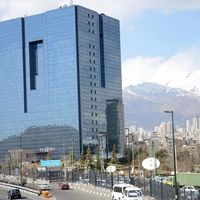
- Financial sector measures, including freezing assets of the Central Bank of Iran and major commercial banks.
- Transport restrictions, reinstating measures to bar Iranian cargo flights from EU airports and prohibit maintenance or servicing of Iranian cargo aircraft or vessels carrying prohibited materials.
The Council stressed these steps followed earlier commitments. “In October 2015 the Council adopted declaration 2015/C 345/01 lifting all EU nuclear-related sanctions in accordance with the JCPOA and stressing that the EU would reintroduce sanctions in case of significant non-performance by Iran,” it said.
E3 says Iran left no choice
On Sunday, the E3 foreign ministers said Tehran’s breaches had left no alternative. “We welcome the re-instatement since 20:00 EDT on 27 September of Resolutions 1696, 1737, 1747, 1803, 1835, and 1929 after completion of the snapback process,” they said. “We urge Iran and all states to abide fully by these resolutions.”
The ministers accused Iran of “exceeding all limits on its nuclear program” since 2019, noting it held enriched uranium “48 times the JCPOA limit” and at least 10 significant quantities of highly enriched uranium outside of monitoring. “Iran has no credible civilian justification whatsoever for its HEU stockpile,” they said.
They insisted diplomacy remained possible. “The reimposition of UN sanctions is not the end of diplomacy. We urge Iran to refrain from any escalatory action and to return to compliance with its legally binding safeguards obligations.”
Tehran says no obligation to comply
Iran rejected the move outright. “The Islamic Republic of Iran rejects the claim of the three European countries and the United States regarding the return of previous resolutions that ended under Resolution 2231 in 2015, and emphasizes that no obligation is created for UN member states, including Iran,” the foreign ministry said in a statement on Sunday.
It added: “Any attempt to revive terminated resolutions is legally baseless, morally unacceptable and logically flawed.”
Foreign Minister Abbas Araghchi separately wrote to UN Secretary-General Antonio Guterres and Security Council President Sang Jin Kim, saying the alleged return of sanctions was “null and void.”
He urged them “to prevent any attempt to revive the sanctions mechanisms, including the Sanctions Committee and the Panel of Experts.”
Araghchi accused the Europeans of “defaulting on their commitments, misusing the JCPOA dispute settlement process, and even justifying military attacks against safeguarded nuclear facilities in Iran.”
Tehran said all nuclear-related restrictions under Resolution 2231 must expire on October 18, 2025. “Iran will not recognize any effort to extend, revive or enforce them after that,” the ministry said.
In a joint statement on Sunday, the so-called E3 foreign ministers said the snapback mechanism under UN Security Council Resolution 2231 had been triggered on August 28 and completed late on September 27, restoring six previous resolutions imposing international sanctions.
“We welcome the re-instatement since 20:00 EDT on 27 September of Resolutions 1696, 1737, 1747, 1803, 1835, and 1929 after completion of the snapback process,” the ministers said. “We urge Iran and all states to abide fully by these resolutions.”
The measures include restrictions on arms transfers, missile development and proliferation-related activities. They had been lifted in 2015 when Iran agreed to curb its nuclear program under the Joint Comprehensive Plan of Action (JCPOA).
The E3 said Iran had “exceeded all limits on its nuclear program” since 2019 and was now holding enriched uranium “48 times the JCPOA limit.”
According to a September 4 report by the International Atomic Energy Agency, Iran possesses 10 “significant quantities” of highly enriched uranium (HEU) outside of monitoring, an amount that “cannot exclude the possibility of manufacturing a nuclear explosive device.”
“Iran has no credible civilian justification whatsoever for its HEU stockpile,” the statement said. “No other country without a nuclear weapons program enriches uranium to such levels and at this scale.”
The ministers said they had made repeated efforts to avoid snapback, including invoking the JCPOA dispute resolution mechanism in 2020 and participating in talks aimed at restoring the deal in 2020 and 2021.
In July 2025, the E3 offered Iran a one-time extension of snapback if Tehran agreed to resume unconditional talks with Washington, return to compliance with its safeguards obligations and address its HEU stockpile. “Iran did not engage seriously with this offer,” they said.
On September 19, the UNSecurity Council rejected a resolution to maintain sanctions relief for Iran. “The outcome of the vote was an unambiguous no,” the ministers said, adding that the decision “sent a clear signal that all states must abide by their international commitments.”
The statement stressed that “the reimposition of UN sanctions is not the end of diplomacy.” It urged Tehran “to refrain from any escalatory action and to return to compliance with its legally binding safeguards obligations.”
France, Germany and the UK said they remained committed to working with all parties “towards a new diplomatic solution to ensure Iran never gets a nuclear weapon.”

