• العربية
  • فارسی
Brand
  • Iran Insight
  • Politics
  • Economy
  • Analysis
  • Special Report
  • Opinion
  • Podcast
  • Iran Insight
  • Politics
  • Economy
  • Analysis
  • Special Report
  • Opinion
  • Podcast
  • Theme
  • Language
    • العربية
    • فارسی
  • Iran Insight
  • Politics
  • Economy
  • Analysis
  • Special Report
  • Opinion
  • Podcast
All rights reserved for Volant Media UK Limited
volant media logo

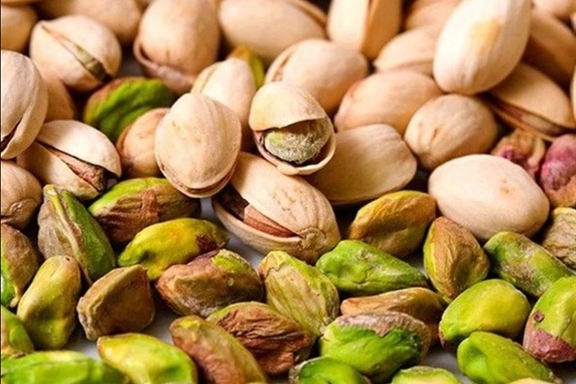
Canada bans Iranian pistachio imports over salmonella risk

Sep 29, 2025, 09:12 GMT+1

Canada’s food safety watchdog has temporarily banned imports of pistachios and pistachio products from Iran after more than 100 confirmed salmonella cases and several recalls linked to contaminated shipments.

The Canadian Food Inspection Agency (CFIA) said the move was "a precautionary measure to protect Canadians from the risk of Salmonella infection.”

Importers must now prove shipments do not originate from Iran, or they will be blocked or sent for testing.

“An outbreak investigation is ongoing, led by the Public Health Agency of Canada, with more than 100 laboratory-confirmed Salmonella infections in Canada and numerous food recall notifications linked to pistachio kernels and products originating from Iran,” read a statement by CFIA.

At least 16 people have been hospitalized, though no deaths have been reported. The Public Health Agency of Canada said 75% of cases were among women, warning that children, the elderly and pregnant women are particularly vulnerable.

The CFIA said the restrictions will remain in place until food safety reviews are complete, with penalties ranging from fines to license suspensions or legal action for violations.

Iranian pistachios have faced bans in the past.

Last year, the European Union temporarily halted imports after detecting high levels of aflatoxin, a toxic mold byproduct.

Other Iranian produce, including peppers, kiwis and potatoes, has also been rejected by Russia, India and Pakistan in recent years over contamination concerns.

Most Viewed

Ghalibaf defends Iran-US talks amid hardline backlash
1
INSIGHT

Ghalibaf defends Iran-US talks amid hardline backlash

2
INSIGHT

Iran diplomacy wobbles as factions compete to avoid looking soft on US

3
VOICES FROM IRAN

Bread shortages, soaring prices strain households in Iran, residents say

4
ANALYSIS

The politics of pink: how Iran uses cuteness to rebrand violence

5

Scam messages seek crypto for ships’ safe passage through Hormuz, firm warns

Banner
Banner

Spotlight

  • Opposition to US talks grows in Tehran as ceasefire deadline nears
    INSIGHT

    Opposition to US talks grows in Tehran as ceasefire deadline nears

  • Tehran moderates see ‘no deal–no war’ limbo as worst outcome
    INSIGHT

    Tehran moderates see ‘no deal–no war’ limbo as worst outcome

  • The future has been switched off here
    TEHRAN INSIDER

    The future has been switched off here

  • Lights out, then gunfire: Witnesses recount Mashhad protest crackdown
    VOICES FROM IRAN

    Lights out, then gunfire: Witnesses recount Mashhad protest crackdown

  • Family told missing teen was alive, then received his body 60 days later
    EXCLUSIVE

    Family told missing teen was alive, then received his body 60 days later

  • Is Iran entering its Gorbachev moment?
    INSIGHT

    Is Iran entering its Gorbachev moment?

•
•
•

More Stories

Iran threatens war with US if attacked by Israel again

Sep 28, 2025, 23:00 GMT+1

Iran will enter a war with the United States if Israel launches a new attack on the Islamic Republic, a senior Iranian official and former chief commander of the Revolutionary Guard said on Sunday.

"The Zionists (Israel) are seeking to try their luck against Iran once again," Major General Mohsen Rezaei told the state TV.

“However, events will soon happen inside Israel that will make this impossible,” he said. “It is not expedient to talk about them now.”

His remarks came hours after Ynet reported Israel is on heightened alert after the United Nations sanctions were reinstated on Iran under the so-called snapback mechanism, amid fears in the Jewish State that Tehran could accelerate its nuclear activities.

The sanctions were imposed despite several rounds of talks between Tehran and world powers aimed at clinching an agreement on Tehran’s disputed nuclear program.

Rezaei said Tehran will not accept further negotiations with Western powers that give Israel time to prepare or strengthen its position.

“Negotiations aimed at giving Israel time or strengthen it are unacceptable,” the veteran general-turned-politician told the state TV as he was once again seen wearing his military uniform.

“If that happens, the moment Israel starts a war, we will also enter a war with the United States,” said Rezaei who is a member of Iran’s Expediency Council.

“Negotiations must not be accepted in any form, at any price, or without conditions,” he said. “If we enter negotiations, military force must in no way be used against Iran. Otherwise, we will retaliate; not only against Israel, but also against American targets in the region.”

The warning followed fresh statements from Iran’s military leadership emphasizing the country’s readiness to respond to any attack.

Earlier on Sunday, Iran’s armed forces chief of staff Abdolrahim Mousavi said the military is fully prepared to respond to any threat or assault.

“Unity between the army and the Revolutionary Guards is the guarantor of preserving Iran’s territorial integrity,” Mousavi said during a meeting with the Guards’ commander.

“The armed forces are fully ready to confront any threat or possible aggression with strength,” he added.

Iran state TV slammed for censoring Finnish FM's legs during UN meeting

Sep 28, 2025, 16:48 GMT+1

Finnish Foreign Minister Elina Valtonen called Iranian state television’s decision to blur her legs during a broadcast of her UN meeting with Iran’s foreign minister a “sad” reflection of women’s treatment in the country.

“My Swedish colleague sent me the video on Friday. My first reaction was that it was amusing. But I immediately added, 'sad too’,” Valtonen told Helsingin Sanomat, Finland’s largest daily newspaper.

She added that she does not change her clothing based on who she is meeting and avoids events that require covering the face or hair.

Valtonen said she raises women’s rights in every meeting with Iranian officials, including this week’s talks.

Iranian state television blurred Valtonen’s legs in a news broadcast of her meeting with Iran’s Foreign Minister Abbas Araghchi on Tuesday on the sidelines of the UN General Assembly in New York.

Sweden’s Foreign Minister Maria Malmer Stenergard’s legs were also blurred in the same broadcast. The footage was widely shared on social media, including by Iranian women's rights activist and journalist Masih Alinejad.

Finland’s National Coalition Party, which Valtonen represents, also reacted on Instagram, calling the incident “a sad example of the trampling of women’s rights.”

"This is a reminder of how women around the world are still controlled and erased from visibility. Every woman has the absolute right to be seen, heard, and live freely," the party wrote on a post on Instagram.

"The National Coalition Party stands firmly for women’s rights — both in Finland and globally," it added.

Khamenei adviser urges joining Saudi-Pakistan defense pact

Sep 28, 2025, 13:53 GMT+1

A senior adviser to Iran’s Supreme Leader said Tehran should consider joining a new Saudi-Pakistani defense pact while vowing to strengthen its offensive military power after the recent 12-day war with Israel and the United States.

Major General Yahya Rahim Safavi told state television on Saturday night that the agreement between Riyadh and Islamabad was positive and proposed Iran, Iraq and others also take part.

“Iran, Saudi Arabia, Pakistan and Iraq can reach a collective defense pact,” he said, while acknowledging that US influence over Riyadh and Islamabad may limit such moves.

Earlier in September, Saudi Arabia and nuclear-armed Pakistan signed a mutual defense pact in Riyadh, bolstering their decades-old security partnership a week after Israel’s strikes on Qatar. Riyadh insisted the deal was not a response to specific events but the culmination of years of talks.

The agreement, described by a senior Saudi official as a “comprehensive defensive agreement that encompasses all military means,” says that aggression against either country will be considered an attack on both.

Pakistan, the only Muslim-majority nuclear power, has long stationed troops in the kingdom and provides technical and operational support to its military.

Pakistani Prime Minister Shehbaz Sharif and Saudi Crown Prince Mohammed bin Salman signed the pact alongside Pakistan’s powerful army chief Asim Munir.

Elsewhere in his remarks, Safavi said Iran launched more than 500 long-range missiles during the June conflict but admitted weaknesses in air defense and intelligence.

“Foreign assessments show 60% believe Iran won, because Israel did not achieve its objectives,” he said, without mentioning any source.

He added Iran was rebuilding damaged radar and missile systems and would “certainly increase” its offensive capabilities.

“The enemy could not tolerate us striking Haifa’s refinery and power plants,” Safavi said, adding that Iranian missiles destroyed advanced Israeli sites and pilots.

Safavi warned the conflict was “not fully over” and called for strengthening diplomacy, media, and military readiness. “We must continue the path of power-building. Offensive power is not only in air and space but in all domains,” he said.

Iran central bank moves to calm currency market with $500 million injection

Sep 28, 2025, 12:30 GMT+1

Iran’s central bank said it will inject $500 million into the currency market from Monday to ease pressure on the rial after weeks of sharp volatility, state media reported.

The central bank said the intervention is aimed at reducing demand in the open market and providing reassurance to businesses.

Analysts told the semi-official Fars news agency the injection could cut the dollar rate by up to 100,000 rials in the short term if delivered as cash or immediate transfers, though the effect would be limited if allocated through longer-term instruments.

Economists caution that such interventions often provide only temporary relief unless paired with structural reforms to boost exports, manage inflation and ensure transparency in foreign currency allocations.

The Iranian rial weakened on Sunday following the reimposition of snapback sanctions, trading at 111,400 per dollar, 130,370 per euro and 149,620 per pound on the open market.

E3 says Iran left no choice but to reimpose UN sanctions

Sep 28, 2025, 11:01 GMT+1

France, Germany and the United Kingdom said on Sunday that the reimposition of United Nations sanctions on Iran was unavoidable after what they described as Tehran’s persistent breaches of the 2015 nuclear deal.

In a joint statement on Sunday, the so-called E3 foreign ministers said the snapback mechanism under UN Security Council Resolution 2231 had been triggered on August 28 and completed late on September 27, restoring six previous resolutions imposing international sanctions.

“We welcome the re-instatement since 20:00 EDT on 27 September of Resolutions 1696, 1737, 1747, 1803, 1835, and 1929 after completion of the snapback process,” the ministers said. “We urge Iran and all states to abide fully by these resolutions.”

The measures include restrictions on arms transfers, missile development and proliferation-related activities. They had been lifted in 2015 when Iran agreed to curb its nuclear program under the Joint Comprehensive Plan of Action (JCPOA).

  • Tehran says no obligation to comply with revived UN resolutions

    Tehran says no obligation to comply with revived UN resolutions

The E3 said Iran had “exceeded all limits on its nuclear program” since 2019 and was now holding enriched uranium “48 times the JCPOA limit.”

According to a September 4 report by the International Atomic Energy Agency, Iran possesses 10 “significant quantities” of highly enriched uranium (HEU) outside of monitoring, an amount that “cannot exclude the possibility of manufacturing a nuclear explosive device.”

“Iran has no credible civilian justification whatsoever for its HEU stockpile,” the statement said. “No other country without a nuclear weapons program enriches uranium to such levels and at this scale.”

The ministers said they had made repeated efforts to avoid snapback, including invoking the JCPOA dispute resolution mechanism in 2020 and participating in talks aimed at restoring the deal in 2020 and 2021.

In July 2025, the E3 offered Iran a one-time extension of snapback if Tehran agreed to resume unconditional talks with Washington, return to compliance with its safeguards obligations and address its HEU stockpile. “Iran did not engage seriously with this offer,” they said.

On September 19, the UNSecurity Council rejected a resolution to maintain sanctions relief for Iran. “The outcome of the vote was an unambiguous no,” the ministers said, adding that the decision “sent a clear signal that all states must abide by their international commitments.”

The statement stressed that “the reimposition of UN sanctions is not the end of diplomacy.” It urged Tehran “to refrain from any escalatory action and to return to compliance with its legally binding safeguards obligations.”

France, Germany and the UK said they remained committed to working with all parties “towards a new diplomatic solution to ensure Iran never gets a nuclear weapon.”