Tehran decides to resume talks with US - state-linked daily
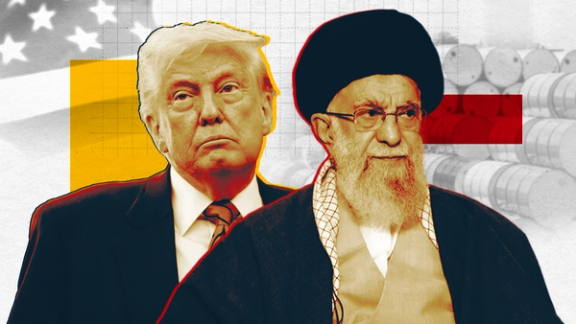
Iran has taken steps toward beginning negotiations with the United States in parallel with talks with the UN nuclear watchdog, the state-linked daily Farhikhtegan reported on Monday.
Iran has taken steps toward beginning negotiations with the United States in parallel with talks with the UN nuclear watchdog, the state-linked daily Farhikhtegan reported on Monday.
According to the paper, “decisions have been made to start negotiations with America so that, simultaneously with the start of talks, a request can be submitted to delay activation of the snapback mechanism until the negotiations are concluded.”
Farhikhtegan said the International Atomic Energy Agency (IAEA) is seeking a full return to cooperation, including the reinstatement of inspectors, the installation of monitoring cameras and “detailed information on the location of enriched materials.”
Iran, it added, has pushed back by proposing limits on “the number of inspectors, the level of oversight and their nationalities.”
The newspaper noted that European governments have tied suspension of the snapback mechanism to several conditions, “including direct negotiations with America, talks on missile activities, and signing the so-called snapback-plus.”
IAEA inspectors left Iran after parliament passed a law expelling them in response to Israeli strikes on nuclear facilities in June. Since then, only limited visits have taken place, including to monitor fuel replacement at the Bushehr nuclear power plant.
Iranian officials say talks with the agency are aimed at drafting a “new framework” for cooperation in line with the country’s law.
On Saturday, Iran’s envoy in Vienna, Reza Najafi, said a third round of discussions had been held “to draw up guidelines for implementing safeguard commitments in the new situation following the attacks.”
Foreign Minister Abbas Araghchi also expressed optimism, saying Iran was “close to reaching a framework for cooperation with the Agency.”
Farhikhtegan added that resuming cooperation could carry risks for Iran’s national interests. It wrote that allowing inspectors to return to damaged sites could expose sensitive data, recalling past accusations of information leaks.
“It is essential that frameworks for monitoring continue with this record in mind,” the paper said, adding that restrictions should be defined to “minimize misuse of IAEA reports.”
The daily concluded that uncertainty remains over whether cooperation would ultimately serve Iran’s interests. “The key question is whether starting cooperation with the Agency will bring more benefits than costs, and whether removing ambiguity over Iran’s nuclear status can delay the activation of the snapback mechanism.”




“While national law may create obligations domestically, it cannot do so for the IAEA,” he added, saying that the Non-Proliferation Treaty safeguards agreement remains fully in force.
“The consideration of Iran's nuclear program has remained at the center of our efforts in the past few weeks and especially after the attacks that took place in June.”
Iran’s curbs on inspectors
The Iranian parliament passed a law on June 25 restricting the agency’s work, approved by the president on July 2.
Since then, IAEA inspectors have been denied access to enrichment facilities at Fordow, Natanz, and Isfahan, with visits confined to the Bushehr power plant after Israeli and US military strikes in June.
A confidential IAEA report last week showed Iran’s stock of uranium enriched to 60% rose nearly eight percent before the June 13 Israeli attack, reaching 440.9 kilograms.
The agency acknowledged it “lost continuity of knowledge” over inventories during that period.


Snapback sanctions and stalled talks
Following those developments, France, Germany, and the UK activated the UN sanctions snapback mechanism, prompting Iranian threats of retaliation.
Any new inspection framework must now be cleared by Iran’s Supreme National Security Council, and no agreement has yet been reached.
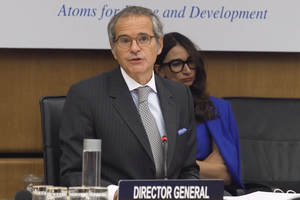
Grossi said technical discussions in Tehran and Vienna have made progress toward a practical arrangement to resume monitoring.
“It is my sincere hope that within the next few days, it will be possible to come to a successful conclusion,” he told governors.
Safeguards violations under scrutiny
The board is meeting against the backdrop of the IAEA’s May comprehensive report, which found Iran in breach of its safeguards obligations by concealing activities at sites including Lavisan-Shian, Marivan, Varamin, and Turquz-Abad.
The agency’s safeguards remain legally binding in Iran and must be fully implemented if wider diplomatic talks are to advance, Grossi told governors.
“The full implementation of the rights and obligations of the agency and Iran under Iran's NPT safeguards agreement is indispensable to paving the way towards real improvement in the overall situation,” he said.
With the general conference due next week and European powers pushing for a censure resolution, Grossi framed the coming days as decisive. “Always enough when there is good faith and a clear sense of responsibility,” he said, appealing for cooperation that could avoid escalation at the Security Council.

Press conference
After his remarks to the board, Grossi fielded questions in Vienna, saying he had no fixed plan to travel to Iran but hoped to do so “as part of the normalization of our contacts and relations with Iran.”
He described trust-building as gradual, citing consultations in Tehran and Vienna as well as his talks with Foreign Minister Abbas Araghchi. “It will take some time, but in my opinion, we are moving in the right direction,” he said.
He explained that legal deadlines under Iran’s safeguards agreement had already lapsed, and although the agency showed flexibility after days of attacks and damage to facilities in June, “we need to do what is necessary… it is not like we can go for weeks and months on end talking about this.”
On inspections and European snapback sanctions, Grossi stressed the agency’s independence: “We need to resume inspections because this is what we need to do, not because there is snapback.”
Still, he acknowledged that restarting work would carry a positive influence beyond the agency.
Grossi avoided political condemnations when asked about targeted killings of Iranian scientists, saying he would never endorse violence but that attribution was outside his mandate.
He confirmed that required 30-day checks on highly enriched uranium had not taken place and that there was still no clarity about the material’s location. The process of assessing Iran’s disclosures would only begin once access resumed, he added.
Grossi also dismissed remarks that IAEA data had been misused to enable attacks on facilities, calling the allegation “an absurd narrative.”
The agency, he said, had never shared confidential inspection information and was discussing additional measures to reassure Iran that safeguards data remained secure.
Obstacles to an agreement
Grossi said the main hurdles were practical -- gaining access to bomb-damaged facilities, addressing safety concerns, and navigating a new Iranian system that requires high-level political clearance.
Despite these obstacles, he said that negotiations were moving closer to agreement and voiced hope that a deal could be reached soon.
On the scope of inspections, he said that only the standard measures of the Comprehensive Safeguards Agreement were under discussion, since Iran is not applying the Additional Protocol.
He welcomed Tehran’s declared commitment to remain in the NPT but rejected calls to denounce individual states, warning that political condemnations would undercut his role.
Replying to Iran International
Responding to Iran International about a planned inspection at Isfahan nuclear site canceled by airstrikes, Grossi said he could not provide details of what was intended there.
He emphasized, however, that the agency had “no credible information about any other sites or places where enrichment activity would have been taking place before the attacks in June,” and added he expected access once conditions allowed.
“The Islamic Republic of Iran will under no circumstances negotiate about its defensive capacities,” spokesman Esmail Baghaei said at his weekly briefing.
“The Iranian nation will not allow talks on the tools necessary for defending our dignity and independence.”
On possible withdrawal from the Nuclear Non-Proliferation Treaty, he said the issue remains with parliament and no decision has been made.
EU mechanism under review in Tehran and Brussels
Baghaei confirmed that EU contacts continue after Britain, France and Germany triggered the snapback mechanism on August 28, demanding wider access for IAEA inspectors and accounting for Iran’s uranium stockpile.
“Contacts between the two sides continue on a rolling basis—both at ministerial level and among deputies,” he said.
He called the foreign minister’s meeting with EU foreign-policy chief Kaja Kallas in Doha “useful” and confirmed Tehran is reviewing proposals exchanged with Brussels.
“We and the European side must examine and finalize these proposals in the relevant bodies,” he said, adding that further exchanges are likely but no timetable has been fixed.
A third round of talks with the IAEA ended on Saturday and is now being assessed in Tehran. “After the final assessment, the next stage of negotiations will be announced,” Baghaei said.
Moscow and Beijing stance
Baghaei pointed to a joint letter signed with Russia and China rejecting the European attempt to restore sanctions under Resolution 2231.
“Both countries believe that the three European states lack the legal competence to restore UN sanctions, because they have repeatedly and continuously breached their obligations,” he said.
A growing number of Security Council members share that view and argued that reverting to pre-2010 measures would be “illegal, unjustified and damaging,” he argued.
Tehran has been preparing “for all scenarios” in coordination with Moscow and Beijing, Baghaei added, describing them as key partners in the Security Council, BRICS and the Shanghai Cooperation Organization.
He confirmed Iran will present a resolution at the IAEA General Conference later this month, aimed at prohibiting attacks on nuclear facilities. The draft, he said, reflects existing international law and criticized Washington for threatening to halt agency funding if it is adopted.
Broader politics
Baghaei addressed Iran’s outreach to Venezuela, saying support is based on “principles of international law and awareness of the dangers of unilateralism and bullying.”
On China, he said Tehran’s 25-year cooperation agreement with Beijing is also progressing “without particular problems,” though oversight is required to address challenges as they arise.
On US limits to Iranian participation at the UN, Baghaei called the restrictions a violation of international rules but confirmed President Masoud Pezeshkian will attend the General Assembly in New York.
The spokesman ended by criticizing Washington’s proposed renaming of its defense department, saying it “explicitly declares its hostility to the principles and norms of international law.”
Donald Trump on Friday signed an executive order renaming the Department of Defense as the Department of War, reviving the title the agency held from 1789 until 1947.