What was once heralded as a diplomatic triumph—a landmark nuclear agreement that promised peace in our time—now stands battered, its legal scaffolding trembling beneath the weight of defiance, duplicity and exhaustion.
In these waning weeks, the world confronts a choice of historic consequence. Shall sanctions be restored, snapping back with the force of law? Will diplomacy, extended yet again, provide a further lease on life to a faltering compact? Or will events-military, political, or economic overtake deliberation and hurl the region into crisis?
To speak plainly: snapback is no illusion. Contrary to misreporting, there is no "30-day prerequisite" before the mechanism may be activated.
The Council requires no incubation period. Once a party files notification of "significant non-performance," the thirty-day clock begins. Unless a fresh resolution is passed, the sanctions of a bygone decade automatically return-immediately, inexorably and beyond veto.
Europe's gambit
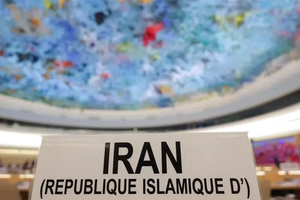
The E3—Britain, France and Germany—have already pulled the lever. In their formal notice, they declared Iran to be in "significant non-performance" of its obligations. This, procedurally, is the point of no return.
Unless Moscow can secure nine votes for its draft, and unless Washington refrains from veto, the sanctions of yesteryear will rise again like specters.
For Europe, this is both an act of law and of frustration. Years of oscillation—inspectors expelled, enrichment concealed, commitments broken-have eroded the credibility of diplomacy.
The E3, once patient custodians of compromise, now stand as executioners of its failure.
Moscow's shield, Beijing's hedge
Earlier last week, before E3 notify the UN of their intention to "trigger the snapback à la UNSCR 2231", Russia and China had already stepped into the breach by a draft resolution to extend October 18, 2025, expiry date of UNSCR 2231.
Moscow's draft resolution, tabled before the Security Council, proposes a six-month extension of 2231 to April 2026, granting Tehran a stay of execution.
It is a tactical gambit: stall the clock, suspend deliberation and deny Europe the satisfaction of reimposed sanctions. For Russia, it is one more lever in its great game against the West, wielding Iran as both pawn and partner.
China, ever cautious, has lent its support. Beijing's foreign ministry denounces snapback and extols dialogue, yet behind closed doors its diplomats speak with candor.
If Moscow's extension fails, they admit, China may be resigned to the automatic return of sanctions. For all its rhetoric, Beijing is loath to be cast as breaker of the Council's law. In this careful hedging lies recognition: once triggered, snapback is a machine that runs of itself.
Khamenei's defiance
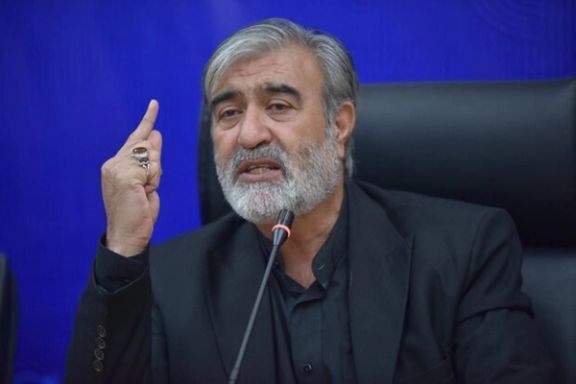
In Tehran, Supreme Leader Ayatollah Khamenei responded with thunder. In a speech days ago, he rejected outright the prospect of direct negotiations with the United States, branding the dispute "unsolvable."
He warned that Israel, ever the adversary, may seize the moment to again strike Iranian facilities. His words were defiance clothed as prophecy, meant to steel his people and to warn his foes.
Yet, however loud the thunder, the storm advances. Sanctions gnaw at Iran's economy. The rial buckles. Inflation devours. To millions of Iranians, Khamenei's words are less shield than sentence.
Even as the Leader railed, International Atomic Energy Agency inspectors returned to Iran for the first time in months, resuming limited work at Bushehr. It was no great opening: they were kept from Fordow, Natanz and other contested sites.
But it was something. Director General Rafael Grossi hailed the step as "an early indication of progress," though with Churchillian caution: "full cooperation," he warned, "remains a work in progress".
Iran presented the move as magnanimity; parliamentarians denounced it as betrayal. Yet the fact remains: Tehran, sensing peril, cracked open the door.
The transformation ultimatum
There is yet a more radical road. Under the hammer of snapback, with Moscow's shield broken and Beijing resigned, Khamenei may, like Khomeini before him, bow to survive.
He could proclaim a volte-face: accept spontaneous inspections anywhere in Iran; relocate enrichment to a consortium abroad—in the United Arab Emirates or Qatar—or cede it wholly to Russia.
The Leader could pledge compliance with the Financial Action Task Force and thereby grant external auditors full access to Tehran's banking system.
Khamenei might even agree to dismantle the Revolutionary Guards, curtail ballistic missiles and drones and to watch, powerless, as Lebanon advances toward the disarmament of Hezbollah and Iraq presses its own militias into submission.
Already Israeli strikes on Iran's allies in Yemen, with senior Houthi officials reported killed.
Were all this to unfold, Iran would face not mere concession, but transformation. A kleptocratic, hybrid theocracy would be stripped of its praetorian guard, its financial opacity and its regional claws.
History shows that regimes so hollowed seldom survive. This, then, would be snapback not as sanction, but as sentence.