Ball is in Tehran's court, EU foreign policy chief says
"The 30-day deadline has started and this does not mark the end of diplomacy," EU Foreign Policy Chief Kaja Kallas told reporters on Saturday, after France, Britain and Germany triggered the "snapback" mechanism that will reimpose UN sanctions on Iran.
"Tehran still has the chance to fully cooperate with the International Atomic Energy Agency and resume negotiations with the US over its nuclear program. And the ball is in Tehran's court."
"So I stand ready to support any kind of diplomatic efforts towards finding a solution," she added.
Representations of cryptocurrency Binance are seen in front of displayed Nobitex logo in this illustration taken November 3, 2022
An attack by Israeli-linked hackers on Iran's top cryptocurrency exchange amid a 12-day war in June focused their targeting on accounts held by officials and their so-called hot and cold wallets, a source told Iran International on Friday.
The Western-sanctioned Nobitex exchange was hit on June 18 by the hacking group Predatory Sparrow and $90 million dollars in its currency was destroyed, according to independent monitors. Nobitex has denied any military or government connections.
Hackers analyzed the stolen data and identified assets, networks, and transactions linked to Iranian officials, distinguishing them from those of civilians and ordinary users, the source said.
Nobitex announced after the attack that losses were limited to hot wallets only. However, a source told Iran International that both hot and cold wallets had been affected.
Hot wallets are internet-connected digital wallets designed for quick transactions but vulnerable to hacks. Cold wallets—offline hardware devices or paper keys—offer higher security but are slower and less convenient for daily use.
Determining whether destroyed assets were in hot or cold wallets can be done by examining transaction patterns and blockchain data tagged by analysis firms.
The United States sanctioned Nobitex in September 2022, followed by Canada in December 2022 and New Zealand in 2023, citing the exchange’s role in arms cooperation with Russia and drone transfers in the Ukraine war.
While the released data suggested extensive sanctions-evasion activities, the Nobitex team insisted it is merely a startup and denied any illegal conduct.
During the June conflict, Israel-linked hackers launched some of the most disruptive cyberattacks of the campaign.
The Predatory Sparrow claimed responsibility for destroying $90mn from Iran’s Nobitex cryptocurrency exchange and crippling services at Bank Sepah and Bank Pasargad by disabling their main and backup data centers.
“During the Nobitex hack, the asset withdrawals specifically occurred from high-frequency addresses, typically associated with hot wallets, and were transferred to burn addresses,” Mehdi Saremi Far, a science and technology journalist, told Iran International.
Iran’s cryptocurrency market is estimated at $5–12 billion, with Nobitex handling about 87% of its transaction volume.
TRM Labs, which specializes in detecting and disrupting blockchain-based illicit activity such as ransomware and money laundering, announced in July that Nobitex was not only used for illicit activities but also served as a surveillance tool.
“The Nobitex breach showed that the exchange’s internal infrastructure was designed to evade detection by the US Treasury Department’s Financial Crimes Enforcement Network (FinCEN) and US-based blockchain intelligence firms. This included modules for generating stealth addresses, obfuscating transactions, and evading surveillance,” TRM Labs said.
Foreign currency and gold prices in Iran rose sharply on Saturday after France, Germany, and Britain triggered the UN snapback mechanism, Iranian media reported.
The US dollar climbed by about 20,000 rials from the previous day to reach 1.04 million rials on the open market. The euro and British pound also saw gains of nearly 2 percent, selling for around 1.214 million and 1.401 million rials, respectively.
Local outlets said the market is reacting to fears that renewed UN sanctions could restrict trade, freeze assets, and add pressure on inflation and imports.
Iran will not surrender to Western pressure and will instead become “a model of resistance for other nations,” Abbas Kaabi said on Saturday, according to Rasa News.
“The West seeks Iran’s surrender, but the Iranian nation, relying on faith, the leadership of the Supreme Leader, and vast internal capabilities, will not surrender,” Kaabi, a member of the Assembly of Experts, said. “Instead, we will become an example of resistance for other nations.”
He said Iran should counter sanctions by building economic self-sufficiency, deepening ties with countries opposed to US unilateralism, and taking a more active role in regional diplomacy and multilateral organizations.
Eight people were arrested on suspicion of attempting to pass sensitive information about military officials and strategic sites to Israel’s Mossad, Iran’s Revolutionary Guards announced on Saturday.
“These individuals, who had received their specialized training online from agents of Mossad, had sent the coordinates of vital and sensitive centers, as well as information related to prominent military figures, to Mossad intelligence officers during the 12-day war,” read the announcement.
Israel launched the 12-day air campaign against Iran in June, with brief support from the United States, targeting nuclear sites and killing senior military officials and nuclear scientists. The strikes crippled much of Iran’s air defense network and damaged a significant portion of its ballistic missile arsenal, Israel said.
The people were arrested in northeastern Razavi Khorasan province before carrying out their plans, according to the statement. Authorities said they seized equipment for producing explosives, bombs and booby traps.
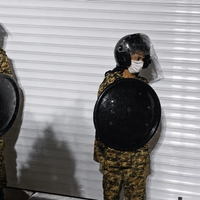
The announcement follows a broader crackdown in the wake of the June war. State media reported that police detained as many as 21,000 people during the 12-day conflict with Israel, though no details were given about the charges. Security forces also expanded their street presence during the brief war, which ended in a US-brokered ceasefire after Iran launched missile barrages on Israeli cities and military sites.
Earlier this month, Iran hanged nuclear scientist Rouzbeh Vadi, accusing him of providing intelligence to Israel about another scientist later killed in Israeli strikes. In total, at least eight people have been executed in recent months on espionage-related charges.
Human rights groups argue Tehran often uses espionage allegations and swift trials to stifle dissent and tighten control, particularly during periods of conflict.
According to Amnesty, Iran was responsible for 64 percent of all recorded executions worldwide in 2024 and has carried out 612 hangings in the first half of 2025 alone.
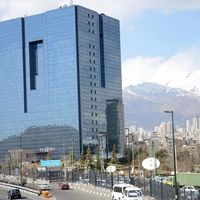
Tehran’s main stock index fell by more than 35,000 points on Saturday, closing at around 2.395 million, as the market reacted to the formal launch of the UN snapback process by France, Germany and Britain.
Mehr News Agency, a semi-official outlet, said the announcement has added a “wave of psychological anxiety” to a market already under “chronic selling pressure.” While analysts quoted by the agency believe the snapback may not have major operational effects under current sanctions, they said it casts a “dark cloud over the trading floor.”
“What we are seeing now is more of an overreaction than a reflection of real economic impact,” Mehr quoted one analyst as saying. Some added that a short-term rebound is possible if the market finds support levels and the effects of the mechanism are clarified, but noted that “sustainable recovery still depends on fresh capital inflows,” which remain absent.
The drop follows months of market volatility. In early July, after the 12-day war with Israel, the market saw historic outflows. On July 2, investors pulled nearly $145 million in a single day, and the index fell by 57,000 points. The selloff was intensified by cyberattacks on major banks and ongoing concerns about economic mismanagement and financial instability.