Iran has charged comedian Zeinab Mousavi over her satire of Ferdowsi, the 10th-century Persian poet behind the epic Shahnameh, using the controversy to stir patriotism after the war with Israel.
Iran has charged a comedian over a satirical sketch mocking Ferdowsi, the 10th-century poet behind the epic Shahnameh, after the performance provoked uproar across society.
The sketch, which recited verses of the Shahnameh with irreverent commentary, drew condemnation online and from prominent cultural figures who called it an insult to Iran’s heritage.
The Shahnameh, chronicling Iran’s mythical past and heroic kings, is widely regarded as a cornerstone of national identity.
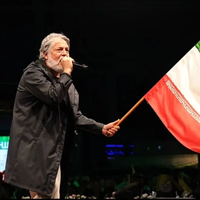
The comedian at the center of the storm, Zeinab Mousavi—known by her stage name Empress Kuzcooo—said she had not intended for the recording to circulate.
But prosecutors accused her of producing “offensive content”, framing it as an insult to Ferdowsi and a provocation to public sentiment.
Tasnim, a news agency affiliated with the Revolutionary Guards, cast the affair in those terms.
“Hostility toward Iran is one of the round-the-clock activities of Zionists and their agents. Just as the brave Iranian people defended the country against attacks from the United States and Israel, they will also defend the symbols of this noble land.”
Mousavi told Rouydad24 that the YouTube program scheduled to air the sketch had promised to cut the segments, and she was unaware of their circulation on social media.
“Comedy has no boundaries,” she said. “I have harmed no one.” She did not issue an apology.
Clerics vs Ferdowsi
Some hardline Shia clerics have long viewed Ferdowsi with disdain over the Shahnameh’s anti-Arab verses and his praise for pre-Islamic monarchy.
Under their influence, murals depicting scenes from the epic were removed from Mashhad, and a statue of Ferdowsi was blocked from installation at Ferdowsi University.
Supreme Leader Ali Khamenei, however, has downplayed these objections, presenting Ferdowsi as a devout Shia and framing the Shahnameh as consistent with Islamic thought.
Critics call the state’s current posture opportunistic.
“Until yesterday they were erasing Shahnameh murals,” wrote one user, Soroush. “Now, to preserve the regime in wartime, they wave nationalist symbols. Tomorrow they might even parade Achaemenid soldiers.”
Mousavi, a 35-year-old software graduate, is no stranger to controversy. Her biting humor, scathing critiques of clerics and politicians, and occasional sexual references have repeatedly attracted the authorities’ attention.
She has been arrested several times on charges such as “insulting religious sanctities,” often over satire targeting compulsory hijab laws.
The case has reignited debate about freedom of expression and the limits of satire in Iran.
“Insulting Ferdowsi and his enduring masterpiece, the Shahnameh, is an affront to our cultural roots. It deserves criticism, but the response should not be prison,” wrote reformist politician Azar Mansouri on X.
“Judicial punishment neither builds culture nor fosters respect.”
Journalist Milad Alavi echoed the point: “Zeinab Mousavi’s jokes about Ferdowsi were at times offensive, but they were not a crime. Criminal prosecution undermines freedom of expression and erodes the rule of law.”
A man takes his medicine at the till of a pharmacy in Tehran
The government will soon be unable to cover health care expenses, an Iranian parliament member warned on Wednesday, citing rising costs, insurance debts, and an aging population.
The Islamic Republic risks losing the ability to fund its health system, said Reza Jabbari, a member of parliament’s presiding board, during a meeting with Health Minister Mohammadreza Zafarghandi.
“Based on submitted reports, 70 percent of insurance resources are spent on medicine and equipment, which could be significantly reduced through strategic purchasing,” Jabbari added.
Without reform, he said, demographic and dietary pressures could create in health care the same shortage already seen in Iran’s energy sector.
Iran may soon face a surge in chronic and non-communicable diseases, Jabbari warned.
“The country will no longer be able to pay health costs if the current situation continues.”
Debt to the pharmaceutical supply chain
The warning came a day after Shahram Kalantari, head of Iran’s Pharmacists Association, described the government as “the main debtor to the pharmaceutical supply chain.” Insurers have failed to pay most of their obligations this year, he said.
A hospital in Iran
“Health Insurance owes us $100 trillion rials ($100 million), Social Security owes $150 trillion rials ($150 million), and the Daroyar plan owes $90 trillion rials ($90 million) since July,” Kalantari said Tuesday.
The drug industry can only remain stable for 170 to 180 days if payments continue to be delayed, he cautioned. After that, shortages of essential medicines are likely.
Kalantari has previously said 80 percent of pharmacies in the country are on the brink of bankruptcy due to mounting debts from insurers and subsidy programs.
Rising burden on households
Other lawmakers have also highlighted the growing strain on families. Fatemeh Mohammadbeigi, deputy chair of the parliament’s Health Committee, said Iranians now pay about 70 percent of medical costs out of pocket.
She described the insurance system as “inefficient and near bankruptcy” due to poor management and a failure to consolidate coverage.
“This figure should be reversed, with people paying 30 percent and the government 70 percent,” Mohammadbeigi said earlier this month. Falling insurance coverage particularly harms low-income groups, she added.
Labor activists have also pointed to shrinking access. Abbas Shiri, a board inspector for the National Construction Workers’ Union, said on August 2 that fewer than 50,000 workers have gained insurance since 2020, leaving hundreds of thousands waiting.
The combined warnings from lawmakers, pharmacists, and labor groups underscore a health system burdened by debt, demographic pressures, and inadequate insurance coverage, with officials conceding that sustainability is in doubt.
A Russian-made air defense battery is displayed in Iran in this file photo
Allegations by an Iranian official suggesting Russian complicity with Israel in attacks on Iran have sparked debate over the value of Iran’s long-touted strategic partnership with Russia.
Mohammad Sadr, a member of Iran's Expediency Council appointed by Supreme Leader Ali Khamenei, suggested that Russia may have provided Israel with Iranian air-defense intelligence from prior conflicts, including a limited Israeli strike in November 2024.
According to Sadr, this could have enabled Israel to precisely target Iranian defense sites during a 12-day war in June. He was speaking in an interview published on Sunday by online outlet Seenergy — a lesser-known podcast channel dedicated to foreign policy and energy issues.
“I’m telling you, analytically, that the Russians had given the specifications to Israel,” Sadr said, but suggesting he was also in possession of information on the matter.
Mohammed Sadr, a member of Iran's Expediency Council, gestures in this file photo
Iran's judiciary announced on Wednesday that the Tehran Prosecutor's Office has filed charges against him for "making false statements," in a possible sign of officialdom's keenness not to upset one of Iran's few strong foreign relationships.
Sadr, a former senior deputy foreign minister under reformist President Mohammad Khatami, is one of the very few reformists Iran's Supreme Leader Ali Khamenei has ever appointed as a member of the Expediency Council.
He also criticized Russia's sale of the S-400 system to Turkey, a NATO member, and a delay in delivering the Sukhoi Su-35 fighter jets to Iran.
According to Sadr, these developments prove that the so-called Iran-Russia 20-year strategic partnership is “hollow and empty.”
He argued that Russia’s willingness to prioritize other international partnerships, including its defense deals with India and cautious approach toward Israel, highlights the limits of Moscow’s commitment to Tehran.
While he stressed that relations with Moscow should not be severed, he warned against placing too much trust in it. Sadr emphasized that Iran must maintain strategic autonomy, diversify its defense and diplomatic relationships, and be wary of over-reliance on a partner whose interests may not align with its own.
Hardliner furor
The controversial remarks were widely covered by domestic media and drew immediate reactions, including a denial by the Foreign Ministry and criticism from the ultra-hardline Kayhan daily and conservative Farhikhtegan.
Foreign Ministry spokesman Esmail Baghaei emphasized that Sadr’s views were personal opinions and did not necessarily reflect official policy.
Kayhan, funded by the Supreme Leader’s office, dismissed Sadr’s remarks, writing: “If Russia had not called the snapback mechanism illegal, and if it were not confronting the United States in Ukraine, and if it had not defended Iran at the United Nations, and so on, the reformists would not be spouting this nonsense. Many of these reformists oppose any current that stands against America.”
The article was referring to the so-called snapback of international sanctions which European powers are due to trigger soon which could seriously hurt Iran's already ailing economy.
Mashregh News, reportedly linked to the Revolutionary Guard Intelligence Organization (SAS), also criticized Sadr, saying he portrayed the situation as a gain for Israel while voicing anti-Russian rhetoric without offering supporting evidence.
“Making such statements—even if they contained a grain of truth, which Sadr’s unsubstantiated approach clearly undermines—serves no purpose other than fueling tensions in international relations,” Mashregh wrote.
Growing scrutiny over Russia’s commitment
While long considered a staunch ally by Iranian hardliners, Russia came under scrutiny from Iranian media figures, former diplomats and politicians who argued that Moscow’s support for Iran during the 12-day war fell short of meaningful military backing.
Such an explicit accusation of Russian cooperation or intelligence-sharing with Israel against Iran, however, had never been publicly raised by any official. This made Sadr’s remarks, as the first public statement of its kind by a leader-appointed member of the Expediency Council, unusually rare and sensitive.
Iranian-designed attack drones have been increasingly deployed by Moscow in Ukraine, but Russian military help has been elusive as Iran has suffered harsh blows from Israel and the United States.
The controversy comes amid growing scrutiny of Russia’s broader foreign policy priorities, including its expanding defense ties with other countries.
The contrast between Russia’s limited support for Iran and its robust defense cooperation with other countries is stark.
Following the 12-day conflict with Israel, Moscow finalized a deal to provide India with 117 Su-35 fighter jets and joint production of the Su-57 stealth aircraft, including full technology transfer—capabilities Tehran has long sought but has yet to secure.
Critics argue that Moscow’s military entanglement in Ukraine coupled with its cautious approach toward Israel, reflects limits to its commitment to Iran—raising questions about how dependable Russia is as a strategic partner.
Traditional flood irrigation of agricultural land in Iran
At the cost of creating serious water shortages, Iran’s agricultural sector has vastly expanded over recent decades in pursuit of food self-sufficiency and hard currency through exports.
The country is already grappling with one of the worst water crises in the Middle East, with more than 300 cities currently experiencing water stress according to official statistics.
Former Agriculture Minister Isa Kalantari put the situation starkly in an interview with the Entekhab newspaper, saying the agricultural sector consumes 77 billion cubic meters of water annually—85–90 percent of Iran’s total water withdrawals—producing $40 billion in output but imposing an environmental cost of $44 billion.
A political push for food independence
Since the Islamic Revolution, food self-sufficiency has been treated as a pillar of economic independence. This strategy gained momentum during the 1980–1988 Iran–Iraq War and amid international sanctions.
“Tensions in foreign policy have led the state to treat food sovereignty as a security issue; this approach, instead of promoting genuine development, has merely resulted in the unchecked expansion of agriculture,” said Morad Kaviani-Rad, professor of hydro-politics at Tehran University, in an interview with Entekhab.
Kaviani-Rad said that Iran’s Planning and Budget Organization recognized as early as the 1950s that the country lacked the natural capacity for full agricultural self-sufficiency and should instead prioritize industrialization.
Nevertheless, Supreme Leader Ali Khamenei has repeatedly called for increased domestic food production and population growth. In a 2021 speech, he said Iran could feed four times its current population with existing rainfall if resources were managed properly.
The emphasis on food self-reliance and export-oriented agriculture has long drawn criticism from experts.
“Failing to understand the subtle yet strategic difference between ‘food self-sufficiency’ and ‘food security’ ... will destroy agriculture, the economy, water, land, natural resources, farmers’ livelihoods and the security of an entire nation,” warned Kaveh Madani, a leading Iranian environmentalist, in a December 2023 post on X.
Water-intensive exports deepen the crisis
Despite mounting evidence, Iran’s agricultural expansion continues largely unchecked, with subsidies and government incentives still promoting cultivation of thirsty crops for export, a practice often described as “exporting virtual water.”
Pistachios, for example, earned $1.5 billion in export revenues in the year to March 2025 but require 5,000–7,000 cubic meters of water per hectare annually. They are mainly grown in Kerman province, one of Iran’s driest regions, where over-extraction has led to aquifer depletion and land subsidence.
According to Iran’s Trade Promotion Organization, agricultural products accounted for approximately 12 percent of the country’s non-oil exports in the year to March 2025, underscoring their economic significance.
This year’s severe drought and worsening water shortages in areas including Tehran, however, have amplified warnings about growing water-intensive crops for export.
"Just as the reservoirs are one by one approaching zero, truckloads of cucumbers, watermelons, and potatoes are being shipped to Iraq and Russia," wrote Iranian journalist Azadeh Mokhtari in Rokna News on August 22. "This isn't called export; it's called an emergency outflow of the country's water resources—with no return."
A recent speech by Iran’s Supreme Leader Ali Khamenei has energized hardliners who see it as a mandate to silence reformists advocating direct talks with Washington and nuclear concessions.
Khamenei on Sunday appeared to dismiss a manifesto by reformist groups which called for direct talks with Washington and suspension of uranium enrichment.
Hardliners were quick to interpret his words as a rebuke to the authors of the recent Reform Front statement and figures such as former president Hassan Rouhani and his foreign minister Mohammad-Javad Zarif, who also urge direct talks and diplomacy.
“Those who say, ‘Why don’t you negotiate directly with the United States and solve the issues,’ are superficial, because the reality is different," Khamenei said in his speech.
Analysts are divided over the implications. Dissident commentator Reza Alijani told Iran International that Khamenei’s stance reveals “a backward Cold War mindset” hostile to compromise, warning he is “gambling with the fate of the country and the Iranian people.”
Others argue the speech was more rhetorical than absolute. Ruhollah Rahimpour noted in a post on X that Khamenei has made similar statements even while Iran’s diplomats were actively engaged in talks.
The timing of the remarks, however, is significant. Just a week earlier, the Reform Front called for direct US negotiations, suspension of enrichment, and acceptance of full IAEA monitoring in exchange for sanctions relief.
Hardliners hailed Khamenei’s speech as a rejection of that appeal.
“The Leader’s wise remarks struck like a resounding slap against submissive reformists—against Rouhani, Zarif, (Mohammad) Akhoundi, Azar Mansouria and others,” wrote ultra-hardliner activist Alireza Aliyaninejad on X.
Ultra-hardliner defiance
Khamenei’s simultaneous expression of support for President Masoud Pezeshkian and emphasis on a united front against foreign enemies has complicated the picture.
Reformist-leaning figures and outlets highlighted the endorsement, while some ultra-hardliners such as lawmaker Hamid Rasaei insisted such support was merely pro forma.
Only hours after the speech, Rasaei suggested that parliament could oust Pezeshkian for incompetence, likening him to Iran’s first president Abolhassan Banisadr, who was impeached in 1981 despite Ayatollah Khomeini’s earlier backing.
The threat against Pezeshkian triggered backlash even within conservative circles.
Revolutionary Guards-affiliated media accused Rasaei of defying Khamenei’s call for unity. A Telegram channel believed close to the Guards warned: “This is a complete final warning—in the true sense of the word—to you and to all (ultra-hardliners) who, contrary to the explicit order of the Supreme Leader, engage in creating distractions and acting against national cohesion and unity.”
The Guards-affiliated Javan newspaper went further, calling for Rasaei to be prosecuted.
Green light for prosecution?
Judiciary chief Gholam-Hossein Mohseni-Ejei warned the Reform Front over its statement: “Those who, whether out of negligence or questionable motives, signed it should acknowledge their mistake and withdraw this disgraceful act. Naturally, the Tehran prosecutor will also carry out his legal duty."
Reformists rejected the accusation of betrayal.
“The Reformist Front’s statement is not an alignment with the enemy, but the voice of the voiceless who are worried about Iran. Judicial action against ‘opinions, criticism, and proposed solutions’ reflects a crisis in listening,” responded Azar Mansouri, the Front’s leader, on X.
A group of young men and women in casual, Western-style clothing gathered around a woman in Lebanese-style hijab seated on a large red armchair placed in the middle of a street in Iran..
A viral series of photos showing women without headscarves on the streets of Tehran has ignited heated debate on social media over claims that the Islamic Republic has loosened its enforcement of compulsory hijab.
The images, some first shared in early August on X by social media activist Sana Moeinni, depict scenes that appear to show everyday urban life in present-day Iran. They present a strikingly relaxed atmosphere, with diversity in clothing styles and subtle cultural symbols such as flags used in Shiite Muharram mourning ceremonies.
One photo shows a group of young men and women in casual, Western-style clothing gathered around a woman in Lebanese-style hijab seated on a large red armchair placed in the middle of a street.
Another depicts a woman and child riding a yellow scooter—an image that would have been almost unthinkable just a few years ago, when an unwritten ban on riding bicycles or motorcycles in public was strictly enforced.
Staged reality or social progress?
Critics argue that the images are staged. Diaspora journalist Amir Kalhor called them part of a coordinated propaganda campaign.
“This project, involving dozens of photographers, models, and production teams, is designed to project a fabricated, sanitized image of life in Iran under the rule of the Islamic Republic for international audiences,” Kalhor wrote on Instagram.
Supporters of President Masoud Pezeshkian, however, see the backlash differently. Kiana Poorhaghighi, a young pro-government activist, argued that opposition groups feel threatened because hijab enforcement has been a powerful rallying point.
“If the Islamic Republic acknowledges diversity of clothing, as seen in these photos, the opposition loses one of its strongest tools,” she wrote on X.
Alireza Ziloochi, who calls himself a tourism expert, said: "I still can’t figure out when I should say, ‘Bravo for this courage. Everyday acts of resistance matter. People need to get used to seeing these images,’ when someone posts a photo without hijab in Iran’s streets — and when I should say, ‘The reformist scoundrels have launched the regime’s whitewashing project, because otherwise the streets of the city aren’t like this at all.’"
The photographers have not been publicly identified.
‘Fragments of reality’
Some critics accused the photographers of “selectively highlighting fragments of reality” to suggest that Pezeshkian’s government has eased restrictions, while concealing the ongoing struggles women face.
A commenter argued that the photos “whitewashed” the reality of the Islamic Republic by showing unveiled women but not the harshness of the daily risks women take: “It’s a struggle that costs us—materially, emotionally, mentally, and even physically,” she wrote.
Others framed the issue in broader terms of personal freedom: “Our women’s clothing, whether veil or bikini, should not be imposed by the state. Women and men should decide for themselves. We do not need guardians.”
The reality on the ground
In May, Iran’s Supreme National Security Council shelved a new hardline bill mandating stricter hijab rules, reportedly out of fear of public backlash. Enforcement has not disappeared, but reports of women facing harassment, including fines and impounding of their vehicles, are not as common as before.
While unveiled women are now common in Tehran and other cities, most still carry scarves in their bags to use in banks, government offices, or public transport if ordered.
“You can say we are free only when we can go to the bank, tax office, or hospital without a hijab, and are not told at the entrance to cover up,” one user wrote on X.
Few women dress entirely as they wish: most avoid sleeveless shirts, shorts, or short skirts, opting instead for long sleeves and modest skirts as a compromise to avoid confrontation.
“[Having to wear] long-sleeved blouses, pants, and long skirts in 40-degree heat cannot be considered freedom of dress,” a post on X argued.
Change from above or women’s steadfastness?
Supporters of Pezeshkian credit his presidency with the apparent relaxation of enforcement in recent months. Others insist that it is women’s defiance—not government reform—that has shifted the balance.
“The fact that women today walk unveiled in Tehran or even ride motorcycles is neither the result of ‘reform’ nor the reformists’ achievement,” one critic wrote, pointing out these relative freedoms are not formally recognized as legal rights.
“Any change in this matter is the result of women’s resistance,” wrote feminist activist Zeinab Zaman.