• العربية
  • فارسی
Brand
  • Iran Insight
  • Politics
  • Economy
  • Analysis
  • Special Report
  • Opinion
  • Podcast
  • Iran Insight
  • Politics
  • Economy
  • Analysis
  • Special Report
  • Opinion
  • Podcast
  • Theme
  • Language
    • العربية
    • فارسی
  • Iran Insight
  • Politics
  • Economy
  • Analysis
  • Special Report
  • Opinion
  • Podcast
All rights reserved for Volant Media UK Limited
volant media logo

Iranian man wanted by US worked for Swiss, EU-funded drone lab - Swiss daily

Benjamin Weinthal
Benjamin Weinthal

Contributor

Jul 10, 2025, 15:58 GMT+1Updated: 07:52 GMT+0
The US seeks arrest of Mohammad Abedini for alleged role in drone attack that killed 3 American soldiers in Jordan in January 2024

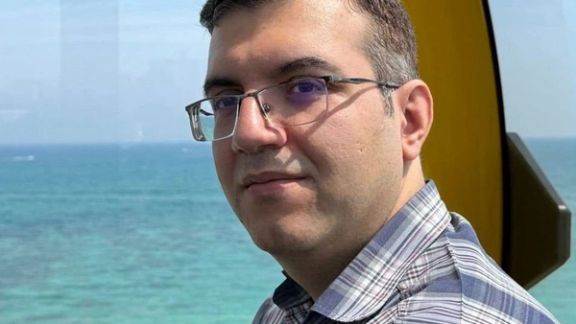
An Iranian man wanted by the United States on terrorism charges worked for Swiss university lab which received state and European Union funding, the Swiss daily Neue Zürcher Zeitung reported.

Mohammad Abedini Najafabadi, who was at the center of hostage standoff between Italy and Iran earlier this year, worked in a drone research lab funded by European Union and Swiss state innovation agency, NZZ reported.

His activities helped Tehran acquire cutting-edge Western technology for its drone program, the German-language daily wrote.

US authorities issued an arrest warrant last year for Abedini over his alleged role in a drone attack that killed three US Army soldiers in Jordan last year and injured dozens.

The warrant alleged Abedini had ordered highly advanced electromechanical micro-components to Lausanne and smuggled them back to Iran in his luggage.

In 2019, Abedini began research with Swiss Professor Jan Skaloud, a specialist in satellite and inertial navigation, at the Swiss Federal Technology Institute of Lausanne (EPFL).

“Between 2017 and 2024, the defense company supported a total of nine Skaloud projects,” the NZZ said.

"The topic is autonomous drone navigation without the aid of satellites. At the heart of this project is a laboratory where a suspected Iranian spy works,” it added.

Emmanuel Barraud, an EPFL spokesperson, said the institute did not aid Tehran.

“The NZZ article doesn’t state that EPFL actively helped the Iranian regime in any way," Barraud told Iran International by email.

"Such a statement would be a gross distortion of reality. The investigation shows some connections between EPFL and one individual, M. Abedini, who may have tried to hide some of his defense-oriented activities behind the company he founded while at EPFL.”

“As far as we know, all activities performed by Abedini under his EPFL part-time contract were related to the objectives of the Lab that employed him, without any relationship to Iran. As a consequence, there is no ground for a procedure related to a violation of sanctions,” Barraud added.

Switzerland's federal defense procurement agency Armasuisse was a client of the lab, NZZ reported.

NZZ reported that Armasuisse, EPFL and Skaloud did not carry out background checks on Abedini, who leads the SDRA company, an Iranian firm producing navigation and drone systems for Iran’s Islamic Revolutionary Guard Corps, which is designated a terrorist organization by the United States.

Lea Ryf, a spokesperson for Armasuisse, told Iran International: "A security clearance or confidentiality process is not common in the field of applied research with academic institutes, as the content is usually unclassified.”

“Armasuisse does not support the Iranian regime with regard to drone technology and other technologies,” Ryf added.

Skaloud did not respond to Iran International requests for comment.

'Drones for the dictatorship'

Born in 1986, Abedini graduated from Tehran’s Sharif University of Technology, which the European Union sanctioned in 2012 for supporting Iran’s nuclear activities.

His father is Ayatollah Ahmad Abedini, a cleric who teaches in Qom.

"The coverage of Abedini has involved discussions about his role in smuggling drone technology but the research has largely been ignored,” NZZ journalist Daniel Rickenbacher told Iran International.

Skaloud and Armasuisse did not immediately respond to Iran International requests for comment.

In its article titled “Drones for the dictatorship – How Swiss research flowed into Iranian weapons technology,” NZZ wrote, “An Iranian engineer used the Federal Institute of Technology in Lausanne to procure cutting-edge Western technology for

After earning his doctorate, the NZZ reported, Abedini took a research post at EPFL in 2015.

“According to the FBI, at that time he was not only a scientist, but also held a key position in Iran's arms program,” the NZZ wrote.

The Swiss government, which represents US interests in Iran, has faced accusations of overly cordial ties with the Islamic Republic and its oil industry.

In 2012, then-US ambassador Donald Beyer criticized Switzerland for refusing to adopt sanctions targeting Iran’s Central Bank and oil trade with Europe.

Italian authorities arrested Abedini in December in response to the US warrant but released him to Iran in January, apparently in an exchange linked to Iran’s reported detention of Italian reporter Cecilia Sala.

Most Viewed

Iran diplomacy wobbles as factions compete to avoid looking soft on US
1
INSIGHT

Iran diplomacy wobbles as factions compete to avoid looking soft on US

2
ANALYSIS

The politics of pink: how Iran uses cuteness to rebrand violence

3

Scam messages seek crypto for ships’ safe passage through Hormuz, firm warns

4
EXCLUSIVE

Family told missing teen was alive, then received his body 60 days later

5
INSIGHT

Is Iran entering its Gorbachev moment?

Banner
Banner

Spotlight

  • Diplomacy tolls at Hormuz as conflict returns to its doorstep
    OPINION

    Diplomacy tolls at Hormuz as conflict returns to its doorstep

  • Opposition to US talks grows in Tehran as ceasefire deadline nears
    INSIGHT

    Opposition to US talks grows in Tehran as ceasefire deadline nears

  • Tehran moderates see ‘no deal–no war’ limbo as worst outcome
    INSIGHT

    Tehran moderates see ‘no deal–no war’ limbo as worst outcome

  • The future has been switched off here
    TEHRAN INSIDER

    The future has been switched off here

  • Lights out, then gunfire: Witnesses recount Mashhad protest crackdown
    VOICES FROM IRAN

    Lights out, then gunfire: Witnesses recount Mashhad protest crackdown

  • Is Iran entering its Gorbachev moment?
    INSIGHT

    Is Iran entering its Gorbachev moment?

•
•
•

More Stories

Trump mocks Iran official's Mar-a-Lago attack threat: 'I don't sunbathe'

Jul 9, 2025, 19:51 GMT+1

US President Donald Trump on Wednesday laughed off a threat by an Iranian official suggesting he could be attacked with drones while sunning himself at his Florida mansion, telling a bemused press corps he had not sunbathed since childhood.

“Trump has done something so that he can no longer sunbathe in Mar-a-Lago," Mohammad-Javad Larijani, a former senior advisor to Iran’s Supreme Leader had told Iranian state TV in remarks first reported in the English language media by Iran International.

"As he lies there with his stomach to the sun, a small drone might hit him in the navel. It’s very simple,” added Larijani, whose two brothers are among the Islamic Republic’s most powerful political figures.

Fox News reporter Peter Doocy read the comments to Trump at a press conference, adding, "Do you think that's a real threat? And when is the last time you went sunbathing anyway?"

Trump, smiling, retorted: "It's been a long time. I don't know, maybe I was around seven or so. I'm not too big into it. Yeah, I guess it's a threat. I'm not sure it's a threat actually, but perhaps it is."

Iranian clerics have previously called on Muslims to kill Trump and Israeli Prime Minister Benjamin Netanyahu in retaliation for their threats on the life of Iranian Supreme Leader Ali Khamenei during the conflict.

US forces attacked three Iranian nuclear sites in a bid to disable Tehran's disputed program days after Trump said Washington was well aware of where Khamenei was sheltering during the war.

Larijani's comments came after an online platform calling itself "blood pact" began raising funds for what it calls “retribution against those who mock and threaten the Supreme Leader Ali Khamenei.” The site says to have collected over $40 million to date.

It was not immediately possible to verify the authenticity of the figure.

Bounty for Trump’s head

“We pledge to award the bounty to anyone who can bring the enemies of God and those who threaten the life of Ali Khamenei to justice,” a statement on the site said.

The campaign's stated aim is to raise $100 million for the killing of Donald Trump. It remains unclear who operates the site.

However, Fars News Agency, affiliated with the Revolutionary Guards, reported the launch of the Blood Pact initiative and called on religious groups in Iran and abroad to rally in front of Western embassies and central squares to express support for Khamenei.

The outlet also urged the application of “Islamic rulings on moharebeh” against both Trump and Israeli Prime Minister Benjamin Netanyahu.

In the Iranian legal system, moharebeh—literally “waging war against God”—is punishable by death.

President Masoud Pezeshkian sought to distance his government from the campaign, telling US commentator Tucker Carlson on Monday that “the fatwa of warfare has nothing to do with the Iranian government or the Supreme Leader.”

But Kayhan newspaper, overseen by a representative of Khamenei, dismissed the president's remark.

“This is not an academic opinion. It is a clear religious ruling in defense of faith, sanctities and especially the guardianship of the jurist,” it wrote in a Tuesday editorial, referring to Iran's system of clerical rule.

Any future “fire-starter” would face retaliation, the newspaper added concluding that “The Islamic Republic will drown Israel in blood.”

Former lawmaker Gholamali Jafarzadeh Imenabadi earlier condemned Kayhan’s position, saying: “I can’t believe Kayhan’s editor-in-chief Hossein Shariatmadari is Iranian ... saying Trump should be assassinated will bring the cost down on the people.”

In response, Kayhan wrote: “Today, avenging Trump is nearly a national demand. It is Imenabadi’s words that are out of step with Iranian values."

Trump has been a target for assassination threats since he ordered the 2020 killing of Islamic Revolutionary Guard Corps (IRGC) General Qassem Soleimani in Iraq.

Last year, US law enforcement accused the IRGC of organizing a plot to kill Trump in retaliation for his order to assassinate Soleimani.

A win for Tehran: experts assess Carlson's Iran interview

Jul 8, 2025, 20:00 GMT+1
•
Negar Mojtahedi

Tucker Carlson's interview with Iran’s president Masoud Pezeshkian was all Tehran could wish for, experts told Iran International: a global stage, no pushback, and a direct line to Donald Trump’s base.

“This was a major victory for Iranian information warfare operations,” said Marcus Kolga, a leading expert on foreign disinformation. “Whether intentionally or not, Carlson is acting as a significant conduit and amplifier for Iranian government information operations.”

The interview was recorded remotely, unlike the one Carlson did with Russia's president Vladimir Putin in February 2024.

"(Carlson) offers Pezeshkian and the Iranian regime a platform—without context or pushback—allowing Tehran to shape the record to Carlson’s viewers and listeners unopposed,” Kolga added.

A moment highlighted by many critics was when Pezeshkian asserted that Israel had tried to assassinate him without offering any evidence.

“He was trying to... put forward the message that this is Israel tricking America into getting involved in this. This really isn't America's war. Iran and America, we have nothing to fight about.” director of the Yorktown Institute's Turan Research Center Joseph Epstein said.

Epstein argued the interview fit Carlson’s broader pattern of offering authoritarian figures a platform to rewrite narratives without scrutiny—an approach that often blurs the line between journalistic curiosity and ideological alignment.

MAGA :' forever wars'

That alignment, analysts say, extended deep into the language Pezeshkian used.

From “forever wars” to calls for dialogue, his remarks were crafted to appeal to Trump-aligned isolationists and feed growing calls for US disengagement from the Middle East.

The use of such language is no accident, said Holly Dagres, a senior fellow at the Washington Institute, who has long studied Iranian strategic messaging.

“One of the main goals of the Islamic Republic is to get the US out of the Middle East... and when you're pushing this isolationist rhetoric or America First, you're basically saying America needs to get out," Dagres told Iran International.

Dagres noted that Pezeshkian’s emphasis on business cooperation with the US and his softened tone on slogans like “Death to America” appeared to be an overture to Trump himself, even if the message didn’t land as clearly in today’s post-war political climate.

The interview was praised by Iran's moderates, but hardline voices slammed the president's for what they called 'appeasement'.

"A lot of conservatives condemned it because (they said) the US just bombed us. Why are you making these appeals to them?”

The messaging, several experts said, fits into a broader long-term goal: undermining the US-Israeli alliance.

“He used this as an opportunity to weaken and to increase America's skepticism of support for Israel,” said Casey Babb, senior fellow at the Macdonald-Laurier Institute. “In 50 years or 100 years, if America and Israel are not aligned the same way they are right now, Israel could be in a very precarious situation.”

Carlson, Babb said, handed that message a valuable platform by failing to press Pezeshkian on Iran’s human rights record, nuclear activities, or assassination plots.

“There were definitely softball questions with no follow-up,” said Dagres. “Carlson didn’t challenge Pezeshkian on well-documented plots to target American officials or on the regime’s broader ambitions.”

“In failing to counter these narratives,” Kolga said, “Carlson becomes a conduit for regime propaganda—allowing this high-profile ‘conversation’ to turn into a successful Iranian strategic disinformation operation.”

Iran hit Israeli military sites during June airstrikes - Reuters

Jul 8, 2025, 14:59 GMT+1

Iranian airstrikes last month hit several Israeli military sites, according to a Reuters report citing an Israeli military official — the first apparent public confirmation that such locations were struck.

The unnamed official, speaking under customary anonymity, said that “very few” sites were hit and all remained operational.

No further details were provided by the official on the specific locations or extent of the damage.

Iran launched multiple waves of missile against Israel during the 12-day war that began on 13 June when Israeli airstrikes hit Iranian nuclear and military sites and killed several IRGC top commanders.

Iranian strikes frequently targeted major cities including Tel Aviv and Haifa, as well as military areas around Beersheba.

Several residential buildings were also hit, though the Israeli military said most of the missiles and drones were intercepted.

Iran and Israel agreed to a US-backed ceasefire on June 24 after the United States bombed the Islamic Republic's nuclear facilities.

The British daily Telegraph reported on Monday that Iranian missiles struck five Israeli military facilities, citing satellite radar data reviewed by US researchers.

The data, provided by a research group at Oregon State University, suggest that six Iranian missiles hit military targets across northern, central, and southern Israel, including what the report describes as a major air base, an intelligence facility, and a logistics center.

A more comprehensive analysis of the damage to both Israeli and Iranian infrastructure is expected from the Oregon State research group within two weeks, according to the report.

At least two killed and two missing in latest Houthi attack on ship off Yemen

Jul 8, 2025, 11:20 GMT+1

Two seamen are believed to have been killed and another two missing after an attack on a Greek-managed cargo ship off the coast of Yemen by the Iran-backed Houthis, according to Reuters.

This brings the death toll to six since the group began its maritime attacks in support of Iran-backed Hamas in Gaza in November 2023.

The attack came just hours after the group, which many Western countries have listed as a terrorist organization, claimed to have sunk a bulk carrier in the Red Sea.

According to the European Union’s Operation Aspides task group specializing on protecting shipping in the Red Sea region, the attack happened 50 nautical miles southwest of the port of Hodeidah.

The vessel, which was Liberia-flagged, had 22 crew members, 21 Filipinos and one Russian, as well as armed guards on board.

It was attacked with sea drones and rocket-propelled grenades fired from manned speedboats, sources said.

An official from Cosmoship Management, which manages the vessel, told Reuters that the vessel's bridge was hit and telecommunications were impacted.

While crew were told to abandon after it suffered serious damage, the lifeboats had been destroyed in the assault.

On Monday, the Houthis had claimed responsibility for sinking the MV Magic Seas, for what the spokesman for the group said was “repeated violations by its owning company of the ban on entering the ports of occupied Palestine.”

The raid involved gunfire and rocket-propelled grenades from eight skiffs as well as missiles and four uncrewed surface vessels.

The statement also warned: “We are not satisfied with sinking just one ship, there is more to come.”

While the Houthis said the group had sunk the ship, Michael Bodouroglou, a representative of Stem Shipping, one of the ship's commercial managers, said there was no independent verification, according to Reuters.

If proven to have been sunk, it would make it the third ship to be sunk since November 2023 when the group began the blockade, following a call by Iran’s Supreme Leader Ali Khamenei.

On Sunday morning, Israel announced it had struck multiple Houthi targets.

In May, the US made a ceasefire with the group after at least 174 attacks on US warships, in addition to the group's more than 145 attacks on commercial vessels, as of March figures. That ceasefire did not include other nations.

Iran's hand in global terrorism remains a threat, Israeli think-tank says

Jul 8, 2025, 10:01 GMT+1

In the last five years, Iran has stepped up its involvement in global terrorism, according to new research by the Institute for National Security Studies (INSS), an Israeli think-tank.

“Over the past five years, Iran’s activity in the arena of international terrorism has significantly intensified, spreading across vast geographic regions and incorporating criminal organizations in the execution of terrorist operations,” read the paper led by counter-terrorism expert Yoram Schweitzer.

“Although most Iranian terrorism attempts have been thwarted, there is no guarantee that this success will persist in the future.”

It comes as the UK parliament's Intelligence and Security Committee has just produced a report saying that Iran remains one of the country’s biggest foreign threats on domestic soil, as reported by The Telegraph, highlighting the targeting of Iranian dissidents in the UK and cyber attacks aimed at UK companies.

Last year, the head of Britain’s MI5 intelligence service also said Iran remains one of the country’s biggest foreign threats.

Arrests of people accused of involvement in alleged Iran-backed attacks have happened in countries around the world from Azerbaijan to Greece, and have stepped up since the Gaza war.

Last year, the European Parliament said: "The Iranian regime’s use of criminal networks as terrorist proxies in Europe poses a grave threat to our internal security."

Plots targeting Israelis abroad have also been exposed in countries such as Cyprus, Turkey and Georgia.

“An analysis of Iran’s terrorism policy reveals a troubling trend, illustrating that Iran remains committed to employing international terrorism and is even amplifying its efforts in this regard, demonstrating a willingness to risk friction with numerous states in order to pursue its policy,” the INSS report said.

The researchers said Iran has become more confident “in violating international norms” with most operations abroad carried out under the responsibility of the Islamic Revolutionary Guard Corps (IRGC), specifically the foreign branch known as the Quds Force, and the IRGC Intelligence Organization. Other attacks have fallen under the Iranian Ministry of Intelligence.

Last year, the European Parliament once again called to add the IRGC to the list of terrorist organizations, following the likes of the US and Canada.

"Iran’s hostile activities abroad are not a new phenomenon. The European Parliament has repeatedly called for the EU to take action against the Iranian regime, including by adding the Islamic Revolutionary Guard Corps to the EU terrorist list," a statement in October said.

The INSS paper also pointed out Iran's use of its military allies such as Hezbollah in Lebanon, and criminal organizations.