At least 20 arrested as Iran truckers’ strike enters ninth day
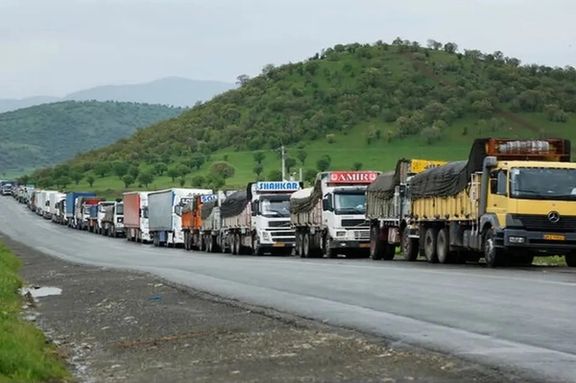
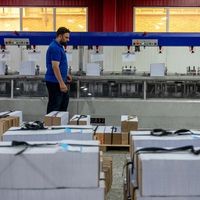
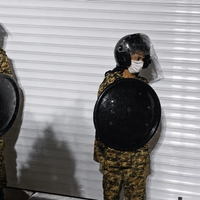
Iranian truck drivers’ strike entered its ninth day of protests on 30 May 2025.
At least 20 people have been arrested across Iran since truck drivers launched a nationwide strike on May 22, with political prisoners in Tehran’s Evin Prison voicing support on the protest’s ninth day.
Arrests have been made across Iran, including in the north, south, and west, according to a report on Friday by US-based rights group Human Rights Activists News Agency (HRANA).
The Union of Truck Drivers and Transport Workers called for the immediate release of those detained and vowed to continue the strike until their demands are met.
Drivers are demanding better working conditions, higher freight rates, and relief from high insurance costs and fuel restrictions.
Earlier, the Union of Truck Drivers and Transport Workers had announced that 11 drivers were arrested in Kermanshah and some others in Sanandaj, both Kurdish-populated cities in western Iran.
The union accused security forces of using pepper spray and violence against protesters at the Sanandaj terminal.
Iranian authorities in several provinces confirmed further arrests.
Iran's Revolutionary Guards (IRGC) in Gilan province, in northern Iran, said a citizen was detained in Rasht for allegedly supporting opposition groups.
Its branch in Khuzestan province, in the southwest, reported two arrests in Bandar Imam.
The police chief of Bandar Lengeh, a southern port city in Hormozgan province, said one person was detained for posting a video encouraging participation in the strike, which was shared with foreign-based media.
In Shiraz, located in the south-central province of Fars, the local prosecutor announced the arrest of several drivers on charges of “disrupting transportation,” without specifying how many were detained.
The strike has spread to more than 141 cities despite the crackdown, signaling one of the largest coordinated labor actions in Iran in recent months.
Growing support for strikes
The nationwide strike has drawn support from activists and political prisoners.
On Friday, 13 political prisoners at Evin Prison in Tehran issued a message backing the strike, saying: “We, the political prisoners, stand alongside the truck drivers and all those on strike at this critical moment in history.”
The strike has spread to more than 141 cities despite the crackdown, signaling one of the largest coordinated labor actions in Iran in recent months.
Iran’s exiled prince Reza Pahlavi on Friday called on labor unions around the world to support striking truck drivers and workers in Iran, who he said are risking their lives by demanding their rights amid arrests and intimidation.
“Only in a free Iran will all workers have the right to freely and openly organize,” Pahlavi wrote on X. “I invite you, labor unions and leaders, to stand with your fellow workers in Iran and show your solidarity.”
The truckers’ strike is one of Iran’s largest labor protests in recent years—halting freight, disrupting supply chains, and exposing deeper undercurrents of discontent in a nation already under economic strain.
While the immediate impact is felt on the roads, the strike’s significance reaches beyond transport, tapping into wider frustrations over living costs, state policy, and the struggle for basic economic dignity.
When and where did it start?
The strike began on May 22 in the southern port city of Bandar Abbas and spread quickly. Within two days, drivers in dozens of cities joined.
Truckers in more than 135 cities and towns are on strike now, according to the Alliance of Iran Truckers and Truck Drivers’ Unions (AITTD).
Key provinces crucial to transport, industry, and agriculture—including Kermanshah, Khuzestan, Tehran, Yazd, Kerman, and Esfahan—have been especially affected.
Why are they striking?
Truckers are protesting deteriorating working conditions and rising costs. Their demands include:
Affordable fuel and higher quotas
Relief from insurance and toll fees
Improved road safety and infrastructure
Fairer freight rate calculations, which are state-regulated
At the center of the protest is a new diesel pricing plan that drivers say will make their work financially unsustainable.
What’s the issue with fuel?
Truckers currently receive heavily subsidized diesel at 3,000 rials per liter, based on GPS-tracked mileage and valid cargo waybills. That is about 1.5 cents per gallon.
A new three-tier pricing plan, set for 21 June, would sharply raise prices for fuel used beyond quota limits—up to 250,000 rials per liter at market rate.
Officials say the changes are aimed at curbing smuggling, but drivers argue that quotas don’t reflect real freight needs and that the costs could ruin livelihoods.
Who is organizing the strike?
The AITTD, a semi-underground network active in a 2018 strike, is coordinating the protest via Telegram. Though not officially recognized by the state, it has become a central organizing force.
Government-recognized unions, such as the Union of Nationwide Transportation Truckers’ Cooperatives (UNTTC), have criticized the AITTD, including during a smaller 2023 protest.
How has the government responded?
Authorities have offered limited concessions while cracking down on dissent.
The diesel pricing plan has been suspended pending review, and officials pledged fuel bonuses for non-striking drivers.
At the same time, security forces have arrested drivers accused of road blockades or filming strike scenes. In Kordestan Province, clashes were reported, with police using pepper spray to disperse crowds.
Are others joining in?
Yes. The strike has drawn support from other labor groups and civil society. Some prominent dissidents have endorsed it, and drivers from Snapp—Iran’s version of Uber—have posted videos backing the truckers or joining the protest.
What’s the impact?
The strike’s effects were immediate. Videos and reports show stalled deliveries of agricultural goods, industrial inputs, and supplies for key sectors like steel, petrochemicals, and automotive manufacturing.
The disruption underscores how essential truckers are to Iran’s economic infrastructure.
How important are trucks to Iran’s economy?
Trucks move 80–90% of all domestic freight. In the year to March 2023, nearly 505 million tons of goods were moved by road.
More than 11,000 trucks also cross Iran’s borders daily, underlining the sector’s critical role in regional trade.
As of March 2024, around 365,000 trucks were active in Iran, most privately owned. Only about 28,000 are operated by hired drivers.
The sector’s fragmented, owner-operator model makes it difficult for the government to manage—and easier for strikes to spread.
Finnish Border Guard is seen at the border between Russia and Finland.
Iran is conducting increasingly hostile intelligence operations targeting Finland, the Finnish Security and Intelligence Service (Supo) told public broadcaster Yle in comments published Friday.
For the first time, Supo officially named Iran as one of the states actively spying on Finland, alongside Russia and China. The agency did not specify what kind of information Iran seeks but cited a broader rise in espionage threats.
Supo noted that Iran's tactics could include recruiting organized crime groups to carry out operations in Finland—an approach it described as part of Tehran’s use of proxy actors to obscure its involvement. The agency did not provide details on what kinds of acts might be involved but said similar Iranian-linked plots have been uncovered elsewhere in Europe.
Iranian surveillance targets exiles abroad
The agency also warned of surveillance targeting members of exiled opposition groups and other individuals viewed by Tehran as threats, often using personal data collection and pressure on family members abroad.
Supo said Iran’s actions reflect deteriorating relations with Western countries and highlighted that the threat is growing in other Nordic countries as well.
Sweden previously flagged similar threats from Tehran
The warning from Supo comes amid similar concerns raised by Sweden earlier this year. In its March annual threat assessment, the Swedish Security Police (SAPO) said Iran had escalated its intelligence activities and was increasingly using criminal networks within Sweden to suppress opposition and target perceived threats — including Israeli-linked groups. SAPO also reported efforts by Tehran to acquire sensitive dual-use technologies to bypass international sanctions and support weapons programs.
At the time, SAPO accused Iran of using a Shiite mosque in Stockholm for surveillance operations and warned that the security situation could deteriorate in unpredictable ways. That assessment followed a major diplomatic crisis last year, which ended in a prisoner swap between Stockholm and Tehran.
Chief of Iranian Armed Forces, Mohammad Bagheri, welcomes Saudi Defence Minister, Prince Khalid bin Salman, in Tehran, Iran, April 17, 2025.
Saudi Arabia’s defense minister told senior Iranian officials in April that they should take President Donald Trump’s offer to negotiate a nuclear deal seriously or risk a potential Israeli military strike, four sources familiar with the meeting told Reuters.
Prince Khalid bin Salman delivered the message from King Salman during a closed-door meeting in Tehran on April 17, according to two sources close to regional governments and two Iranian officials. Iranian President Masoud Pezeshkian, armed forces chief Mohammad Bagheri, and Foreign Minister Abbas Araghchi were present at the talks, the sources said.
The prince, who previously served as Saudi ambassador to Washington, conveyed that Trump’s team had limited patience for prolonged negotiations and that a failure to reach an agreement could raise the risk of an Israeli strike, according to the sources.
The same sources said Prince Khalid indicated it would be preferable to reach a deal with the United States rather than face the consequences of escalating tensions.
Iran says it's open to deal but not at any cost
Iranian officials responded that Tehran was interested in a deal to ease economic pressure, but raised concerns about the Trump administration’s “unpredictable” negotiating style.
One Iranian source said Pezeshkian conveyed that while Tehran was eager to reach a deal, it was not prepared to give up its enrichment program solely to satisfy US demands.
The message from Riyadh came as talks between Washington and Tehran, mediated by Oman, enter a critical phase. No date has been announced for a sixth round, though Trump said this week that “we are very close to a solution,” adding that Iran appears willing to engage seriously. “If we can make a deal, I’d save a lot of lives,” he said.
Enrichment, inspections, and Iranian goals under scrutiny
According to CNN, negotiators are exploring a framework that may include a multinational consortium to produce nuclear fuel for Iran’s civilian program and possible US investment. Iran has denied a separate report that it was considering a temporary pause in enrichment in return for sanctions relief and recognition of its right to civilian enrichment.
Foreign Ministry spokesman Esmaeil Baghaei said on Wednesday, “The continuation of enrichment in Iran is a non-negotiable principle.”
Iran says its program is peaceful, while US and Israeli officials continue to express concern that Tehran is approaching nuclear weapons capability. A recent report by Austria’s intelligence agency described Iran’s weapons program as “far advanced,” in contrast with the US public assessment that Iran has not yet decided to build a bomb.
Tehran has also indicated it may consider allowing US nuclear inspectors under a future deal, a shift from its current restrictions, while IAEA chief Rafael Grossi said any agreement would require “very robust inspection.”
Israel has thwarted 85 Iranian cyberattacks aiming to gather intelligence for top level assassinations in the country, according to the Shin Bet intelligence agency.
With the aim of infiltrating phones and computers to gather sensitive intelligence for the assassinations, phishing attempts targeted senior Israeli security officials, politicians, journalists and academics.
The attacks were carried out via fake Google Meet links, individually tailored to each target, the Shin Bet said.
There has been a marked rise in attacks in recent months, according to a statement from Shin Bet which said had aimed to gather information such as home addresses, personal relationships and routine locations.
The information would then be handed to operatives on the ground in Israel, as growing numbers of civilians are being recruited by Tehran in plots targeting the country's top political and military echelons, in addition to highly sensitive sites.
Oded Ailam, a former head of counter-terrorism at Mossad, wrote in Israel Hayom: "Iran’s Islamic Revolutionary Guard Corps has discarded the slow, resource-heavy traditions of classical espionage: no more lengthy vetting, grueling training, or elaborate cover stories.”
"Instead, they’ve embraced a model that’s raw, direct, and disturbingly effective. Through aggressive mass campaigns on social media, thousands of Israelis are being approached."
He said that via messages like “Want to earn some easy cash?”, vulnerable communities are now being targeted by Iran to carry out work which until now, had been unheard of in the Jewish state.
But in the wake of the Gaza war, there have been dozens recruited, as Tehran infiltrates the digital landscape.
"This is Iran’s version of digital marketing applied to espionage: blanket targeting, no filters. And like any marketing effort, only a tiny fraction need to respond for the campaign to succeed.”
"To Tehran, even a one percent success rate from a thousand messages is worth it. It’s a chillingly rational approach: volume will eventually produce the quality they seek. And sadly, it works," Ailam said.
Israel Hayom quoted a Shin Bet official who said: "We are witnessing continued, relentless efforts by hostile actors as part of the campaign Iran is waging against Israel.
"The public must remain vigilant and cautious, these cyberattacks can be prevented through awareness, skepticism and proper online conduct, particularly by avoiding clicks on unidentified links."
Earlier this month, Israel’s Defense Minister Israel Katz said a spy plot against him had been thwarted in what Israel says is the 20th Iran-backed operation thwarted in the country since the Gaza war began.
Two Israeli suspects, Roy Mizrahi and Almog Atias, both 25 and childhood friends, were arrested at the end of April accused of intelligence-gathering missions and placing explosives in the community where Katz lives.
The case is the latest in a string of plots foiled since the start of the Gaza war in October 2023, with dozens of Israelis allegedly hired by Iranian operatives to carry out operations targeting the country’s top political and military echelons.
Other targets have included the Prime Minister Benjamin Netanyahu and head of the Shin Bet intelligence agency, Ronen Bar.
Iranian Nobel Peace Prize laureate Shirin Ebadi has accused UNICEF of failing to fulfill its responsibilities in Iran, citing what she called the organization's inaction in response to the execution of minors and the authorities’ targeting of activists’ children.
In a letter to the United Nations Children's Fund, a copy of which was seen by Iran International, Ebadi wrote: “The Iran branch of your organization has been active for years. However, for reasons unclear to me and my compatriots, it has failed to take effective measures to fulfill its legal obligations.”
She said UNICEF’s Iran office has remained silent despite repeated reports of juvenile executions, violations in healthcare and education, and harmful content in school textbooks.
“Numerous issues exist that UNICEF should have addressed in Iran. Yet we have only witnessed silence from this organization,” she wrote.
She also condemned what she described as the Islamic Republic’s use of children to pressure political and civil activists.
“Children are unjustly imprisoned under baseless allegations to coerce their parents into silence or collaboration with the government,” she wrote.
Ebadi cited the summons of 17-year-old Nima Khandan, son of human rights lawyer Nasrin Sotoudeh and jailed activist Reza Khandan, over what she said was a baseless charge of insulting an officer at Tehran's Evin Prison.
"The initiation of this case based on false accusations is solely intended to harass this family of civil activists and to force them into silence and cooperation," Ebadi wrote.
Ebadi called on UNICEF Iran to uphold its obligations under the Convention on the Rights of the Child, to which Iran is a signatory.