Iran’s president accuses US of ‘global theft’ in fiery parliament speech
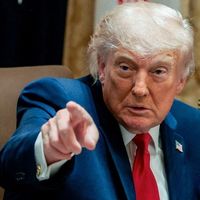
Iranian President Masoud Pezeshkian accused the United States of "global plunder and hypocrisy" during a speech to parliament on Wednesday, responding to remarks by Donald Trump in Saudi Arabia.
“The master thieves of the planet who rob every country now accuse others,” he said. Pezeshkian said Iran is branded a “terrorist state simply for resisting Western exploitation.”
A screengrab shows an Israeli Air Force plane, which the Israeli army says is departing to carry out strikes on Iran, from a handout video released on October 26, 2024.
New US intelligence suggests preparations are underway for an Israeli strike on Iran’s nuclear facilities in spite of its ally being in the midst of sensitive nuclear talks with Tehran, according to CNN.
Citing intelligence sources, the report said that among the military preparations the US has observed are the movement of air munitions and the completion of an air exercise.
Additionally, CNN said intelligence had come from intercepted Israeli communications.
A source close to US intelligence told CNN that “the chance of an Israeli strike on an Iranian nuclear facility has gone up significantly in recent months and the prospect of a Trump-negotiated US-Iran deal that doesn’t remove all of Iran’s uranium makes the chance of a strike more likely.”
In a letter to Iran’s Supreme Leader Ali Khamenei in mid-March, Trump set a 60-day deadline for the resolution of a new nuclear deal to replace the JCPOA from which Trump left during his first presidency in 2018.
According to a source familiar with the communication, CNN reported that it has now been more than 60 days since that letter was delivered, and about 40 days since the first round of talks began.
Trump warned that there will be “bombing the likes of which they have never seen before” before the talks commenced.
However, after the fourth round of Oman-mediated negotiations, Khamenei on Tuesday said the discussions look likely to fail as the US insists that Iran stops all uranium enrichment.
"Saying things like 'we won’t allow Iran to enrich uranium' is way out of line," he said. "We do not think (the talks) would yield results now."
Iran is the only non-nuclear weapon state enriching uranium to 60% U-235, a level that causes "serious concern," according to International Atomic Energy Agency (IAEA) Director General Rafael Mariano Grossi.
The IAEA has consistently maintained that there is no credible civilian use for uranium enriched to this level, which is a short technical step from weapons-grade 90% fissile material. Iran's stockpile of 60% enriched uranium had increased to 275 kg, enough to theoretically make about half a dozen weapons if Iran further enriches the uranium.
Speaking to CNN, Jonathan Panikoff, a former senior intelligence official specializing in the region said that the talks have put Israel “between a rock and a hard place” as Israeli Prime Minister Benjamin Netanyahu now waits for Trump’s next moves.
“At the end of the day, the Israeli decision-making is going to be predicated on US policy determinations and actions, and what agreements President Trump does or does not come to with Iran,” Panikoff said, stressing that even Netanyahu would not be as bold as to act without tacit US approval.
Iran's air defenses were significantly weakened after Israeli bombings in October, though the country's top military commander announced renewed air defense systems this week.
The US intelligence source told CNN: “I think it’s more likely they [Israel] strike to try and get the deal to fall apart if they think Trump is going to settle for a ‘bad deal. The Israelis have not been shy about signaling that to us … both publicly and privately.”
A previous CNN report showed that according to a US intelligence assessment from February, Israel could use either military aircraft or long-range missiles to capitalize on Iran’s degraded air defense capabilities after the October strikes.
In the same month, US intelligence agencies issued warnings that Israel will likely attempt to strike facilities key to Iran’s nuclear program this year.
It has “consistently been the Israeli position that the military option is the only option to stopping Iran’s military nuclear program,” one US official told CNN.
Image from Mizan News shows the attacker, face blurred, sitting in court during his trial over the Azerbaijani embassy shooting.
Iran on Wednesday executed the man convicted of a deadly 2023 attack on the Azerbaijani embassy in Tehran, the judiciary’s official news agency Mizan reported.
The attacker, identified as Yasin Hoseinzadeh, stormed the embassy in January 2023, armed with a Kalashnikov rifle.
He broke through the security post and opened fire, killing the head of the embassy’s security service, Orkhan Asgarov, and injuring two others — Vasif Taghiyev and Mahir Imanov — who tried to stop the attack, according to APA.
At the time, Azerbaijani President Ilham Aliyev condemned the attack on social media, calling it a “terrorist act” and “unacceptable.”
Iranian authorities said the attacker acted on a personal motive, believing his wife was inside the embassy and refusing to see him.
He was sentenced to death for murder, illegal possession of firearms, and disturbing public order. The Supreme Court upheld the verdict, and the sentence was carried out on Wednesday morning.
The attack led to the suspension of Azerbaijan’s embassy operations in Iran. Diplomatic staff and their families were evacuated shortly after the incident, and the mission only resumed work at a new location in July last year following negotiations between the two countries.
Relations between the two neighbours have been tense, with Azerbaijan accusing Iran of mistreating its ethnic Azeri population, and Tehran expressing concern over Baku’s close ties with Israel and possible regional border shifts following the Armenia-Azerbaijan conflict.
Oil prices climbed more than 1% on Wednesday following reports that Israel is preparing to strike Iranian nuclear facilities, prompting concerns over a broader disruption to Middle East energy supplies.
Brent crude futures for July rose 68 cents to $66.06 a barrel by 0630 GMT, while US West Texas Intermediate crude for the same month increased by 70 cents to $62.73.
CNN reported Tuesday that US intelligence indicates Israel is preparing for potential strikes on Iranian nuclear infrastructure, citing multiple American officials. It remains unclear whether a final decision has been made.
"Such an escalation would not only put Iranian supply at risk, but also in large parts of the broader region," ING commodities strategists said Wednesday.
An Israeli attack could jeopardize output from Iran, the third-largest OPEC producer, and spark retaliation at the Strait of Hormuz, the vital shipping route for oil exports from several Persian Gulf states.
A pump jack operates near a crude oil reserve in the Permian Basin oil field near Midland, Texas, US February 18, 2025.
Iran’s refusal to halt uranium enrichment made a full rollback of its nuclear ambitions unattainable, former US envoy Wendy Sherman warned, raising fears of a looming conflict.
“[it was impossible to convince Tehran to] dismantle its nuclear program and give up their enrichment even though that would be ideal".
“So that means they will come to an impasse, and that we will face the potential for war, which I don't think, quite frankly, President Trump looks forward to because he has campaigned as a peace president,” Sherman said.
Iran will take "appropriate measures" if European powers move to reimpose UN sanctions under the 2015 nuclear deal’s snapback mechanism, a senior Iranian official said on Wednesday.
“If Europe uses the snapback mechanism, Iran will take a proportional action,” Kazem Gharibabadi, Iran’s deputy foreign minister for legal and international affairs, told state news agency Mizan.
Last week, talks in Istanbul between Iran and European powers turned tense, with Britain, France and Germany proposing a “snapback-plus” clause to restore UN sanctions without US backing, media in Iran reported.
“Europeans know that such a move would destroy the space created for diplomacy,” Gharibabadi said. “This would not go unanswered by the Islamic Republic.”
He urged European countries to stop making threats. “We hope they think about the consequences and explain how they plan to contribute positively to diplomacy instead,” he said.