Two Iranian MPs argue as others closely watch in Iran's parliament or Majles
As nuclear diplomacy draws global attention, Iran’s domestic politics remain consumed by petty administrative debates, leaving little space to address the country’s deeper economic and institutional challenges.
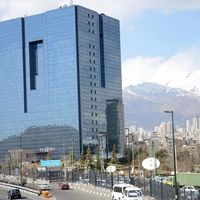
Iran’s currency the rial dropped as much as 4% on Tuesday after Supreme Leader Ali Khamenei appeared to question the outcome of ongoing negotiations with the United States, highlighting once more the instability of an economy badly in need of reform.
And yet, the most hotly debated issue in the past few weeks has been whether to change office hours instead of simply adjusting the clocks—a standard move in many countries to maximize daylight during warmer months.
After extended back-and-forth between officials and media, government spokeswoman Fatemeh Mohajerani confirmed on May 13 that Parliament had rejected the time change proposal.
Public backlash followed swiftly. Both traditional and social media brimmed with frustration over the 6 AM workday start promulgated to avoid peak electricity consumption hours as an energy shortage and blackouts persist.
Parents, in particular, lament the impracticality of getting children ready and fed before leaving home in the early hours.
Meanwhile, the position of economy minister remains vacant two months after the previous minister was dismissed.
The government has offered no official reason for the delay, but reports suggest the shortlisted candidates are no better than the ousted Abdolnasser Hemmati—widely viewed as more experienced and competent than his potential successors.
His removal, many argue, had more to do with political wrangling than poor performance. What remains unsaid, however, is that no economy minister—or even President—can independently steer the economy while real power lies with Supreme Leader Ali Khamenei.
In Parliament, proceedings drag on with little public interest. The row between Speaker Mohammad Bagher Ghalibaf and hardline MP Mostafa Mirsalim has barely registered.
Mirsalim has accused the parliamentary presidium of accepting bribes to delay impeachment motions. Ghalibaf, calling the allegations insulting, has filed a legal complaint. Meanwhile the public largely views the Parliament as irrelevant at best.
President Masoud Pezeshkian and his team are also losing the limited public support they had—best illustrated, perhaps, by rising voices of disapproval within the moderate and reformist camp.
In mid-May, Pezeshkian and Vice President Mohammad Reza Aref once again vowed to lift bans on social media, but skepticism runs deep—especially after the government’s announcement of a 75% hike in internet subscription fees.
Government spokeswoman Fatemeh Mohajerani drew fresh criticism during an official visit to the northern province of Gilan, a popular holiday destination. She was reported to have called braving the trip in hot weather “a sacrifice” she was making for the nation—an offhand comment that sparked ridicule.
On social media, satire has flourished at pace with the problems as anxiety over a potential war lingers and military leaders frequently boast of Iran's arsenal.
One user quipped that Iran doesn’t have enough electricity to light up its underground missile stockpiles.
Iranians shop at the bazaar in the Northwestern city of Zanjan, March 21, 2025.
Optimism in Tehran about nuclear talks with Washington has waned after a stern public rebuke from Iran's Supreme Leader Ali Khamenei on Tuesday to US demand that Iran totally halt uranium enrichment.
"The American side ... should try not to spout nonsense," Khamenei said in a speech. "Saying things like 'we won’t allow Iran to enrich uranium' is way out of line," he added. "We do not think (the talks) would yield results now."
Within hours of Khamenei's speech, the Iranian rial weakened by over 3 percent, and the main index of the Tehran Stock Exchange dropped by around 2 percent.
Some supporters of a hard Iranian line said a US moratorium on Iranian enrichment, which Tehran maintains is its national right, would scupper the talks.
“The Leader stood up to America's excesses. The US will be directly responsible if the negotiations bear no result. They have no right not to recognize (Iran's) right to enrichment,” hardline cleric Ehsan Ebadi posted on X.
But the sharp speech also raised alarm about the stakes of the talks' collapse.
“The failure of the negotiations is definitely a loss for Iran, not the US. Iran should not let the negotiations fail,” Iranian teacher Ali Ghiasi-Farahani posted on X.
“What benefit has enrichment had for the Iranian people that they insist on continuing it? It has cost over a trillion dollars in direct and indirect costs so far. Be realistic!!”
Door not yet closed?
Observers from the reformist camp sought to project a cautiously hopeful tone, suggesting the door to diplomacy has not yet closed.
“Peace will come, God willing, when the fighting escalates, the uproar increases, and the pressure reaches an unbearable level. Reason: Experience,” senior reformist journalist Mohammad Sahafi posted on X.
Likewise, reformist journalist Ali-Asghar Shafieian who is close to the Pezeshkian administration emphasized that firm statements from Iranian officials did not yet mean negotiations were doomed.
“Relevant officials have given a similar and appropriate response to the other party's claim before the Leader. If required, they will again make the necessary response after him,” Shafieian posted on X. “But these responses do not mean the failure of negotiations or despair in finding innovative solutions to the problem.”
Matin Razavi, a hardline commentator, also dismissed suggestions of a diplomatic breakdown. “Iran's rejection of further talks and saying no to the US is part of Tehran's 'diplomatic performance' toward Washington. We have not yet reached the stage of failure of the talks,” he wrote.
A more nuanced interpretation was offered by a supporter of Parliament Speaker Mohammad-Bagher Ghalibaf posting as @mhmdhsyn who suggested that Khamenei’s rhetoric could be a tactical gambit.
“The Islamic Republic says no through the words of its Leader, shows its frowns through the language of its military men, and says yes by its diplomats," he wrote. “This is the Al Pacino face of Iranian diplomacy—smiling on one side and frowning on the other.”
Iranian security forces outside the UK embassy in Tehran, August, 23, 2015
As European powers are in tense talks with Iran over whether to impose punishing sanctions over its nuclear program, terrorism-related arrests of Iranians on UK soil and a drama over detained Britons are pushing London-Tehran ties to new lows.
Tensions between Tehran and London have ratcheted up sharply in recent weeks, likely sharpening the collective European tack on Iran.
"Let me be clear, we will not tolerate growing state backed threats on UK soil. The Iranian regime poses an unacceptable threat to our domestic security which cannot continue," British interior minister Yvette Cooper told parliament on Monday.
Iran’s Foreign Ministry on Sunday summoned the UK’s chargé d'affaires in Tehran to protest the arrest of several Iranian nationals in the UK in connection with alleged spying and terror-related activities. On Monday, Iran's ambassador to London Ali Mousavi was summoned in response.
British authorities charged three Iranian nationals under the National Security Act on Saturday for conducting surveillance against journalists from Iran International. Earlier this month, five other Iranian nationals were detained in a separate counter-terrorism operation.
The case has added urgency to ongoing debates in the UK Parliament over whether to designate Iran’s Islamic Revolutionary Guard Corps (IRGC) as a terrorist organization.
Over 550 members of the UK Parliament and peers have signed a letter urging the British government to move forward with the designation, reflecting growing bipartisan concern over Iran’s activities in the UK and abroad.
Tense meeting in Istanbul
The EU statement released on Monday came after a meeting of senior diplomats of the UK, France, and Germany –collectively known as the E3– with two Iranian deputy foreign ministers in Istanbul on May 16 to discuss the future of the 2015 nuclear agreement (JCPOA).
The three European powers are not directly involved in ongoing Tehran-Washington talks. However, they can trigger its snapback mechanism of the JCPOA before an October deadline and reimpose all UN sanctions on Iran should talks with Washington fail.
Quoting unnamed sources, Iran’s conservative Farhikhtegan newspaper reported on Sunday that the atmosphere of the meeting in Istanbul on May 16 was highly tense, with the European side allegedly issuing serious threats to impose additional sanctions on Iran—potentially exceeding the scope of UN sanctions—if Tehran fails to comply with future agreements.
The European side, the report claimed, also demanded that any potential Tehran-Washington deal include a clause— which it referred to as “snapback-plus”—that would allow the E3 to reimpose UN sanctions in the future if Iran violated the JCPOA.
Broader grievances, distrust
Beyond the nuclear file, the E3 has cited a wide range of concerns in their dealings with Tehran: Iran’s ballistic missile program, its support for Russia in the Ukraine conflict, threats to European national security, ongoing human rights violations, and the detention of European nationals.
Iran charged a British couple on a road trip in the country with espionage in February, drawing London's ire. France too is irate at Iran's detention of two French citizens for three years, deepening collective European mistrust with Tehran.
For its part, Iran accuses the E3 of failing to uphold their economic commitments under the JCPOA following the US withdrawal. Iranian officials argue that European governments and companies yielded to American pressure, rendering the promised sanctions relief largely ineffective.
Tehran also accuses the E3 of aligning too closely with US and Israeli positions on regional security issues.
Iranian foreign minister hot and cold
Despite the strained atmosphere, Iranian Foreign Minister Abbas Araghchi has continued to espouse a conciliatory tone in public statements towards the remaining Western signatories of the JCPOA, from which the United States unilaterally withdrew in 2018.
“Iran is ready, should it see genuine will and an independent approach from the European side (parties to the 2015 nuclear deal), to begin a new chapter in its relations with Europe,” he told a diplomatic forum in Tehran on May 18.
Nonetheless, Araghchi has issued a stern warning cautioning that any move by the E3 to trigger the snapback mechanism could mark not only the end of Europe’s role in the nuclear agreement but also push Iran toward more drastic measures.
Iranian officials have threatened withdrawal from the Nuclear Non-Proliferation Treaty (NPT) if talks with the US fail and sanctions remain.
The flags of EU, Iran, France, Germany and the United Kingdom
Iran’s outreach to European powers has divided Tehran’s political commentators over whether engaging France, Germany and Britain serves any real purpose amid the Islamic Republic's talks with Washington.
Senior diplomats from Iran and the three European signatories to the 2015 nuclear deal met in Istanbul on Friday in what appears to be Tehran’s attempt to prevent a "snapback" of the UN sanctions that were suspended for ten years as part of that deal.
But the initiative is being questioned—somewhat surprisingly—by voices long known for advocating diplomacy, such as former lawmaker Heshmatollah Falahatpisheh.
“There is no point in holding talks with Europeans. Iran’s only solution is to continue negotiations with the United States,” he told the conservative Nameh News on Friday
“Europe’s influence will remain insignificant as long as Trump is the President of the United States.”
Missed chances
A former head of parliament’s foreign policy committee, Falahatpisheh argued that Iran’s recent diplomatic overtures to the signatories of the 2015 deal are little more than a symbolic attempt to break out of the political impasse created by Washington.
“Iran should have negotiated with (US President) Trump during his first term,” Falahatpisheh said. “Unfortunately, Iranian officials are known for their costly and untimely decisions.”
This critique of past decisions may be shared by many in Tehran’s commentariat, but the way forward is certainly not.
“Even if talks with the Americans are paused or entangled in new complexities, we should not stop our negotiations with the Europeans,” political analyst Ali Bigdeli told the moderate outlet Fararu.
“The truth is that the Europeans are holding a hostage called the ‘trigger mechanism,’ which they can use to pressure us. If they don’t agree to postpone its activation by a year, they can use it as leverage against us,” he added.
Fearing the trigger
The trigger clause in the 2015 nuclear deal allows any signatory to reimpose lifted UN sanctions on Iran. The United States effectively forfeited that prerogative when the first Trump administration withdrew from the agreement in 2018.
It remains unclear whether the so-called snapback of sanctions was discussed in the Istanbul roundtable on Friday.
European officials described the event as a broad discussion about Tehran’s relationship with the West. Iran’s Foreign Minister Abbas Araghchi asserted that it had “nothing to do with negotiations with Washington.”
It did, as far as the media inside Iran are concerned. Whatever their view on the significance of the Istanbul meeting, most editorials linked it to the talks with the US.
“The position of the United States, which has initiated bilateral negotiations with Tehran, has somewhat sidelined Europe’s role,”Khabar Online wrote in an editorial on Friday.
“The nuclear negotiations are not merely a diplomatic engagement between Iran and Europe, but will more broadly affect the balance of power in the region,” it concluded.
Iran's Supreme Leader Ali Khamenei and Emir of Qatar, February 2025
Qatar's diplomatic prowess was lavished with praise by US President Donald Trump on his visit this week, suggesting the maverick mediator state may be set for more involvement on one of the region's trickiest dossiers: Iran.
Trump's remarks could herald a bigger role for Qatar as the US-Iran talks mediated by Oman appear headed for crunch time.
During a state dinner in Doha this week, Trump appeared to acknowledge Qatar’s crucial role in helping put off a US military strike on Iran amid high stakes talks over Tehran's disputed nuclear program.
Trump praised Qatar’s leadership, specifically Emir Sheikh Tamim bin Hamad Al Thani, for resisting calls within Washington and its allies to deliver a “hard blow” to Iran.
“Iran should seriously thank the emir of Qatar, because there are others who want to deal a hard blow to Iran, unlike Qatar,” Trump said. “Iran is very lucky to have the emir because he’s actually fighting for them. He doesn’t want us to do a vicious blow to Iran.”
Hashem Ahelbarra, a correspondent for Qatar-owned Al-Jazeera, said the comments strongly indicate a potential larger role for Doha in mediating a settlement between Tehran and Washington.
“They played quite a crucial role in mediating between the Iranians and the Americans in the past.”
Iran’s Foreign Minister Abbas Araghchi’s visits to Riyadh and Doha earlier this month just ahead of the fourth round of nuclear talks held in Oman and Abu Dhabi highlight Tehran’s willingness to broaden the regional dialogue.
Perils of potential US-Iran military confrontation for Qatar
The gas-rich microstate has been key mediator for the United States in regional conflagrations from Afghanistan to Gaza.
Qatar, which has strong ties with the US and hosts Al Udeid Air Base—the largest US military base in the Middle East—opposes any US or Israeli military strike on Iran and its nuclear facilities, emphasizing the risk of regional destabilization, and seeks a diplomatic solution.
“We have no hostility toward our neighboring countries, and brotherhood prevails among us. However, US bases located in the region's countries will be considered targets by us in the event of an attack on the Islamic Republic of Iran,” he said.
In March 2025, Qatari Prime Minister Sheikh Mohammed bin Abdulrahman Al Thani warned that military strikes on Iranian nuclear facilities could have catastrophic environmental consequences, such as contaminating the Persian Gulf’s waters.
This, he said, would imperil the water security of Qatar, along with other states like the UAE and Kuwait, all of which rely heavily on desalinated water from the Persian Gulf.
Good neighbors
Iran and Qatar, which share stewardship of South Pars, the world’s largest natural gas field, have maintained close economic and political relations over the years.
Iran played a crucial role in helping Qatar maintain economic stability and connectivity with the outside world when Saudi Arabia, the UAE, Bahrain and Egypt imposed a blockade on Qatar in 2017, partly due to its close ties with Iran.
Tehran offered Doha diplomatic support, opened its airspace to Qatari aircraft, sent dozens of cargo planes and ships loaded with food, and expanded maritime trade routes to Qatar through its southern ports.
Qatar also played a pivotal role in facilitating the release of five American citizens detained in Iran in September 2023, hosting multiple rounds of indirect negotiations between US and Iranian officials in Doha.
The unfrozen funds, stipulated to be used solely for humanitarian purposes, such as purchasing food and medicine, were transferred to Qatari banks and Qatar committed to overseeing the disbursement of these funds to ensure compliance with US sanctions.
The funds, however, have not been made available to Iran due to a quiet agreement between Washington and Doha.
Iran's Supreme Leader Ali Khamenei blamed Washington for obstructing the release of the funds during his meeting with the Emir of Qatar in Tehran in February and said Iran expected Doha to resist US pressure.
Iranian officials and media have welcomed a piece of legislation required for compliance with the Financial Action Task Force (FATF), though the path to removal from the watchdog’s black list remains uncertain.
On Wednesday, the Expediency Council gave final approval to the bill that enables Iran to join the Palermo Convention, formally known as the United Nations Convention against Transnational Organized Crime. However, the legislation includes several conditions that could raise concerns for the FATF.
Officials say the Expediency Council is expected to review the second remaining bill, required for joining the Combating the Financing of Terrorism (CFT) Convention, next week.
Ratifying these two conventions is considered a final and necessary step in aligning Iran with FATF standards and can facilitate its removal from the global anti-money laundering body’s black list.
The breakthrough followed a green light given in December by Supreme Leader Ali Khamenei which allowed the Expediency Council to re-examine both bills after years amid political infighting.
Official and media optimism
“The conditional approval of the Palermo bill by the Expediency Council is an important step towards constructive engagement with the world,” government spokeswoman Fatemeh Mohajerani said in a post on X on Wednesday.
“The government welcomes the Assembly’s decision and hopes that national interests, economic benefits, and international considerations will guide the review of the CFT (bill) as well,” she added.
Iran's moderate and reformist media have also widely welcomed the move with optimistic headlines and commentaries.
“This can facilitate Iran’s return to the international financial system and its effective presence in global markets,” Donya-ye Eghtesad economic daily wrote.
“This important development has occurred while signs of progress in negotiations between Iran and the United States are also visible, and optimism about the future of Iran’s economy has increased."
Conditional ratification and FATF concerns
Despite the positive tone, the conditions attached to Iran’s ratification of the Palermo Convention—and the reservations included in the CFT bill—pose serious challenges to the country's full compliance with FATF standards.
The FATF has clearly said that Iran must ratify and implement the Palermo and CFT conventions “without undue reservations”, saying broad or vague reservations can undermine the conventions’ effectiveness and create loopholes for financing terrorism.
Speaking to IRNA after the Council’s decision, Deputy Economy Minister Hadi Khani downplayed the importance of the conditions.
“Many countries have set conditions for accepting these two conventions. Our country’s parliament, too, introduced conditions for certain articles of the conventions,” he said, adding that most of these were based on the principle that Iran would implement the conventions within the framework of its own Constitution.
Some FATF members including the United States, China, and India have ratified the Palermo Convention with the reservation that they do not consider themselves bound by Article 35(2), which involves mandatory dispute resolution by the International Court of Justice (ICJ).
Iran's Palermo legislation includes similar language, excluding ICJ jurisdiction while asserting that decisions on extradition and mutual legal assistance will be made on a case-by-case basis.
Iran has also declared that provisions incompatible with its national laws—many of which are rooted in Islamic Sharia—will not be binding. Pakistan and Saudi Arabia have accepted the Convention with similar reservations.
Moreover, Iran’s legislation explicitly states that accession to the required conventions does not imply recognition of Israel, a FATF member.
The CTF bill also includes language affirming the “legitimate and recognized right” of peoples under occupation to resist and pursue self-determination in apparent reference to the Israeli-occupied Palestinian territories.
FATF’s concerns are particularly related to the reservations included in the CFT bill. Iran's CTF bill does not accept the definitions of terrorism provided by other countries or international bodies if they conflict with its national laws and support for groups that it views as legitimate resistance movements.
Remaining on FATF black list
Iran was on FATF black lists from 2008 to 2016. In February 2020 it was black-listed again and has remained so to date.
While approval of the Palermo Convention and the CFT Convention bills is a critical step, removal from the FATF black list depends on effective implementation, not just legal ratification, and may take several years.
In January, former Central Bank official Asghar Fakhriyeh-Kashani revealed that some Chinese banks had closed Iranian accounts to avoid FATF penalties and geopolitical analyst Abdolreza Faraji-Rad told Ham-Mihan daily at the time that Iran’s oil trade with China had to bypass the formal banking system, avoiding cash payments and relying on alternative mechanisms for the same reason.