Iran says it seeks dialogue but will not yield on nuclear rights
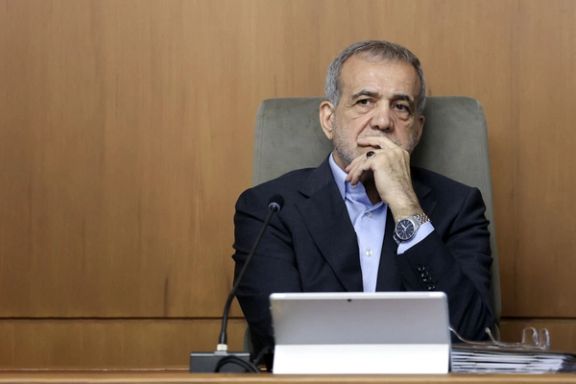
Iranian President Masoud Pezeshkian (File Photo)
Iranian President Masoud Pezeshkian said on Saturday that Iran is open to negotiations but will not retreat in the face of threats, while Foreign Minister Abbas Araghchi ruled out any compromise over enriching uranium.
“We are not seeking war. We believe in negotiations and dialogue,” Pezeshkian said at a military ceremony in Tehran. “But we are not afraid of threats and we will never retreat from our legal rights.”
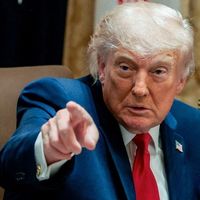
Pezeshkian criticized US President Donald Trump for sending what he called contradictory messages. “He talks of peace while threatening us with advanced weapons. No one but him believes these contradictions,” Pezeshkian said.
The president added that Iran would stand firm. “They assassinate our scientists and accuse us of terrorism. But we are the victims of terror,” he said. “They should not expect us to give up our military and nuclear achievements under pressure.”
Separately, Foreign Minister Abbas Araghchi said Iran remains committed to peaceful nuclear development under the Non-Proliferation Treaty but will not negotiate away its right to enrichment.
“Iran is ready to build trust about the peaceful nature of its program, but cannot compromise on the legal and inalienable right to enrichment,” Araghchi said at a meeting with the Pugwash Conferences on Science and World Affairs. He added that Iran had “paid a heavy price” to preserve this right and would not accept restrictions as a long-standing NPT signatory.
Araghchi also criticized what he called inconsistent messages from US officials, saying they had complicated negotiations and undermined trust. “The Americans change their positions frequently and face pressure from war-driven lobbies,” he said. “This is their internal issue, but Iran will stay focused on its lawful and principled position.”
British counter-terrorism police have charged three Iranian nationals with offences under the National Security Act, alleging they acted on behalf of Iran’s intelligence service and carried out surveillance targeting Iran International journalists.
The men — Mostafa Sepahvand, 39, Farhad Javadi Manesh, 44, and Shapoor Qalehali Khani Noori, 56 — were arrested at their homes in London on May 3 and charged on Friday.
All three are accused of engaging in conduct likely to assist a foreign intelligence service between August 14, 2024 and February 16, 2025, in breach of Section 3 of the National Security Act 2023.
The foreign state involved is Iran, police said.
Surveillance linked to Iran International journalists
According to the Crown Prosecution Service, the men carried out surveillance and reconnaissance targeting journalists associated with Iran International.
"Examination of their phones revealed that from the 14th August 2024 they had been engaged in carrying out surveillance with a view to locating journalists associated with Iran International," read the statement by the Crown Prosecution Service.
Iran International is a Persian-language TV news network that broadcasts 24/7 and has a strong following in Iran, despite government efforts to restrict access to the internet and satellite signals. Tehan has labelled it a terrorist organisation.
Phones seized during the arrests allegedly contained satellite images and mobile phone videos of buildings and streets in London.
Sepahvand faces an additional charge of conducting reconnaissance with the intention of committing acts of serious violence in the UK. Javadi Manesh and Noori are charged with similar conduct intended to facilitate serious violence by others.
“These are extremely serious charges under the National Security Act,” said Commander Dominic Murphy, head of the Metropolitan Police’s Counter Terrorism Command. “Detectives have been working around the clock and we have worked closely with colleagues in the CPS to reach this point.”
All three men have been remanded in custody and appeared at Westminster Magistrates’ Court on Saturday.
Iran International has previously been the subject of threats and attacks. In 2023, a man was convicted under terrorism laws after filming outside its premises, and in 2024, Pouria Zeraati, the television host of the "Last Word" program on Iran International was stabbed in London.
UK Minister: Iran must be held to account for its actions
Home Secretary Yvette Cooper on Saturday confirmed Iran was the foreign state referred to in the charges.
“I want to thank the police and security services for their continuing work on this very serious investigation, and for their immense dedication to protecting our national security and the safety of our communities,” she said in a statement.
“The charges that have been laid must now take their course through the criminal justice system… But we will also take separate action to address the very serious wider issues raised by this case. Iran must be held to account for its actions.”
Cooper said the government would publish next week the findings of a review by Jonathan Hall KC -- the Home Secretary's independent reviewer of terrorism legislation -- into whether existing counter-terrorism frameworks can be adapted to address modern state-based threats, including the design of a proscription mechanism for state-linked entities.
UK raises alarm over Iranian state threats
UK security agencies have warned of increasing threats linked to Tehran. In October, MI5 Director General Ken McCallum said at least 20 plots linked to Iranian state actors had been disrupted since early 2022, including efforts to kidnap or kill individuals seen as dissidents.
A fourth man, aged 31, arrested as part of the investigation was released without charge on May 15.
All three defendants arrived in the UK by irregular means, including via small boats, between 2016 and 2022. Sepahvand claimed asylum in 2016, Javadi Manesh in 2019 on religious grounds, and Noori's asylum application was rejected in 2024. He is currently appealing that decision.
Iran’s government has previously denied involvement in alleged plots on British soil. In earlier comments, Foreign Minister Abbas Araghchi said Iran “categorically rejects” claims of targeting foreign sites and called for due process to be afforded to Iranian nationals abroad.
US President Donald Trump said on Friday that Iran will not be given time to develop a nuclear weapon and warned that a resolution will come “one way or the other,” suggesting the outcome could be peaceful or violent.
“There’s not plenty of time,” Trump said in an interview with Fox News' Bret Baier. “We’re going to have a solution one way or the other. It’s either going to be violent or non-violent. And I far prefer non-violent.”
“I don’t want it to be a violent thing, but they’re not going to have a nuclear weapon,” he added. “I know so many Iranians from New York, from Washington, from a different place. These are great people. You know, they have to view them as people.”
Trump said Iran appears interested in engaging. “Iran wants to trade with us, okay, if you can believe that. And I’m okay with it. I’m using trade to settle scores and to make peace,” he said. “I’ve told Iran, we make a deal, you're going to be really... you’re going to be very happy.”
He also questioned why Iran would pursue nuclear energy given its vast oil reserves. “When you have unlimited amounts of oil and gas, why are you putting up nuclear civil?” he said. “If you’re sitting on one of the largest piles of oil in the world, why?”
Trump says Iran got US proposal
Earlier in the day, Trump told reporters that Iran had received a formal US proposal for a nuclear agreement and warned Tehran not to delay. “They have a proposal. More importantly, they know they have to move quickly or something bad—something bad's going to happen,” he said.
Axios reported Thursday that the written proposal was delivered during the fourth round of indirect talks between US and Iranian officials last Sunday in Muscat, Oman. The document, carried by White House envoy Steve Witkoff, reportedly outlines terms for a monitored civilian nuclear program.
According to the report, Iranian Foreign Minister Abbas Araghchi took the proposal back to Tehran for review by Supreme Leader Ali Khamenei and other senior officials. U.S. and diplomatic sources described the offer as the first formal one from the Trump administration since talks began in April.
Iran, however, denied receiving any proposal. Araghchi wrote on X that no such document had been delivered and reaffirmed Iran’s position on uranium enrichment.
“The messaging we—and the world—continue to receive is confusing and contradictory,” Araghchi said. “Mark my words: there is no scenario in which Iran abandons its hard-earned right to enrichment for peaceful purposes.”
US Secretary of State Marco Rubio, speaking Thursday from Turkey, said diplomacy remains on the table but emphasized that the decision ultimately lies with Iran’s Supreme Leader.
“I hope he chooses the path of peace and prosperity, not a destructive path,” Rubio said.
The flags of EU, Iran, France, Germany and the United Kingdom
Iran’s outreach to European powers has divided Tehran’s political commentators over whether engaging France, Germany and Britain serves any real purpose amid the Islamic Republic's talks with Washington.
Senior diplomats from Iran and the three European signatories to the 2015 nuclear deal met in Istanbul on Friday in what appears to be Tehran’s attempt to prevent a "snapback" of the UN sanctions that were suspended for ten years as part of that deal.
But the initiative is being questioned—somewhat surprisingly—by voices long known for advocating diplomacy, such as former lawmaker Heshmatollah Falahatpisheh.
“There is no point in holding talks with Europeans. Iran’s only solution is to continue negotiations with the United States,” he told the conservative Nameh News on Friday
“Europe’s influence will remain insignificant as long as Trump is the President of the United States.”
Missed chances
A former head of parliament’s foreign policy committee, Falahatpisheh argued that Iran’s recent diplomatic overtures to the signatories of the 2015 deal are little more than a symbolic attempt to break out of the political impasse created by Washington.
“Iran should have negotiated with (US President) Trump during his first term,” Falahatpisheh said. “Unfortunately, Iranian officials are known for their costly and untimely decisions.”
This critique of past decisions may be shared by many in Tehran’s commentariat, but the way forward is certainly not.
“Even if talks with the Americans are paused or entangled in new complexities, we should not stop our negotiations with the Europeans,” political analyst Ali Bigdeli told the moderate outlet Fararu.
“The truth is that the Europeans are holding a hostage called the ‘trigger mechanism,’ which they can use to pressure us. If they don’t agree to postpone its activation by a year, they can use it as leverage against us,” he added.
Fearing the trigger
The trigger clause in the 2015 nuclear deal allows any signatory to reimpose lifted UN sanctions on Iran. The United States effectively forfeited that prerogative when the first Trump administration withdrew from the agreement in 2018.
It remains unclear whether the so-called snapback of sanctions was discussed in the Istanbul roundtable on Friday.
European officials described the event as a broad discussion about Tehran’s relationship with the West. Iran’s Foreign Minister Abbas Araghchi asserted that it had “nothing to do with negotiations with Washington.”
It did, as far as the media inside Iran are concerned. Whatever their view on the significance of the Istanbul meeting, most editorials linked it to the talks with the US.
“The position of the United States, which has initiated bilateral negotiations with Tehran, has somewhat sidelined Europe’s role,”Khabar Online wrote in an editorial on Friday.
“The nuclear negotiations are not merely a diplomatic engagement between Iran and Europe, but will more broadly affect the balance of power in the region,” it concluded.
Iran's Supreme Leader Ali Khamenei and Emir of Qatar, February 2025
Qatar's diplomatic prowess was lavished with praise by US President Donald Trump on his visit this week, suggesting the maverick mediator state may be set for more involvement on one of the region's trickiest dossiers: Iran.
Trump's remarks could herald a bigger role for Qatar as the US-Iran talks mediated by Oman appear headed for crunch time.
During a state dinner in Doha this week, Trump appeared to acknowledge Qatar’s crucial role in helping put off a US military strike on Iran amid high stakes talks over Tehran's disputed nuclear program.
Trump praised Qatar’s leadership, specifically Emir Sheikh Tamim bin Hamad Al Thani, for resisting calls within Washington and its allies to deliver a “hard blow” to Iran.
“Iran should seriously thank the emir of Qatar, because there are others who want to deal a hard blow to Iran, unlike Qatar,” Trump said. “Iran is very lucky to have the emir because he’s actually fighting for them. He doesn’t want us to do a vicious blow to Iran.”
Hashem Ahelbarra, a correspondent for Qatar-owned Al-Jazeera, said the comments strongly indicate a potential larger role for Doha in mediating a settlement between Tehran and Washington.
“They played quite a crucial role in mediating between the Iranians and the Americans in the past.”
Iran’s Foreign Minister Abbas Araghchi’s visits to Riyadh and Doha earlier this month just ahead of the fourth round of nuclear talks held in Oman and Abu Dhabi highlight Tehran’s willingness to broaden the regional dialogue.
Perils of potential US-Iran military confrontation for Qatar
The gas-rich microstate has been key mediator for the United States in regional conflagrations from Afghanistan to Gaza.
Qatar, which has strong ties with the US and hosts Al Udeid Air Base—the largest US military base in the Middle East—opposes any US or Israeli military strike on Iran and its nuclear facilities, emphasizing the risk of regional destabilization, and seeks a diplomatic solution.
“We have no hostility toward our neighboring countries, and brotherhood prevails among us. However, US bases located in the region's countries will be considered targets by us in the event of an attack on the Islamic Republic of Iran,” he said.
In March 2025, Qatari Prime Minister Sheikh Mohammed bin Abdulrahman Al Thani warned that military strikes on Iranian nuclear facilities could have catastrophic environmental consequences, such as contaminating the Persian Gulf’s waters.
This, he said, would imperil the water security of Qatar, along with other states like the UAE and Kuwait, all of which rely heavily on desalinated water from the Persian Gulf.
Good neighbors
Iran and Qatar, which share stewardship of South Pars, the world’s largest natural gas field, have maintained close economic and political relations over the years.
Iran played a crucial role in helping Qatar maintain economic stability and connectivity with the outside world when Saudi Arabia, the UAE, Bahrain and Egypt imposed a blockade on Qatar in 2017, partly due to its close ties with Iran.
Tehran offered Doha diplomatic support, opened its airspace to Qatari aircraft, sent dozens of cargo planes and ships loaded with food, and expanded maritime trade routes to Qatar through its southern ports.
Qatar also played a pivotal role in facilitating the release of five American citizens detained in Iran in September 2023, hosting multiple rounds of indirect negotiations between US and Iranian officials in Doha.
The unfrozen funds, stipulated to be used solely for humanitarian purposes, such as purchasing food and medicine, were transferred to Qatari banks and Qatar committed to overseeing the disbursement of these funds to ensure compliance with US sanctions.
The funds, however, have not been made available to Iran due to a quiet agreement between Washington and Doha.
Iran's Supreme Leader Ali Khamenei blamed Washington for obstructing the release of the funds during his meeting with the Emir of Qatar in Tehran in February and said Iran expected Doha to resist US pressure.
US President Donald Trump gestures, while he boards Air Force One, in Abu Dhabi, United Arab Emirates, May 16, 2025.
US President Donald Trump said on Friday that Iran has received a formal American proposal for a nuclear agreement and warned Tehran to respond swiftly or face consequences.
“They have a proposal. More importantly, they know they have to move quickly or something bad—something bad's going to happen,” Trump told reporters aboard Air Force One after leaving the United Arab Emirates.
Axios reported Thursday that the written proposal was delivered during the fourth round of indirect talks between US and Iranian officials last Sunday in Muscat, Oman. It was the first formal offer made by the Trump administration since negotiations began in April, Axios cited US and diplomatic sources saying.
The document, handed over by White House envoy Steve Witkoff, outlines terms for a civilian nuclear program, with specific provisions for international monitoring and verification.
Iranian Foreign Minister Abbas Araghchi reportedly took the proposal back to Tehran for review by Supreme Leader Ali Khamenei, President Masoud Pezeshkian, and other senior officials.
Witkoff described the proposal as “elegant” and “very big” in a recent briefing to the United Nations Security Council, according to Axios, but acknowledged that more work was needed. A fifth round of talks has not yet been scheduled.
Iran has responded positively in public statements. Ali Shamkhani, a senior adviser to Khamenei told NBC News that Tehran is ready to stop enriching uranium to weapons-grade levels, reduce its stockpiles and accept inspections—if the United States lifts all sanctions.
US Secretary of State Marco Rubio, speaking Thursday from Turkey, said the diplomatic window remains open but warned the decision ultimately rests with Iran’s leadership.
“In the end, the decision lies in the hands of one person, and that's the Supreme Leader in Iran, and I hope he chooses the path of peace and prosperity, not a destructive path,” Rubio told reporters.