Uneven Tehran blackouts spark debate on social equity in energy access
A view from Tehran
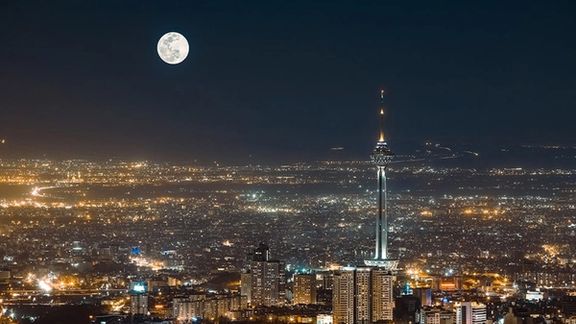
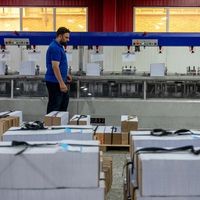
Iran’s capital is grappling with renewed electricity outages but growing evidence suggests the burden of power cuts is falling unevenly across the city, raising concerns over social equity and institutional bias in blackout management.
According to reports from Iranian media and residents, working-class neighborhoods in southern and western Tehran are experiencing up to four hours of daily blackouts, while more affluent districts in the north remain largely unaffected.
This disparity, once a topic of speculation among citizens, has now been corroborated by the reformist leaning Ham-Mihan newspaper, and acknowledged in comments by both energy officials and lawmakers.
A recent field investigation by Ham-Mihan found that nearly 75% of documented blackouts in Tehran province during the first two months of the Iranian calendar year (started March 20) occurred in lower-income areas. In contrast, power remained uninterrupted in wealthier northern districts, even during periods of peak demand.
While Tehran Electricity Distribution Company had released a blackout schedule for spring, residents across marginalized neighborhoods say cuts have been occurring unpredictably and far more frequently than indicated.
“We have power outages twice a day — sometimes lasting up to two hours each,” a resident of Islamshahr, a southern suburb, wrote online. Meanwhile, a resident in District 2, in northern Tehran, reported no outages since the start of the blackout cycle.
The discrepancies have sparked a wave of criticism on social media and from public figures.
Hossein Selahvarzi, a prominent economist and former head of Iran’s Chamber of Commerce, wrote: “If it is true that outages in the south of Tehran are more frequent than in the north, then our problem is not only energy imbalance — it is also a failure of social justice.”
In comments to Ham-Mihan, a senior official from Tehran’s regional power grid admitted the blackout pattern is not accidental. “To maintain network stability, we concentrate outages in outlying districts,” the unnamed source said.
“Blackouts in central or northern Tehran have political and media consequences that we try to avoid.”
The issue of unequal energy access is not confined to Tehran.
Hussein Haghverdi, a member of parliament representing the towns of Malard, Shahriar, and Qods in Tehran province, has publicly accused the Ministry of Energy of discriminatory energy allocation.
In a letter to Energy Minister Abbas Aliabadi, Haghverdi said that while the capital’s industrial zones faced a 50-megawatt blackout quota, neighboring residential and industrial towns were subjected to four times that amount.
“This vast disparity is unacceptable and has caused widespread dissatisfaction,” he wrote.
With temperatures rising and demand for cooling surging — particularly through water-intensive swamp coolers — Tehran’s daily water usage has already exceeded 3.1 million cubic meters.
Iran’s hydroelectric capacity — once a key component of the energy mix — has been severely curtailed by a historic drought.
Officials have warned that continued overconsumption could lead to even harsher cuts, with punitive 12-hour blackouts possible for chronic overusers.
But critics argue that the current approach to energy rationing lacks transparency and reinforces systemic inequalities.
“You can’t ask citizens to sacrifice while shielding elite districts from the consequences,” said an environmental policy expert in Tehran who requested anonymity. “This is not just a technical failure — it’s a governance issue.”
With no immediate relief in sight, the government is under mounting pressure to ensure that conservation efforts — and their consequences — are distributed fairly.
As one Ham-Mihan editorial put it: “The blackout map is becoming a social map — and it is illuminating more than just who has electricity.”
A US Air Force B-52 strategic bomber, C-17 and F-22s take part in a joint drill with South Korea's Air Force, in South Korea, December 20, 2022.
New satellite imagery shows two US B-52 bombers deployed at the Diego Garcia airbase in the Indian Ocean, reinforcing Washington’s long-range strike posture near Iran as nuclear talks remain postponed, Newsweek reported Thursday.
The image, captured by the European Space Agency’s Sentinel-2 satellite on May 7, was first identified by open-source analyst MT Anderson and shows aircraft matching the dimensions of B-52 bombers parked at the US Naval Support Facility.
The B-52s join a buildup of US assets at the base, including previously deployed B-2 stealth bombers, C-17 cargo planes, and aerial refueling tankers, according to Air & Space Forces Magazine and The War Zone.
The enhanced deployment follows months of rising tensions between Washington and Tehran. While US President Donald Trump has said he prefers a peaceful resolution to the standoff over Iran’s nuclear program, he has also warned of military action if no agreement is reached.
Tehran has rejected talks outside the framework of the 2015 nuclear deal.
In March, a senior Iranian military official warned that Iran would target the joint US-UK base on Diego Garcia if it is used to launch attacks. “There will be no distinction in targeting British or American forces if Iran is attacked from any base in the region or within range of Iranian missiles,” the official told The Telegraph.
However, the remote Indian Ocean base is located some 3,800 kilometers from Iran—beyond the estimated 2,000-kilometer range of Iranian ballistic missiles.
A UK government spokesman condemned the threats at the time, calling the base “vital to UK and US security” and underscoring London’s efforts to promote de-escalation in the region.
Diego Garcia has previously been used to launch US strikes in Iraq and Afghanistan. The latest deployments suggest the US is positioning for potential large-scale operations, even as diplomatic efforts with Tehran remain uncertain.
Iranian Foreign Minister Abbas Araghchi and his Indian counterpart Subrahmanyam Jaishankar, May 8, 2025..
Iranian Foreign Minister Abbas Araghchi called for restraint between India and Pakistan during his visit to New Delhi on Thursday as tensions continue to rise following last month’s deadly attack on tourists in Indian-administered Kashmir.
“We hope that India and Pakistan will prevent the escalation of tension in the region,” Araghchi said, according to Iranian state media. “Our region needs peace, especially to expand economic cooperation between regional countries, and we hope this will happen.”
The visit, planned before the attack, is focused on co-chairing the Iran-India Joint Commission meeting with Indian External Affairs Minister S. Jaishankar.
India is a key trading partner for Iran, in spite of global sanctions, and the upcoming talks are expected to cover trade, energy, and infrastructure cooperation.
Araghchi arrived in India after meetings in Islamabad earlier this week, where he held talks with Pakistani Foreign Minister Ishaq Dar, President Asif Ali Zardari, and Prime Minister Shehbaz Sharif.
The diplomatic trip comes days after India launched airstrikes on what it said were “terrorist camps” in Pakistan in response to the attack in Kashmir’s Baisaran Valley, which killed 26 civilians, including 25 Indian tourists.
Pakistan denied involvement and said the Indian strikes killed at least 31 civilians, vowing to respond.
Iran has offered to mediate between the two nuclear-armed neighbours, though New Delhi has rejected third-party involvement, according to local media.
Despite a new law targeting the illegal arms trade, Iran’s underground gun market continues to thrive on encrypted Telegram channels where vendors openly offer firearms ranging from pistols to Kalashnikov rifles.
The updated legislation, signed into effect on Tuesday by President Masoud Pezeshkian, imposes harsher sentences for unlicensed gun possession and criminalizes the use of digital platforms to promote or sell weapons.
But Telegram remains awash in posts advertising weapons for prices between 200 million and 1.8 billion rials—roughly $240 to $2,200 at the current exchange rate of 820,000 rials per US dollar.
Telegram channels in Iran are openly advertising firearms for sale
In one 17,000-member channel, a vendor offered a Glock 17 pistol for 280 million rials ($340), a Makarov for 240 million ($290), and a Turkish-made Colt .45 for 360 million ($440). For higher-end buyers, a Kalashnikov was listed at 1.7 billion rials ($2,070), including a video showing it wrapped in cloth beside two full magazines.
“Payment is in Tether,” said one seller when contacted anonymously via Telegram, referring to a cryptocurrency. “Once confirmed, you’ll receive a location—usually a locker in a shopping mall. You have two hours to retrieve it.”
An image from social media advertising guns for sale in Iran
Posing as a buyer we messaged five sellers across different channels. All insisted on cryptocurrency, none offered verification and two responded with identical language and price lists—raising doubts about authenticity.
But sources in Tehran familiar with the illicit trade said the market is not entirely fake. “There are scams, yes,” one source said. “But there are many real vendors. People share experiences, and some of these sellers have been delivering for years.”
Iran’s newly amended firearms law significantly broadens the scope of punishable offenses. Beyond illegal possession, it targets sellers, repairers and those who promote or advertise firearms online.
Penalties range from three to fifteen years in prison depending on the type of weapon, with automatic firearms, heavy arms, and military-grade munitions drawing the harshest sentences.
A clause in the law also authorizes authorities to seize properties, vehicles, or storage facilities used in connection with arms crimes.
According to the text, any digital promotion, sale, or training activity linked to firearms is subject to prosecution.
The law also tightens control over airguns, mandating that those in possession of PCP rifles over 40 joules must surrender them within three months or face penalties equivalent to those for illegal hunting rifles. Owners of PCPs under the threshold must apply for a license.
Still, on Telegram, enforcement appears limited. Sellers openly post weapons and use emojis of guns, bombs, and fire to attract attention.
Sources say these weapons are often smuggled in from Turkey, Iraq, or via the Persian Gulf and may be resold multiple times through local intermediaries. “The dealers who actually deliver have networks,” said a source in Tehran. “They use trusted people. Some even have police protection.”
Iran’s black market extends far beyond guns. Unlicensed alcohol, sex work under the guise of massage services, and a growing narcotics scene—from cocaine to synthetic pills—share the same digital infrastructure, relying on anonymity, encrypted platforms, and rapid logistics.
While authorities promise firm implementation of the new law, Telegram channels remain easy to find and quick to rebrand. For buyers, the market is a gamble. But according to those familiar with Tehran’s illicit economy, enough vendors deliver to keep demand alive.
Nestled in the heart of Iran's second holiest city, the century-old Qom Seminary is the most influential Shi'ite clerical institution in the country and arguably the world.
As the academic and spiritual powerhouse of Shi'ism, the Qom Seminary plays a central role in shaping Iran's religious elite and, by extension, much of the country's theocratic structure. Beneath its religious facade, however, lies a vast, opaque network of political influence, financial entanglements and government control.
The seminary consists of nearly 60 schools, each established and operated either by high-ranking Shi'ite clerics—referred to as sources of emulation—or by state-affiliated institutions.
Tens of thousands of students study in Qom Seminary’s various schools, including thousands of foreign nationals from across the Shi'ite world—such as Lebanon, Iraq, Afghanistan, Nigeria and even China—drawn by Qom’s global religious stature.
Many of the country’s most influential officials and politicians who possess strong religious credentials hail from the Qom Seminary.
Roots in tradition and power
In addition to Qom, there are hundreds of Shi'ite seminary schools in Tehran, Mashhad, Isfahan and other cities across Iran. All of these institutions operate within a framework that is increasingly shaped and influenced by the state.
At the center of this framework is the Supreme Council of Seminaries, an official policy-making body responsible for overseeing curricula, setting educational standards, and managing the administration of seminaries.
The Council’s power is bolstered by the fact that its members are appointed by both Iran’s Supreme Leader, Ali Khamenei, and senior clerics who align with his religious and political interests.
Sacred duties, government funding
For centuries, seminary schools operated independently, funded primarily through religious dues called khoms or charity payments, zakat, that believers pay to their chosen source of emulation and the revenues from charitable endowments that they control.
These funds allowed sources of emulation to run their schools, pay stipends, and provide lodging for their students. This fostered a decentralized clerical tradition where independent scholars could thrive without state interference.
Since the 1979 Islamic Revolution, the state has consolidated its control over the administration of seminaries, incorporating them into the broader framework of governance and state-sponsored religion.
Government funding of seminaries is extensive but fragmented. Instead of channeling money through a single institution, the state allocates funds to a range of entities.
These include the Administrative Center of Seminaries, the Islamic Propaganda Organization, and various entities dedicated to supporting students and faculty members. Seminary students now routinely receive state-funded stipends, health insurance and other welfare benefits.
Khamenei’s grip on seminaries
Supreme Leader Ali Khamenei’s office provides additional financial support to selected seminary entities across the country. The details of these contributions—including amounts and recipients—are seldom made public, adding to seminaries’ overall lack of financial transparency.
His influence over Qom and other seminaries extends beyond funding and appointments. His office also uses intelligence surveillance, ideological monitoring, and strategic institutional control to maintain dominance over the clerical sphere.
Training the clerical elite
Becoming a fully qualified Shi'ite jurist or mujtahid—someone capable of independently interpreting Islamic law (ijtihad) -- typically requires at least two decades of intensive study in fields such as jurisprudence or fiqh, philosophy, logic and the Arabic language.
To be formally recognized as a jurist, a candidate needs the endorsement of a prominent clerical authority—often a source of emulation or another senior jurist.
Once recognized, a jurist can issue legal opinions or fatwas and may, in some cases, be acknowledged by peers and followers as a source of emulation.
Shi'ite laypeople are expected to follow the religious rulings of a living source of emulation, making these clerics deeply influential figures in both the religious and political spheres of Shiite-majority societies, especially in Iran.
Women in seminaries
While the leadership of seminaries remains exclusively male, more than 3,000 female seminarians currently study in a dozen gender-segregated schools in Qom Seminary alone. Their education is primarily focused on training women to teach religious principles—especially those related to women’s issues, family life, and Islamic ethics.
In rare instances, women have been permitted to attend advanced-level lectures typically reserved for male students. However, only a small number have ever attained the title of jurist.
Iran's Ayatollah Ali Khamenei writes on a document, file photo.
With the hawks in Washington pushing for a tougher stance on Iran, and the talks appearing to lose some positive initial momentum after three rounds, a sense of urgency about a potential deal appears to be taking hold in Tehran.
Former officials and media pundits are urging a swift agreement with the United States, warning that delays could harden President Trump’s position or allow regional developments to close the door on diplomacy.
“Time is certainly working against us this time. Reaching an agreement today is better than doing so tomorrow,” former minister Abbas Akhundi said in an interview with moderate daily Etemad on Monday.
“Trump is an opportunity if you understand his logic and act at the right time,” Akhundi added. “He is not someone who will be willing to negotiate forever … so we must be able to conclude the negotiations in a short time.”
Such bold statements on a potential thaw with the US are tolerated, if not encouraged, because supreme leader Ali Khamenei has not only endorsed the negotiations but also hushed its hardline opponents with his customary cryptic messaging.
Any viable nuclear deal would require significant concessions on Iran’s part. Khamenei needs to make those palatable to the loyalists who back him in the face of growing popular discontent. The longer the process the harder his task will become.
Regional developments are also a factor. Ceasefires in the Middle East often last not as long as the wars they tend to end.
Akhundi touched on this too in his Monday interview: “Israel is certainly unhappy about the possibility of a deal and may try to obstruct an agreement through psychological warfare, targeted assassinations, and cyber-attacks,” he warned.
Former conservative MP Mahmood Abbaszadeh Meshkini echoed the urgency while calling for a more proactive strategy.
“Trump is not interested in starting a war with Iran,” Mashkini told Khabar Online, urging the decision-makers in Tehran to take the lead in shaping the agenda.
Like many conservatives who have jumped ship on talks, Meshkini backed the official line and even went as far to hint at the rift between the rulers and the ruled as a hindrance for Iran advancing its interests abroad.
Another conservative commentator Mohammad Mohajeri charted another territory previously unnavigable: concessions.
“Eventually, both sides might come to accept that some red lines are also open to negotiation,” he told the outlet Rouydad24 briefly—and somewhat daringly—before quickly qualifying his remarks, perhaps to guard against criticism for his plain speech.
“However, if the other side demands that enrichment in Iran be reduced to zero or that our peaceful nuclear activities be entirely shut down, that is certainly unacceptable,” he added.
Tehran’s official position has remained constant during negotiations with Washington: low levels of enrichment are non-negotiable. On the other side, however, the stance seems to have hardened as president Trump and others in his team talk about Iran’s nuclear program being dismantled altogether.
The apparent sense of urgency reflected in Iranian media this week may have a thing or two to do with this.