US, Israel behind India-Pakistan tensions, Iranian lawmaker says
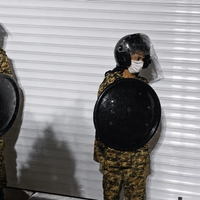
A Pakistan Army soldier stands in front of damaged Bilal Mosque after it was hit by an Indian strike in Muzaffarabad, the capital of Pakistan-administered Kashmir, May 7, 2025.
The former Iranian ambassador to Afghanistan has suggested that the recent escalation of tensions between India and Pakistan is part of a US and Israeli plot to reshape the geopolitical map of the region.
Abolfazl Zohrevand, also a member of the Iranian parliament's National Security Committee, told Rouydad 24 news website that the "extremist current" in India had been ensnared in a trap set by the US and Israel, with the aim of destabilizing the region.
"The conflict between Islamabad and New Delhi is one of the schemes orchestrated by the US and Israel to reshape the region's geopolitics, a move that could have catastrophic consequences for the subcontinent, South and Central Asia, especially China," he said.
Zohrevand's comments follow the most serious clashes between the nuclear-armed neighbors since 2019, India claiming strikes on what it called "terrorist infrastructure" inside Pakistan, and Pakistan announcing it shot down five Indian fighter jets in response.
The lawmaker stressed that Tehran will not take sides in the conflict that has seen heavy exchanges of fire along the Kashmir Line of Control.
"Iran has played an important role in maintaining the geopolitical map of the region, and in this episode, it will also try to prevent this tension from escalating and going astray," Zohrevand said.
India has long been a key trade partner for Iran, although last year, an Iranian trade official admitted that trade with India dropped by up to a third due to global sanctions.
However, relations with Pakistan have been more fragile. Last year, Iran and Pakistan engaged in tit-for-tat attacks which both sides said were targeting terrorist hideouts on the borders.
Earlier on Wednesday, Foreign Ministry Spokesman Esmail Baghai voiced deep concerns regarding the heightened tensions, urging both India and Pakistan to show restraint.
Iran is prepared to assist investigations if credible allegations are established against several of its nationals arrested in the UK, Foreign Minister Abbas Araghchi said on Wednesday.
“Disturbed to learn that Iranian citizens have reportedly been arrested by UK security services,” Araghchi said in a post on X. “If credible allegations of misconduct are established, Iran stands ready to assist investigations. We call on UK to ensure respect for our citizens' rights and afford them due process.”
Earlier, Alireza Yousefi Director General for Western Europe at Iran’s Foreign Ministry said Tehran expected British authorities to respect legal norms.
“We call for immediate and accurate information to be given to Iran regarding the reasons for the arrests,” Yousefi said. “Access to consular services must be granted, and the principles of fair trial must be upheld.”
He added that the timing and nature of the accusations raised “serious concerns about political motives” behind the detentions.
Seven Iranian nationals are among eight men arrested in two major counter-terrorism operations carried out separately on Saturday by the UK’s Counter Terrorism Command.
According to the Metropolitan Police, five of the arrests were part of a pre-planned investigation into an alleged plot to target a specific premises. Authorities say some of those detained remain in custody.
Following the arrests, Labour MPs renewed calls for the government to formally proscribe Iran’s Islamic Revolutionary Guard Corps (IRGC) as a terrorist organization. They argue the IRGC’s role in transnational repression and terror plots poses a direct threat to UK national security.
In October, MI5 Director General Ken McCallum said authorities had disrupted 20 “potentially deadly” plots tied to Tehran since January 2022.
“Iranian state actors make extensive use of criminals as proxies—from international drug traffickers to low-level crooks,” McCallum said in a public statement.
A police officer walks outside New Scotland Yard, the headquarters of the Metropolitan Police, in London, Britain March 21, 2023.
The arrest of five Iranian nationals on terror charges across the UK has led to renewed calls by lawmakers to designate Iran’s Islamic Revolutionary Guard Corps (IRGC) as a terrorist organization.
Security Minister Dan Jarvis told Parliament on Tuesday that the arrests marked "the first Iranian nationals arrested under the National Security Act.”
He said the Iranian state—including the IRGC and the Ministry of Intelligence and Security—had previously been placed on the enhanced tier of the foreign influence registration scheme.
“Anyone in the UK who works for the Iranian state must declare it or they will be committing a serious criminal offence,” he added.
The arrests, made on May 4 in London, Rochdale, Swindon, Manchester and Stockport, involved five men held under the Terrorism Act 2006 and three more under the National Security Act. Four remain in custody. Authorities believe the group was only hours away from attacking a specific location.
The Telegraph reported that at least one of the suspects is closely tied to the Islamic Republic’s leadership and comes from a prominent business family.
Jarvis said MI5 and police have responded to 20 Iran-backed plots since January 2022.
Liberal Democrat MP Lisa Smart criticized the government, saying, “Over recent years Members have been called to this Chamber to discuss plots to commit acts of terror on Britain’s streets at the hands of the Iranian regime—but consecutive Governments are yet to proscribe the Islamic Revolutionary Guard Corps as a terrorist organization.”
“If now is not the time for proscription, when should the House expect a further update?” she asked.
Labor’s Matt Vickers recalled the Home Secretary’s previous commitment to impose “appropriately targeted proscription-style restrictions” on state-linked entities such as the IRGC.
Labor and Co-operative MP Alex Sobel protested that he “asked many times for proscription of the IRGC, as it is certainly one of the bodies in Iran that is responsible for transnational repression,” while Labor MP Jon Pearce raised concerns that UK-based charities may be used to fund terrorism.
According to the government, a review of legal options by Jonathan Hall, an independent barrister, has been completed and will be published soon. Ministers have said they will not hesitate to act based on the findings.
Meanwhile, exiled Iranian prince Reza Pahlavi called the arrests further proof of what he calls Tehran’s global threat. “The arrest of Islamic Republic agents in the UK, on the brink of another terror attack, reinforces the need to proscribe the IRGC as a terrorist organization,” he wrote on X.
“This regime has proven, once again, that it will not change its behavior. It continues to spread terror not only in the Middle East but to target innocent civilians across Europe and the United States.”
The head of Iran’s judiciary said clerics and Basij paramilitary forces were deployed to detention centers during the 2022 Woman, Life, Freedom protests in what he said was a move to offer guidance to detainees, including schoolchildren and university students.
"The events of 2022 resulted in approximately 90,000 legal cases,” judiciary chief Gholamhossein Mohseni Ejei said on Tuesday. “The defendants and convicts in these cases came from various segments of society. Among them were, in some cases, teachers, school students, and university students.”
He said widespread prosecutions would have allowed "enemies" to exploit the unrest, so the judiciary sought assistance from non-judicial bodies.
“At that point, we sought help from seminaries, the Basij, academics, and teachers. With their presence in detention centers, the majority of those convicted in 2022 were admonished and guided,” Ejei said.
“Criminals who committed violent acts or engaged in organized operations were a separate matter,” he said. “They were dealt with legally and were not included in these measures,” he added.
The 2022 protests erupted after 22-year-old Mahsa Amini died in police custody following her arrest by Iran’s morality police over alleged hijab violations.
Human rights groups say thousands were detained, including minors, and at least eight people have been executed in connection with the protests.
Iranian authorities have ordered the closure of the country's sole national Water Museum to accommodate the relocation of the Quran Museum, a move that has sparked strong criticism from museum experts and staff, according to an Iranian daily.
The report in Payam-e Ma said that the decision, approved by President Masoud Pezeshkian, directs the Water Museum in Tehran’s historic Sa’dabad Palace complex to vacate its building so that the National Quran Museum—currently located in central Tehran—can be moved in.
The order came without public notice and was issued after the Iranian New Year holidays in early April, according to the report.
Museum workers were caught off guard as government officials suddenly removed signage and sealed the building.
Shahrokh Karimi, head of the National Water Treasure Institute that manages the museum, told the paper: “We worked hard for 30 years. It is heartbreaking to see it dismantled overnight.”
He warned that the move would erase a rare cultural institution dedicated to Iran’s water engineering and environmental heritage.
The Water Museum, established in 1996 through a government partnership between Iran’s energy ministry and cultural heritage authorities, showcased ancient irrigation techniques, historical engineering documents, and educational displays.
It has been part of a broader effort to preserve the country’s “water memory” amid growing environmental concerns.
Ahmad Mohit-Tabatabai, head of the International Council of Museums (ICOM) in Iran, criticized the relocation.
“Closing or moving a national museum is among the worst things that can happen in museology,” he said, warning that the Quran Museum’s needs are not compatible with the Water Museum’s small facilities.
In recent years, Iran has been selling off ancient heritage sites amid the country's financial crisis with historians accusing the government of abandoning the country's rich history.
Last year there was public outcry when the government announced the construction of mosques in public parks, as the Islamic Republic's agenda is seen as eroding the country's environmental heritage.
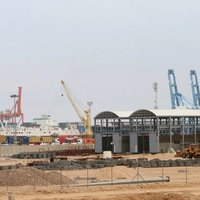
Iranian methanol exports to China could come under US scrutiny after Washington warned of secondary sanctions on Iranian oil and petrochemicals buyers while nuclear talks continue, Bloomberg reported on Tuesday.
About 40% of China’s methanol imports — some 5.2 million tons in 2024 — came from Iran, data from shipping analytics firm Kpler shows.
Methanol, used to produce plastics, is a key feedstock for China’s methanol-to-olefin (MTO) plants, which are major buyers of Iranian cargoes, according to ICIS, a global market intelligence firm.
"Iranian methanol is almost the only efficient way for coastal MTO units to get enough supply," said Ann Sun, senior analyst at ICIS.
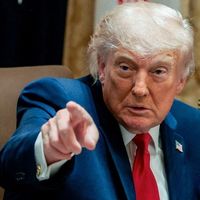
US President Donald Trump last week said countries or firms that buy Iranian oil or petrochemicals could face immediate sanctions. The US has already targeted Iranian energy exports and Chinese refineries allegedly involved in such trade.
Although some Iranian methanol reaches China via third countries like the UAE or Oman, further sanctions could disrupt flows.
The latest move by Trump comes as he is squeezing Iran amid ongoing indirect nuclear talks between the US and Iran. They have now passed the third stage and are awaiting the fourth round in Oman.
Iran says that lifting sanctions is a priority in the nuclear talks.