Enrichment inside Iran a red line in Trump negotiations, Tehran says
Iran’s foreign ministry said on Monday that any agreement with the US must respect Tehran’s key demands, including the continuation of uranium enrichment inside the country and the effective lifting of sanctions.
Foreign Ministry spokesman Esmail Baghaei told reporters at his weekly press briefing that the upcoming talks — expected to be chaired by Iran’s foreign minister and the US special envoy — follow an understanding reached in Muscat.
Baghaei stressed that Iran’s fundamental negotiating principles remain unchanged. "Entering the details of any negotiation must be within the framework of broad outlines agreed upon by both sides," he said.
"Uranium enrichment inside the country and the effective removal of sanctions are Iran’s red lines and will be pursued with seriousness."
On the ongoing visit of an International Atomic Energy Agency (IAEA) technical team, Baghaei said the discussions would focus purely on technical issues and pending safeguarding matters.
"The visit of the IAEA technical delegation is a continuation of the discussions that took place between the Director General (Grossi) and Iranian officials, and today they will have talks with officials of the Atomic Energy Organization, and it is only technical. The discussion will be about the remaining safeguards issues,” he said.
Following the conclusion of the third round of nuclear talks in Oman on Saturday, Iran's foreign minister said IAEA experts might join the next round of talks on Saturday.
Visiting Tehran earlier in April, IAEA Chief Rafael Grossi said his agency could help achieve a positive outcome in the negotiations.
Last week, speaking at the US-based think tank Council on Foreign Relations, Grossi said Iran has enough enriched uranium to produce several nuclear warheads and could do so within months.
In 2018, Trump withdrew the US from a 2015 nuclear pact between Iran and major world powers, leading Iran to subsequently surpass that deal's uranium enrichment limits and limit the IAEA's oversight.
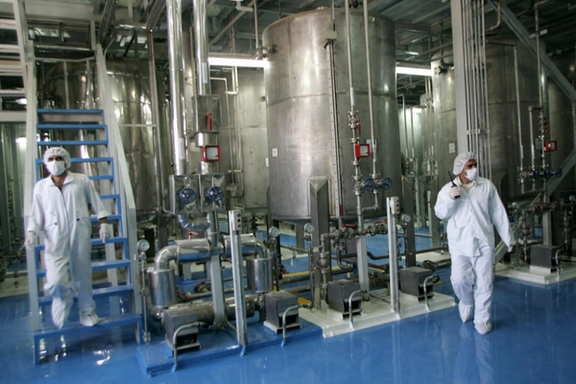
In February, the IAEA released a report saying the current situation is concerning as Tehran is enriching uranium to up to 60% purity, near weapons grade. Tehran has long denied seeking nuclear weapons.
Baghaei also addressed the role of European nations in the nuclear talks. "We hope the Europeans will play a constructive role," he said, adding that Iran’s continued engagement with neighboring countries and other JCPOA participants signals the Islamic Republic's good will.
When asked about the decision to exclude three European parties of the JCPOA from the talks, Baghaei said, "That was their own choice... Iran stands ready for European nations to play a role in these discussions.”
He criticized US pressure tactics beyond Iran, saying, "The maximum pressure policy is not limited to Iran; it is being pursued against other countries like China and disrupts free trade. It ultimately violates the human rights of individuals subjected to sanctions."
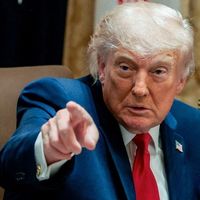
US President Donald Trump has threatened to bomb Iran if it does not agree to a new nuclear deal and on Sunday night, Israeli PM Benjamin Netanyahu said: "We are in close contact with the United States. But I said, one way or the other, Iran will not have nuclear weapons."
Baghaei responded to the threats saying: "Any adventurism against Iran will face a crushing response. Western countries, especially those continuing to support this regime [Israel], must understand they are assisting an entity whose survival depends on crisis."
Baghaei confirmed that the next round of talks is planned for Saturday, warning that the process will not be fast. "Entering technical issues is time-consuming and an inseparable part of negotiations," he said. "We have said that we are serious."
He emphasized that sanctions relief must be comprehensive and includes Tehran’s access to its assets blocked in foreign banks due to US sanctions. "Effective termination of sanctions is a key term that must include a diverse set of commitments. Ensuring free access to Iran’s resources and assets is our right."
Iran and the United States opened a third round of nuclear negotiations in Oman on Saturday.
Foreign Minister Abbas Araghchi is leading Iran’s delegation. The US State Department confirmed that Steve Witkoff, the special envoy for nuclear affairs, is heading the American team, alongside Michael Anton, who previously served as National Security Council spokesman during Trump's first term as leading the American technical delegation.
“We’re having very serious meetings, and there are only two options. And one option is not a good option. It’s not a good option at all,” President Donald Trump said Friday, according to Reuters. He added, “I think we’re doing very well with respect to Iran.”
The negotiations follow last weekend’s session in Rome. Iranian officials are said to be willing to return to the technical constraints of the 2015 nuclear deal, including reactivating International Atomic Energy Agency surveillance cameras at nuclear facilities.
Under the 2015 Joint Comprehensive Plan of Action (JCPOA), Iran was restricted to enriching uranium up to 3.67 percent with a stockpile limit of 300 kilograms.
Following Washington’s unilateral withdrawal from the accord in 2018, Iran expanded enrichment to 60 percent and accumulated more than 8,000 kilograms of uranium, while maintaining that its program remains civilian in nature.
An Iranian official participating in the negotiations told Reuters that "the only remaining point of disagreement in the general discussions and mutual understanding is the missile issue."
According to the official, Iran's position — that it would not exceed the obligations outlined in the 2015 deal and related resolution — means it would "only refrain from building missiles capable of carrying nuclear warheads as a gesture of goodwill."
Both negotiating teams arrived in Muscat on Friday. Araghchi and Omani Foreign Minister Badr Albusaidi later attended the Muscat International Book Fair, where Araghchi’s Arabic-language book The Power of Negotiation was unveiled.
Witkoff traveled to Oman after meetings with Russian President Vladimir Putin in Moscow.
Iranian state media reported the talks were initially scheduled for one day but may be extended depending on technical progress.
The outcome could shape whether Iran steps back toward nuclear restrictions or deepens a confrontation already straining regional security.
Iran’s political and religious establishment is closing ranks to defend Supreme Leader Ali Khamenei’s backing of renewed negotiations with the United States, with clerics and hardliners urging the public to view flexibility as a continuation of revolutionary goals.
Khamenei on Thursday invoked a historic concession by Shia Islam’s second Imam, Hasan ibn Ali, who signed a controversial peace treaty with Mu'awiya in 661 CE. Without directly mentioning the ongoing US nuclear talks, he said the treaty was temporary and necessary to safeguard Islam’s future.
The allusion mirrors Khamenei’s 2013 justification for the 2015 nuclear deal, when he framed negotiations as an act of “heroic flexibility.” His tone marks a significant shift from February, when he denounced engagement with the United States as “unwise and dishonorable.”
Analyst Hamed Moafagh Behrouzi, in an article published Saturday by the IRGC-linked Fars News Agency, interpreted Khamenei’s recent remarks as a reaffirmation of the Islamic Republic’s unwavering path, warning against simplistic readings of tactical shifts.
He wrote that evolving methods should not be mistaken for a change in objectives, adding, “The Islamic system is exactly on the same divine path.”
Mohammad-Javad Larijani, a senior Iranian political figure, praised the decision to open talks through Omani mediation.
He called the move “shrewd” in an interview with the IRGC-linked Tasnim News Agency, saying, “Diplomacy is, in fact, at the service of the country's security, military, defense, political, economic, and cultural objectives.”
Clerics during Friday prayers echoed the recalibration. Sermons widely broadcast across Iranian media stressed the need for accurate understanding of global conditions.
Tehran’s interim Friday prayers leader Mohammad-Hassan Aboutorabi-Fard said “Without the slightest doubt, the negotiations began from a position of dignity and power.”
Further endorsement appeared in a commentary by the hardline Kayhan newspaper, which operates under Khamenei’s supervision. The article described the apparent contradiction between opposing direct US talks and later allowing indirect negotiations as “two sides of a battlefield and part of real negotiation tactics.”
“Khamenei at the time did not regard negotiations as honorable or wise but, with steadfastness like Imam Ali’s, forced new conditions upon the enemy,” added the daily.
According to Kayhan, Khamenei “humiliated Trump” by imposing and cementing several strategic frameworks, then allowed indirect talks to “disarm the American president from using any pretext to claim Iranian nuclear military activity.”
Hardline reactions, however, have not been uniformly supportive. Some ultra-conservative figures have voiced frustration, accusing sections of the establishment of weakening the Islamic Republic's position.
In further comments Thursday, Khamenei appeared to address internal dissent, warning, “Our loose lips, our failure to help, our needless protests ... can sometimes have an impact. One must be very careful.”
Commentators noted that while Khamenei’s authority remains unchallengeable, dissatisfaction lingers among hardliners. “He is trying to warn and to provide a rationale (for his decisions) to his radical supporters,” US-based analyst Ali Afshari told Iran International TV.
Mostafa Pourmohammadi, a veteran conservative and former minister, separately defended Khamenei’s decision on Friday, likening negotiations to a real estate bargaining process where success depends on patience and strategy.
Taken together, the coordinated messaging from political insiders, clerics, and IRGC-linked outlets signals a broader effort to shield Khamenei’s shift from criticism.
Iran's supreme leader Ali Khamenei meeting with senior armed forces personnel, Tehran, Iran, March 13, 2025
Cautious statements from some Iranian officials and a paucity of disclosures by the tightly-controlled media on ongoing talks with the United States suggests an official desire to control the public discourse on the hyper-sensitive dossier.
Still, Iranian officials appear to have been willing to share information with Russian and Chinese counterparts.
While foreign ministry officials have openly expressed a desire to maintain secrecy about the talks' contents, they have coordinated closely with Russian and Chinese counterparts on their progress.
The Revolutionary Guards-linked newspaper Javan reported on Wednesday that Iranian Foreign Minister Abbas Araghchi's decision to withdraw from a preplanned online meeting at the Carnegie Endowment in New York on Saturday earlier in the week was a "calculated move aimed at controlling the narrative surrounding the Iran-US talks."
"Iran has no intention to negotiate in public," Aragchi said in a post on X on Monday.
Araghchi accused unnamed "special Interest groups" of "attempting to manipulate the course of diplomacy by smearing negotiators and pressuring the US administration to adopt maximalist demands."
While he emphasized that his focus was on "Iran's thoughts and objectives in the talks," he has not provided any substantive explanations to the Iranian public about these goals.
Officials have only vaguely mentioned their primary aim of lifting sanctions.
Araghchi also cited his concerns about the format of the Carnegie Endowment discussion, explaining that he feared his keynote address might turn into "an open Q&A."
Following this, the Carnegie Endowment expressed regret, noting that changes to the agreed format meant they had to cancel Araghchi's attendance.
Seeking a Controlled Narrative
Meanwhile, the Javan newspaper quoted a source saying Tehran is intent on crafting a "controlled narrative" to bolster its position in the talks.
"Iran understands the impact of public perceptions on diplomatic outcomes," the source added. "Avoiding a public platform strengthens its stance and demonstrates its commitment to achieving diplomatic results."
Promoting a Dominant Narrative
This aligns with remarks made by Iranian Government Spokeswoman Fatemeh Mohajerani on April 22, who described Iran's approach to presenting a "dominant narrative" about the negotiations.
"We aim to offer the first narrative after every round of talks," she added. "Consequently, many media outlets have adopted Iran's perspective following statements by Foreign Ministry Spokesman Esmail Baghaei immediately after the meetings."
Mohajerani portrayed this as a method of managing media coverage in the interest of transparency and accurate information dissemination. However, her assertion about transparency contradicted Baghaei's earlier comments on April 21.
"Details about the negotiations are not meant to be disclosed to the media," he said.
US-Iran talks are set to get trickier as the two foes thrash out technical details deciding the limits to Iran's nuclear activity and the scope of inspections, a former senior US negotiator told Eye for Iran.
Richard Nephew, former US deputy special envoy for Iran during part of Joe Biden's presidency, said the level of trust between President Donald Trump and his special envoy Steve Witkoff augured well for the talks.
Still, as the negotiations are set for their third round on Saturday and first set of technical talks, the devil may be in the technical details.
"We haven't yet really seen a pretty clear sense of consistency or attention to detail on the technical side," he said in an interview with the podcast.
"Nuclear talks in general, but absolutely these, which have a 22-year history at this point, definitely could use a little bit more of the technical, a little more of the expert practitioner side," he added.
The ability of inspectors to understand and access the Iranian nuclear program which has advanced far further beyond levels reached when previous nuclear deal will also be key to success, Nephew said.
"That job is harder now than it was in the past. There's a lot less that is known about Iran's current centrifuge production activities than was known at the time. There are more hidden sites. There are storage locations."
Nephew was Washington's lead sanctions expert in the team which inked the 2015 agreement, from which Trump withdrew in 2018 during his first term.
That decision means it will not just mean the US side will be seeking commitments from Iran, he said, but Tehran will want to be sure Washington will not promptly withdraw again.
"I think the biggest thing, and this is the thing the Iranians have been looking for, and I think it's also part of the US approach here too, is guarantees for performance going forward. And I think for the Iranian, this is obviously a very serious issue because the United States did withdraw in the past."
'Talks are no reward'
While Tehran's staunchest critics have criticized US-Iran nuclear talks as legitimizing an irredeemable enemy, Nephew said diplomacy should be seen as a strategic tool and not a reward.
“I have to smile when I hear about diplomacy being seen as a reward. I couldn't disagree more with that,” Nephew said. “Diplomacy is a national security and foreign policy tool. If you see diplomacy as a tool, then you can't also see it simultaneously as a reward.”
In a recent interview with the Washington Free Beacon, maverick Democratic Senator John Fetterman deployed salty language to advocate ending talks and bombing Iranian nuclear sites.
“Waste that shit,” Fetterman said. “You’re not going to be able to negotiate with that kind of regime that has been destabilizing the region for decades already.”
Nephew argued that diplomacy paired with rigorous verification and inspections remains the best path while acknowledging that diplomacy was no panacea.
“You can’t put all your chips on diplomacy,” he said, emphasizing the need for a credible military contingency in the background. But a strike, he warned, wouldn’t be quick or clean.
“A military option would, at a minimum, create chaos across what remains of the Iranian nuclear program,” he explained. “If I'm sitting in Tehran after US military strikes, after I've lost Hezbollah, Hamas, Shia militia groups, and similar assets, it's hard to imagine the regime saying, ‘Yes, let’s make strategic concessions now.’”
You can watch the full interview with Richard Nephew on YouTube, or listen on any major podcast platform like Spotify, Apple, Amazon or Castbox.
The United States urged Syria’s interim authorities to prevent Iran and its allied groups from exploiting the country’s territory, while Iran accused Washington of worsening Syrians' suffering through sanctions, during a UN Security Council meeting on Friday.
"We will hold Syrian interim authorities accountable for the following steps to fully renounce and suppress terrorism, adopt a policy of non-aggression to neighboring states, exclude foreign terrorist fighters from any official roles, prevent Iran and its proxies from exploiting Syrian territory," said Dorothy Shea, the Deputy US representative to the United Nations in New York.
Iran’s representative Amir Saeid Iravani, in turn, said US sanctions were worsening the suffering of Syrians and hampering reconstruction.
Iran supports free elections and the formation of an inclusive government in Syria, Iravani added, calling for the immediate withdrawal of all foreign forces from Syria.
The Iranian envoy also warned that the presence of foreign forces undermines the country’s sovereignty and delays peace efforts.