Revolutionary Guards shelter Swedish gang leader linked to Europe attacks
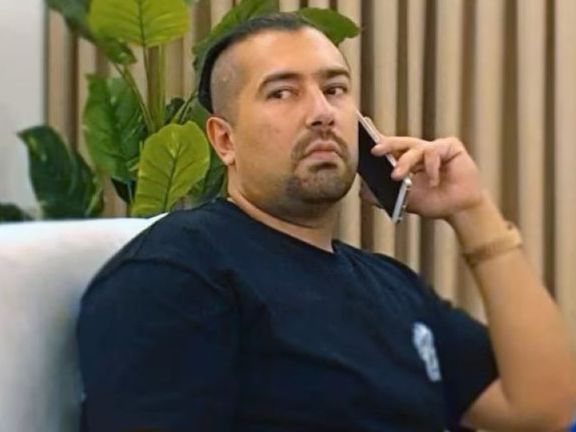
Rawa Majid, the leader of a Sweden based criminal gang
The leader of a Swedish criminal network accused of assisting Tehran in attacks on Israeli-linked targets in Europe is currently living in Iran under the protection of the Islamic Revolutionary Guard Corps (IRGC), sources told Iran International.
Rawa Majid received funds from Iran’s embassy in Denmark to help coordinate attacks against Israeli diplomatic facilities in Copenhagen and Stockholm, according to a source familiar with the matter inside the IRGC.
The source also said the gang leader travels between Iran and Afghanistan for operations overseen by the IRGC.
Majid leads a criminal group, Foxtrot, recently sanctioned by the UK and the US for its alleged role in orchestrating attacks on Israeli interests. Both governments accused the group of working as a proxy force for Iran in Europe. Tehran has denied the charges.
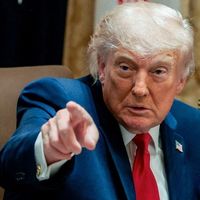
"Iran’s brazen use of transnational criminal organizations and narcotics traffickers underscores the regime’s attempts to achieve its aims through any means, with no regard for the cost to communities across Europe,” US Treasury Secretary Scott Bessent said in a statement in March as the US sanctioned Majid and Foxtrot.
Rawa Majid
The US Treasury said the group has carried out operations targeting Israeli and Jewish institutions, including an attempted bombing outside the Israeli embassy in Stockholm and grenade attacks near the Israeli embassy in Copenhagen in October 2024.
The attacks are part of an apparent broader strategy that has alarmed European security services. In a December 2024 report, Bloomberg detailed how Iran-affiliated groups have increasingly recruited local criminals — including minors — to carry out assaults on Jewish and Israeli institutions across Europe.
Iran’s expanding covert footprint in Europe is linked to the broader regional conflict between Israel and Iranian proxy forces, Bloomberg reported, and the strategy may be aimed at fueling social tensions in countries already divided over immigration and integration.
Sweden’s Security Service (Säpo) and Israeli intelligence agency Mossad have both identified the Foxtrot criminal network as one of the groups recruited by Tehran for sabotage operations in Europe.
While Iranian officials deny using criminal organizations abroad, leaders of the Islamic Republic have repeatedly praised attacks on Israeli interests globally.
Iranian women walk in a street in Tehran, Iran, April 9, 2023.
Enforcing Iran's new hijab law is the top priority for the parliamentary cultural committee, its spokesperson said as authorities come under mounting conservative pressure to implement legislation expanding surveillance and penalties.
“A group of devout citizens has a rightful demand, and that is the enforcement of the hijab law — a demand that holds value for the Islamic system,” said spokesman Ahmad Rastineh on Thursday.
The law was passed by parliament in September 2023 but is yet to be fully enforced as the government tries to avoid mass backlash. It mandates harsh penalties for women and girls who defy compulsory veiling and has been branded by the UN as amounting to gender apartheid.
Punishments under the strict new law include travel bans, social media restrictions, prison sentences, lashes, and fines. It also criminalizes promoting hijab resistance.
The legislation was introduced following mass protests triggered by the death of Mahsa Amini in police custody in 2022 which led to nationwide hijab rebellion and a loss of control by authorities.
Although the law’s enforcement was postponed in December following public outcry and international pressure, calls for its immediate implementation have intensified.
Last month, a group of pro-hijab activists staged a sit-in outside parliament, demanding the law be enacted. The protest, which coincided with Quds Day, was dispersed by police on the grounds that it lacked official authorization.
As measures to enforce hijab continue, a recent cooperation agreement was signed between Iran’s police and the education ministry which has sparked outrage from teachers’ unions.
Critics say the deal, which allows police input on school policies, could militarize schools and enforce hijab compliance among students.
“Teachers across the country will not allow schools to be turned into military barracks,” said the Iranian Teachers' Trade Association.
“This is a degrading and alarming stance,” added Mohammad Habibi, the group’s spokesman, accusing the education minister of surrendering the civilian space of education to security forces.
Many women around the country now openly reject the compulsory headscarf, long tunics, and trousers mandated by Iran’s Shariah law. Acts of defiance have become increasingly visible, with women frequently seen unveiled, singing, and dancing in public as a challenge to the religious establishment.
Iranian state television dismissed several senior staff members and triggered a legal crackdown after a segment insulting Sunni Islamic figures was broadcast, drawing public outrage and prompting official apologies to contain the fallout.
The controversial broadcast aired Wednesday on Channel One and featured a guest reciting verses disparaging Abu Bakr, the first caliph in Sunni Islam, during a midday segment.
The footage was quickly deleted from IRIB-affiliated platforms, as the broadcaster scrambled to contain the crisis.
In a joint statement from Sunni majority Sistan and Baluchestan, the province's governor Mansour Bijar and the Supreme Leader’s regional representative Mostafa Mohami condemned the broadcast, describing it as offensive to the sacred beliefs of the Sunni community and a source of distress and anger across the Muslim world.
Sunnis make up at least 10 percent of Iran's 88 million population, and Sistan and Baluchestan is one of the few Sunni-majority regions in a predominantly Shiite country.
While they welcomed the swift dismissals and referral of those responsible to the judiciary, they urged systemic reforms and punitive measures to prevent recurrence and called on the judiciary to ensure “deterrent accountability and public transparency,” IRNA reported.
The state broadcaster has removed the channel’s programming director and head of production. Additionally, eight individuals involved in the show’s creation now face criminal charges, as reported by state media.
A special committee comprising representatives from IRIB’s security, legal, and inspection branches has been tasked with investigating the incident further.
“Sowing discord in the Islamic community has no defenders among true Muslims, whether Shia or Sunni,” IRIB chief Peyman Jebeli said. “The error of extremist ignorants is unforgivable."
IRIB chief Peyman Jebelli
The network also aired a string of unity-themed documentaries on Wednesday featuring Sunni figures, a move seen as an effort to contain the backlash and reaffirm the state’s emphasis on intra-Muslim unity amid sensitive diplomatic engagement with Sunni-led Saudi Arabia as Shia majority Iran tries to cultivate closer ties to its Sunni neighbors.
This is not the first time IRIB has drawn criticism over sectarian or politically provocative content. Last week, Nasim TV apologized for airing a satirical segment mocking Saudi Arabia’s foreign minister just days after a rare visit by the kingdom’s defense chief to Tehran.
A screengrab from a program mocking Saudi Arabia’s foreign minister on Iran's state TV.
In 2019, IRIB announced the dismissal of the director and broadcast manager of Channel Five following the unvetted airing of controversial remarks by a eulogist during a religious program.
The decision came at the directive of then-IRIB chief Abdolali Ali-Asgari, who said that “safeguarding the dignity of the Islamic ummah” remained a core principle of the broadcaster under the leadership of the Supreme Leader.
Among those dismissed was Javad Ramazannejad, who had been appointed to lead Channel Five less than a year prior to the incident.
With a budget now larger than that of ten ministries and a steadily eroding domestic audience—polls show viewership plummeting from 57% to just 11%—Iran’s state broadcaster faces intensifying scrutiny over its legitimacy, oversight, and role in shaping national identity.
Sunnis, though legal in Iran as a branch of Islam, are among the country's religious minorities which rights groups say are routinely oppressed.
Last year, Human Rights Watch reported that Iranian law denies freedom of religion to minorities such as Baha’is and discriminates against them.
"The government also discriminates against other religious minorities, including Sunni Muslims, and restricts cultural and political activities among the country’s Azeri, Kurdish, Arab, and Baluch ethnic minorities," the report added.
Iran is constructing a new security perimeter around two underground tunnel complexes near its Natanz nuclear site, according to a report by the Institute for Science and International Security (ISIS) released Wednesday.
The sites, buried beneath Mount Kolang Gaz La, have not been accessed by international inspectors.
"The creation of a security perimeter around deeply buried sites associated with uranium enrichment suggests that Iran is increasingly worried about an individual or group seeking to enter the tunnel complexes undetected," the report wrote. "Whether this type of protective barrier would be effective against a well-armed and resourced adversary is unclear."
The report, based on satellite imagery from March, shows wall panels and road grading forming a perimeter that connects with the Natanz facility. One of the complexes is new and deeply buried, likely intended to replace a centrifuge assembly plant destroyed at Natanz in 2020. The other dates back to 2007 and appears to be undergoing upgrades.
David Albright, the institute's president, said the new perimeter suggested that the tunnel complexes, under construction beneath Mt. Kolang Gaz La for several years, could become operational relatively soon.
The complexes could be used to store Iran's stockpile of highly enriched uranium or undeclared nuclear materials, and advanced centrifuges that could quickly purify enough uranium for a bomb, Albright was quoted as saying by Reuters.
The ongoing construction appears to underscore Tehran’s rejection of demands that nuclear talks with the US lead to the full dismantlement of its program, Reuters reported. Iran has maintained it has the right to peaceful nuclear technology.
Israel has not ruled out military action. Prime Minister Benjamin Netanyahu insists any deal must result in the complete dismantlement of Iran’s nuclear infrastructure.
Iranian President Masoud Pezeshkian and the chief of staff of Iran's armed forces Major General Mohammad Bagheri observe the annual Army Day parade in Tehran, April 18 2025.
The United States and Iran appear to be on a collision course over whether Tehran should be allowed to enrich uranium in any nuclear deal between the two arch-foes, potentially endangering talks headed for a third round on Saturday.
US secretary of state Marco Rubio ruled out allowing any Iranian uranium enrichment, while Iranian foreign minister Abbas Araghchi said the talks would stumble if US demands stray from a sole focus on nuclear weapons.
"If Iran wants a civil nuclear program, they can have one just like many other countries in the world have one, and that is they import enriched material," US secretary of state Marco Rubio said in an interview with The Free Press podcast.
"There’s a pathway to a civil, peaceful nuclear program if they want one. But if they insist on enriching, then they will be the only country in the world that doesn’t have a 'weapons program,' quote-unquote, but is enriching. And so I think that’s problematic."
The UN nuclear watchdog said last month that Iran is only non-nuclear armed state enriching uranium to 60%. Several countries which do not possess nuclear weapons, including Japan, Brazil, Germany and the Netherlands, enrich uranium at lower levels.
Iran denies seeking a nuclear weapon and has said its nuclear program is peaceful and marks a national scientific accomplishment. Israel, the United States and other Western countries question Tehran's intentions.
The United Nations permits uranium enrichment as part of peaceful nuclear technology and Iran is a member of the Non-Proliferation Treaty aimed at preventing the spread of nuclear weapons.
Iranian officialdom has repeatedly said Iran's enrichment is not up for discussion.
"If America’s only demand is that Iran not possess nuclear weapons, that demand is attainable and we can meet it," Iran's Foreign Minister Abbas Araghchi told reporters in Beijing on Wednesday.
"But if (Washington) makes impractical and unreasonable demands, it’s natural that we will run into problems."
Araghchi's hosts, nuclear-armed US rival China, appeared to confirm its alignment with Iran's position while blessing the talks with Washington.
"China appreciates Iran's commitment not to develop nuclear weapons, respects Iran's right to peacefully use nuclear energy and supports Iran in conducting dialogue with all parties including the United States to safeguard its legitimate rights and interests through consultation and negotiation, "Chinese Foreign Minister Wang Yi said.
'Out of compliance'
Calling Iran "nuclear-ambitious", Rubio criticized a 2015 international nuclear deal from which US President Donald Trump withdrew in his first term and vowed to seek more permanent curbs on Iran's nuclear activity.
"The previous deal was bad for a number of reasons. It gave Iran immediate and full sanctions relief in exchange for enrichment capabilities that at any point could be weaponized in the future," Rubio said.
"They got to keep that permanently, they got to keep the sanctions relief permanently, and they only had to live by the enrichment limitations for a defined period of time."
Iran and the United States are due to hold a third round of indirect nuclear talks on Saturday in Rome after both sides described the previous two rounds as constructive.
Last week, Rubio warned that Iran is nearing a nuclear weapons capability and urged European allies to consider reimposing UN sanctions on Iran under the JCPOA’s snapback mechanism.
Iran has accumulated nearly 300 kilograms of uranium enriched up to 60% purity, in violation of the 2015 nuclear deal.
Fellow signatories Germany, France and the United Kingdom can use their authority under the agreement to reimpose UN sanctions.
The deal’s final sunset clause is set to expire in October.
French authorities have arrested a dual Iranian-French national in Paris for expressing support for Palestine, Iranian state media reported on Wednesday.
Mizan News Agency, affiliated with Iran’s judiciary, reported that Shahin Hazamy was detained by French security forces on Tuesday. The outlet described him as an independent journalist and said the arrest stemmed from his support for Palestine, without citing French legal charges.
French magazine Le Point confirmed through Hazamy’s lawyer that the arrest was based on accusations of “apologie du terrorisme,” a criminal charge under French law covering praise of terrorist acts. Hazamy remains in temporary detention while the case is under review by investigating judges.
Posts on Hazamy’s Instagram account show support for Hezbollah and Palestinian factions backed by Tehran, as well as images taken during recent visits to Lebanon. He also voiced solidarity with Mahdieh Esfandiari, a 39-year-old Iranian translator living in Lyon who has been held since early March under similar charges.
According to Le Point, Esfandiari is accused of publishing Telegram posts in support of the October 7 Hamas attack on Israel, which Israeli officials say killed over 1,200 mostly civilians.
Iran’s foreign ministry has criticized both arrests, demanding explanations and consular access. Spokesman Esmail Baghaei said earlier in April that the detentions raised serious concerns over the rights of Iranian nationals in France.
France, meanwhile, says Iran detains French citizens as leverage in diplomatic disputes. Foreign Minister Jean-Noël Barrot urged French nationals not to travel to Iran, citing the risk of arbitrary arrest.