UK court delays trial of suspects in attack on Iran International journalist
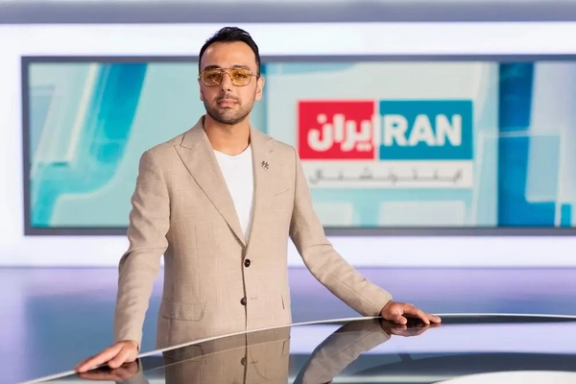
Pouria Zeraati, Iran International presenter
The trial of two Romanian nationals accused of attacking Iran International TV presenter Pouria Zeraati has been postponed by five weeks on the order of a judge at the Central Criminal Court of England and Wales.
The next court session is scheduled for Friday, May 16.
Nandito Badea, 20, and George Stana, 24, appeared via video link and used a translator to address the court. Both are being held in Belmarsh, a high-security prison in southeast London.
The pair were arrested in Romania in connection with the stabbing of Zeraati and extradited to the United Kingdom under an existing agreement between the two countries.
An indictment was issued against them following a review of evidence from the Metropolitan Police’s Counter Terrorism Command. The charges include causing grievous bodily harm with intent.
Zeraati was attacked on March 29 outside his residence in Wimbledon, south London, and sustained injuries to his leg. He was discharged from hospital two days later. The motive for the attack remains undetermined, but the case is being handled by counterterrorism investigators given previous threats to journalists at Iran International.
In October, The Wall Street Journal reported that the Iranian government uses criminal groups to target individuals in Western countries.
The Iranian government has denied any involvement in the attack.
Oman's Sultan Haitham bin Tarik greets dignitaries, Oct. 24 2022
If US President Donald Trump’s shock announcement in the Oval Office on Wednesday that his administration was due to hold talks with Iran this weekend was a surprise, the choice of Oman as host was not.
For years, the Sultanate has supported diplomatic back-channels between the United States and Iran, and has built up a record as a credible intermediary trusted by both sides.
Rather than act as a mediator, as other regional states such as Qatar have done, and participate in direct talks themselves, the Omani approach is to create the spaces in which dialogue can take place, thus acting more as a facilitator.
A combination of historical and geographical factors explains Oman’s pragmatic facilitation of diplomacy as a key element in its foreign policy approach.
Unlike several of its Gulf neighbors, Oman has not had a history of poor relations with Tehran, and Omanis recall that Iran under the Shah provided important support to Sultan Qaboos during the early years of his reign in the 1970s.
Even after the Iranian revolution ousted the Shah in 1979 and ushered in the theocracy headed by Ayatollah Khomeini, Oman stood aside from the regional rivalries and competition for geopolitical influence in the Gulf.
The contours of Omani foreign policy were usefully set out in 2003 by Sayyid Badr Albusaidi, a career diplomat who became Foreign Minister in 2020.
Albusaidi said "it is possible for a small state to carve out for itself a degree of relative autonomy" and "we try to make use of our intermediate position between larger powers to reduce the potential for conflict in our immediate neighborhood."
Avoiding 'I told you so'
As such, Omani officials have sought to ensure that disputes and flashpoints which have the potential to escalate into outright conflict, and thereby threaten economic and political stability and regional security, can be addressed before they spiral out of control, by leveraging their ability to engage with all sides.
Oman’s support for the backchannel that enabled US and Iranian officials to meet secretly for multiple rounds of talks in 2012 and 2013 is the most well-known example of such facilitation.
The clandestine contacts were detailed by Bill Burns, then Deputy Secretary of State, in his memoir, written before he returned to office as Director of the CIA in 2021. Burns described how the chief of Sultan Qaboos’s court and the head of Omani intelligence "greeted both delegations as we walked into the meeting room" and "offered a few brief words of welcome and then departed."
The talks succeeded in laying the framework for the subsequent P5+1 negotiation which led to the Joint Comprehensive Plan of Action, the Iran nuclear deal, in 2015, from which Trump withdrew in 2018 during his first term.
The JCPOA collapsed in acrimony and appeared to prove Burns’s point when he wrote that Araghchi and his co-delegation leader, Majid Takht-Revanchi, "would sometimes confide in me that they had a Supreme Leader who was just waiting to say 'I told you so' and prove that the Americans could not be trusted."
Secret no more
Omani officials continued to act as periodic intermediaries between Tehran and Washington. This included hosting indirect talks in 2023 and again in 2024 that involved White House Middle East coordinator Brett McGurk and Iranian nuclear negotiator Ali Bagheri that addressed the Houthi attacks on maritime shipping and the tit-for-tat Israeli and Iranian military strikes that threatened all-out regional war.
With this record in mind, it was unsurprising that the Iranian leadership responded to a letter from Trump, delivered by an Emirati intermediary, raising the prospect of talks, through Oman in late-March.
It remains to be seen whether the talks, indirect or direct or possibly a combination of the two, may lead to any form of breakthrough, given the political constraints on both sides and the legacy of decades of distrust.
In addition, the fact that the talks have been very publicly announced is a major departure from the secrecy of the backchannel in 2013 which was more characteristic of Oman’s discreet approach to diplomacy.
The choice of venue and interlocutor nevertheless reaffirm Omani centrality to the dialogue between two arch nemeses who despise each other but trust Muscat.
Tehran and Washington are heading into high-stakes talks in Oman this weekend that could determine the path ahead: diplomacy or war. The outcome may shape not only regional stability, but the survival of the Islamic Republic, which has ruled Iran for more than four decades.
On this episode of Eye for Iran, a powerhouse panel of experts unpacks what’s really at stake and what each side hopes to gain.
The Islamic Republic is fundamentally transactional—and deeply motivated to strike a deal in order to survive, says Arash Azizi, an Iran analyst and author of What Iranians Want.
“The result of a failure of the talks is no longer, oh, there will be a lot more sanctions, you have to deal with it economically but an escalation that could be really devastating to Iran as a nation,” said Azizi.
Pressure is mounting. Former President Donald Trump has not only issued verbal warnings but deployed strategic bombers to the Indian Ocean. The US military has also moved a Patriot missile defense battalion from the Indo-Pacific to the Middle East—a major logistical feat involving at least 73 C-17 cargo flights, according to Axios.
On Wednesday, Trump said that Israel could lead a potential strike on Iran should the nuclear talks collapse. The announcement came just two days after he blindsided Israeli Prime Minister Benjamin Netanyahu at the White House by revealing direct negotiations with Tehran.
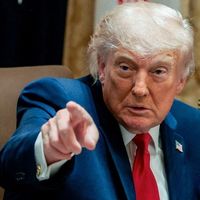
“If it requires military, we’re going to have military,” Trump said during a press briefing in the Oval Office.
Meanwhile, Iran continues inching closer to nuclear weapons capability. Though Tehran insists its program is peaceful, the UN nuclear watchdog has warned that Iran now possesses enough uranium enriched to near-weapons-grade levels to make several nuclear bombs.
“I think they are very motivated, as real estate agents say, to get a deal,” added Azizi.
Behnam Ben Taleblu, Senior Director of the FDD’s Iran program, argues that while the Iranian establishment is ideological, it can still be pressured. “If the president wants to give diplomacy a chance, the best way to do that is to make sure that Iran doesn't have credible exit options—meaning Iran's option away from the table should not be better for the regime than the option to come to the table.”
Jay Solomon of The Free Press warns that Iran may use talks to buy time. “What's still kind of confusing is the person who's negotiating it, Steve Witkoff, and his positions, at least publicly, of what a deal would look like is a lot different than what Mike Waltz the national security advisor—he's talked about essentially dismantling the whole program.”
Solomon also pointed to rifts within the Trump camp.
“His (Witkoff) diplomacy in recent weeks was on Tucker Carlson, and Carlson himself has almost daily been lobbying very publicly against any military strikes on Iran … you can see these tensions inside the Trump administration between kind of these hawkish, almost traditional conservative Republicans like Waltz. But then you have this wing of the MAGA movement.”
Gabriel Noronha, former Special Advisor for the Iran Action Group at the State Department, sees these talks as a test—not a breakthrough.
"This is really President Trump saying that there's one last way out for Iran to avoid the disastrous fate which it has put itself into… an easy way out of this predicament or there's the hard way out, the hard way out being military strikes.”
An official familiar with the preparations was cited by Reuters as saying that the two delegations will meet in the same room.
It’s a pivotal moment—one that could reset the trajectory of US-Iran relations. Whether diplomacy prevails or war looms will likely be decided behind closed doors in Oman.
The planned amputation of three men’s fingers in Iran amounts to torture and must be halted immediately, the UN Special Rapporteur on Human Rights in Iran told Iran International in an interview.
"Today, I’m very concerned about the possibility of amputation of fingers that may be implemented to three men who have been convicted of theft,” said Mai Sato.
"Corporal punishment, including amputation, is absolutely prohibited under international law. And if executed, will amount to torture or ill-treatment," she said.
Earlier, rights group Amnesty International said the three men — Hadi Rostami, Mehdi Sharfian, and Mehdi Shahivand — held in Urumieh Central Prison in northwestern Iran, were informed by prosecution authorities last month that their sentences would be implemented as early as 11 April.
Amnesty said the same prison carried out amputations on two brothers last October using a guillotine device, raising alarm that authorities are prepared to enforce further amputation sentences.
Despite violating Article 7 of the International Covenant on Civil and Political Rights (ICCPR), to which Iran is a party, Amnesty said the court had sentenced the three men to “have four fingers on their right hands completely cut off so only the palm of their hands and thumbs are left”.
Sato urged the Iranian authorities to halt the amputation sentence on the men.
Amnesty said the three men have consistently maintained their innocence and said that their confessions were forced under torture, including beatings, flogging and suspension by their limbs.
At least 223 amputations have been carried out by Iranian authorities out of 384 known sentences since 1979, according to the US-based rights group the Abdorrahman Boroumand Center.
Iranian authorities had removed several organs from dual national Jamshid Sharmahd before transferring his body to Berlin after his sudden death in an Iranian prison while awaiting execution, the family's lawyers said Friday.
The lawyers said autopsy results revealed that several organs, including his tongue, larynx, thyroid, and heart had been removed before his body was transferred to Germany, hindering a full investigation into the cause of his death.
The possibility that Sharmahd may have been poisoned cannot be dismissed, according to lawyer Patrick Kroker.
His body was in poor condition Kroker said, adding that the corpse had only two teeth remaining.
Sharmahd was abducted by Iranian agents during a visit to the United Arab Emirates in 2020 and forcibly taken to Iran. According to Sharmahd family's lawyers, he was taken to Iran via Oman.
In February 2023, the Iranian judiciary sentenced him to death on charges of endangering national security.
He was convicted of heading a pro-monarchist group called Tondar accused of a deadly 2008 bombing at a religious center in Shiraz, killing 14 and injuring 215 more. The accusation, which Sharmahd repeatedly denied, was never substantiated by any public evidence.
'Mutilation'
At the memorial ceremony on Friday co-organized by the Berlin-based rights group Hawar Help, Sharmahd's daughter, Ghazaleh, told Iran International that the removal of his organs served two purposes: to traumatize the family and conceal evidence of his fate.
"They took out his tongue, the one with which he spoke about what they didn't want him to and they removed his heart, the one that beat for Iran," Ghazaleh said.
She added that in death by hanging, examiners might look for external evidence such as marks from a tight noose. However, after a few months these marks fade and internal organs must be investigated.
“The organs they removed are the very things that could show he was executed,” she said.
On October 28 last year, Iran's judiciary website Mizan announced that Sharmahd was executed. However, a week later on Nov 5, the judiciary spokesperson Asghar Jahangir said that Sharmahd died of a stroke before his scheduled execution.
The conflicting accounts of the Iranian authorities at the time raised questions about the truth behind his death.
Nearly four months after his demise was announced by Iranian authorities, German authorities informed Ghazaleh that her father’s body would be transferred to Berlin.
"We had to try really hard to bring him here, and German authorities didn’t want to help," Ghazaleh told Iran International.
Activist Mina Khani said that rights group Hawar Help, led by founder Düzen Tekkal and co-initiator of the group’s German political sponsorship program for Iranians detained in Iran, Mariam Claren, were deeply involved in pushing the German government to pressure Iran to repatriate Sharmahd's body.
“The most shocking part was the Islamic Republic’s mutilation of Jamshid Sharmahd's body, where parts of his body including his tongue, larynx, thyroid, and heart were removed before being sent,” Khani added.
In a statement following the ceremony, Julia Duchrow, Secretary General of Amnesty International said: "The shocking finding of the autopsy is that the cause of Jamshid Sharmahd's death cannot be determined due to the condition of the body."
Duchrow called on the German Federal Prosecutor's Office to immediately launch criminal investigations against Iranian officials suspected of being responsible for Sharmahd's death.
Mai Sato, Special Rapporteur on the situation of human rights in the Islamic Republic of Iran
Iran plans to amputate the fingers of three men convicted of theft on Friday just days after executing five political prisoners, prompting alarm from UN human rights experts and international rights groups.
"Three men in Iran face imminent finger amputations that may be carried out as early as tomorrow (11 April 2025). The prohibition of torture and ill-treatment is absolute and allows no exceptions," Mai Sato, Special Rapporteur on the situation of human rights in the Islamic Republic of Iran, said in a post on X.
UN experts, which include Sato, expressed deep concern over the planned amputations, saying it violates international law and called for the immediate halt of such punishments.
In their statement, the UN experts said the three men were convicted of theft in 2019 and sentenced to amputation, with the Supreme Court upholding the verdict in 2020 despite allegations of torture.
Iran executes five political prisoners
The planned amputations come just days after Iran executed five political prisoners on Tuesday in Mashhad Central Prison, in northeastern Iran.
Left to right- Farhad Shakeri, Abdolhakim Azim Gorgij and Abdolrahman Gorgij.
The five prisoners, identified as Farhad Shakeri, Abdolhakim Azim Gorgij, Abdolrahman Gorgij, Taj Mohammad Khormali, and Malek Ali Fadayi Nasab, were convicted of “armed rebellion” for their affiliation with banned political groups, according to Norway-based rights group Iran Human Rights (IHR).
In a statement on Wednesday, IHR said the five men were executed without the opportunity for a final visit with their families. Their executions came after years of detention, including long periods in solitary confinement and allegations of torture during their trials.
“These prisoners were subjected to torture and sentenced to death following an unfair trial in the Revolutionary Court,” said Mahmood Amiry-Moghaddam, Director of Iran Human Rights (IHR). "The international community and the people of Iran must respond seriously to these executions."
The executions of the five men came on the same day as Amnesty International warned that the vast majority of the executions in Iran last year were linked to political repression.
The rights group reported that Iran accounted for 64% of all known global executions in 2024, with at least 972 people executed, in what Amnesty said is the government's ongoing campaign of mass suppression of dissent.