US military relocates Patriot missiles to Mideast in major airlift operation
The US military has redeployed a Patriot missile defense battalion from the Indo-Pacific to the Middle East, a major logistical operation involving at least 73 C-17 cargo flights, Axios reported citing Indo-Pacific Command boss.
The Patriot system, capable of intercepting missiles and aircraft, arrives at a tense time in the region.
The move is part of a broader US military buildup under Central Command, which now includes two aircraft carriers—Carl Vinson and Harry S. Truman—and an unusually large group of B-2 bombers sent to Diego Garcia, the report said.
A launcher of a Patriot air defence system of the Ukrainian Air Forces is seen on the ground, amid Russia's attack on Ukraine, in an undisclosed location, Ukraine August 4, 2024.
Akbar Etemad, a physicist and the first head of Iran's Atomic Energy Organization—often referred to as the "father of Iran's nuclear program"—passed away in Paris on Friday at the age of 95.
The construction of Iran's Bushehr nuclear power plant began during his tenure.
Etemad founded and served as the first head of the AEOI under Mohammad Reza Shah Pahlavi but resigned in 1978, shortly before the Islamic Revolution.
Iranian authorities had removed several organs from dual national Jamshid Sharmahd before transferring his body to Berlin after his sudden death in an Iranian prison while awaiting execution, the family's lawyers said Friday.
The lawyers said autopsy results revealed that several organs, including his tongue, larynx, thyroid, and heart had been removed before his body was transferred to Germany, hindering a full investigation into the cause of his death.
The possibility that Sharmahd may have been poisoned cannot be dismissed, according to lawyer Patrick Kroker.
His body was in poor condition Kroker said, adding that the corpse had only two teeth remaining.
Sharmahd was abducted by Iranian agents during a visit to the United Arab Emirates in 2020 and forcibly taken to Iran. According to Sharmahd family's lawyers, he was taken to Iran via Oman.
In February 2023, the Iranian judiciary sentenced him to death on charges of endangering national security.
He was convicted of heading a pro-monarchist group called Tondar accused of a deadly 2008 bombing at a religious center in Shiraz, killing 14 and injuring 215 more. The accusation, which Sharmahd repeatedly denied, was never substantiated by any public evidence.
'Mutilation'
At the memorial ceremony on Friday co-organized by the Berlin-based rights group Hawar Help, Sharmahd's daughter, Ghazaleh, told Iran International that the removal of his organs served two purposes: to traumatize the family and conceal evidence of his fate.
"They took out his tongue, the one with which he spoke about what they didn't want him to and they removed his heart, the one that beat for Iran," Ghazaleh said.
She added that in death by hanging, examiners might look for external evidence such as marks from a tight noose. However, after a few months these marks fade and internal organs must be investigated.
“The organs they removed are the very things that could show he was executed,” she said.
On October 28 last year, Iran's judiciary website Mizan announced that Sharmahd was executed. However, a week later on Nov 5, the judiciary spokesperson Asghar Jahangir said that Sharmahd died of a stroke before his scheduled execution.
The conflicting accounts of the Iranian authorities at the time raised questions about the truth behind his death.
Nearly four months after his demise was announced by Iranian authorities, German authorities informed Ghazaleh that her father’s body would be transferred to Berlin.
"We had to try really hard to bring him here, and German authorities didn’t want to help," Ghazaleh told Iran International.
Activist Mina Khani said that rights group Hawar Help, led by founder Düzen Tekkal and co-initiator of the group’s German political sponsorship program for Iranians detained in Iran, Mariam Claren, were deeply involved in pushing the German government to pressure Iran to repatriate Sharmahd's body.
“The most shocking part was the Islamic Republic’s mutilation of Jamshid Sharmahd's body, where parts of his body including his tongue, larynx, thyroid, and heart were removed before being sent,” Khani added.
In a statement following the ceremony, Julia Duchrow, Secretary General of Amnesty International said: "The shocking finding of the autopsy is that the cause of Jamshid Sharmahd's death cannot be determined due to the condition of the body."
Duchrow called on the German Federal Prosecutor's Office to immediately launch criminal investigations against Iranian officials suspected of being responsible for Sharmahd's death.
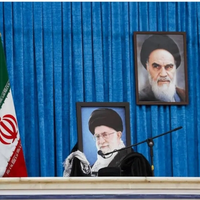
While most semi-official media outlets in Iran and many political figures have expressed support for what they describe as indirect talks with the United States, hardline clerics loyal to Supreme Leader Ali Khamenei are voicing sharp opposition.
Media outlets in Tehran, including those close to his office, have been highlighting that without Khamenei’s support there would be no talks with the Trump administration. However, Friday prayer imams who work under his control, slammed negotiations in their sermons, saying that it is beneath Iran to enter diplomatic bargaining with Washington.
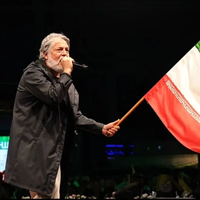
“Negotiating with America is against our national pride,” said Ahmad Alamolhoda, the firebrand imam of Mashhad, during his sermon on Friday, according to the semi-official Mehr news agency. “No Iranian with self-respect would accept to approach the US empty-handed.”
He added that US demands—ranging from dismantling Iran’s missile program to limiting its regional influence—amounted to surrender. “They want us to give up everything: our weapons, our science, even our pride. No honorable Iranian would accept that.”
Calling on Iran’s negotiators to resist pressure, Alamolhoda warned: “Direct talks are worse than indirect ones. We’ve been here before—and it always ends badly.”
Firebrand ayatollah, Alamolhoda during a sermon - File Photo
Khamenei banned negotiations with Washington one day after President Donald Trump renewed his maximum pressure on Tehran in early February. However, the mood gradually changed, as Trump repeatedly issued military threats and a large US naval force gathered in the region.
President Masoud Pezeshkian confirmed on Wednesday that Foreign Minister Abbas Araghchi will conduct upcoming talks with US representatives in Oman under Khamenei's guidance.
The conservative daily Khorasan, which is closely affiliated with parliamentary speaker Mohammad Bagher Ghalibaf, echoed this stance. The paper noted that despite previously opposing direct engagement, Khamenei has now approved the indirect negotiations and is expected to closely oversee their progress.
However, Khamenei has allowed prominent Friday Imams, who wield power in their cities and provinces, to speak out against the negotiations. The Supreme Leader adopted a similar stance during the Obama administration when the JCPOA nuclear deal was being negotiated. He reluctantly admitted that he allowed the talks but often voiced doubt if the outcome would be beneficial.
Khamenei with Tehran Imam, Sedighi - File photo
“Direct talks are beneath us,” said Tehran’s interim Friday prayer Imam Kazem Sedighi during his weekly sermon, according to the semi-official Tasnim news agency. “How can we trust those who tore up the [JCPOA] deal?”
Sedighi said any engagement with Washington must be approached with caution, citing Khamenei’s guidance that negotiations should only take place when there is certainty the other side will honor its commitments.
“There is no room left for negotiation where they try to take the nuclear industry from us,” he said.
Other Friday imams argued that lifting sanctions is not a good enough reason for negotiating with Trump. They reverted to Khamenei’s calls of strengthening the Islamic Republic from within – an ideology that has failed to create a stable economy. Iran’s currency has tumbled 22-fold since 2018 and incomes have nosedived, pushing close to half the population into poverty. Workers' salaries are now barely above $100 per month.
An Iranian hardline lawmaker also said on Friday that the upcoming talks must center on proving Iran is not pursuing nuclear weapons, warning that any effort to dismantle the country’s nuclear program would make talks unacceptable.
“In the talks with the US, we must prove that Iran is not pursuing the construction of a nuclear weapon,” Mousa Ghazanfariabadi said, according to the Mehr news agency.
“But if the other side tries to shut down Iran’s nuclear program or raise unrelated issues, the negotiation is invalid and unacceptable,” he added.
A senior Iranian diplomat said on Friday that progress in nuclear talks with the United States is possible if Washington refrains from issuing threats or introducing unrelated demands.
“If the American side refrains from raising irrelevant issues and puts aside threats and intimidation, there is a good chance for reaching an agreement,” said Majid Takht-Ravanchi, Iran’s deputy foreign minister, according to domestic media outlets.
Speaking at a foreign policy conference in Belgrade, Takht-Ravanchi said, "Iran remains committed to dialogue over its peaceful nuclear program" and has recently held talks with China, Russia, and three European countries.
“We believe in dialogue and engagement in the spirit of mutual respect,” he said. “We reject bullying and coercion.”
US Energy Secretary Chris Wright said on Friday that Washington’s Persian Gulf allies are “extremely concerned” about the possibility of a nuclear-powered Iran and share the United States’ commitment to preventing that outcome.
While declining to detail specific enforcement tools, Wright warned that the US has the capability to curb Iran’s oil exports.
“I’m not going to talk about the specific methodology of how we stop Iran oil exports, but we can turn the screws on Iran 100%,” he told Reuters.
“We can follow the ships from Iran, we know where they go, we can stop Iran’s export of oil,” he added.