• العربية
  • فارسی
Brand
  • Iran Insight
  • Politics
  • Economy
  • Analysis
  • Special Report
  • Opinion
  • Podcast
  • Iran Insight
  • Politics
  • Economy
  • Analysis
  • Special Report
  • Opinion
  • Podcast
  • Theme
  • Language
    • العربية
    • فارسی
  • Iran Insight
  • Politics
  • Economy
  • Analysis
  • Special Report
  • Opinion
  • Podcast
All rights reserved for Volant Media UK Limited
volant media logo

China tells US to stop meddling in its trade with Iran
Mar 21, 2025, 16:05 GMT+0Updated: 19:19 GMT+0
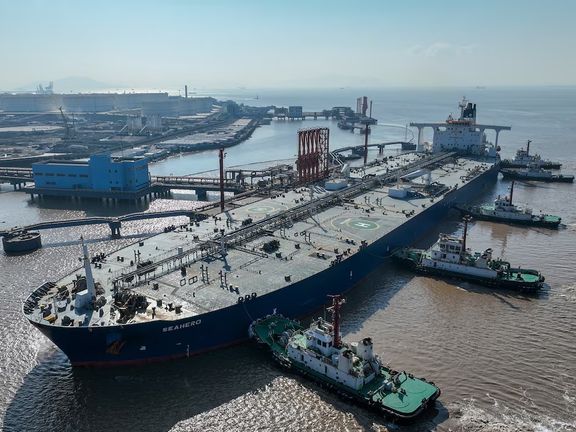
A crude oil tanker at an oil terminal Zhejiang province, China January 4, 2023.

China on Friday blasted the United States for sanctioning Chinese entities that Washington says are involved in Iranian oil trade, asserting Beijing's readiness to defend its economic interests.

"China is always opposed to the abuse of illegal unilateral sanctions and long-arm jurisdiction," Chinese foreign ministry spokesperson Mao Ning said. "The US should stop interfering in and undermining normal trade cooperation between China and Iran."

Her statement came a day after the US State Department announced sanctions against a crude oil and petroleum products storage terminal in the port of Huizhou, China, for receiving and storing Iranian-origin crude oil from a blocked tanker.

According to the US State Department, the terminal, offloaded approximately one million barrels of Iranian crude in late January 2025 from the US-designated tanker formerly known as Spirit of Casper and Nichola.

The State Department said Chinese terminals play a critical role in facilitating Iran’s energy exports and sustaining its revenue streams.

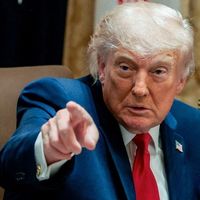
Washington has been ramping up sanctions on Iran's oil exports, as part of US President Donald Trump renewed "maximum pressure" campaign, aimed at cutting Iran’s oil exports to zero in a bid to force Tehran into talks over its nuclear program.

The latest measure on Thursday appears to have pushed China over the edge to censure publicly the Trump administration's targeting of Chinese entities.

"China will take all necessary measure to resolutely safeguard the legitimate rights and interests of Chinese companies," Mao warned in her statement.

Beijing hosted senior Iranian and Russian officials last week in a show of growing alliance between the three countries as the stand-off over Iran's nuclear program inches toward military confrontation.

"Now the situation has reached a critical juncture again," Chinese Foreign Minister, Wang Yi, said. "We must buy time for peace, resolve disputes through political and diplomatic means, and oppose the use of force and illegal sanctions."

Iran's deputy foreign minister Kazem Gharibabadi said that the Islamic Republic had agreed with China and Russia that any future talks over Iran's nuclear program must not stray into other issues.

"We made our position clear and China and Russia take the same position and have always maintained that non-nuclear issues won’t be part of the nuclear talks," Gharibabadi said. "This is the position of all three countries."

The three countries in an earlier joint statement emphasized the need to address the root causes of the nuclear standoff. They condemned unilateral sanctions as illegal and underscored Iran's right to the peaceful use of nuclear energy.


Most Viewed

Iran diplomacy wobbles as factions compete to avoid looking soft on US
1
INSIGHT

Iran diplomacy wobbles as factions compete to avoid looking soft on US

2
VOICES FROM IRAN

Bread shortages, soaring prices strain households in Iran, residents say

3
ANALYSIS

The politics of pink: how Iran uses cuteness to rebrand violence

4

Scam messages seek crypto for ships’ safe passage through Hormuz, firm warns

5
EXCLUSIVE

Family told missing teen was alive, then received his body 60 days later

Banner
Banner

Spotlight

  • Diplomacy tolls at Hormuz as conflict returns to its doorstep
    OPINION

    Diplomacy tolls at Hormuz as conflict returns to its doorstep

  • Opposition to US talks grows in Tehran as ceasefire deadline nears
    INSIGHT

    Opposition to US talks grows in Tehran as ceasefire deadline nears

  • Tehran moderates see ‘no deal–no war’ limbo as worst outcome
    INSIGHT

    Tehran moderates see ‘no deal–no war’ limbo as worst outcome

  • The future has been switched off here
    TEHRAN INSIDER

    The future has been switched off here

  • Lights out, then gunfire: Witnesses recount Mashhad protest crackdown
    VOICES FROM IRAN

    Lights out, then gunfire: Witnesses recount Mashhad protest crackdown

  • Is Iran entering its Gorbachev moment?
    INSIGHT

    Is Iran entering its Gorbachev moment?

•
•
•

More Stories

US sanctions more vessels and entities aiding Iran's oil exports

Mar 20, 2025, 14:25 GMT+0

The United States issued new Iran-related sanctions on Thursday, targeting one individual, several entities and vessels linked to Iranian oil trade as part of President Trump's pressure campaign on Tehran.

“Teapot refinery purchases of Iranian oil provide the primary economic lifeline for the Iranian regime, the world’s leading state sponsor of terror,” said Secretary of the Treasury Scott Bessent in a press release announcing the new measure.

“The United States is committed to cutting off the revenue streams that enable Tehran’s continued financing of terrorism and development of its nuclear program.”

The sanctions target a Chinese refinery, Luqing Petrochemical, which the US Treasury accused of purchasing Iranian crude worth half a billion dollars.

The refinery allegedly received oil from vessels linked to the Yemen's Houthis and Iran’s Ministry of Defense and Armed Forces Logistics. Its CEO, Wang Xueqing, was also sanctioned.

Nineteen more entities and vessels were also designated that the US treasury said involved in transporting Iranian oil as part of Iran’s "shadow fleet," which US officials say engages in deceptive shipping practices.

Among them are the Natalina 7, Catalina 7, Aurora Riley, Viola, Montrose, Volans, Brava Lake, and Titan. Companies registered in Hong Kong, Panama, Liberia, Seychelles, and the British Virgin Islands were also sanctioned for allegedly owning or operating these vessels.

In a separate announcement, the State Department said it is sanctioning a crude oil and petroleum products storage terminal in the port of Huizhou, China, for receiving and storing Iranian-origin crude oil from a blocked tanker.

The terminal, owned and operated by Huaying Huizhou Daya Bay Petrochemical Terminal Storage Co., Ltd (Huaying Petrochemical), offloaded approximately one million barrels of Iranian crude in late January 2025 from the US-designated tanker formerly known as Spirit of Casper and Nichola. The State Department said Chinese terminals play a critical role in facilitating Iran’s energy exports and sustaining its revenue streams.

The new sanctions come a day after the US State Department’s Rewards for Justice program announced it is offering up to $15 million for information on four Chinese individuals accused of supplying Iran’s Islamic Revolutionary Guard Corps (IRGC) with US-controlled technology.

Last Thursday, US Treasury sanctioned Iran's Oil Minister Mohsen Paknejad, several oil tankers, and commercial entities.

Washington has been ramping up sanctions on Iran's oil exports since the latter days of the Joe Biden administration, as part of US President Donald Trump renewed "maximum pressure" campaign, aimed at cutting Iran’s oil exports to zero in a bid to force Tehran into talks over its nuclear program.

The sanctions mark the fourth round of US measures targeting Iran's oil sector since Trump took office on January 20, 2025.

Trump sends New Year greetings as US-Iran tensions persist

Mar 20, 2025, 07:36 GMT+0

US President Donald Trump extended Nowruz greetings to those celebrating the Persian New Year, while tensions between the two nations over Iran's nuclear program escalate.

“Nowruz is a joyous occasion for the Persian people, marking the beginning of spring, and the Persian New Year. This long-standing tradition presents a time to reflect on the blessings of the previous year and prepare for the coming spring with a renewed spirit of optimism,” he said in a message published by the White House on Wednesday.

The US has one of the largest expatriate population of Iranians abroad with numbers estimated to be around 620,000 in California alone, according to the Harris Poll and UCLA research.

Research from the United Nations Population Division in 2019 found that the US is the most popular destination for Iranians living abroad.

100%

In his message, he highlighted the contributions of Iranians to various fields, saying, “The Persian people with their vibrant culture and exceptional talents in fields such as math, science, law, technology, and the arts, make many integral contributions to society.”

Trump’s statement comes amid a renewed policy of maximum pressure on Iran, including tough economic sanctions and diplomatic isolation.

A letter he sent to Iran’s Supreme Leader, Ali Khamenei, seemingly set conditions for de-escalation, calling for Tehran to dismantle its nuclear program, impose strict limits on missile development, and halt support for regional armed groups.

While Trump has voiced a preference for diplomatic means with Iran, he has not ruled out military options, while Khamenei has banned talks with the US under the current conditions.

US offers $15M for info on Chinese tech suppliers to Iran

Mar 19, 2025, 16:18 GMT+0

The US State Department’s Rewards for Justice program is offering up to $15 million for information on four Chinese individuals involved in supplying Iran’s Islamic Revolutionary Guard Corps (IRGC) with US-controlled technology.

The IRGC, including its Qods Force, is designated by the US as a Foreign Terrorist Organization and has been linked to armed groups such as Hamas, Hezbollah, and Iran-backed militias in Iraq.

The US government has accused the Chinese nationals—Liu Baoxia, Li Yongxin, Yung Yiu Wa, and Zhong Yanlai—of using front companies to illegally procure and transfer US electronic components to Iran.

“Beginning as early as May 2007, Liu and her associates allegedly utilized an array of front companies in the People’s Republic of China (PRC) to send dual-use US-origin electronic components to IRGC-linked companies that could be used in the production of UAVs, ballistic missile systems, and other military end uses,” the State Department said in its announcement.

The Justice Department charged them in January 2024 with conspiring to smuggle thousands of restricted components for use in Iranian drones and missile systems.

Last week, Rewards for Justice offered a reward of up to $15 million for information that could disrupt financial networks supporting a drone-production arm of Iran’s Islamic Revolutionary Guard Corps' elite Qods Force called Kimia Part Sivan Company (KIPAS).

The company has also sourced key drone components from foreign suppliers, according to US officials.

Iran's ex-president blames Tehran for missed US nuclear deal

Mar 19, 2025, 11:15 GMT+0

Former President Hassan Rouhani has acknowledged that his administration came close to reviving the 2015 nuclear deal under Biden, but Tehran’s internal divisions prevented the agreement.

"Biden’s election was a golden opportunity for the Islamic Republic," Rouhani said Tuesday in an interview with Iran newspaper. "We could have restored the nuclear deal in 2021, but due to political disputes over who would take the presidency next, that opportunity was lost. Now, our situation is harder than ever."

According to Rouhani, who served from 2013 to 2021, his top negotiator at the time, Abbas Araghchi—now Iran’s foreign minister—had reached a framework agreement for reviving the deal with Robert Malley, President Joe Biden’s special envoy for Iran.

Malley, who led US efforts to restart nuclear negotiations, was placed on unpaid leave in April 2023 amid an FBI investigation into his handling of classified information. A Wall Street Journal report in September said that Malley had clicked on a phishing link that compromised his personal email and may have moved classified meeting notes to an unauthorized account.

During Malley’s tenure, the Biden administration informally eased enforcement of US oil sanctions on Iran which were imposed by President Donald Trump in 2018. Iranian oil exports, which had dropped to 250,000 barrels per day in 2019 under Trump’s maximum-pressure campaign, surged to nearly 2 million barrels per day during Biden’s presidency.

Rouhani also said that Malley and Araghchi’s agreement would have ensured not only a US return to the nuclear deal but also the reversal of Trump-era policies, including sanctions on Iran’s Supreme Leader’s office and the designation of the Islamic Revolutionary Guard Corps (IRGC) as a terrorist organization.

Rouhani, who according to Iranian laws could run for a third term, was succeeded by hardliner cleric Ebrahim Raisi in June 2021. His administration resumed talks with JCPOA signatories, but negotiations collapsed after Russia’s invasion of Ukraine.

The former president blamed internal power struggles for the failure of the negotiations. “Some were more concerned about preventing my administration from achieving success than about the national interest,” he said.

Rouhani’s latest remarks come after he suggested last week that Supreme Leader Ali Khamenei’s firm rejection of direct negotiations with Washington might not be absolute—despite Khamenei himself maintaining otherwise. Nevertheless, with Trump back in the White House, Rouhani acknowledged that engaging with Washington will be even more challenging. “Working with Trump is extremely difficult and complex,” he said. “I hope our officials find a way forward.”

As tensions between the US and Iran remain high, Rouhani’s comments hint at the differing views within Tehran’s leadership on how to approach Washington, both in the past and moving forward.

Iran ends its worst year and enters an uncertain future

Mar 19, 2025, 08:16 GMT+0
•
Mardo Soghom

The Iranian year 1403 ending on March 20 marked one of the most challenging yet for the country’s ruling elite, which has been beset by economic malaise at home and historic setbacks abroad.

At the start of the year in March 2024, Iran was already grappling with a broken economy and the looming threat of political unrest. Regionally, however, it still appeared strong and could plausibly project itself as a serious challenge to US and Israeli interests.

Conflict with Israel

As the year began, Israel was deeply engaged in its war with Iran-backed Hamas in Gaza. Tehran confidently claimed that its regional adversary was stuck in an unwinnable conflict, boasting about its so-called Resistance Front and threatening to escalate against both Israel and US interests. Yemen's Houthis were already disrupting shipping in the Red Sea and launching missiles at Israel.

Houthi attacks on maritime trade which began in November 2023 following a declaration by Iran’s Supreme Leader Ali Khamenei inflicted an estimated $200 billion in losses on the global economy.

Israeli tanks in Gaza still confronting remnants of Hamas
100%
Israeli tanks in Gaza still confronting remnants of Hamas

Less than a month into the Iranian year, Tehran launched a large-scale missile and drone strike on Israel In April 2024 in response to Israeli attacks on Iranian targets in Syria.

While most projectiles were intercepted with minimal damage, the Islamic Republic framed it as a significant blow against the "Zionist entity." At the time, Tehran appeared strong, seemingly capable of deterring its most determined adversary.

However, the tide began to turn in late July when Hamas leader Ismail Haniyeh was killed in an explosion while staying at a government guesthouse in Tehran.

It remains unclear whether the incident was caused by a planted explosive or an Israeli missile strike, but the ability of Tehran's arch-foe to strike seemingly anywhere was lost on no one.

The assassination would be just one of many, crescendoing with the killing of Hezbollah leaders via their bomb-laden communication devices and culminating in the assassination of its storied leader Hassan Nasrallah.

Political crisis

Before these epochal blow, Iran suffered another major shock in May when hardline President Ebrahim Raisi and his foreign minister died in a mysterious helicopter crash in northwestern Iran.

Many doubted the official explanation of bad weather, which was never conclusively proven, fueling speculation about a high-level internal plot or an Israeli operation.

Raisi had been widely regarded as ineffective, presiding over a rapidly deteriorating economy since taking office in 2021.

Rescuers at the remote region where Raisi's helicopter crashed in May 2024
100%
Rescuers at the remote region where Raisi's helicopter crashed in May 2024

In June, Iran held presidential elections, with several key candidates disqualified through a vetting process controlled by Khamenei. Ultimately, Masoud Pezeshkian, a politician with no executive experience, faced hardliner Saeed Jalili in a low-turnout runoff and won.

During his campaign, Pezeshkian made it clear that he had no plans beyond executing Khamenei’s directives.

Some Iranians still hoped for limited reforms and a diplomatic breakthrough to ease US sanctions. However, when Khamenei formally banned negotiations in early February 2025, Pezeshkian pledged loyalty to his decision, disappointing even his Reformist supporters.

Economic crisis

By mid-2024, with Hezbollah and Hamas weakened and Israel growing more confident in striking Iranian military targets, Iran’s economic woes deepened. The rial, which had been around 550,000 per dollar in September, plunged to 900,000 by February and even hit one million by March 18.

The worsening economic picture underscored a government unable to halt a downward spiral. Severe energy shortages crippled both households and industries throughout fall and winter, with the government regularly announcing power shutdowns across the country due to heating and electricity failures.

Blackouts hit Iran in the fall and winter of 2024-2025
100%
Blackouts hit Iran in the fall and winter of 2024-2025

Iran’s oil exports to China continued through intermediaries and at deep discounts, but the Trump administration escalated sanctions on oil tankers and trading entities following Biden’s late-term crackdown on exports.

Revenues from these limited exports fell far short of meeting the government’s foreign currency needs, especially given Tehran’s ongoing financial commitments to regional proxy groups.

Bleak outlook

Many political insiders in Tehran now say Pezeshkian’s administration may be incapable of addressing the worsening economic crisis. The only potential relief would come from easing US sanctions, but Khamenei has so far resisted Trump’s pressure to make concessions.

It remains unclear whether Washington seeks only a binding agreement to prevent Iran from enriching uranium to weapons-grade levels or whether it also aims to curb Tehran’s ballistic missile program and regional activities.

Khamenei appears to be employing delaying tactics, hoping circumstances shift in his favor or that he can stall until the next US elections. Meanwhile, Trump continues to tighten sanctions and increase military threats, either directly or through Israel.

Another critical challenge is the risk of public unrest due to soaring prices and a growing sense of political instability.

While the Islamic Republic has repeatedly demonstrated its willingness to use deadly force against protesters, its ability to quash mass uprisings is not guaranteed.

If essential goods approach hyperinflation levels, even the security forces and loyalist cadres—who rely on fixed incomes—could begin to waver.