Iran mandates solar panels in government offices to tackle energy shortage
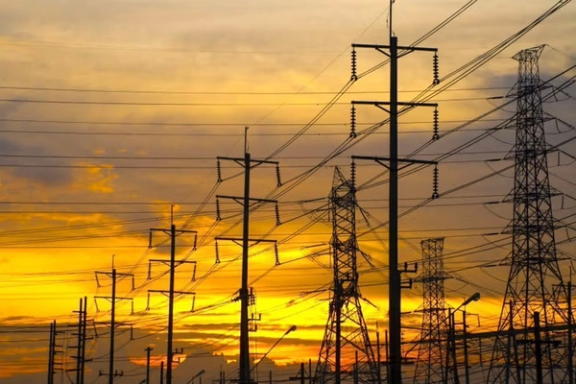
Iranian President Masoud Pezeshkian announced that government offices and executive bodies will be required to install solar panels as part of efforts to address the country's energy shortages, state media reported Monday.
Speaking at a meeting on energy distribution and consumption, Pezeshkian stressed the need for equitable energy policies and flexible solutions adapted to regional conditions.
“Addressing energy imbalances should not be confined to a single approach,” he said, advocating for a mix of strategies to optimize distribution and ensure fairness across different provinces.
Iranian officials refer to the shortages in the energy sector as an imbalance.
The president also emphasized public engagement in energy-saving initiatives, suggesting that mosques, health centers, and prominent cultural figures could help promote consumption reforms.
“If we involve people in implementing these decisions, we will overcome many challenges, including energy distribution and consumption management,” he added.
Among other measures, Pezeshkian highlighted the need to modernize heating equipment, ban outdated and inefficient appliances, and expand the use of smart meters in residential areas.
The energy crisis, marked by widespread electricity shortages and gas deficits, has disrupted industries across the country since the past months. Aging infrastructure, international sanctions, and poor management have compounded the problem, leading to the shutdown of approximately 80 power plants.
During the winter, Iran faces a daily shortfall of at least 260 million cubic meters of gas, further straining the electricity supply.
Iran has vast oil and gas reserves, much of which it cannot tap due to US-led sanctions which stall investment and maintenance.
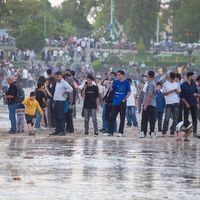
Iran's then-presidential candidate Mehdi Karroubi (3rd right) joins a crowd of supporters in Tehran June 17, 2009.
Mehdi Karroubi, a presidential candidate at the center of deadly 2009 protests, is set to be released from house arrest after 14 years, his son said on Monday.
"Security officers met my father and said his arrest would be lifted today on orders of the head of the judiciary," Karroubi's son Hossein Karroubi told Jamaran, a semi-official newspaper linked to Iran's Reformist political faction.
Karroubi's political ally, former Prime Minister Mirhossein Mousavi, would also be released from house arrest in the coming months, he added.
In the 2009 presidential election, which resulted in the controversial re-election of Mahmoud Ahmadinejad, Karroubi, now 87, and Mousavi, 83, ran on a reformist platform. The outcome sparked mass protests, known as the Green Movement, with demonstrators alleging widespread electoral fraud."
Both were detained in 2011 after taking a leading role in the protests, though they were not put on trial or publicly charged.
Karroubi’s son, however, added that his father had been told that security officers would be present at his home until April 8 to ensure his protection.
Iran's official news agency IRNA also reported on Karroubi's release, but did not refer to Mousavi's case.
Last year, Hossein Karroubi told Ensaf News that his father would refuse release from house arrest while Mousavi remained detained.
Iran's current president, Masoud Pezeshkian, promised during his election campaign to release both politicians.
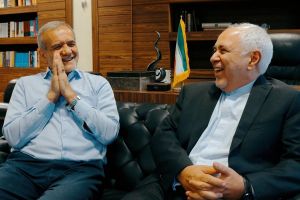
Iranian President Masoud Pezeshkian (right) and Mohammad Javad Zarif (center), the vice-president for strategic affairs
Veteran nuclear negotiator and top reformist Javad Zarif remains at his senior post despite resigning, a spokesperson said, signaling that the beleaguered president is loath to lose him.
Government Spokeswoman Fatemeh Mohajerani said on Sunday that Zarif's resignation, announced amid controversy over his children's US citizenship, has not been officially accepted, emphasizing that his appointment has not been revoked, nor has a replacement been named.
"From the government's perspective, Zarif remains the Strategic Affairs Vice-President," Mohajerani said. "Dr. Zarif's vice presidency remains valid, though he is absent from government meetings."
Zarif announced his resignation earlier this month, citing pressure from the Judiciary and a desire to "prevent further pressure on the government" after criticism from hardliners who cited a 2022 law banning officials with dual citizenship or close relatives with dual citizenship from holding sensitive positions.
Mohajerani also addressed concerns about other officials with dual citizenship. "If the law is to be enforced, it must apply uniformly across all branches of government," she added.
Mohajerani revealed that Zarif had met with President Masoud Pezeshkian after submitting his resignation, where she said they discussed "Zarif's capabilities, impact, and unique experiences".
Though she said "the text he released indicated a kind of resignation", she went on to say: “The Vice-President for Strategic Affairs resigned from his position to prevent harm to the President, the government, and the country."
Zarif's resignation sparked sharp political reactions in Iran, with hardliners celebrating his exit and reformists warning of its broader implications.
His departure came less than four weeks after Supreme Leader Ali Khamenei reaffirmed his opposition to negotiations with the United States, a stance that undermined Zarif’s role in the government.
It was widely perceived that Zarif joined the Pezeshkian administration to help negotiate another nuclear deal with world powers similar to the Joint Comprehensive Plan of Action (JCPOA), which was scrapped by Donald Trump during his first term in office.
However, Khamenei, the country's ultimate decision-maker, rejected the idea of talks with Trump last month.
Reformist commentators have warned that Zarif’s resignation, coming shortly after the impeachment of Economy Minister Abdolnaser Hemmati, signals growing instability within Pezeshkian’s administration.
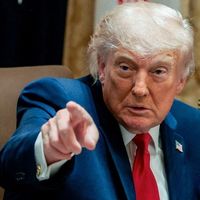
US President Donald Trump speaks to reporters, watched by National Security Advisor Mike Waltz, aboard Air Force One on his return to Washington, DC, March 16, 2025.
Tehran will respond privately to US President Donald Trump's letter and will not make public its contents, according to Iran's foreign ministry.
"We currently do not intend to release the contents of Trump's message to the media," said Spokesperson Esmail Baghaei during a press conference on Monday.
Last week, an Emirati official brought a letter from the US president proposing nuclear talks with Tehran, which Supreme Leader Ali Khamenei rejected, saying such a proposal was deception from Washington amid crippling sanctions on Iran.
"Our response to this correspondence will be provided through appropriate channels after the completion of the reviews. What has been published in the media is mostly speculation and lacks a precise basis."
Baghaei noted that the letter's content "is not significantly different from Trump's speeches and is structured based on those elements."
The spokesman described US messages as contradictory signals, noting that while expressing readiness for talks, the US continues to impose sanctions.
He specifically criticized the US for sanctioning Iran's oil minister, whose "only crime is performing his official, legal, and national duties."
"Diplomatic negotiations have etiquette in that each side must recognize the other's interests and, more importantly, believe in fulfilling their commitments," he added during the televised press conference.
"The US does not respect that and uses the possibility of negotiations as a propaganda and political tool."
During his first term, President Trump withdrew the US from the 2015 Joint Comprehensive Plan of Action (JCPOA), an agreement between Iran and major powers that limited Iran's nuclear activities in exchange for sanctions relief. Following the 2018 US withdrawal and reimposition of sanctions, Iran exceeded the JCPOA's nuclear activity limits.
Western powers express concern that Iran's uranium enrichment, reaching up to 60% purity, indicates a potential pursuit of nuclear weapons, an allegation Iran denies, asserting its program is for peaceful purposes and compliant with international law.
Baghaei also highlighted recent diplomatic activities, including a trip by Foreign Minister Abbas Araghchi to Oman on Sunday, a trilateral meeting in Beijing with Russia and China, and a visit by the Deputy for Legal and International Affairs to Vienna for talks with the International Atomic Energy Agency (IAEA).
He stressed that Araghchi's Oman trip was unrelated to Trump's letter and had been scheduled beforehand.
In response to questions about US military strikes against the Iran-backed Houthis in Yemen, Baghaei condemned the attacks as a crime and a violation of international law.
"The US has unfortunately mistaken the victim for the criminal," he said, calling on the international community to take urgent action.
He also rejected US claims that Iran was behind the Houthi's blockade of commercial shipping in the Red Sea, saying the Yemeni people make their own decisions.
The denials came on the back of claims made on Sunday by Revolutionary Guard Corps (IRGC) Commander Hossein Salami who categorically denied US accusations of Iranian control over the Houthis', in spite of the blockade being ordered by Iran's Supreme Leader in allegiance with Iran-backed Hamas amid the Gaza war, back in 2023.
"We have always declared, and we declare today, that the Yemenis are an independent and free nation in their own land and have an independent national policy," Salami said.
"Ansarullah, as the representative of the Yemenis, makes its own strategic decisions, and the Islamic Republic of Iran has no role in setting the national or operational policies of any movement in the resistance front, including Ansarullah in Yemen."
A B-52 Stratofortress flies over Afghanistan in this undated handout photo. U.S. Air Force
The Trump administration wants Iran to abandon all aspects of its nuclear program, the US national security advisor said on Sunday, warning that all options are on the table should Tehran refuse.
"Iran cannot have a nuclear weapon. All options are on the table to ensure it does not have one," Michael Waltz told ABC News on Sunday.
"And that’s all aspects of Iran's program. That’s the missiles, the weaponization, the enrichment. They can either hand it over and give it up in a way that is verifiable, or they can face a whole series of other consequences," he warned.
In 2015, Iran signed a nuclear deal with the United States and other world powers that imposed restrictions on its uranium enrichment capacity but effectively allowed it to maintain its nuclear program. It also did not directly address Tehran's ballistic missile program, focusing instead on nuclear-related issues.
While Iran is now signaling a willingness to accept similar restrictions on its nuclear program in exchange for sanctions relief, the Trump administration appears determined to put an end to Tehran's atomic ambitions.
The United Nations' nuclear watchdog warned on Saturday that the Islamic Republic is very close to developing a nuclear weapon.
"Iran has an extremely ambitious and extensive nuclear program, under which it is enriching uranium to nearly weapons-grade levels," Rafael Grossi, the director general of the International Atomic Energy Agency (IAEA) said.
Trump's national security advisor said on Sunday that "we cannot have a world with the ayatollahs with their finger on the nuclear button. And President Trump is determined (to prevent that), one way or another."
"Iran has been offered a way out of this to make sure that we don’t have a world that can be threatened by a radical regime," Waltz said, referring to Trump's direct letter to Iran's Supreme Leader.
Trump announced the overture at the same time he warned Iran to agree to a new nuclear deal or face military action.
While Supreme Leader Ali Khamenei has publicly ruled out talks, Iran’s foreign minister on Thursday signaled Tehran's willingness to engage in indirect negotiations with the United States through Oman.
On Sunday, Araghchi travelled to Muscat "to review bilateral and regional issues of mutual interest and concern."
"Our commitment is to diplomacy in defense of peace and stability, and I am always delighted to engage with my Omani counterpart in pursuit of these aims," he said, without explaining whether the issue of Omani mediation between Tehran and Washington had been discussed.
US may target Iranian assets in Red Sea
Araghchi's trip to Oman came hours after the US military started a series of large-scale airstrikes against Yemen's Houthis in what US officials described as a warning signal to their sponsors in Tehran.
US Defense Secretary Pete Hegseth said on Sunday the ongoing US airstrikes against Houthis serve as a warning to Iran to stop backing the group.
Washington would conduct "unrelenting" strikes against Yemen's Houthis until the Tehran-backed group ceases their military actions targeting US assets and global shipping, Hegseth told Fox News.
Secretary of State Marco Rubio also told CBS News that there was "no way" Yemen's Houthis would have the ability to attack global shipping without support from Iran.
In his Sunday interview with Fox News, Michael Waltz said the Trump administration "will hold not only the Houthis accountable, but we’re going to hold Iran, their backers, accountable as well.”
"And if that means they’re targeting ships that they have put in to – to help their Iranian trainers, IRGC and others, that intelligence, other things that they have put in to help the Houthis attack the global economy, those – those targets will be on the table too," he warned.
Iran allegedly operates reconnaissance ships in the Red Sea, including the commercial cargo ships Behshad and Saviz, which Washington says coordinate with the Houthis.
Despite scrutinizing their operations, neither the US nor Israeli militaries have targeted the ships.
Iran’s Supreme Labor Council approved a 45% increase in the minimum wage, setting the new base salary at 104.4 million rials ($110) per month, but the decision has drawn criticism from lawmakers and labor representatives who argue that it fails to match rising living costs.
Despite the wage hike, workers' representatives had demanded at least a 70% increase to keep pace with inflation.
The council did not issue a decision on housing allowances, leaving it at 9 million rials ($9.50) per month, while rent for a 50-square-meter apartment in Tehran averages 150 million rials ($160) per month.
Hussein-Ali Haji Deligani, a member of parliament, dismissed the 45% wage increase as insufficient in the country's collapsing economy.
“With 100 million rials ($106), a family cannot survive,” he said, calling for a fundamental adjustment of wages to match inflation.
The increase is 10 percentage points higher than last year’s 35% wage increase, but some lawmakers emphasized that percentage gains mean little when purchasing power declines.
Mojtaba Yousefi, an MP from Ahvaz, pointed out that “when wages rise slower than inflation, workers’ real income drops by 20%.”
According to Iran’s labor law, the minimum wage must be set in accordance with inflation and provide for a household’s basic needs.
A view of Tehran's Grand Bazaar
Inflation has been consistently around 50 percent and the economic crisis has significantly diminished the purchasing power of ordinary Iranians, leading to tens of millions falling into the category of working poor.
Experts highlight that the poverty line for Tehran residents is approximately 300,000,000 rials (approx. $600) per month, three times the current minimum wage.
Ali Babaei Karnami, head of the parliamentary Social Committee, previously said that any increase below 50% would be “a deviation from the law.” He also cited reports estimating a household’s essential expenses at 260 million rials ($277) per month, more than twice the newly set minimum wage.
Under the new system, a married worker with two children will see their total monthly income rise from 116.9 million rials ($124) to 163.5 million rials ($174), while a single worker without seniority will earn 134.9 million rials ($144), up from 94.6 million rials ($101).
Each year, Iran’s labor ministry convenes negotiations between worker and employer representatives, but two key factors ultimately determine wages: the government’s salary increases in the annual budget and the inflation rate reported by the country’s statistics agency.
Critics argue that raising wages without broader economic reforms risks fueling further inflation while failing to improve workers’ real incomes. At least one third of Iran now lives below the poverty line.
In dollar terms, wages have barely grown due to the weakening rial, leaving many workers effectively poorer despite nominal increases.