Iran rejects talks under Trump's maximum pressure as political shake-up continues
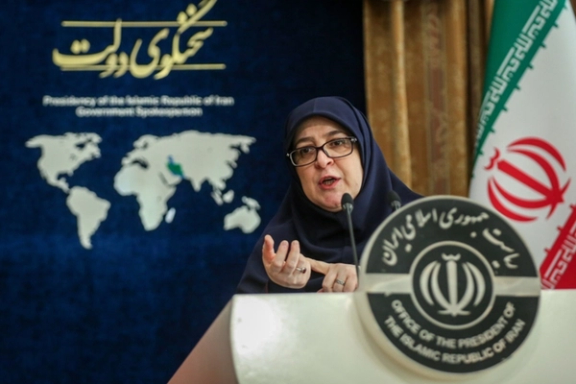
Iranian Government Spokesperson Fatemeh Mohajerani
Iran will not engage in negotiations under maximum pressure, government spokesperson Fatemeh Mohajerani said in a press briefing, pushing back against interpretations that Tehran categorically refuses talks under sanctions.
"The phrase 'we do not negotiate under sanctions' is not accurate; rather, we 'do not negotiate under maximum pressure,'" she said.
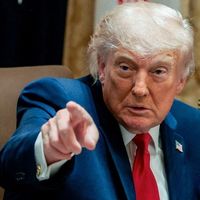
Her remarks came as Supreme Leader Ali Khamenei ruled out direct talks with Donald Trump, who reinstated severe sanctions last month. The US president defended his approach, saying reports of a planned military strike on Iran were greatly exaggerated and that he preferred a deal.
Iranian President Masoud Pezeshkian has said he supported negotiations but has aligned with Khamenei’s decision against engaging in talks. Addressing parliament on Sunday, he said his initial stance had been for diplomatic engagement but deferred to the Supreme Leader's position.
"Negotiation is a voluntary act," Mohajerani said. "No one can force another person to sit at the negotiating table."
Amid mounting political shifts, Mohajerani dismissed concerns that recent resignations and dismissals could fracture government unity.
"Impeachment or resignation of an individual does not take us away from national unity in solving people's problems," she said, referring to the ousting of Vice-President Mohammad Javad Zarif and Economy Minister Abdolnaser Hemmati.
Zarif, known for his role in the 2015 nuclear deal, tendered his forced resignation on Sunday, though Pezeshkian has not accepted it. Mohajerani confirmed that "one side of a resignation is its acceptance, which has not yet been granted by Pezeshkian."
Zarif later wrote on X that he stepped down following a meeting with Iran’s judiciary chief, who advised him to "return to the university to prevent further pressure on the government."
With economic concerns mounting, Mohajerani acknowledged the challenges but stressed that solutions would take time. "The country's economic issues did not emerge overnight and will not be resolved overnight either," she said.
The vote followed a heated session in which Hemmati defended his record while critics pointed to the surging exchange rate and rising inflation, blaming him for its worsening since coming to office.
Iranian President Masoud Pezeshkian meets with Supreme Leader Ali Khamenei on August 27, 2024
After Iranian hardliners ousted two key aides and rejected his hopes for talks with the United States, the young presidency of relative moderate Masoud Pezeshkian appears to be at a low ebb.
Economy Minister Abdolnaser Hemmati was impeached by Parliament while Vice President for Strategic Affairs Javad Zarif resigned under pressure last week.
Hardliners accused Hemmati of failing to curb rising prices, inflation, and the devastating devaluation of Iran’s rial, while Zarif faced criticism over his family members' US citizenship. Pezeshkian had strongly defended both men.
The key question in Iranian newspapers on Monday was, "Will hardliners stop here?" Some outlets predicted that attacks on Pezeshkian and his government would continue.
Political commentators speaking to Persian-language media outside Iran said that anyone in Pezeshkian's position would have resigned almost immediately.
Inside Iran, however, commentators remained silent or were too intimidated to voice opinions that could be seen as undermining the government's integrity or sowing discord among officials.
What media, commentators, and politicians in Iran did not say was that Hemmati was impeached for economic problems rooted in Supreme Leader Ali Khamenei’s refusal to negotiate with the United States to address Iran’s chronic economic crisis. While many have acknowledged in recent months that US sanctions are the primary driver of Iran’s economic hardships, they have consistently avoided blaming Khamenei for the situation.
Even Pezeshkian and Hemmati, who detailed Iran’s deep economic problems in their speeches at the Majles, avoided explicitly naming Khamenei as the culprit. However, Pezeshkian made it clear: "I wanted to negotiate with the United States, but Khamenei forbade negotiations, and therefore, I said we won't negotiate."
That statement alone was damning. Pezeshkian was desperately trying to convey to the nation that the suffering was not his fault. From Khamenei’s perspective, shifting the blame to the economy minister helped absolve the Supreme Leader of responsibility for prolonging the country’s financial hardships.
With Khamenei dominating the country's political and media landscape, Pezeshkian has little room to further defend himself. He is likely to be left isolated, facing intensified attacks from hardliners who oppose his presidency and have never hidden their desire to unseat him.
The pro-reform website Fararu quoted former government spokesman Ali Rabiei as saying, "Pezeshkian has more difficult days ahead of him."
Other reformists, including cleric Mohammad Ali Abtahi, a former aide to President Mohammad Khatami, criticized Pezeshkian for his attempts to unify with hardliners. Abtahi argued that Pezeshkian appointed ultraconservatives to key positions in his government without securing their support for his administration.
Tehran's former mayor Gholam Hossein Karbaschi, who is currently the proprietor of centrist Ham Miham daily, wrote: "The hardliners will be further emboldened if Pezeshkian does not object and keeps giving concessions to ultraconservatives."
Karbaschi advised Pezeshkian that "There should be a limit to the idea of national reconciliation." He added that Hemmati's impeachment was a factional move and is not likely to bring about any improvement in the country's economic situation." He explained that the "ultraconservatives always held a grudge against Hemmati since June 2021 when he was competing with ultraconservative figureheads Saeed Jalili and Ebrahim Raisi as presidential candidate and questioned their understanding of the country's economy."
Referring to "the failure of national reconciliation as Pezeshkian's main project," proreform Rouydad24 warned the Iranian President: "Reconciliations with others in power has failed. Think of reconciling with the people."
Iranian women without mandatory hijab on a street in Tehran
UN High Commissioner for Human Rights Volker Turk urged Iran to permanently repeal its hijab law and end its use of the death penalty, speaking at the 58th session of the Human Rights Council on Monday.
"I call again on the authorities to repeal the (hijab) law fully and permanently, along with all other laws and practices that discriminate against women and girls," Turk said.
In December, Iran postponed the implementation of the controversial hijab law that imposes severe penalties on women and girls who defy veiling requirements, following huge backlash from the public and the international community.
Despite this, Iranian authorities continue to crack down on women who appear unveiled in public.
He also called for the release of all detained human rights defenders and an end to arbitrary arrests and imprisonment. Expressing concern over a sharp rise in executions, Turk noted that more than 900 cases were reported last year.
"I have urged the Iranian authorities to place an immediate moratorium on the use of the death penalty," he added.
At least 54 political prisoners are currently on death row in Iran, according US-based rights group Human Rights Activists News Agency (HRANA), with 19 having their convictions upheld by higher courts of the Islamic Republic
Two former Iranian ministers have been sentenced to prison for their roles in a major corruption case involving the tea company Debsh, according to Iran’s judiciary spokesperson.
Former trade minister Reza Fatemi-Amin received a one-year sentence and former agriculture minister Javad Sadatinejad was handed two years after both found guilty of “complicity in disrupting the country’s economic system”.
The sentencing of former government officials marks a rare instance of high-profile figures being prosecuted in the Islamic Republic. Appeals and commutations have meant similar sentences are often not fully implemented.
The Debsh Tea scandal, one of the largest financial corruption cases in Iran’s history, involved financial misconduct amounting to approximately $3.4 billion. Investigations uncovered widespread fraud, including large-scale tea smuggling, currency manipulation and illegal acquisition of foreign exchange.
At the center of the scandal was the industrial group’s CEO Akbar Rahimi Darabad, who on Monday was sentenced to 66 years in prison for various economic crimes according to his spokesman, including organized smuggling and bank fraud.
Rahimi Darabad has also been required to return over €2 billion in received foreign currency facilities and pay fines for various smuggled tea shipments.
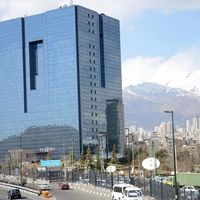
The two ex-ministers were among 44 individuals found guilty in the case, which allegedly involved Iran’s Central Bank and customs and various ministries, raising public concerns over the extent of economic misconduct in the country.
The investigation alleged that Debsh Tea had exploited government policies to acquire vast amounts of foreign currency at official exchange rates, later selling it at significantly higher prices on the open market.
The company also smuggled tea into the country without fulfilling tax and import obligations.
Iran's supreme leader and president, September 21, 2024
Iran's president Masoud Pezeshkian’s hinted at disagreement with Ali Khamenei over US negotiations, in a sign of his apparent frustration with his role.
“I personally believed it would be better to negotiate [with the US], but the Supreme Leader said we will not talk with the US. So I said we would not negotiate with the US. It was done and over with, it was done and over with,” Pezeshkian said, his tone possibly reflecting frustration, during a speech in Parliament on Sunday. He was attending the session as lawmakers debated the impeachment of his economy minister, Abdolnaser Hemmati.
This marks the first time an Iranian president, while still in office, has openly acknowledged a significant policy disagreement with Khamenei on a matter of dire national importance.
At a press briefing on Monday, Iranian Foreign Ministry spokesman Esmaeil Baghaei emphasized that Pezeshkian’s remarks were clear and meant that his government would adhere to "policies ordained by the top officials of the country"—a phrase commonly understood to refer to Khamenei.
A mission derailed?
When the reform-leaning Pezeshkian was unexpectedly allowed to run in the June snap presidential election, many speculated that his candidacy was intended to facilitate negotiations with the US while also serving as a scapegoat if the talks failed.
"Pezeshkian was supposed to be the president who negotiated with the US," political commentator Sahand Iranmehr wrote on X, arguing that after Trump’s election, Iran’s real decision-makers reversed course. According to Iranmehr, Pezeshkian’s speech in Parliament reflected a leader whose mission had been completely erased—a man who now appears aimless, sidelined, and even ashamed.
There are also some speculations that Pezeshkian’s candid admission of his disagreement with Khamenei was a deliberate—perhaps desperate—attempt to shift responsibility for the consequences of refusing negotiations onto the Supreme Leader himself.
By publicly acknowledging his stance, Pezeshkian may have sought to make it clear that if the economic and political crisis worsens, it will be Khamenei and the hardliners opposed to negotiations rather than his government who should bear the blame.
Fallout from Pezeshkian’s admission
On Sunday, the hardline-dominated Parliament voted to remove Pezeshkian's reformist economy minister. Hours later, he also lost his strategic affairs deputy, Mohammad-Javad Zarif, a figure despised by hardliners for advocating diplomacy with the US.
In an X post, Zarif announced his resignation, stating that he was stepping down on the "advice" of Chief Justice Gholam-Hossein Mohseni-Ejei. Pezeshkian has yet to officially accept his resignation.
Due to the sensitivity of the issue, most politicians and commentators in Iran have refrained from directly commenting on Pezeshkian’s remarks. Instead, they have either quoted him verbatim or expressed disappointment in vague terms.
However, ordinary Iranians—many posting anonymously on social media or sending recorded messages to Iran International TV—have been far more direct in their criticism and many say he should resign now that he has realized he has no power to deliver his election promises, including resolving the issue of sanctions through direct talks with the US.
“It was you who mocked [Saeed] Jalili [in election debates] saying nothing could be done unless sanctions were lifted. Now you are saying you wanted to negotiate but will not do so because Ali Khamenei says no,” one of the angry citizens said in a recorded messages sent to Iran International.
Others who had hoped Pezeshkian would break the deadlock over sanctions expressed deep disillusionment. A businessman in Tehran, speaking anonymously to Iran International, said voting for Pezeshkian had been "the last chance" for him and many others who had hoped change could come through elections.
"With the possibility of sanctions worsening due to Khamenei’s obstinacy, things that are already bad could spiral into something much worse. When all hope is lost, a countdown to the public’s complete disillusionment with the regime will begin, possibly in the next few months," he warned.
Khamenei’s history of blocking US negotiations
Khamenei has a long history of obstructing presidents who sought negotiations with the US. However, his stance has not always been absolute. While he denied permission to Akbar Hashemi-Rafsanjani and Mohammad Khatami, he allowed secret talks with US officials in Oman from 2013-2015 that resulted in the JCPOA nuclear deal.
“Rafsanjani advocated talks with the US but was not given permission. Neither did Khatami. Mahmoud [Ahmadinejad] was allowed but he wasn’t taken seriously [by the other side]. Then there was Rouhani who managed to make the nuclear deal but denied permission to continue. Raisi tried secretly for three years but failed. And Pezeshkian said today that he wants negotiations but [is forbidden]… and the story will continue,” wrote Ghorbanali Salavatian, a reformist public figure and Iran-Iraq War veteran, in an X post.
Mohammad Javad Zarif (left) and Masoud Pezeshkian during presidential election campaign (July 2024)
The formal resignation of Mohammad Javad Zarif, Iran’s Vice-President for Strategic Affairs has sparked sharp political reactions in Iran, with hardliners celebrating his exit and reformists warning of its broader implications.
His departure came less than four weeks after Supreme Leader Ali Khamenei reaffirmed his opposition to negotiations with the United States, a stance that undermined Zarif’s role in the government.
Zarif announced his resignation on Sunday, saying that the powerful Judiciary had asked him to return to teaching at the university, ostensibly because his children hold US citizenship.
Several conservative lawmakers seized the moment to push for further resignations. Tehran MP Amirhossein Sabati said, "There are several other officials in the government who must either revoke their children’s dual nationality or be removed from their positions."
Hardliners like Sabeti cite a law that bans individuals with dual citizenship or close relatives with dual citizenship from holding sensitive positions as the basis for the action.
Zarif's children were automatically granted US citizenship at birth in New York while he spent much of his career with the Iranian delegation at the United Nations.
Although they now reside in Iran, the Law on the Appointment of Individuals to Sensitive Positions, enacted in October 2022, bans Zarif from holding his position as vice president for strategic affairs.
Hardliner MP Hamid Rasaei dismissed the notion that Zarif had voluntarily resigned, saying, "Someone whose presence is legally null and void cannot resign. Rather, after being formally charged, they should be dismissed from the position they unlawfully occupied."
Zarif’s allies and reformist figures have framed his resignation as a significant loss. Hesamoddin Ashna, an advisor to former President Hassan Rouhani, suggested that Zarif had been forced out. Others, including Hassan Younesi, said his departure would be welcomed by Israeli Prime Minister Benjamin Netanyahu.
Early Monday, Zarif posted on X that he had been invited to a meeting with judiciary chief Gholamhossein Mohseni Ejei, who "recommended that I return to the university to prevent further pressure on the government. I immediately accepted."
Political analyst Mohsen Sazgara told Iran International TV that Zarif was no longer useful to the government after Khamenei banned negotiations with the US. "Khamenei put figures like Hemmati and Zarif to be grilled by the hardliners, and there is a chance some other ministers might be impeached," he said.
Reformist commentators have warned that Zarif’s resignation, coming shortly after the impeachment of Economy Minister Abdolnaser Hemmati, signals growing instability within Pezeshkian’s administration.
Abbas Abdi told Khabar Online that official positions on potential US negotiations had "closed off possibilities, forcing Pezeshkian to confront harsh realities that he had not anticipated."
The relatively moderate Etemad newspaper reported that Hemmati’s impeachment may have been orchestrated outside parliament, suggesting that "internal parliamentary events had little influence" on the decision. In contrast, the conservative Kayhan newspaper welcomed Hemmati’s removal, calling it a necessary step for economic reform.
The vote followed a heated session in which Hemmati defended his record while critics pointed to the surging exchange rate and rising inflation.
Parliament voted 182 to 89 in favor of impeachment, with one abstention and one void ballot out of 273 total votes. Under Article 135 of Iran’s Constitution, ministers remain in office unless dismissed by the president or voted out by parliament.