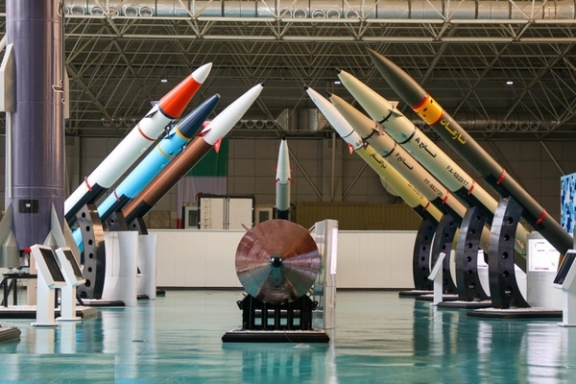
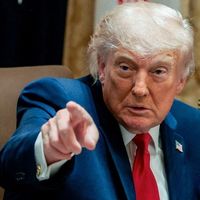
Some Iranian politicians maintain that Tehran’s military strength is deterring the United States as tensions fester between President Donald Trump and the Islamic Republic.
Former parliament member Ezzatollah Yousefian said on Friday that “Trump does not want to go to war with Iran because he knows Iran’s missile power can obliterate an entire country.”
Yousefian also reiterated that Iran will not accept to take part in any negotiation in a situation marked by arrogance.
Another former lawmaker, Mohammad Hassan Asafari, told a local conservative website, “Trump has realized that Iran is now speaking with one voice and that no one in Iran will accept negotiations under threats and arrogance.” He added that Trump’s decisions on Iran are influenced by the latest developments in Iran’s domestic political climate.
Despite Asafari’s claim of unity, many political figures in Tehran have been asking for a change in foreign policy and negotiations with the United States.
Asafari also urged Tehran to stand firm against Trump, saying, “Trump is accustomed to using fear and intimidation in negotiations, but Iran is aware of his tactics and will not bow to arrogance or threats.”
Addressing Trump’s statement about allowing Israel to attack Iran if Tehran refuses to negotiate over its nuclear program, Asafari said, “If we stand firm, Trump will back down, but if we show division, he will exploit it.” He also echoed Yousefian’s statement that Iran’s missile power is substantial, adding, “If Israel makes a miscalculation, confronting Iran will not be easy.”
Iran launched hundreds of ballistic missiles against Israel twice in 2024, causing minimal damage as most were intercepted by Israeli, US and other allied air defenses and warplanes.
Yousefian also noted that “Trump constantly contradicts himself to confuse his opponents, which reflects a businessman’s mentality.” He added, “He is committed to protecting Israel, but no one can predict the tactics he will use to achieve that.”
Trump’s objective goes beyond preventing Iran from obtaining nuclear weapons; he aims to disarm the country entirely, Yousefian argued. He explained that Trump is increasing pressure on Tehran to force it to the negotiating table, adding, “Unlike Biden, Trump is not a patient man and will not spend two years on negotiations. He wants quick results; otherwise, he will exert more pressure.”
In another development, Iran's Deputy Foreign Minister Majid Takht Ravanchi emphasized that the Foreign Ministry “will act within the frameworks set by Supreme Leader Ali Khamenei for interaction with America.” He deliberately used the term “interaction” instead of “negotiation,” reflecting Khamenei’s firm opposition to talks with the United States.
During an interview with an Iraqi network on a recent visit to Baghdad, Ravanchi criticized the US for failing to uphold its commitments under the 2015 nuclear deal with Iran. He noted that Trump withdrew from the agreement in 2018 after Iran declined to engage in new talks on its nuclear program and regional military ambitions. Ravanchi added that Iran is now focused on pursuing discussions with Europe.
In another development, prominent Iranian lawmaker Ali Keshvari criticized the United States, saying, “The US has a poor track record in its previous negotiations with Iran,” and accused it of “easily undermining its obligations.”
Keshvari also accused the US of “unilateralism when dealing with independent countries,” arguing that “the US seeks only to serve its own interests and secure concessions without offering any in return.” He added, “The US has employed this approach in its negotiations with many other countries,” although he did not specify which ones.
Israeli fighters jets fly low over the funeral of slain Hezbollah leader Hassan Nasrallah in Beirut on Feb. 23, 2025
Israeli fighter jets on Sunday buzzed over the funeral ceremony in Beirut of slain Hezbollah leader Hassan Nasrallah, in what the visiting Iranian foreign minister called a violation of Lebanon’s sovereignty and an attempt to intimidate mourners.
"I witnessed, with my own eyes, the violation of Lebanon's sovereignty by Israeli jets that flew close above our heads, in a pitiful attempt to terrify people who gathered only to mourn," said Foreign Minister Abbas Araghchi who was in Beirut to attend Nasrallah's funeral.
"If that is not an act of terror, then what is?" he asked in a post on his X account, in which he also embedded a video of the Israeli jet fighters flying low over the Lebanese capital.
The Israeli defense minister confirmed his country's aircraft flying over the funeral of Nasrallah, saying that the move "conveyed a clear message: Those who threaten to destroy Israel and attack Israel, it will be their end."
“You will specialize in funerals, and we will in victories,” Israel Katz said in a statement.
As the funeral was under way in Beirut, the Israeli military released videos of the moment it assassinated Nasrallah on September 27, 2024, along with several other commanders of the Iran-backed group, in an attack on their underground headquarters in Beirut.
Hezbollah, designated a terrorist organization by countries such as the US and UK, is currently in a fragile US-French brokered ceasefire with Israel, while both sides allege continued violations.
Although Israel's military has mostly pulled back from southern Lebanon, its air force continues to target what it claims are Hezbollah positions throughout the country, while its troops still maintain control over five hilltop positions along the border.
Iran's inflation has hit a new peak this year, with the Statistical Center of Iran reporting a general inflation rate of over 35% for February, the highest since last winter.
The surge, marked by a monthly inflation exceeding 4% for the first time in the past year, has exacerbated the widespread public discontent, especially as food prices skyrocket. Hundreds of Iranian have sent messages to Iran International complaining about soaring prices.
Official data reveals that food costs are the primary driver of inflation, with rural areas experiencing a higher rate (36%) than urban centers (35.2%). Low-income households are bearing the brunt of this economic strain, particularly in provinces like Semnan, West Azarbaijan, and Hormozgan.
"The point-to-point inflation rate, indicating how much household expenses have changed compared to last year, reached 35.3% in the Persian calendar month of Bahman (ended on February 18)," said the Statistical Center. "This marks the highest inflation rate in 12 months."
Vegetables and legumes saw a staggering 16.9% monthly inflation, while fruits and nuts rose by 8.7%. Conversely, education saw the lowest monthly inflation, below 1%.
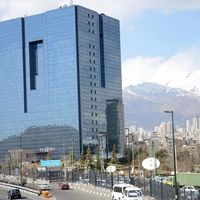
Annual inflation has risen by around 40 percent, each year in the past five years, and the rial has lost 95% of its value since 2018 when Donald Trump withdrew from the 2015 nuclear deal and re-imposed draconian sanctions on the country.
The massive depreciation of the rial and high inflation have drastically increased the cost of living, including expenses for food, housing, and healthcare and driven over 30 percent of the population below the poverty line.
Citizens engaging with Iran International have corroborated these findings, sending videos depicting a sharp rise in essential goods prices.
Iran is a ‘peace-seeking nation,’ the intelligence minister said, warning of a strong response to any hostile act from the US or Israel as threats against its nuclear facilities increased under the new Trump administration.
“The Iranian nation is peace-seeking and has no enmity with any country,” Esmail Khatib said during a ceremony Saturday marking the 40th anniversary of the Intelligence Ministry’s establishment.
“However, in the face of adventurism, malicious actions, and unwarranted interference—particularly from the US and the Zionist regime—we will adhere to the strategy of threat for threat and aggression for aggression.”
While US President Donald Trump has said he prefers diplomatic channels to deal with Iran, he has not ruled out military action against its nuclear facilities, having vowed that Iran must not obtain nuclear weapons.
President Masoud Pezeshkian, Judiciary Chief Gholamhossein Mohseni-Ejei, and other security and military officials attended the ceremony.
Khatib was sanctioned by the US Treasury Department for his role in cyber operations and human rights abuses, designating both him and the ministry in 2022 saying they were involved in cyber activities against the US and its allies.
Iran’s intelligence services, particularly the Revolutionary Guard’s intelligence arm, have played a central role in suppressing dissent in recent years, detaining protesters and opposition figures in its own detention facilities.
The venue of Hassan Nasrallah's funeral procession in Beirut, February 23, 2025.
Iran’s foreign minister and parliament speaker traveled to Beirut to attend the funeral of Hassan Nasrallah, the slain Secretary General of Hezbollah, and his deputy.
Abbas Araghchi and Mohammad Bagher Ghalibaf, along with several Lebanese politicians and leaders of Iran-backed groups, will attend the ceremony.
Lebanese media said Iran’s President Masoud Pezeshkian expressed a desire to attend but did not receive an invitation.
Iranian state media said that family members of the late President Ebrahim Raisi and former Foreign Minister Hossein Amir-Abdollahian, who were killed in a helicopter crash last year along with several government officials, also traveled to Lebanon as part of an official delegation of around 40 representatives.
Araghchi said: “Many people in Iran wanted to participate today to bid farewell to these two heroes of the resistance. The funeral will show that Hezbollah remains strong, loyal to its ideals, and that the struggle will continue.”
Iran’s Supreme Leader Ali Khamenei issued a message for Nasrallah’s funeral, honoring him as a pioneering leader of the resistance whose legacy will endure. He also praised Safieddine as a vital figure in Lebanon’s resistance, offering prayers for them and all fallen fighters.
Khamenei added that “the resistance against usurpation and oppression will continue until its goals are achieved.”
Hezbollah, designated a terrorist organization by countries such as the US and UK, is currently in a fragile US-French brokered ceasefire with Israel, while both sides allege continued violations.
Last year, while thousands of projectiles being fired by Hezbollah to Israel in allegiance with Iran-backed Hamas in Gaza, hundreds of Hezbollah operatives were killed by Israel, including the assassination of its decades-long leader, Nasrallah.
He was killed in a targeted airstrike targeting Hezbollah’s command center in Beirut’s southern suburbs.
Hundreds more operatives were also seriously injured in a two-day operation in which Israel targeted pagers and walkie-talkies belonging to the group's members.
Ahead of Nasrallah’s burial, the Lebanese government extended the suspension of flights to and from Iran indefinitely.
The Washington Post reported that with the cancellation of Iranian passenger flights, Hezbollah supporters are traveling through Iraq to reach Beirut.
The funeral procession for Nasrallah and Safi al-Din is set to begin Sunday at a sports stadium in southern Beirut. Naim Qassem, Hezbollah’s current Secretary General, is expected to deliver a speech.
The US Embassy in Beirut has advised its citizens to avoid areas surrounding the funeral, including the airport.
Once Iran’s most powerful regional proxy armed militia, Hezbollah was founded with the support of the Revolutionary Guards in 1982 but suffered heavy losses in last year’s war, with Israel significantly weakening its military and political power.
While Tehran remains its key backer, the group’s diminished strength has raised questions about its ability to project power as it once did.
Donald Trump used his speech at the Conservative Political Action Conference (CPAC) to once again boast about the outcomes of pressuring Iran during his first time but stopped short of talking about his current plans for dealing with Tehran's rulers.
"Iran was broke. They had no money for Hamas or Hezbollah. They had no money to give. Everybody knows that...They were not giving money around," the US president said in his Saturday speech outside Washington DC.
He had previously made similar remarks about how his “maximum pressure” policy against the Islamic Republic helped reduce the country's oil sales and strip it of enough funds to sponsor its armed allies in the Middle East.
Trump has long argued that the deadly attack launched by Tehran-backed Hamas militants against Israel on October 7, 2023, would have never happened if he were in office.
"And when I got out, they took all the sanctions off, Biden, and Iran became rich very quickly. With oil, you can become rich very, very quickly. And the rest is history. What a horrible thing," Trump told the CPAC, criticizing his predecessor Joe Biden for what Republicans call a lax enforcement of US sanctions on Iran.
Data from oil tanker tracking firms reveal that during Joe Biden's presidency, Iran exported approximately 2 billion barrels of oil—a significant increase compared to the volumes recorded between 2019 and 2021.
Details from Kpler, a commodity intelligence company, reveal that Iran, whose daily oil exports had fallen below 400,000 barrels in January 2021, at the start of the Biden Administration, exported 1.6 million barrels daily last year.
Trump this month reinstated the maximum pressure campaign on Iran with the stated aim of driving its oil sales to zero, warning of "catastrophic" consequences if Tehran does not make a deal with the US on its nuclear program.
After restoring the sanctions policy, he said he would prefer a deal with Tehran to an Israeli attack on their nuclear sites.
Trump, however, refrained from addressing the issue in his speech at the CPAC.
The meeting was scheduled to host prominent exiled Iranian opposition figure Prince Reza Pahlavi but he cancelled his speech citing family commitments.