EU foreign ministers to discuss tougher Iran stance - WSJ reporter
European Union foreign ministers will meet on Monday for a ministerial discussion focusing on Iran, Laurence Norman of The Wall Street Journal said on X, citing a senior European Union diplomat.
The agenda "will span Tehran’s support for Russia, its nuclear advances, its arrest of European citizens among other issues," the reporter said.
"First @kajakallas move to tighten EU stance on Iran," he added, referring to EU foreign policy chief Kaja Kallas. Norman cited the EU diplomat as saying the Joint Comprehensive Plan of Action (JCPOA) will be one of five key topics discussed.
Last week, US lawmakers urged European leaders to reinstate strict United Nations sanctions on Iran, citing what they called Tehran’s continued violations of the 2015 nuclear deal.
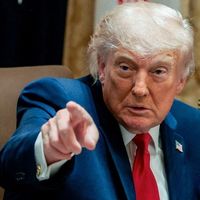
US Secretary of State Marco Rubio on Thursday said US President Donald Trump favors diplomacy over war but is determined to stop Iran from acquiring nuclear weapons.
Last month, the European Parliament adopted a motion for a resolution condemning Iran’s detention of European Union citizens, labelling the practice as “hostage diplomacy.”
The motion also called on the EU Council to take decisive action, including designating the Islamic Revolutionary Guard Corps (IRGC) as a terrorist organization.
Earlier this week, Iran said it charged a British couple on a road trip with espionage, in the latest detention of Western citizens by Tehran.
The United Kingdom is one of the so-called E3 European countries involved in ongoing talks with Tehran over its disputed nuclear program. Another, France, has protested Iran's continued detention of three of its nationals.
Iran said on Tuesday it seeks to more talks with Europe, according to foreign minister Abbas Araghchi, even as the prospect for negotiations with the United States dimmed.
US President Donald Trump favors diplomacy over war but is determined to stop Iran from acquiring nuclear weapons, Secretary of State Marco Rubio said in an interview on Thursday.
“The president’s a peacemaker,” Rubio told independent journalist Catherine Herridge. “He’d prefer to avoid (war) and avoid those circumstances," adding that the United States under Trump “is not going to allow a nuclear Iran.”
Rubio did not discuss specific strategies but said that if Washington decided to act, “it could bring about the end of the Iranian regime,” in some of the most hawkish comments yet on Tehran from a senior member of the Trump administration.
Trump’s focus, Rubio said, remains on avoiding conflict.
As the world watches whether the US can achieve a deal with Moscow over the war in Ukraine, Rubio suggested the two countries may have a common interest in preventing Iran from becoming a nuclear power.
“There are things we could cooperate on geopolitically,” he said. “I’m not sure the Russians are fans of the Iranian regime having nuclear weapons.”
His comments come as US and Russian officials held their first discussions this week in Saudi Arabia on ending the three-year conflict.
Iran, which has sought stronger ties with Russia and China under Supreme Leader Ali Khamenei’s “Look East” policy, has faced economic strain due to US sanctions.
But Iranian media has warned that Moscow may not be a reliable partner and has raised concern that Russia could shift its stance.
Trump has criticized his predecessor, Joe Biden, for being too lenient on Iran and has reinstated the “maximum pressure” sanctions campaign from his first term.
While Trump has expressed reluctance to support an Israeli military strike on Iran’s nuclear program, he has also said he prefers a diplomatic agreement, a proposal that Khamenei has publicly rejected.
US intelligence reports cited by The Wall Street Journal and The Washington Post indicate that Israel sees Iran as vulnerable after October 26 airstrikes, which reportedly US and Israeli leaders say crippled Iran’s air defenses.
Israel, the newspapers reported, perceives the US as more open to military action against Iran under Trump’s leadership.
French President Emmanuel Macron waits for the arrival of guests for a second meeting on Ukraine and European security at the Elysee Palace in Paris, France, February 19, 2025.
French President Emmanuel Macron said he will travel to Washington to convince US President Donald Trump that showing weakness toward Russian President Vladimir Putin would make it harder to confront China and Iran.
"I'm going to tell (Trump), basically, 'You can't be weak in the face of President Putin...How can you then be credible in the face of China?" Macron said during a social media Q&A on Thursday.
"And you, who wants Iran not to have nuclear weapons, you can't be weak with someone (Putin) who is helping (Iran) acquire it," he added.
Macron's scheduled visit to Washington was confirmed by White House Press Secretary Karoline Leavitt.
"Next Monday, the president will host France's President Emmanuel Macron, and on Thursday the UK Prime Minister Keir Starmer will visit the White House as well," she told reporters.
Last month, Macron warned that Iran's nuclear program is nearing the point of no return, stressing the need for Paris to engage in strategic discussions with Trump's administration about Tehran.
Macron also mentioned Iran's ballistic missiles and support for Russia, labeling them threats to Europe.
“(Iran's) ballistic missile program threatens European soil and our interests. Iran is already involved in Russia's war against Ukraine through clear and fully identified military support,” he said.
President Trump's recent remarks on the war in Ukraine and the country's president, Volodymyr Zelensky has troubled European powers who seek US support in dealing with what they see as a growing Russian threat.
International Atomic Energy Agency (IAEA) Director General Rafael Grossi addresses the media during their Board of Governors meeting in Vienna, Austria, September 9, 2024.
The International Atomic Energy Agency (IAEA) chief said on Thursday it was prepared to help Iran prove it did not seek a bomb, in comments Tehran blasted as politicized and a boon to adversaries.
"We want to make ourselves available, providing technically sound alternatives to eliminate the possibility that Iran develops a nuclear weapon, to prevent Iran, or to help Iran prove that they don't want to develop a nuclear weapon," Rafael Grossi told reporters at Japan’s National Press Club.
"We hear the government say that. But as somebody said, we trust everybody, but we need to verify. So until we can have a very, very comprehensive watertight system of verification, we will not be satisfied."
Iran denies seeking a nuclear weapon but the United States assesses that it seeks such a capability and Israel sees its arch-foe wanting a bomb to destroy it.
The Atomic Energy Organization of Iran issued a statement shortly after condemning Grossi's remarks as biased and inaccurate, saying "the burden of proof is on the claimant.”
"The IAEA director general, as a senior official of an important international organization, is expected to speak and act impartially, professionally, and without political bias," it said.
"At a time when the United States and certain Western countries are attempting to misuse the IAEA to exert unjust pressure on Iran, such politically motivated and unprofessional statements could serve as a pretext for their illegitimate ambitions.”
Time may be running out for a peaceful resolution to the nuclear standoff.
The Wall Street Journal and The Washington Post reported last week citing US intelligence findings from last month that Israel saw an opening for an attack on Iranian nuclear sites as early as the first half of this year.
Iran is involved in ongoing negotiations with the so-called E3 European countries - Britain, France and Germany - who were signatories of a now largely defunct 2015 international deal over Iran's nuclear program.
Supreme Leader Ali Khamenei said on Monday that Iran could fend off an attack by its enemies, after rejecting an overture from Trump for a deal over Iran's nuclear program, which Tehran says is peaceful but Israel insists aims at building a bomb.
JCPOA
Despite calling his recent visit to Iran constructive, Grossi said, “Iran is not still cooperating as we would like them to do.”
Grossi described a 2015 nuclear agreement, or Joint Comprehensive Plan of Action, as outdated and in need of a replacement albeit with a similar philosophy of Western economic incentives exchanged for Iranian curbing of enrichment.
"I discussed this with the foreign minister of Iran, Mr. (Abbas) Araghchi, maybe what you can have is the same philosophy of JCPOA, which is tit for tat. Which is, I restrain my activities in exchange for incentives - financial, economical or otherwise. But beyond this, I think it is no longer applicable," Grossi said.
"The JCPOA is an empty shell," Grossi added. "The JCPOA talked about one type of centrifuges but they have much more. They are enriching at 60% or almost weapon level, so it is a completely different nuclear program.”
The 2015 nuclear deal, signed by the Islamic Republic and six world powers, was aimed to limit Iran’s nuclear ambitions in return for sanctions relief. However, during his first term, US President Donald Trump withdrew from the agreement in 2018, reinstating sanctions.
In response, Tehran reduced its commitments, and in 2020, its parliament passed a law restricting IAEA inspections beyond the Nuclear Non-Proliferation Treaty.
Russian and US delegations meet in Saudi Arabia. February 18, 2025
The conservative Tehran newspaper Jomhouri Eslami has warned Iranian authorities that Moscow may sacrifice Iranian interests in exchange for concessions from Washington over the Ukraine conflict.
Referring to US-Russia negotiations over Ukraine that began earlier this week in Riyadh—talks that notably excluded Kyiv—the newspaper speculated on Wednesday that these discussions could lead to a Moscow-Washington agreement. Such a deal, it argued, might see Russia securing territorial gains in Ukraine in return for granting Washington more leverage to protect Israel’s interests in the Middle East.
“Iran will be drawn into this equation alongside Lebanon, Syria, Iraq, and Palestine… and Russia will turn a blind eye to any actions the United States may take against Iran,” the newspaper wrote in an editorial titled “Us and the Great Moscow-Washington Deal.” This editorial has been widely covered by other media outlets in Iran.
The article accused Russia of failing to support Iranian forces in Syria in the past when Israeli jets targeted their positions and of collaborating with the US and Israel against Iran’s ally, Bashar al-Assad, when Tahrir al-Sham militia forces made advances against his troops.
Jomhouri Eslami warned that Moscow could betray Iran again if Washington helps Russia emerge victorious in Ukraine. The paper urged Iranian authorities to remain vigilant and strategize ways to mitigate the consequences of such a deal.
A similar concern was raised by the reformist Shargh daily in an article titled “Will Tehran Be Sacrificed in a Trump-Putin Deal?” The publication urged Iranian authorities to swiftly decide whether to pursue direct negotiations with the United States over its nuclear program.
Foreign relations expert Rahman Ghahramanpour, interviewed by Shargh, suggested that any deal between Donald Trump and Vladimir Putin would first impact European nations that have supported Ukraine. However, he acknowledged that Iran’s position could become a bargaining chip in future discussions, given Moscow’s role in Iran’s 2015 nuclear agreement, the Joint Comprehensive Plan of Action (JCPOA).
Meanwhile, Russian Presidential Press Secretary Dmitry Peskov attempted to reassure Iran, stating in an exclusive interview with Iran’s official news agency (IRNA) on Wednesday that Moscow’s talks with the United States would not impact its relations with Tehran. Peskov confirmed that Iran’s nuclear program was mentioned in a February 12 phone call between Trump and Putin but insisted it was not a primary topic of discussion.
Peskov told IRNA that the cooperation between Iran and Russia was independent of the relations between the Kremlin and the White House. Peskov confirmed that Iran's nuclear program had been “mentioned” in the Trump and Putin’s phone call on February 12, but said it had not been a primary topic in the two presidents’ talk.
Iran faces a limited timeframe, as the European signatories of the 2015 nuclear deal could invoke the “snapback” mechanism in October, reinstating UN sanctions lifted under the agreement. In an interview with RIA Novostiast last week, Russia’s envoy in Tehran, Alexey Dedov, emphasized the importance of Russia and China in any nuclear negotiations, stating, “Without Russia and China, such discussions will not reach their goals and will remain unproductive.”
Trump has signaled a preference for striking a deal with Tehran but has also made clear that, failing diplomatic progress, he would not hesitate to consider military options to prevent Iran from acquiring nuclear weapons.
Iran has sought to deepen ties with Russia and China in line with Supreme Leader Ali Khamenei’s “Look East” policy in the past few years. This approach, which hardliners have actively promoted, posits that closer relations with non-Western powers will bolster Iran’s development and resilience against US pressure and sanctions. However, economic sanctions imposed by Trump in 2018 have led to a deep economic crisis in Iran, without any decisive assistance by Russia and China.
Trump’s stance on the Ukraine war and the concessions he appears willing to make to Putin have been widely criticized by US politicians and media, including by some conservatives who fear that bypassing Kyiv in negotiations could have serious security implications for Ukraine and its European allies.
Iran has repaired damage to its air defenses from an Oct. 26 Israeli attack, a senior military official said on Wednesday, adding that Tehran would punish Israel and any power helping it strike Iran.
The remarks were the first official confirmation that the Israeli air attacks had damaged Iran's air defense systems but emphasized a hawkish stance which appeared to allude to US assistance to a future Israeli raid.
"The air defense of Islamic Iran is at the height of readiness, and the minor damage inflicted on it has been completely repaired," Mohammad Bagheri, chief of staff of Iran's armed forces was quoted by state media as saying.
His remarks were the third time in as many days that a top Iranian military official rebutted US and Israeli assertions that Iran was weakened by the bombardment and come after US media reported that Israel is mulling striking Iranian nuclear sites.
"The air defense of the Armed Forces of the Islamic Republic is at peak readiness for offensive operations, and missile production is continuously being carried out with very high quantity and quality," Bagheri added.
The Wall Street Journal and The Washington Post reported last week citing US intelligence findings from last month that Israel saw an opening for an attack on Iranian nuclear sites as early as the first half of this year.
Visiting the White House this month, Israeli Prime Minister Benjamin Netanyahu said the Israeli strikes had "crippled Iran's air defenses." Trump the next day said any reports of a devastating US-Israeli attack on Iran were "greatly exaggerated".
Israel is basing its assessment, the papers reported, on Iran's weakness after an Oct. 26 Israeli attack knocked out much of its air defenses and a greater perceived receptiveness to military action from US President Donald Trump.
"If the enemy makes any mistake, Israel’s security—and that of those involved in equipping and planning its operations—will be at risk, and the region will not see peace," Bagheri added.
Supreme Leader Ali Khamenei said on Monday that Iran could fend off an attack by its enemies, after rejecting an overture from Trump for a deal over Iran's nuclear program, which Tehran says is peaceful but Israel insists aims at building a bomb.