Dissident Iranian journalist warns of Iran-backed radicalization in Europe
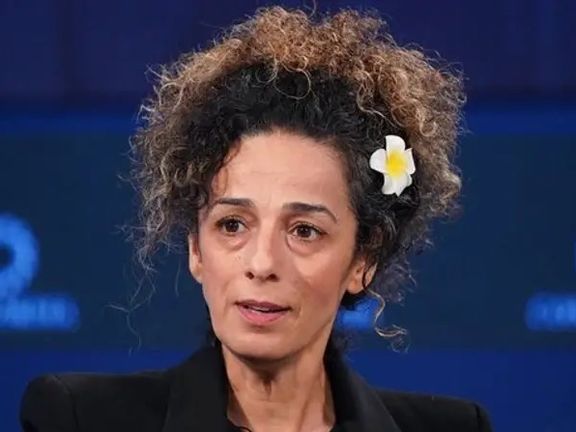
Masih Alinejad
Iranian activist and journalist Masih Alinejad warned that the Islamic Republic and its allied groups, including Hamas and Hezbollah, are spreading their ideology in Europe during a speech on Sunday at the Munich Security Conference.
"Here in Germany, they have 51 Islamic centers...You think Islamic centers here are trying to educate you about peace, security? No," she said.
"All the Islamic centers here are appointed by Ali Khamenei, the dictator from my country, they're trying to expand Islamic laws, Sharia laws to Germany," she added.
Alinejad said that Iran-backed networks in Europe are indoctrinating youth, warning that they are "brainwashing your children to say that they are Hamas, they are Hezbollah."
She expressed concern that radical ideologies are being spread online, citing TikTok videos where users glorify Osama Bin Laden and extremist groups like the Taliban and ISIS.
She also criticized European governments for suppressing voices that speak out against Islamist extremism, arguing that this enables the spread of radical ideologies.
In spite of her attendance, organizers of the conference confirmed to Iran International that the informal invitation to Iran's exiled Prince Reza Pahlavi had been withdrawn after discussions with the German government.
The German Foreign Ministry acknowledged communication with the MSC but said that decisions on invitations were made independently. A source familiar with the matter told Iran International that Berlin feared Pahlavi’s attendance might jeopardize German dual-national prisoners in Iran.
"At the Munich Security Conference, I warned that freedom of speech is under threat. Silencing voices in the name of political correctness or islamophobia won’t stop terrorism, it will only empower it," Alinejad wrote a in a post on X Sunday, addressing the retraction.
Alinejad also called attention to human rights abuses in Iran, mentioning women on death row and the mother of Pouya Bakhtiari, a protester killed by security forces during Iran's 2019 protests who recently attempted suicide in prison. "Stand on the right side of history," she urged.
Iran's exiled Crown Prince Reza Pahlavi speaking at a meeting in Munich on February 16, 2025.
Exiled Iranian prince Reza Pahlavi called for unity and democratic engagement among opposition forces during a meeting in Munich on Sunday.
“Our goal today is solely to save Iran, and in the future, our mission is to enable free elections,” Pahlavi said, emphasizing pluralism and the rejection of divisive behavior.
“Escalation, radicalization, and reactionary leadership will not help this movement—in fact, they could even contribute to its polarization.”
His remarks followed the cancellation of his planned speech at the Munich Security Conference, a decision confirmed by conference organizers after consultations with the German government.
The German Foreign Ministry said it had communicated with the MSC but maintained that the decision was made independently.
A source told Iran International that Berlin feared Pahlavi’s presence could jeopardize German dual-national prisoners held in Iran.
The cancellation sparked protests outside the conference venue on Saturday. Demonstrators chanted slogans in support of Pahlavi and condemned the MSC’s decision.
Addressing his supporters, Pahlavi called for calm. “We must disavow divisive elements. Profanity, threats, and any form of undemocratic behavior have no place in this struggle,” he said.
“Chanting the slogan King Reza Pahlavi contradicts the idea of having the right to choose the type of government in the future."
Nissan pickup trucks in Iran being loaded with gasoline for smuggling
Iran says it has dismantled 130 fuel smuggling depots and arrested 41 key suspects in Tehran province, the capital’s judiciary chief announced on Sunday.
Ali Alghasimehr said authorities have seized over 600,000 liters of smuggled fuel, describing the network as highly organized and large-scale.
He said intelligence and security services played a crucial role in the crackdown which targeted illegal fuel storage sites mainly in southern and western Tehran.
Last December, Iran's President Masoud Pezeshkian said that 20 to 30 million liters of fuel are smuggled out of the country daily, calling it a catastrophe amid the country's energy crisis.
Pezeshkian did not specify the destinations but fuel smuggling in Iran often involves routes to neighboring countries where fuel prices are significantly higher.
In December, Reuters reported that a sophisticated oil smuggling network generating at least $1 billion a year for Iran and its proxies has flourished in Iraq since Prime Minister Mohammed Shia al-Sudani took office in 2022.
US Secretary of State Marco Rubio and Israeli Prime Minister Benjamin Netanyahu make a joint statement to the media at the Prime Minister's office in Jerusalem on February 16, 2025.
US Secretary of State Marco Rubio said that Iran is the single greatest threat to the Middle East in a joint press conference with Israeli Prime Minister Benjamin Netanyahu in Jerusalem.
Rubio said: "Behind every terrorist group, behind every act of violence, behind every destabilizing activity, behind everything that threatens peace and stability for the millions of people that call this region home is Iran.
"And by Iran I mean the ayatollahs, by Iran I mean its regime, a regime who by the way, its people don’t support. The people of Iran are victims of that regime."
Netanyahu, who has long campaigned for harsher policies on Iran from global powers, warning of the threat the country's nuclear program poses to the region, welcomed the comments which echo his own years-long campaign against Tehran.
“Israel and America stand shoulder to shoulder in countering the threat of Iran," he said. "We agree that the ayatollahs must not be allowed to have nuclear weapons. We also agreed that Iran’s aggression in the region has to be rolled back.”
Addressing the Gaza war against Iran-backed militants, Hamas, Netanyahu said Israel had dealt a significant blow to Tehran over the past 16 months, adding that with the support of Trump, "I have no doubt we can and will finish the job".
He also said Israel had weakened the Iranian-backed Hezbollah movement in southern Lebanon and had hit hundreds of targets in Syria to prevent a new Iranian-backed front opening up against Israel.
"Now, if any other force believes that Israel will permit other hostile forces to use Syria as a base of operations against us, they are gravely mistaken," Netanyahu said.
US Secretary of State Marco Rubio meets with Israeli president Isaac Herzog at the president's residence in Jerusalem, Israel February 16, 2025.
A glimpse into the harsh realities of workers' lives in Iran, where families struggle to afford basic necessities amid soaring inflation and economic hardship.
As inflation surges and the value of Iran's currency plunges daily, workers are facing unprecedented economic pressure, with wage negotiations at a standstill.
Mohsen Baghaei, a workers' representative on the Supreme Labor Council, warned of significant price hikes in essential goods over the past two months, with cooking oil increasing by 40%, rice by nearly 100%, and other staples like potatoes and onions also rising steeply.
Baghaei estimated that the average cost-of-living basket for workers has risen by over 30% in just two months, pushing the basket’s value from 300 million rials (around $325) to 380 million rials ($413).
"Inflation on essential goods has been unprecedented," he added, blaming unchecked currency devaluation, corporate hoarding, and a lack of government oversight.
Despite the challenges, wage negotiations remain stagnant. The Supreme Labor Council which is responsible to set minimum wage for the new year starting in March has only convened once since the start of the President Masoud Pezeshkian administration in July, with no meeting held this month.
"While workers expect wages to reflect the cost-of-living basket, the Ministry of Labor’s resistance to this principle has stalled progress."
Currently, the minimum wage set in March 2023 at about 111 million rials ($185 at that time) is worth just $120 due to the rial’s sharp devaluation. With Tehran's estimated living costs exceeding 400 million rials per month, most workers find themselves unable to meet even basic needs and today, at least one third of Iranians are living below the poverty line.
The rising dollar, now valued at around 920,000 rials, has further eroded purchasing power. Shortages of essential goods and inflation nearing 50% compound the crisis, leaving many workers reliant on informal jobs to survive.
The broader economic turmoil has also fueled strikes and protests, including a rare demonstration by Tehran’s historic bazaar merchants last month over soaring currency rates and declining purchasing power.
Baghaei stressed the urgency of implementing realistic wage adjustments based on Article 41 of the Labor Law, which links wages to living costs.
"If the government accepts this legal principle, reaching an agreement won't be difficult," he concluded, while cautioning that lip service without action would only deepen workers’ despair.
Iran’s worsening economic crisis reflects both domestic mismanagement and external sanctions, leaving workers trapped between rising costs and stagnant wages.
A photo shared on social media shows Iranian protesters in Munich on February 15, 2025.
A group of Iranians protested the cancellation of exiled Prince Reza Pahlavi’s speech at the Munich Security Conference (MSC) and to show support for the exiled prince.
The demonstration began at noon on Saturday, with protesters chanting slogans backing Pahlavi and delivering speeches denouncing the decision.
Organizers of the Munich Security Conference, which finishes on Sunday, confirmed to Iran International that the informal invitation to Pahlavi had been withdrawn after discussions with the German government.
“After consultation with the German government, Mr. Heusgen decided not to formalize the invitation to Mr Pahlavi,” they said, noting that Iranian opposition figures had until now, been regular guests.
The German Foreign Ministry acknowledged communication with the MSC but said that decisions on invitations were made independently. A source familiar with the matter told Iran International that Berlin feared Pahlavi’s attendance might jeopardize German dual-national prisoners in Iran.
Pahlavi last participated in the conference in 2023. Dissident journalist and women’s rights activist Masih Alinejad was invited to attend this year.
Earlier this month, the conference reinstated its invitation to Pahlavi after initially withdrawing it due to pressure from the German foreign ministry but then made a u-turn again, retracting the invite for a second time.
On Thursday, the son of Iran’s last king Reza Pahlavi accused the German government of bowing to pressure from Tehran. “This is a betrayal of both the Iranian people and Germany’s democratic values,” Pahlavi wrote on his X social media account.
“This German government has not only silenced the voice of the Iranian people but has actively done the Islamic Republic’s bidding.”
He said that threats from the Islamic Republic had influenced Berlin to retract his invitation to the conference. “The Ayatollah is pulling the strings in Berlin,” he said, adding that Germany’s actions amounted to “outsourcing censorship to Berlin.”
An official X account managed by US-based Pahlavi's office, criticized Germany’s approach, saying, “Instead of supporting those fighting for freedom, Germany has chosen to appease a dictatorship that murders its citizens, takes Europeans hostage, and sponsors terrorism.”